Before Melissa Eamer was responsible for selling devices to people who might never meet her, she owned a restaurant in Richmond, Vermont. A restaurant offers unusually direct instruction in responsibility. The customer is nearby. Dinner has a deadline. An absent employee is a problem that cannot be postponed to the next quarterly meeting.
When the dishwasher failed to show up, she washed the dishes herself. Years later, with an Amazon title attached to her name, that remained one of her examples of ownership. A corner office can put a considerable distance between a manager and a sink. Eamer’s account suggests that the useful lesson survived the journey.
Her subsequent career has passed through Amazon, Glossier and Modern Age, the company she founded and originally led. Since 2025, she has been president and chief operating officer of Wyze, back among connected devices. The sequence looks miscellaneous until you notice how often it returns to the practical business of serving a customer.
The degree was in English
Eamer started working at the restaurant while studying at the University of Vermont, then became a partner. She learned the trade on the job. Eventually, she wanted another intellectual challenge. A move into publishing followed an offer to work without pay; business school came after she saw how a finance executive approached problems.
She earned her MBA at Michigan in 2000. The English graduate had acquired another way to think. It is tempting to make the two qualifications sound incompatible, as if books and spreadsheets observed a formal border. Her next employer offered an obvious crossing: Amazon was a business where a love of books could meet an appetite for building things.
For her interviews, she prepared a written proposal for a customer feature. The gesture had a sensible purpose. A résumé explains where someone has been. A proposal gives the other person something to discuss about what might happen next. For a candidate changing direction, that is a useful change of subject.
“At the restaurant if the dishwasher didn’t show up, I washed dishes.”Melissa Eamer, on ownership
A household with room for a mess
Long before the restaurant, there was a home that made room for experimentation. Eamer has described a childhood of art projects, forts and tadpoles, with two sisters and a mother who encouraged them to tackle difficult things. The record player supplied “Free to Be You and Me.” One can imagine tidier households; this one gave her something she continued to value.
The permission mattered. She credits her mother with teaching her that being a girl need not narrow her ambitions. It is a specific influence on the way she describes work: learning as a continuing activity, persistence as something to practice, difficult problems as things she was allowed to attempt.
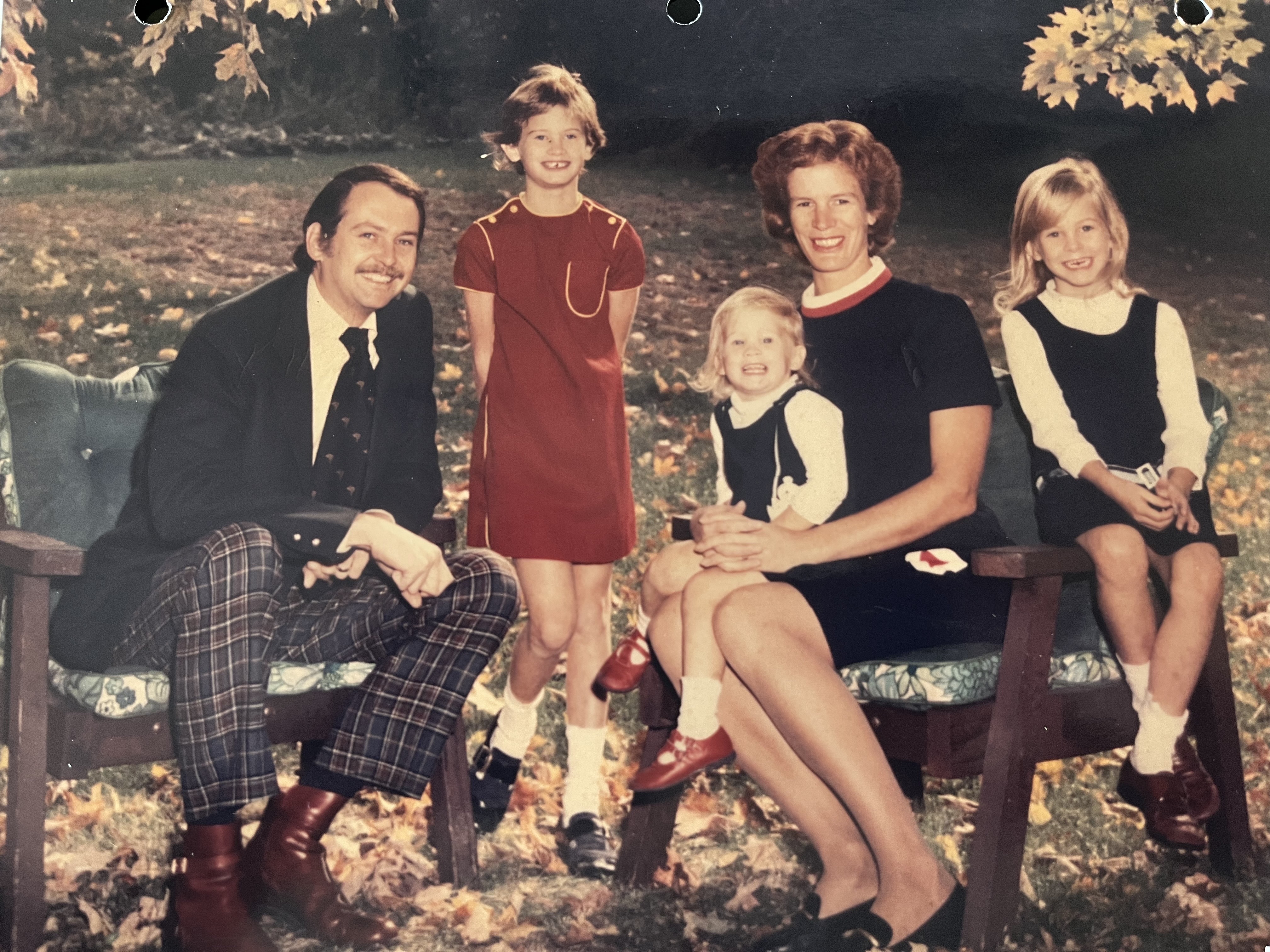
Her own account of motherhood has a welcome comic scale. She has two daughters, and in 2023 she wrote about the parental journey from apparent omniscience to apparent cluelessness. She retained one dependable skill: locating lost possessions. Even a household that has withdrawn confidence from its management still expects management to find the missing object.
There is affection in that admission, and proportion. Professional biographies tend to keep increasing the size of the responsibilities. Family life has other methods of measuring a person. Neither an executive title nor a carefully prepared explanation guarantees an enthusiastic audience at home.
Nineteen years, several careers
At Amazon, Eamer stayed for nineteen years and moved through more than ten roles. That combination deserves a moment. A long tenure can suggest staying put. Hers included enough changes of remit to complicate that picture. Books, the Kindle store, consumer engagement, sports, outdoors, toys and devices all appear in her working record.
She also worked as technical advisor to Jeff Wilke, then leader of Amazon’s consumer business, and led retail leadership development. That added another dimension to a career already moving between products and commerce: helping an organization develop the people who would run it.
Different chapters, different measures. These figures describe tenure and a career milestone.
Her Michigan biography describes a devices organization of more than 800 people, bringing together engineering, product management, marketing and commercial functions. It also credits her teams with work on products and programs including Kindle stores, Kindle readers, Fire tablets and Look Inside the Book.
The team language is important. A consumer sees one feature or one object. Behind it are people making different kinds of decisions on different schedules. An operator’s work includes making those decisions meet. The attractive simplicity of a finished product can conceal a rather crowded room.
A 2021 conversation about Amazon’s “Learn & Be Curious” principle gives this stretch of her career a fitting emphasis. There was a great deal to learn without leaving the employer. The progression suggests curiosity that found practical outlets: a new business, another kind of product, another set of people whose work needed to fit together.
Beauty, and the machinery behind it
In September 2019, Eamer joined Glossier as chief operating officer. Emily Weiss’s beauty company had already made customer relationships part of its identity. Eamer arrived with responsibility for helping build the organization and support its next stage of growth.
The appointment covered the less photogenic side of a consumer brand: business strategy, structure and execution. Those subjects rarely receive the attention given to a new product or a shop opening. They determine whether the excitement can be supported when more people decide to buy.
Glossier was also a change in scale. Eamer’s Michigan biography puts her team there at 130, including technology leadership and functions responsible for digital innovation and revenue. The move placed a large-company operator inside a younger business with a different pace and identity. She spent about a year there before beginning her own venture.
Bring a taller ladder
Eamer founded Modern Age in 2020. Becoming a founder put her back in the position of building a business rather than inheriting its established routines. It also supplied a small episode that would have been perfectly intelligible to her earlier restaurant-owning self.
During a walk-through of the company’s first New York premises, she noticed that the paint stopped short of the ceiling. The painters had lacked a tall enough ladder. They had nevertheless treated the work as finished. Another team eventually completed it.
The incident is funny because the explanation is so literal. A business can possess a sophisticated plan and still be defeated, temporarily, by equipment that does not reach. At the next location, she knew to arrange a taller ladder. Experience had produced a wonderfully unglamorous specification.
Founding also changed her understanding of the chief executive’s job. She had expected more direct product work; building and coordinating the team took more attention. That adjustment is recognizable across her career: as responsibility grows, doing the thing yourself gives way to arranging for other people to do it together.
The original Modern Age operation closed in March 2024 after it could not raise the capital required to continue. Eamer announced the decision herself. An account of her career needs that ending as much as it needs the appointments. Experience did not make the business exempt from the need for money.
Closure also resists the convenient habit of reading every earlier event as preparation for a victory. People can bring skill and commitment to work that ends. The outcome belongs in the record, without requiring the rest of a working life to stop beside it.
Back among the devices
Wyze announced Eamer’s appointment as president and COO in June 2025. Its co-founders, Yun Zhang, Dave Crosby and Dongsheng Song, also came from Amazon. Her own announcement emphasized that shared background and the opportunity to help the company grow.
She told GeekWire that she had missed the “startupy feel of chaos” and building from scratch. It is an amusing preference for someone hired to improve operations. Yet the attraction makes sense. An operator needs something unsettled to operate on; a business that has solved every practical problem offers a fairly short working day.
Her remit at Wyze includes faster product delivery, customer support, business intelligence and partnerships. Hardware brings consequences beyond the purchase button. An object arrives in someone’s home, has to work with software, and may require help. The relationship continues after the sale, sometimes at precisely the moment when the customer would prefer it did not.
That same June, she joined HelloFresh’s supervisory board. Her current responsibilities therefore span running a consumer-technology business and helping oversee another consumer company. The restaurant has receded into the early paragraphs of the biography. Food has found another route back into it.
Outside work, her Michigan biography describes riding and racing with an all-women cycling team. In a March 2024 conversation, she named Megan Rapinoe as someone she admired, singling out the footballer’s advocacy for other female athletes. The choice connects ability with what a person does with the attention it brings.
These are useful details in a life otherwise easily overwhelmed by organizations. A person can run a team and enjoy belonging to one. The bicycle offers a different kind of company from the meeting room, and a road beyond the next item on the agenda.
Eamer’s way of organizing a day is modest enough to fit on paper: make the priorities list the night before, then begin with what matters. The habit offers a quieter picture than the succession of companies. Tomorrow arrives with work attached. Decide where to start.
There is a useful consistency between that list and the dishes. Both make responsibility visible at a manageable scale. After all the changes of industry, Eamer’s career still leaves room for a question a restaurant owner would recognize immediately: what needs doing, and who is going to do it?