A company created to sell consumer products discovered that its more interesting product was the machinery behind the shop. In March 2021, Arfa changed its name to Chord and stopped incubating brands. Henry Davis, its co-founder and original CEO, had helped build a business with things to put on a bathroom shelf. Now he and his colleagues were offering something considerably harder to photograph: commerce software.
The change had an unusually tidy visual logic. Remove the merchandise, leave the systems that made selling it possible, and offer those systems to other people. Operationally, of course, a pivot asks rather more of everyone involved. You have to explain why the company you spent months building should become another kind of company. A new name is the easy part.
Davis’s career makes the decision less surprising than it first appears. Before Arfa, he had worked in venture capital and helped run Glossier. He had watched a brand acquire customers, staff, investors and international ambitions. He had also watched the technology required to support the experience. The storefront received the attention. The work behind it had become an opportunity of its own.
The shop window and the machinery
Arfa’s March 2021 announcement paired the change of name with an $18 million Series A, led by Eclipse Ventures, and the acquisition of business-intelligence company Yaguara. Bryan Mahoney, previously Glossier’s chief technology officer, became Chord’s CEO. Davis was its chairman and chief operating officer. The company would sell the software and data products that had supported its own brands.
In the language of the period, the offering was headless commerce. The term sounds like an unfortunate condition for a retailer; it describes separating the experience a shopper sees from the systems managing content, products and orders. A company could shape its storefront without requiring every piece of its infrastructure to come from the same place.
The distinction suited the partnership. Mahoney approached the problem through architecture. Davis approached it through the economics and daily choices of operating a brand. They had worked on the same problem from different desks: how to make an online business feel particular to its customers while keeping it manageable behind the scenes.
The argument was practical. A smaller brand might want a distinctive experience without assembling the kind of technology organization they had known at Glossier. Their proposed customer was therefore familiar: a founder trying to make a particular promise to a particular audience, with a finite amount of money and a growing list of software decisions.
A history graduate goes shopping
Davis was born and raised in London. He studied Modern History at Oxford, earned an MBA at Stanford, and began his working life in investment banking at Citi before moving into venture capital at Index Ventures. It is a background that offers plenty of practice examining businesses from the outside. He later moved into operating a consumer business.
His interest was in what the internet could change about the relationship between a company and its buyers. While working in venture capital, he had spent time around fashion businesses and become interested in ecommerce. Beauty presented another large market. Meeting Emily Weiss, who had built Into The Gloss, supplied a much more specific reason to care.
By 2014, he was part of Glossier’s early team. His responsibilities came to include the president, COO and CFO roles. There was finance to arrange, an organization to build and physical products to get to customers. The company might speak with the immediacy of the internet, but someone still had to make the less conversational parts of the operation work.
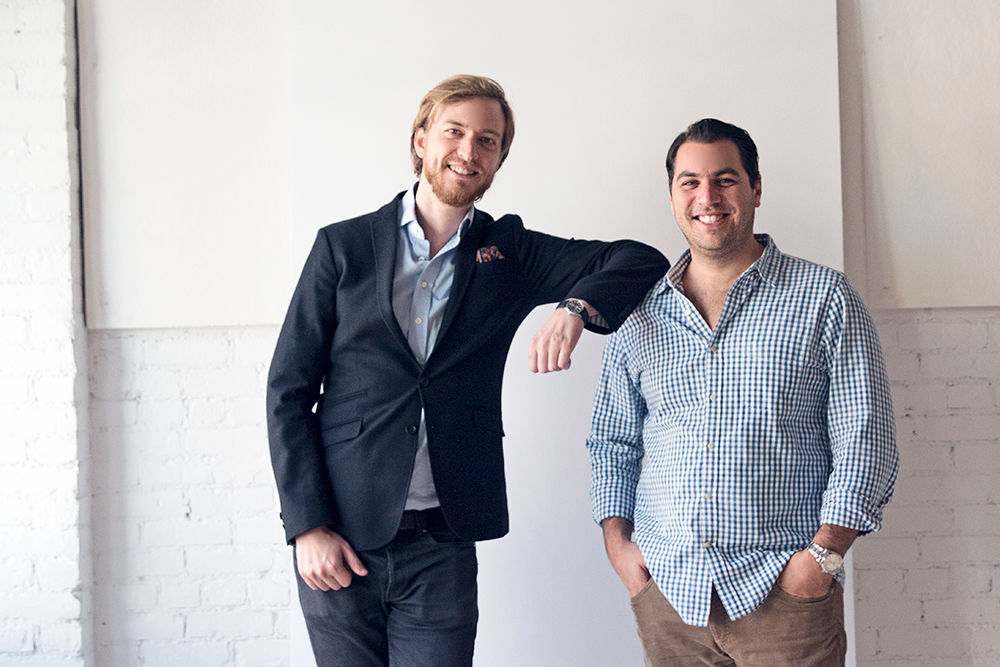
His public introduction to the Glossier audience offered a less formal résumé. In 2015, he described his COO job as ensuring things happened, worked and avoided trouble. Asked about an inexpensive New York evening, he weighed a dive bar against a Manhattan at Bemelmans. He also identified moving to New York to marry his wife and join Glossier as his best idea.
That combination of work and personal commitment gives the move a human scale. This was a Londoner making a life in another city, with a job whose remit could stretch from finance to whatever had just stopped working. Glossier’s ambitions soon stretched geographically too. Davis helped oversee expansion beyond the United States, including into Canada and the United Kingdom.
By his departure in December 2018, he could look back on a much larger organization. In his farewell essay, he described a business with millions of customers across seven countries, almost 200 corporate employees and $86 million raised. Those were company results, produced by a team. They also explain the range of practical experience he carried into founding his next venture.
The customer gets a vote
Glossier gave Davis a place to test an idea he continued to discuss: a buyer could have a stake in a brand’s direction. The customer relationship was worth protecting because it provided more than a route to a sale. It could help the company understand what people wanted, what frustrated them and what they would recognize as a useful response.
He was careful about how that worked. In a 2018 conversation, he resisted the suggestion that the company simply turned requests into products. Listening still required interpretation. People described needs; the company had to decide what to do with them. A comments section could provide material for judgment. Responsibility for the resulting decisions stayed with the people running the business.
“We’re not a crowdsourced brand.”
Henry Davis, 2018
At another industry discussion that year, he pushed the idea further. Feedback deserved a response customers could actually see. Packaging, shops and the process of making products also communicated something about the business. That makes a brand a demanding undertaking. The advertisement can finish on time while the experience it promises continues through the parcel arriving at someone’s door.
Arfa, founded in 2019, took customer participation into its proposed business model. It planned to develop brands with a collective of consumers who would help create, test and promote products. The company said collective members would be eligible for a share of brand profits. Participation had moved from a useful conversation toward a financial arrangement.
The share of brand profits Arfa proposed distributing to its participating consumer collective at launch.
THE ORIGINAL ARFA MODEL · 2020The proposal was an attempt to make the relationship tangible. People helping a company learn about its audience were contributing something. Arfa’s launch model recognized that contribution explicitly. It also raised the commercial question running through Davis’s work: could a closer relationship create a business with more durable demand and less dependence on continually buying attention?
The difficult art of changing your mind
The next decision concerned how many businesses Arfa should try to build itself. Launching a collection of brands had limits. Supplying the infrastructure could support other entrepreneurs pursuing their own audiences. The team was encountering interest in the technology it had built, and the opportunity required a choice about where to concentrate its effort.
In 2021, Davis and Mahoney chose the software business. Arfa would no longer incubate brands. Existing brands would continue, while Chord concentrated on its technology offering. The Yaguara acquisition added business-intelligence capabilities. This was a substantial change in what the company sold and whom it sold to, even as the founders continued working on commerce.
There is an uncomfortable discipline in that choice. Building something gives its maker reasons to keep it: familiarity, effort, affection, the memory of persuading other people to believe. Those reasons are real, but they do not settle where a business should go next. The Arfa-to-Chord decision makes that tension visible without reducing it to a cheerful instruction to pivot.
For Davis, it also meant a different role alongside a familiar collaborator. He had been Arfa’s original CEO; Mahoney led Chord. Titles changed as the venture evolved. The partnership carried forward knowledge acquired together, while the company reorganized around a different customer. By 2022, Davis was discussing the lessons as Chord’s co-founder and chief strategy officer.
The subsequent business continued toward data infrastructure. Chord helps brands bring customer information together and has worked with customers including Sonos, Caraway and Ruggable. That development keeps the story connected to an operational concern: a company needs to understand what is happening across its business before it can make useful decisions about the customer experience.
Back at the table, with a studio at home
In January 2026, Davis joined White Star Capital as a general partner, following an earlier venture-partner relationship with the firm. His working base remained New York, with time in London and Silicon Valley. The return to investing came after years spent doing the work investors examine: running companies, founding one and changing its direction.
He has another set of instruments at home. Davis produces melodic and progressive house music in a studio at home, and supports West Ham United. Music is more than an ornamental interest in his biography. In February 2026, he published an essay about artificial intelligence that approached the subject through drum machines and the creative uses people find for technology.
His argument concerned possibilities that emerge when users experiment beyond a tool’s original purpose. It is a fitting subject for someone whose company found a different use for the systems it had built. Davis’s career keeps returning to people discovering value in what they already have: a conversation, a customer relationship, a software platform. Sometimes the next business is already there, doing an unglamorous job behind the shop window.