The first thing arfa had to reconsider was the sale. In March 2020, its debut brand, HIKI, had sweat-care products ready to ship. Deodorant, wipes, body powder: useful things, arriving at an awkward moment. A pandemic was taking over the country. A cheerful new shopping proposition suddenly required a different sort of judgment.
- Build personal-care brands with customers involved from the start.
- Sell the commerce technology behind those brands as Chord.
- Remove the storefront migration requirement when buyers want the data.
- Use that data foundation for commerce analysis and AI assistance.
Instead of charging normal retail prices, arfa changed the launch into a giveaway. Healthcare workers could receive two items with a $2.50 contribution toward costs; others could qualify by sharing a positive social post and paying $5. The company had found a way to put inventory to work without pretending the calendar was still normal.
01 / The customer had a seat at the table
Founded in 2019, arfa was originally a consumer-goods venture. Henry Davis brought experience as Glossier’s president and COO; Bryan Mahoney had been its CTO. Ariel Wengroff and Shabdha Chigurupati were also part of arfa’s founding group. Their interests met at an attractive problem: how to build brands around things people actually needed.
The mechanism was unusually literal. A group called The Collective helped shape products and marketing. arfa pledged 5% of its profits to these participants. Customers were being asked for more than a favorable comment beneath a photograph. They were meant to help decide what belonged in the photograph.
That distinction reached the formula. Feedback prompted changes to the cornstarch content of HIKI’s body powder so it would blend better across skin tones. Its packaging carried the phrase “For Any Body.” Here was a useful consumer insight with a physical consequence: listening could change the powder, rather than merely change the advertisement.
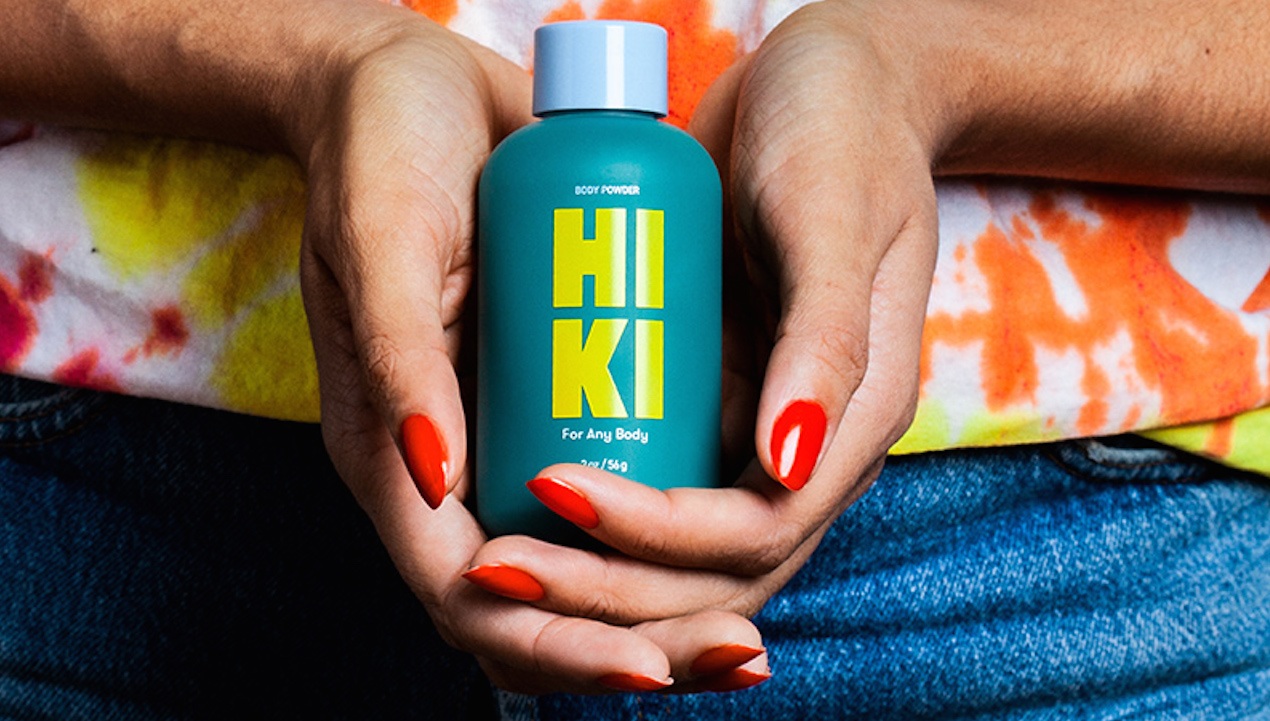
By September 2020, Wengroff said arfa had distributed more than 20,000 HIKI products across all 50 states during four months of giveaways. State Of, a menopause-focused brand, launched in August. The incubator was producing actual goods. But another product was accumulating quietly behind the checkout.
02 / The machinery attracts its own customers

arfa’s brands shared commerce technology and data infrastructure. To the founders, the store and the customer information behind it belonged together. Mahoney had seen what substantial technology resources could do at Glossier. Rebuilding that capability separately for every young brand was an expensive proposition.
After State Of launched, outside interest in the technology made Davis and Mahoney reconsider which business to pursue. In March 2021, arfa became Chord. It announced an $18 million Series A led by Eclipse Ventures and the acquisition of business-intelligence company Yaguara. Brand incubation gave way to selling software to other brands.
“Headless” described the architecture: the customer-facing storefront could be separated from the systems handling commerce underneath. APIs connected components. A merchant could pursue a distinctive shopping experience while drawing on shared infrastructure. The data layer would help explain what happened when people used that experience.
THE BRANDSHIKI + State Of
THE STACKCommerce + data
THE DATAAcross storefronts
The original software proposition competed for attention with commerce platforms such as Shopify Plus, Magento and BigCommerce. Chord’s appeal lay in combining flexibility with integrated data capabilities. Yet an architectural advantage is only useful if a buyer can absorb the work required to obtain it.
03 / The part buyers kept pointing to
By January 2023, Chord had announced a $15 million Series A extension, co-led by Bright Pixel Capital and Eclipse. The money would support data capabilities and larger customers. Later that year, a more consequential adjustment emerged: the data product became available without adopting Chord’s storefront.
In his 2026 account, Mahoney described prospects asking for the data component and being told they would have to replatform. The requirement made a desirable tool harder to purchase. His explanation of the change was admirably economical: “I got tired of hearing no.”
“I got tired of hearing no.”Bryan Mahoney, on the buying obstacle
That is the telling detail. The company had evidence of interest, but attached a condition that customers resisted. Separating the data offer from the storefront enlarged the set of businesses it could serve. The lesson for a founder is concrete: record repeated requests for individual components, especially when the rest of your package prevents a sale.
The financial adjustment was less tidy. In March 2025, investor M13 described a recapitalization and a $5.5 million seed round for the evolving business. Mahoney said earlier money was running short. A new product direction required investors to reconsider the company, too. Successive funding announcements conceal a good deal when treated as a simple rising staircase.
04 / What a merchant buys now
Today Chord presents a commerce data foundation, a context layer and AI tools. Its Copilot lets teams interrogate data in ordinary language; its audience and activation capabilities connect analysis to marketing work. The aim is to make information scattered across business systems usable together.
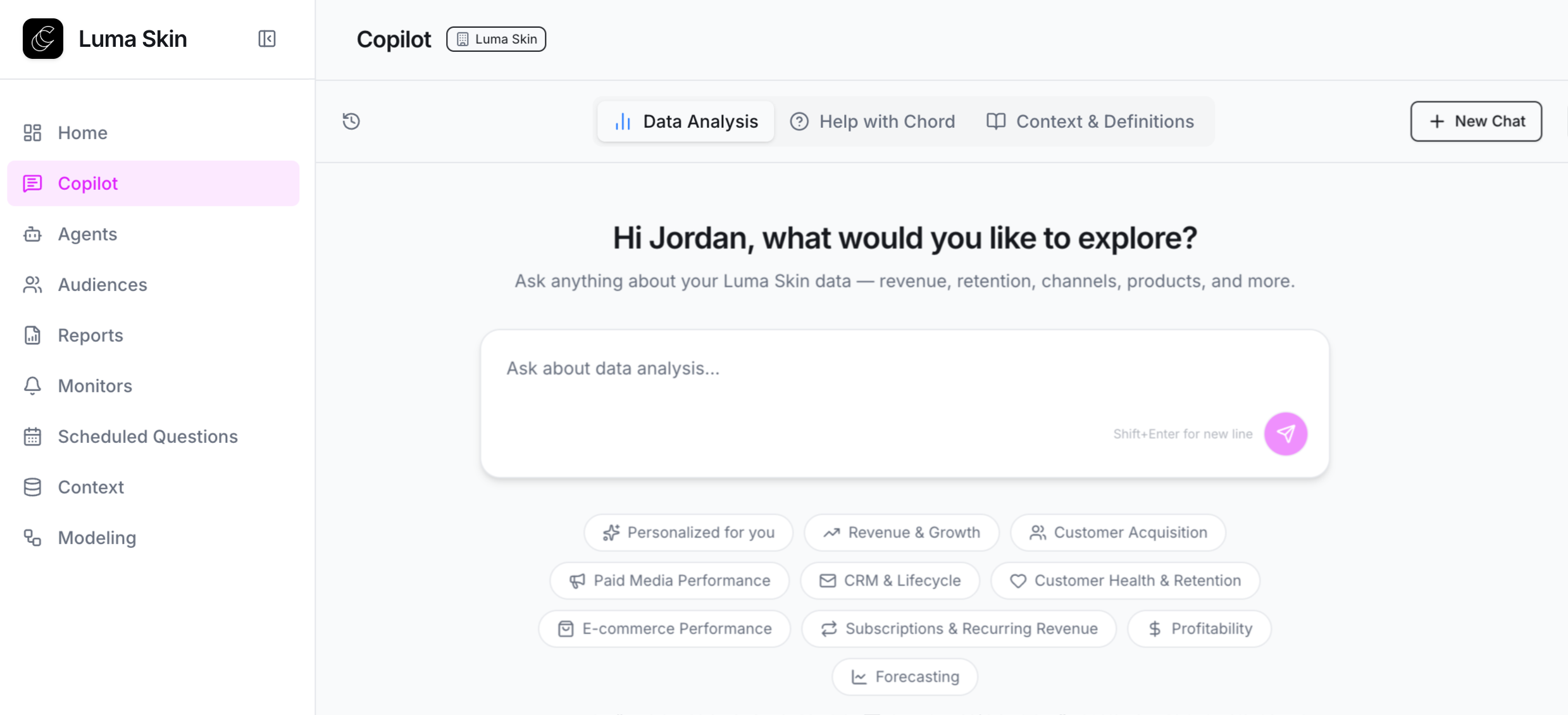
Named customers include Sonos, Blue Bottle Coffee, Sakara, Ruggable and Caraway. In April 2026, Chord announced another $7 million, led by Equal Ventures, for its AI context platform. The release described dozens of customer teams representing more than $1 billion in annual revenue. That figure belongs to the customers, not to Chord’s sales ledger.
A useful question for a merchant might be whether a campaign attracts repeat purchasers rather than merely cheap first orders. Chord positions its commerce-specific modeling against the work of assembling separate data tools. The practical comparison is how much analysis and integration your team must do itself.
Normal starting platform access. Actual scope and fees depend on the contract.
At that price, a small shop with simple reporting needs should examine whether enough decisions would improve to justify the expense. Fragmented channels, recurring purchases and meaningful marketing budgets make the problem more pressing. Poor inputs and nobody responsible for acting on the analysis would limit the value. Those are buying conditions, not a verdict on every merchant.
arfa began by asking consumers what their bodies needed. Chord learned to ask businesses what they wanted to buy. Both questions reward listening. The second also demands the willingness to let an elegant original plan lose an argument.