The first customer was in New York. The introduction came from a friend. Maulik Pandya dates the beginning of Evince Development to June 8, 2012, when opening a bank account gave the venture a working start. It is a pleasingly ordinary detail in a business origin story. Before the international clients and the portfolio of brands, somebody had to arrange a place for the money to go. Somebody also had to persuade a customer to send it.
Pandya’s career has since spread across custom software, Magento commerce tools and restaurant ordering. Follow the products, though, and a smaller question keeps appearing: what happens after the first transaction? An introduction can open a door. Keeping the customer requires a rather longer conversation.
One referral, then the work
Pandya came to entrepreneurship with technical experience and, by his own account, no previous sales or marketing experience. He left his job in March 2012. A mortgage and a young family were already part of the equation. He credits his wife, Jaimini Pandya, friends who helped financially, and Sanjay Rajpara, an early technical colleague, with sustaining the beginning. Rajpara remains part of Evince’s leadership.
“Support from Family and Friends is essential,” Pandya recalled. That sentence is less theatrical than the familiar image of the solitary founder. It also gives the supporting cast its due. A first client needs delivery; a founder needs people willing to stay through the uncertain part.
The technical thread continued as the business grew. His public credentials include Microsoft certification in .NET web applications, followed by Microsoft Certified Professional status in April 2012. In 2018, he signed an agreement with PBR Visvodaya Institute of Technology and Science to give students opportunities for industry training and work experience. Building a company had begun to include helping other people enter the work.
The shopkeeper’s side of the screen
EvinceMage, part of the Evince group, offers a useful view of the business Pandya built. Its Magento catalogue includes order exports, account approvals, review reminders and WhatsApp contact. There is also custom development, migration and server work. These are the parts of online commerce that tend to receive attention when they fail. An order export is unlikely to inspire poetry. A shopkeeper with orders to process may consider that an excellent arrangement.
Here, the customer is a merchant trying to make a store function. The appeal lies in a task completed, an administrative step shortened, a conversation made easier. It places Pandya’s wider technology work close to the everyday mechanics of selling.
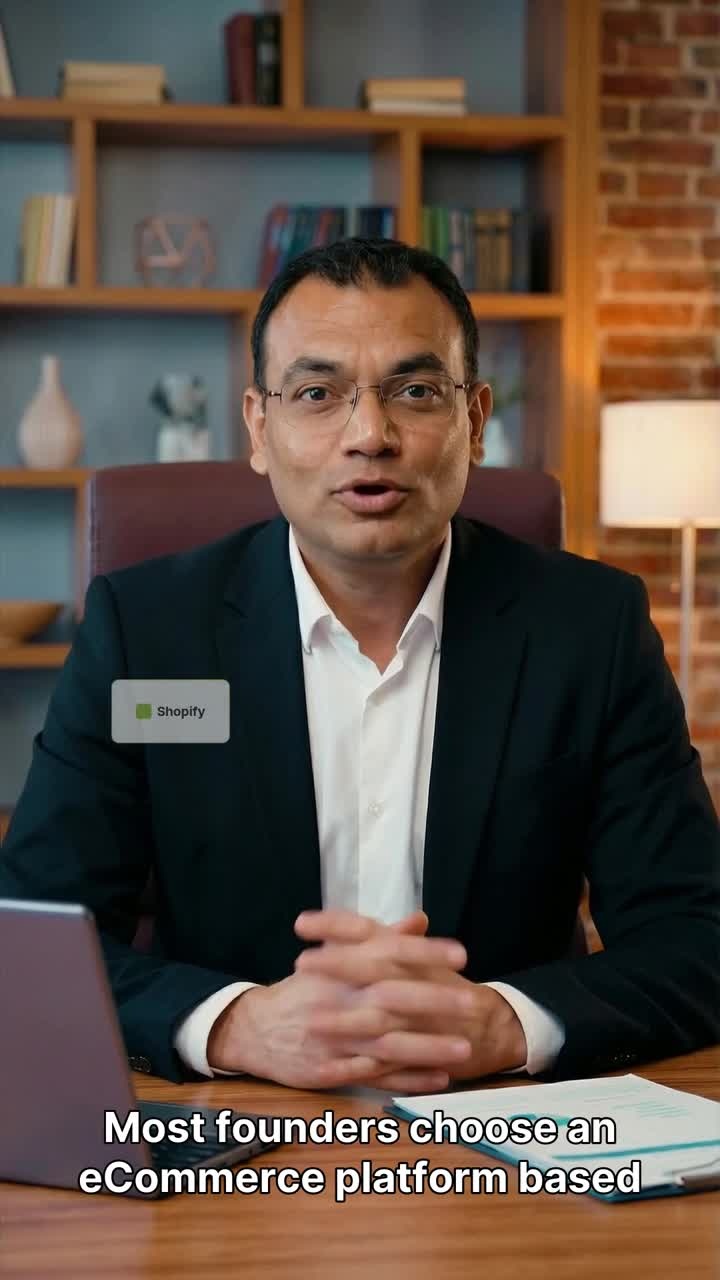
He carries that practical outlook into his advice about platforms. In a public video about e-commerce, he asks founders to consider future operating needs rather than simply following a friend’s recommendation or copying a competitor. Control, convenience, maintenance and the cost of moving later all belong in the decision.
A storefront chosen for an easy beginning can become awkward as the operation grows. His point is that the choice commits a business to infrastructure. The attractive screen is only the part the customer sees; the merchant must live with everything behind it.
Dinner becomes the next project
On Evince’s eighth anniversary in June 2020, Pandya introduced Eatance as a new brand for entrepreneurs. Its proposed support extended from applications to growth consulting, maintenance and digital marketing. He said Eatance would become his personal focus. The ambition covered the work around a product as well as the product itself.
That distinction matters in his story. A software agency can finish a defined assignment. A merchant still has to attract the next customer, manage the next order and keep the service running. Eatance brought those concerns together within a business Pandya was building for himself.
By November 2022, Eatance was announcing expansion into Canada with support from Toronto Business Development Centre. Its plans included restaurant websites and multi-restaurant ordering software. The intended customers ranged from restaurant chains to bakeries and food trucks. A business serving food from a truck and one operating several dining rooms have different working days. Both need a digital service that fits the operation already under way.
Seen beside EvinceMage, the move has a clear connection. Pandya was working on another place where a small business meets a customer through a screen, and where technical choices eventually show up in somebody’s daily takings.
A pitch with the price left on
Before the 2024 Eatance launch, Pandya put a pitch in front of his LinkedIn network and asked for suggestions. It began with recognisable irritations: ordering through an app and discovering a higher price, or waiting in separate lines to pay and collect food at an event. He described real menu prices, rewards, table booking and easier event purchases.
Asking for criticism made the pitch a working document. It also kept the proposition close to an experience a diner could understand. Nobody needs a tutorial in being annoyed by a queue.
In June 2024, Pandya and the team launched the no-markup ordering app at Toronto’s Collision conference. Eatance’s launch announcement described scheduled orders, meal-time coupons and rewards. It reported a beta beginning on May 17 with 15 participating restaurants in the Greater Toronto Area and approximately 212 orders in less than a month.
Those modest operating details are more revealing than a sweeping claim about changing an industry. Fifteen restaurants offer a specific starting point. Orders mean the product has entered an actual transaction. The next challenge is repetition: another meal, another merchant, another reason to open the app.
Figures reported by Eatance at its June 2024 launch. A snapshot of the beta, rather than a current usage total.
Its promise of lower ordering costs remained a product proposition to earn through use. A launch can explain the idea. The restaurant and diner get to decide whether it belongs in their routine.
Spartans who also like a dance floor
Evince calls its team Spartans. The metaphor appears repeatedly in Pandya’s business language, with its emphasis on discipline and coordinated effort. Fortunately, his own public biography allows room for a less martial pastime: Garba. He lists the dance alongside blogging and describes himself as a lifelong analyst, a husband and a father of two daughters.
That mixture supplies a welcome change of register. The person discussing enterprise software also likes a dance floor. His professional self-description ranges across coding, analysis, project management, sales, recruitment and mentorship. It reads like a list of the jobs a growing business eventually asks somebody to do.
The team’s public celebrations put names to the metaphor. Designer Jay Suthar has thanked Pandya and Rajpara for a culture of ownership, trust and delivery. QA engineer Priyansh Patel has described receiving Spartan awards at company anniversaries and credited the leadership’s guidance. These are personal accounts from colleagues, with the enthusiasm of an anniversary attached. They show how the company’s chosen language travels beyond its founder.
There is a distinction between calling a team committed and giving people reasons to remain involved. Recognition, room to learn and responsibility for the work are the details that make that distinction visible.
Keeping the right to decide
Pandya has expressed a clear preference for retaining control of his ventures. “Cash flow is a strategy,” he writes. His argument is practical: payment terms, prepayments and launch timing affect how much freedom a founder has. Funding does not settle the question of whether customers need the product.
“Cash flow is a strategy.”
Maulik Pandya
He says he would give up control when it became necessary to grow more effectively. That leaves room for capital while making the operating business the first concern. A company’s ability to pay for the next month is a rather persuasive form of independence.
The ambitions have nevertheless grown. In January 2024, Evince announced a ₹100 crore investment memorandum with Gujarat, with an intention to create more than 450 skilled jobs over five years. The plans covered infrastructure, research and international expansion. These were commitments for the coming years, carrying the obligation to turn a large announcement into places to work and work to do.
Earlier, Evince had announced its CMMI Level 3 appraisal in October 2022. Process discipline belongs in the same picture as expansion: more projects create more opportunities for a missed detail to become somebody else’s problem.
The next order is still the test
Pandya’s argument for small AI-enabled teams includes useful limits. He recommends starting with a specific task, preparing people to work with the tools and recognising when data or operations are too immature for AI to help. The tool purchase is only one step. The working habits have to change too.
His restaurant technology thinking follows a similar line. He has written about more relevant menus, better-targeted offers and event vouchers that simplify payment and collection. The attraction is a customer completing an ordinary task with less friction. A hungry person has limited patience for a demonstration of technical ambition.
By 2026, his attention was moving between Ahmedabad, Hyderabad and Toronto. He published a reflection on Hyderabad in August and has described recruiting in India for a wider product portfolio. The geography has expanded considerably since that first New York referral.
His writing about brand certainty supplies a connecting thought: customers come to trust repeated, dependable experiences. A feature can attract attention quickly. Confidence accumulates through delivery. For Pandya, that argument sits beside years spent building the systems through which merchants and customers meet.
The first introduction belonged to a friend. The continuing work belongs to the business: send the order through, keep the price intelligible, answer the question, make the next visit worthwhile. A second order looks small on a company timeline. It is quite a substantial vote.