Tom Cirrito has spent enough time around biotechnology to know where the industry keeps its valuables. The patents are written carefully. The processes stay close. The instinct is to build a fence around an invention and charge at the gate. At Varro Life Sciences, the company he co-founded and now leads from St. Louis, Cirrito is attempting a reversal: make the designs available, invite outsiders to improve and adapt them, then earn the business that comes when those ideas need to be manufactured reliably.
It is an unusual wager in a field organized around exclusivity, and Cirrito did not accept it on charm. When a 2024 agreement brought Varro $20 million in non-dilutive support from Vitalik Buterin's Kanro initiative, open sourcing the platform was part of the bargain. Cirrito has said his team took apart the plan line by line and revisited every cell in the financial model, roughly ten times. A scientist can admire an experiment. A CEO still has to make payroll.
The skeptic with a spreadsheet
The useful detail is Cirrito's skepticism. He did not present open source as destiny or as a halo polished for a press release. He described learning, arguing with assumptions and rebuilding the commercial logic until the numbers could support the philosophy. The resulting idea is plain enough to fit on a napkin: distribute the knowledge, expand the population of inventors, and become the supplier they trust when their designs require a specialized sensor.
Varro calls that component a micro-immunoelectrode. It is a small electrochemical biosensor built on semiconductor methods. The company is developing it for devices that analyze breath and sample indoor air. The sensor is the stubborn part - difficult to make consistently, expensive to improvise and useful across products that Varro itself may never think to build.
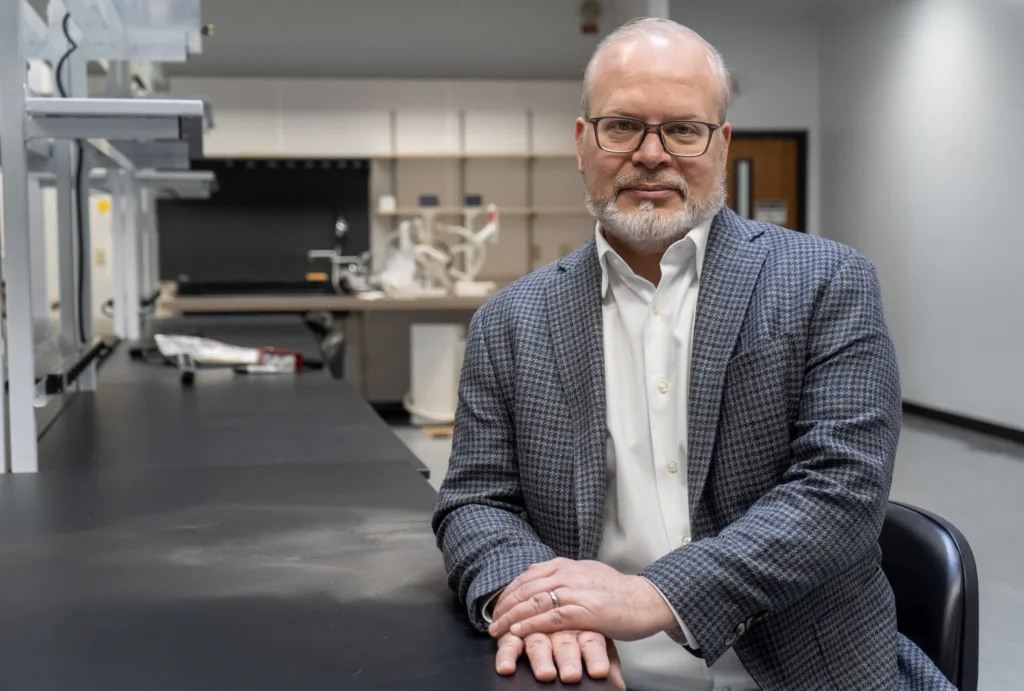
“When you have a technology that's powerful, it's wrong not to enable other people to innovate.”Tom Cirrito
That sentence contains both a moral claim and a market strategy. Cirrito has also said it would be arrogant for one small company to assume it can imagine every possible use. Opening the platform lets other researchers and builders explore. If one of those explorations becomes a real product, Varro hopes the creator will return for engineering help and production. The files can travel cheaply. Manufacturing confidence cannot.
Software veterans will recognize the shape of the model, but hardware refuses to be copied and pasted. A physical product brings suppliers, tolerances, calibration, documentation and quality systems. Varro's GitHub organization can host licensing terms and design material. It cannot mill a part, tune a production line or decide why two batches behaved differently on a Tuesday morning. Cirrito's opportunity lives inside that gap.
A career built across boundaries
Cirrito's path makes him a plausible caretaker of such a hybrid. He earned a bachelor's degree in biological sciences and a doctorate in immunology at Washington University in St. Louis. His doctoral record lists Emil R. Unanue as adviser and a thesis on antigen-presenting cells. From there, he crossed into the commercial grammar of science, working in life-sciences consulting at A.G. Edwards Capital Partners and as a biopharmaceutical equities analyst at Piper Jaffray.
He later joined Stemline Therapeutics as its second employee. Varro's official biography credits him with overseeing operations, drug development and business development, and with leading clinical, manufacturing and toxicology work for the program that became Elzonris from preclinical development through FDA approval. He was also a co-inventor of the company's SL-701 vaccine technology. Stemline went public on Nasdaq and was acquired in 2020 for $677 million.
The sequence is more revealing than any single title. The laboratory taught him how evidence is made. Finance taught him how evidence is priced. Stemline taught him how a promising program travels through manufacturing and regulation without becoming merely a promising program. Then came company formation: Filament BioSolutions, Biotagenics, Immunovent and AGelity BioMechanics, followed by a turn as managing partner at the venture studio Astonishing Labs. He also taught bioentrepreneurship at NYU Metrotech and served for years on a business and advisory board at the Alzheimer's Drug Discovery Foundation.
Completes his Ph.D. in Immunology at Washington University in St. Louis.
Joins as the second employee and works across development, manufacturing and business operations.
Founds the company first known as Y2X Life Sciences.
Returns as CEO and Chairman as Varro announces $20 million and an open-source commitment.
Varro opens its laboratory and R&D facility in St. Louis' Cortex district.
Varro gathers those experiences into one room. It needs a scientist's respect for the sensor, an analyst's suspicion of a beautiful story, an operator's appetite for process and a founder's ability to persuade people to attempt something without much precedent. Cirrito's public comments are most interesting when those identities disagree. He can call open access the right thing to do and, in the next breath, explain the volume economics of supplying a catalog of sensors.
Two brothers, one hometown
The company is also a family story. Tom's brother John Cirrito is a neurology professor at Washington University. John and university collaborators Carla Yuede and Rajan Chakrabarty developed the technology that underpins Varro's platform. During early work adapting it, John has recalled seeing a positive signal within seconds and immediately calling Tom. The scientific exclamation arrived first; a company had to carry the idea the rest of the distance.
Tom returned to his native St. Louis to work near the inventors and the institution. In 2025, Varro opened a laboratory and development facility in the Cortex Innovation Community. The space included ordinary lab fixtures and less ordinary ambitions: laser equipment, a clean room and plans for what Cirrito described as a semiconductor foundry. He has spoken about the pleasure of doing meaningful work with his brother. His phrasing was economical: “To do it with my brother, that's invaluable.”
“We are very proud to be here in St. Louis.”Tom Cirrito
The civic pride is not ornamental. Being close to Washington University keeps the company near research and talent. Building in Cortex places it among laboratories, startups and support organizations. Hiring locally makes the company part of the region's technical memory. Cirrito wants the eventual devices to carry a simple association: this was made in St. Louis. Cities often advertise innovation as an atmosphere. Varro needs it as a supply chain.
The factory is the argument
Open source can begin with a license, but it succeeds through participation. Varro has published a patent pledge, outlined software and hardware licenses, and started forming a community around its three core offerings: the sensor, a breath-based device and an air-monitoring system. The harder work is social. People must understand the material, trust the terms, contribute improvements and know where to go when an idea outgrows a prototype.
Cirrito's bet therefore has two clocks. The community clock measures documentation, relationships and the slow accumulation of credible contributors. The manufacturing clock measures repeatability, cost and volume. They need to meet. A lively forum without dependable hardware becomes conversation. A capable factory without external invention becomes an ordinary supplier searching for demand.
That tension gives Varro its sharpest lesson for founders outside biotechnology. Intellectual property is not automatically the scarce thing. Sometimes advantage sits in execution, in the processes that look tedious from a distance and feel indispensable up close. A company can loosen its grip on the idea if it tightens its command of making the idea real.
What builders can borrow
Cirrito's approach offers a practical audit for any founder deciding what to protect and what to share. First, locate the true bottleneck. If customers can reproduce the scarce capability after reading a document, openness may erase the business. If the capability depends on accumulated judgment, specialized equipment and a record of dependable delivery, sharing may instead enlarge the market around it. The distinction is less romantic than an argument about secrecy. It is a question about where the hard work actually lives.
Second, let the constraint interrogate the model. The funding condition did not automatically make Varro's plan sensible. The team's repeated spreadsheet review did. Cirrito's account suggests a useful discipline: translate a fashionable principle into unit economics, staffing, production capacity and customer behavior. If the logic survives there, it has earned the right to become a strategy.
Third, build the community as deliberately as the component. Opening a repository is an event. Maintaining a shared technical culture is a job. Contributors need legible rules, responsive people and evidence that their effort can travel beyond a demonstration. Varro has hired specifically for open-source community work, an acknowledgment that participation has an operating cost.
Finally, choose a home that shortens the loop. Cirrito's St. Louis decision places university collaborators, laboratory talent and the manufacturing buildout within reach of one another. The arrangement is not universally available, but the principle is: geography should reduce the distance between a question, the person who can answer it and the bench where the answer gets tested.
Cirrito has already changed his mind once, which may be the most encouraging evidence in the story. He approached the open-source condition as a skeptic, did the work and emerged convinced enough to put a clean room behind it. The experiment is still running. The files will show whether people want to build. The factory will show whether Varro deserves their return.