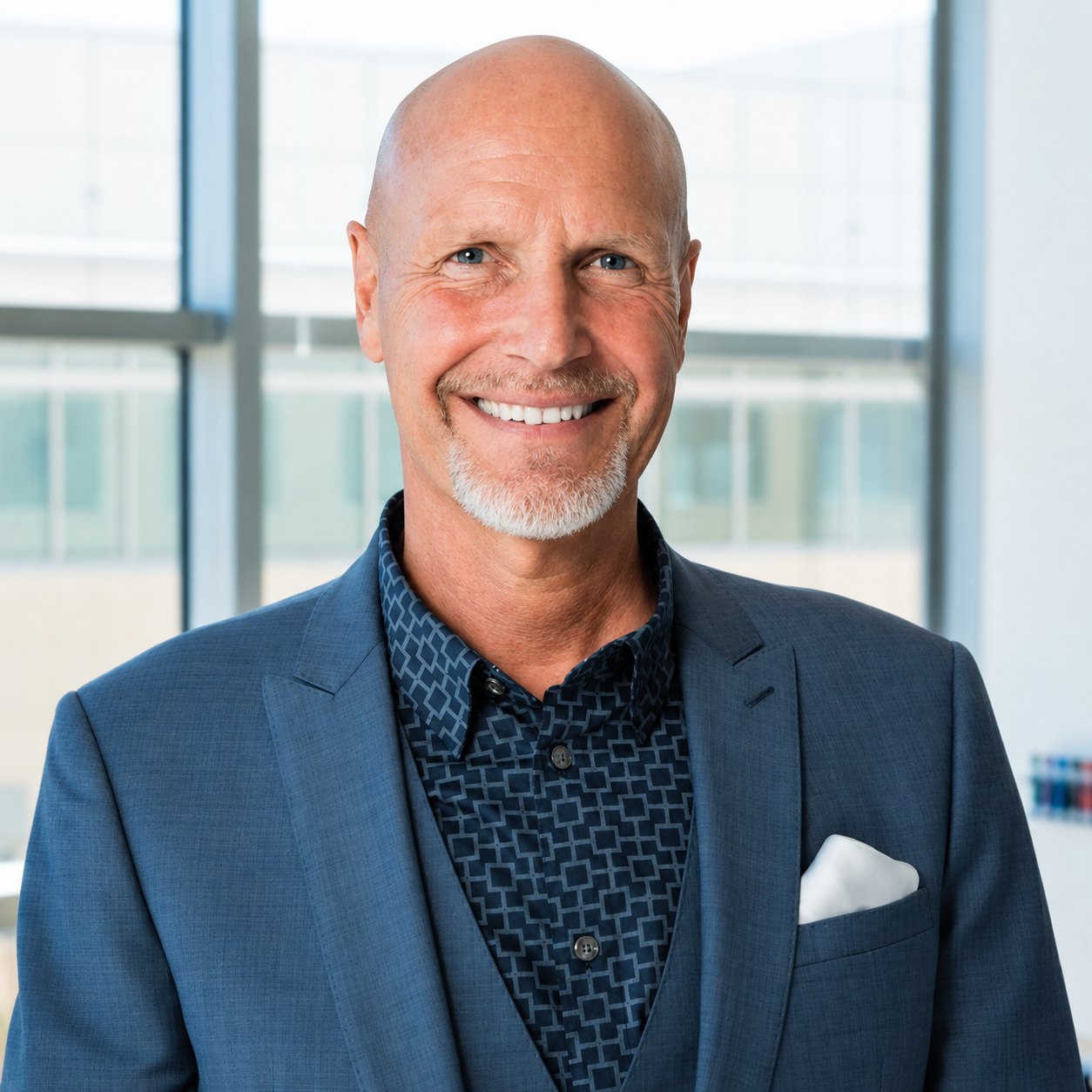
He doubled a spatial biology business before most people knew what spatial biology was. Now he runs one of biotech's most quietly powerful tool companies - from Minneapolis, of all places.
When Chuck Kummeth stepped down as Bio-Techne's CEO in late 2023 after a decade that grew the company from $311 million to over $1.1 billion in revenue, the board ran a thorough search. Internal and external candidates. The full process. They ended up choosing the person who had been running the company's fastest-growing segment from inside the building.
Kelderman became President and CEO on February 1, 2024. He joined the Board of Directors. Kummeth stuck around in an advisory capacity through July 2024 to ensure a clean handover - an unusual show of continuity in an industry that loves clean breaks.
The bet the board made was on operational fluency. Kelderman already knew what Bio-Techne sold, who bought it, and why they kept coming back. He understood the intersection of research tools and clinical diagnostics - the dual market that defines Bio-Techne's identity. The company is not a pure-play diagnostics firm and not a pure-play research tools supplier. It sits in the middle, which is both the risk and the opportunity.
His first major appearances as CEO came at the JP Morgan Healthcare Conference in January 2025, then again in 2026. These are the events where biotech CEOs lay out their thesis to the financial world. Kelderman's pitch: high-growth, underpenetrated markets. Spatial biology. Molecular diagnostics. Protein analysis. The infrastructure of precision medicine, before most precision medicine products have been invented.
In March 2026, he appeared at the TD Cowen Health Care Conference to discuss Bio-Techne's 50th anniversary and strategic priorities - a rare reflective moment. Bio-Techne was founded in 1976, making 2026 its anniversary year. Kelderman is the CEO navigating that milestone while also trying to define what the next fifty years look like.
Beyond the CEO role, Kelderman joined the CONMED Corporation board in September 2025 and serves on the StatLab Medical Products board - the latter a leading developer of diagnostic supplies for anatomic pathology. Pattern recognition: he gravitates toward companies that make the tools behind the tools.
"Sanger sequencing using CE, which is celebrating its 40th anniversary this year, is the gold standard sequencing technology. It helped discover novel biological findings such as the first breast cancer gene (BRCA1) and was used to complete the Human Genome Project in 2003."- Kim Kelderman, on the SeqStudio Genetic Analyzer launch at Thermo Fisher Scientific
"We are committed to working with global partners who share our vision of driving better health outcomes."- Kim Kelderman, on international diagnostics collaboration
The Bio-Techne board's description of Kelderman when he was appointed captures something real: "acts with integrity and achieves results through intensity, innovation, and involvement." The intensity part is visible in investor conference presentations - precise, data-anchored, no wasted words. The involvement part showed up in the years he spent actually running a segment rather than orbiting from the C-suite.
The board chairman Robert Baumgartner framed the appointment in plainly commercial terms: "Kim's experience running life science tools businesses with over $1 billion in annual revenue will be critical as Bio-Techne continues to execute its growth strategy." That's the job. Not inspirational leadership theater - operational execution at scale, in markets that require deep technical credibility to sell into.
Kelderman's strategic thesis, distilled from his public appearances: Life science tools and diagnostics are still underpenetrated. The markets that Bio-Techne serves - spatial biology, molecular diagnostics, protein analysis - are not mature. They're expanding as new research methodologies become clinical workflows, and as clinical workflows demand better tools than what existed five years ago.
The 50-year anniversary podcast appearance was a small but telling moment - a CEO willing to sit with a host and discuss institutional memory, portfolio evolution, and where things are headed. Most biotech CEOs operate in earnings calls and investor conferences. The fact that Kelderman showed up in a more reflective format suggests someone comfortable with the long view.
Know someone who should read this? Share Kim Kelderman's profile across your networks.