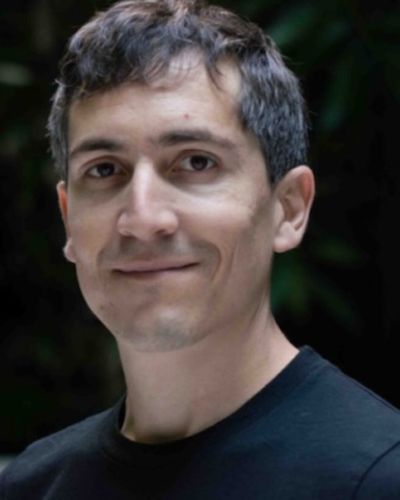
The Physicist Betting He Can Predict
Which Drugs Will Work
Most drug candidates fail. Not a few - most. Around 90 percent of drugs entering clinical trials never reach patients. Francisco Leport, co-founder and CEO of Gordian Biotechnology, has dedicated the last seven years to making that number smaller. His approach is not incremental. It is structural.
Gordian's platform does something that sounds almost too straightforward once you hear it: instead of testing one drug at a time in animal models, it tests hundreds simultaneously in a single animal. Each cell gets a different therapy. Each therapy gets a unique barcode. A machine learning system called Pythia reads the results against human disease signatures and scores which targets actually moved the needle. In osteoarthritis, Gordian's screen matched human clinical outcomes with 80% accuracy. That number matters because, for context, the industry's historical accuracy has been catastrophically low for diseases of aging.
The company calls this approach "mosaic screening." The animal it screens in is called a "Patient Avatar." The logic is as elegant as it is aggressive: why run 200 separate mouse studies when gene therapy vectors let you run 200 experiments in one?
Gordian leverages recent advancements in single-cell sequencing and gene therapy to discover and predict what drugs will be successful in a way that would have been inconceivable just five years ago.
- Francisco Leport, CEO, Gordian BiotechnologyLeport did not come to this through biology. His PhD, completed at Stanford at age 24, was in experimental neutrino physics. He worked on EXO-200, the Enriched Xenon Observatory, building a liquid xenon detector to hunt for a rare nuclear decay event called neutrinoless double-beta decay. It is not a background that screams "aging therapeutics." But look closer: both fields are fundamentally about signal extraction from noise at scale, and building instruments that detect things no one has detected before.
After Stanford, he joined Tesla as a Senior Research Scientist, working directly on battery technologies for the Model S. Then came a stint as Director of Engineering at Integrated Plasmonics, building a medical diagnostics device. Then co-founder and CTO at Tachyus, an energy software company where he served as AI and machine learning lead. The pattern is someone who does not so much switch fields as transfer fluency - someone who thinks in systems and is willing to spend years building the instrument before claiming any result.
The origin of Gordian is family-shaped. Francisco's mother, Dr. Cristina Rizza, is a retired cardiologist and biotech entrepreneur who collaborated with UC Irvine professor Dr. Michael Rose on longevity research. The experiment used fruit flies - and extended their lifespans to four times normal. Francisco helped analyze the data. The image stayed with him. So did something harder to quantify: watching his grandparents age, watching his parents age, and deciding that the biology of aging was a problem worth attacking directly rather than observing from a distance.
The founding story has a detail that functions like a litmus test: before Francisco and his co-founder, Dr. Martin Borch Jensen, signed papers or took money, they went to Burning Man together. Not for fun - for vetting. The founders used Noah Wasserman's "The Founder's Dilemmas" questionnaire, conducted reference calls on each other, and then decided that a week in the Nevada desert was the final exam. Francisco led the construction of an art car. Martin watched. The partnership held.
They met first at Cinderella Bakery in San Francisco in April 2018. Martin, a nanoscience PhD from the National Institute on Aging with years spent on fruit fly research at the Buck Institute, recognized immediately that Francisco's combination of AI, machine learning, and aging interest was the missing half of his own scientific profile. By October 2018, Gordian was incorporated. By February 2019, seed funding was closed. By early 2021, the platform had correctly predicted 13 of 16 clinical outcomes in an initial MASH study - metabolic dysfunction-associated steatohepatitis, a liver condition for which clinical trials routinely fail.
The $60 million Series A, closed in April 2024, came in from a revealing group: Founders Fund, Gigafund, The Longevity Fund, Arctica Ventures, Fifty Years, Athos Service GmbH, and Thomas Ebeling, the former CEO of Novartis. The mix of deep-tech venture capital and pharma credibility signals something. Big pharma is watching. In January 2026, Pfizer formalized that attention into a non-exclusive research collaboration to accelerate in vivo target discovery for obesity drug development.
Three Pillars of Gordian's Drug Discovery Engine
The company currently runs programs in osteoarthritis, MASH, heart failure with preserved ejection fraction, and pulmonary fibrosis - four diseases where clinical trial failure rates are high and the unmet need is massive. What connects them is aging biology. These are not diseases that strike randomly; they accumulate in bodies over time. Gordian's thesis is that the complexity of aging makes standard one-drug-one-trial approaches structurally inadequate, and that only a platform designed for heterogeneity and scale can generate the signal needed to find real targets.
The Pfizer collaboration in January 2026 was the first public signal from a major pharmaceutical company that this thesis has industrial credibility. Gordian is not just a service company - it has its own therapeutic programs - but the collaboration model also means its platform can generate revenue and validation simultaneously. For a company of 40 people taking on the biology of aging, that is a meaningful position to be in.
Francisco describes his ultimate goal in one sentence: "Our ultimate goal is to help people wake up every day, more capable than the one before." His Twitter bio strips it further: "creating time for all of us by curing age related diseases." Ten words. No caveats. At Gordian, that compression is the point - if you cannot say what you are doing in ten words, you have not understood it yet.
At 40 people and growing, Gordian is past the stage where Francisco is building art cars and making reference calls on co-founders. He is - by the team's own cheerful accounting - the "company dad." He was literally the first team member to become a parent. The team that set out to give everyone more time now has someone at the top who is personally acquainted with what having less of it feels like.
The Details That Define Him
Francisco Leport presenting on Gordian's in vivo screening platform - a direct look at how mosaic screening works and why the company believes it changes how drugs for aging get discovered.
▶ Francisco Leport - Gordian Biotechnology: Improving Drug Development Via In Vivo Screening (YouTube)Eight Things Worth Knowing
- Francisco completed his Stanford PhD in experimental neutrino physics at age 24 - working on one of the most esoteric detection experiments in modern physics before pivoting to biotech.
- His mother, Dr. Cristina Rizza, is a retired cardiologist and biotech entrepreneur - science runs in the family, though Francisco took it somewhere she did not predict.
- Before Gordian, he worked at Tesla as a Senior Research Scientist on battery technology for the Model S, reporting up through the company at a time when Elon Musk was directly involved in engineering decisions.
- Gordian's name is a reference to the Gordian Knot - the idea of cutting through impossibly tangled complexity with a single, decisive move. In this case, the knot is aging biology.
- Pythia, Gordian's AI analysis system, is named for the Oracle of Delphi. A machine learning system that predicts which drug targets will work - named for a prophet. The symbolism is intentional.
- The founders vetted their partnership with Noah Wasserman's "The Founder's Dilemmas" questionnaire before going to Burning Man. Both are standard due diligence. The order is unusual.
- Francisco is the "company dad" at Gordian - a title given affectionately because he was the first team member to become a parent. The team that works on giving people more time is led by someone now acutely aware of what that means.
- His Twitter/X bio contains his entire mission in ten words: "creating time for all of us by curing age related diseases." No bio photo. No list of credentials. Just the mission.