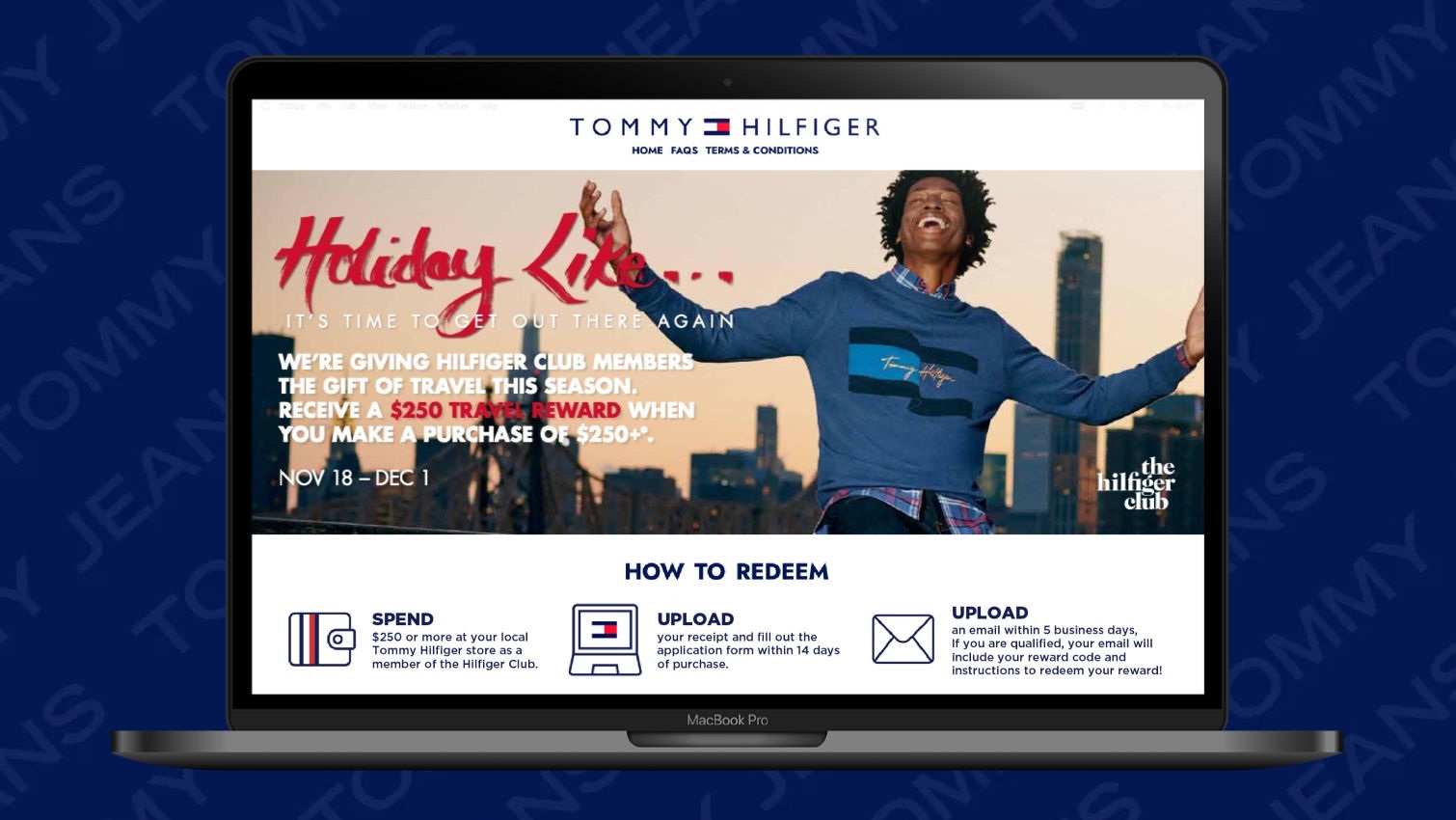
Black Friday usually arrives with a red pen. Tommy Hilfiger tried a travel itinerary. In a campaign run with TLC Worldwide, shoppers spending $250 could receive $250 in travel credit for hotels, rental cars and activities. The clothes kept their price; the purchase acquired a second destination. For a retailer rebuilding footfall after the pandemic, a visit to family was a more interesting sales argument than another percentage sign.
TLC reports an 86% sales increase, a 16-fold return on investment and new loyalty-club members behind 31% of qualifying transactions. Those are campaign-owner figures, best read as a specific commercial example rather than a forecast for the next retailer. The proposition itself is wonderfully legible: buy the outfit, get help with the outing.
The business behind the bonus
TLC occupies an unusually practical corner of marketing. It helps companies persuade people to open accounts, buy products, use apps and remain customers by attaching rewards to those actions. Travel, meals, cinema visits and wellness activities become part of the offer. Its buyers are brands; the people claiming the perks may never think much about TLC at all.
The company combines campaign strategy and creative work with software and a network of reward providers. Its current website describes operations across 50 markets and 15 worldwide hubs. Customers span banks, insurers, telecom operators, retailers and consumer-goods businesses. The breadth makes sense: a bank and a shampoo brand sell different things, but both need a compelling answer to “Why choose this one?”
That puts TLC between a marketing agency, a loyalty-technology supplier and a reward-sourcing business. A client can ask it to create a program or bring fresh rewards into an existing one. For the marketing department, the attraction is having the offer, the participation process and the delivery machinery considered together.
A $250 reward is not a $250 invoice
The economic idea is a gap between the value customers attach to an experience and the price a brand pays to provide access. TLC says its directly contracted partner network allows clients to deliver rewards for a fraction of their advertised value. A cash rebate has a familiar arithmetic. An experience depends on negotiated access, the offer’s conditions and whether the recipient wants to use it.
This is why the Hilfiger credit needs to be understood as travel credit. It is not $250 in unrestricted cash, and its face value does not tell us the campaign’s cost. For a buyer comparing proposals, the useful calculation includes delivery, campaign operations and the additional profitable business generated. A generous headline can start the conversation; it cannot finish the spreadsheet.
TLC’s commercial offer is sold to businesses through programs combining services and technology. The durable expertise lies partly in choosing the right incentive and partly in making it deliverable. The company advertises more than 100,000 reward experiences across eight categories, from dining and entertainment to learning and practical services. That catalogue creates options. Relevance still has to be earned.
When a bank says “SBAM!”
Banca di Asti offers a useful test of that relevance. The Italian bank wanted to attract Generation Z without sounding like a conventional bank addressing a younger person in borrowed slang. TLC’s 2023 campaign attached €300 in activity credits to the account proposition, supported by audience research and a deliberately punchy name: SBAM!
The reward put the bank into the customer’s life outside banking. TLC reports performance 65% above the historical average and a 96% retention rate among the targeted young customers. The bank returned in 2024, when the work expanded and refined customer contact points. A later campaign was commissioned too.
The repeat business matters alongside the percentages. It shows a client choosing to continue with the approach after the first outing. The transferable idea is specific: identify the audience you need, then make the incentive fit something that audience already values. “Young people like rewards” is a weak brief. Activities they can actually imagine booking give the creative team something to work with.
The perk that happens every week
For Three, the design problem was frequency. A concert ticket can be exciting, but an occasional event gives customers only occasional reasons to open an app. TLC’s account of the partnership describes a move toward rewards that fit ordinary routines.
Three+ Eats offered £5 off a £20 restaurant spend at more than 3,500 participating restaurants, available twice daily. The £1 Local Coffee Network offered one barista-made coffee redemption a week, with independent cafés alongside high-street names. TLC handled work including partner recruitment, network management, user experience and fulfilment.
The useful contrast is between the spectacular and the repeatable. Coffee asks less of someone’s calendar than a concert. A nearby restaurant can make a phone contract feel useful at lunchtime. The reward remains connected to the telecom brand even though the benefit is delivered elsewhere.
“solve” not “sell”
Alec Johnson, describing TLC’s approach in his year-end 2025 update
Three+ won International Loyalty Program of the Year - Europe at the 2026 International Loyalty Awards, a result TLC announced in May. Recognition adds weight to the example. The more interesting operating detail is the network underneath it: the coffee has to be available where people actually live and work.
The software has to finish the promise
COSMOS is TLC’s platform for putting these offers into circulation. Its Builder configures branded campaign websites and participation rules. Clients can use credits, qualifying tiers, direct claims or gamified mechanics. An API option inserts TLC rewards into an existing program, so a company can add reward content without commissioning an entirely new customer destination.
That flexibility helps explain where TLC fits against alternatives. Loyalty software such as Antavo can be part of a brand’s evaluation; so can internal campaign teams and conventional promotions. The decision depends on what the buyer needs to own and what it needs someone else to operate. TLC’s proposition bundles reward supply with the ability to launch and run the campaign.
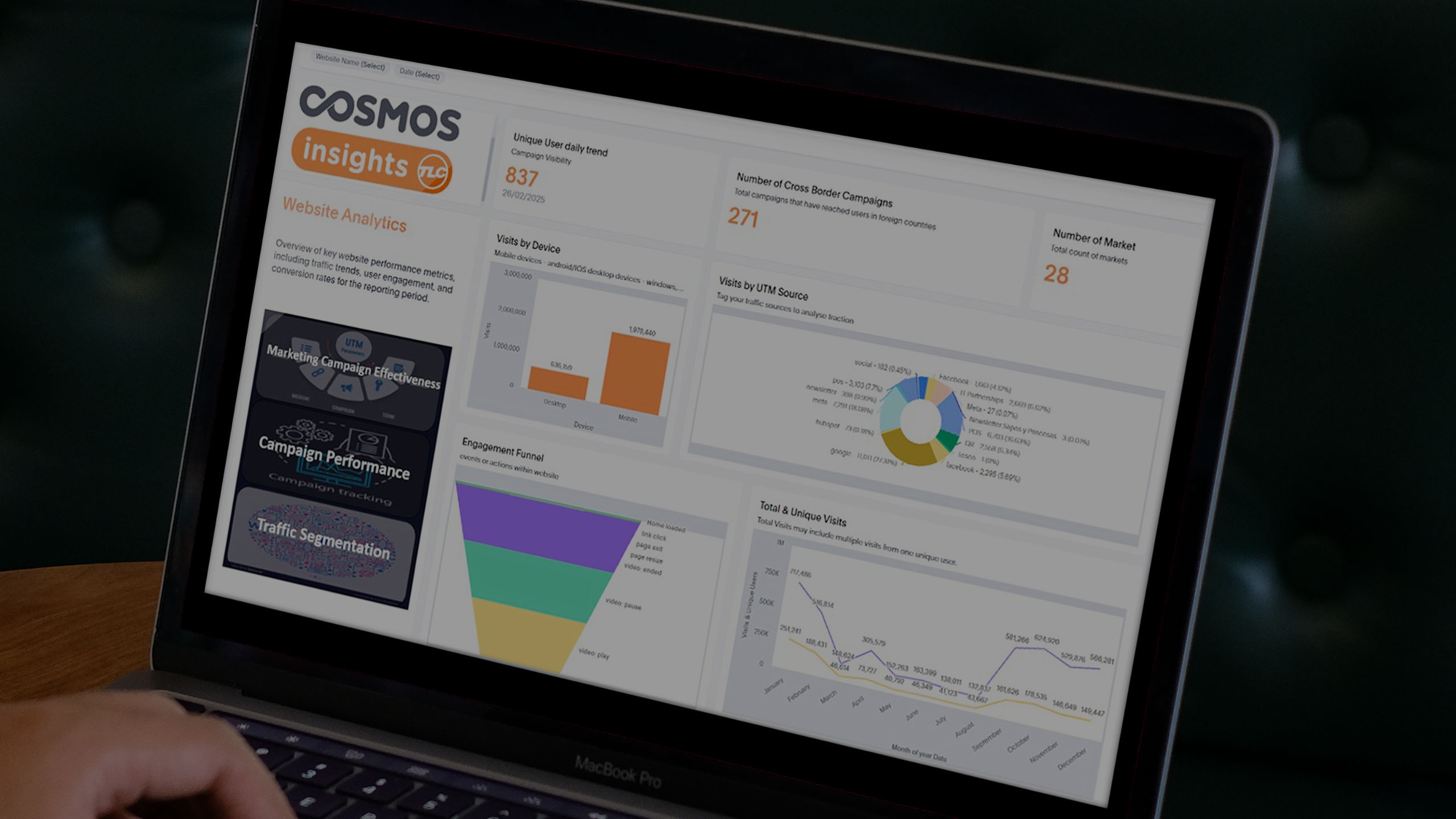
COSMOS Insights supplies the feedback tools: traffic and conversion tracking, audience research, surveys and live campaign dashboards. These help a team see where people arrive, participate or stop. The distinction matters. Getting someone to click an attractive offer is one event. Getting them through the claim process and back to the brand is a longer job.
The loyalty club needed more than another sale
MediaWorld’s case supplies the clearest account of an approach losing effectiveness. According to TLC, the electronics retailer’s internally developed program relied on discounts and promotions and struggled to distinguish itself in a category with infrequent purchases. Consumers could follow the next attractive price.
The response was MediaWorld CLUB, which rewarded participation as well as spending. Welcome gifts, birthday rewards, monthly campaigns, events and tiers created occasions to engage between shopping trips. TLC reports a 61% increase in purchase frequency.
That example also suggests a useful boundary. A program cannot manufacture a need for a new appliance every week. It can give a customer reasons to remain interested until the next purchase. The lesson is to choose a rhythm that suits the category. Coffee frequency and refrigerator frequency belong on different calendars.
The money followed the network
Founded in 1991 by Nick True, TLC acquired private equity backing from bd-capital in February 2024. Sky News put the transaction at an estimated £150 million, citing industry sources. That figure was a reported deal estimate, not a disclosed fundraising cheque.

THE FOUNDERNick TrueFounded the business in 1991 and remained on the board after the 2024 investment. Portrait: TLC Worldwide.
The transaction brought experienced loyalty executives into the picture. David Johnston, formerly chief executive of Aimia, became chairman. Nick True remained on the board, and Alec Johnson continued to lead the business. In his year-end 2025 update, Johnson described a team of 408 and 400 program launches during the year, alongside wider deployment of COSMOS.
There is an agency’s human infrastructure behind those numbers. TLC names a People Academy, a mentorship initiative called TLC Rise and employee recognition through the Frankie Awards. These are company descriptions of how it develops and recognises staff. For a business coordinating creative work, client demands and local merchants, the unglamorous skills of collaboration and follow-through have an obvious commercial purpose.
Start with the action. Then choose the treat.
For marketers, TLC’s cases suggest a sequence worth copying. Define the behaviour first: a new account, a larger basket, a weekly app visit. Choose a reward that belongs in the customer’s life. Make qualification and redemption understandable. Then measure whether the behaviour repeats and whether the economics justify continuing.
The same logic provides its limits. As a practical inference, a distant café, inconvenient booking rules or an offer that requires unwanted spending can weaken the apparent generosity. Access and ease matter as much as the headline number. The brand must judge the experience from the claimant’s side of the screen.
TLC’s proposition is most interesting at that small moment when a perk becomes useful: a booked night away, a paid-for activity, a coffee collected on the way to work. The commercial question is whether the customer remembers which brand made it happen when the next buying decision arrives.