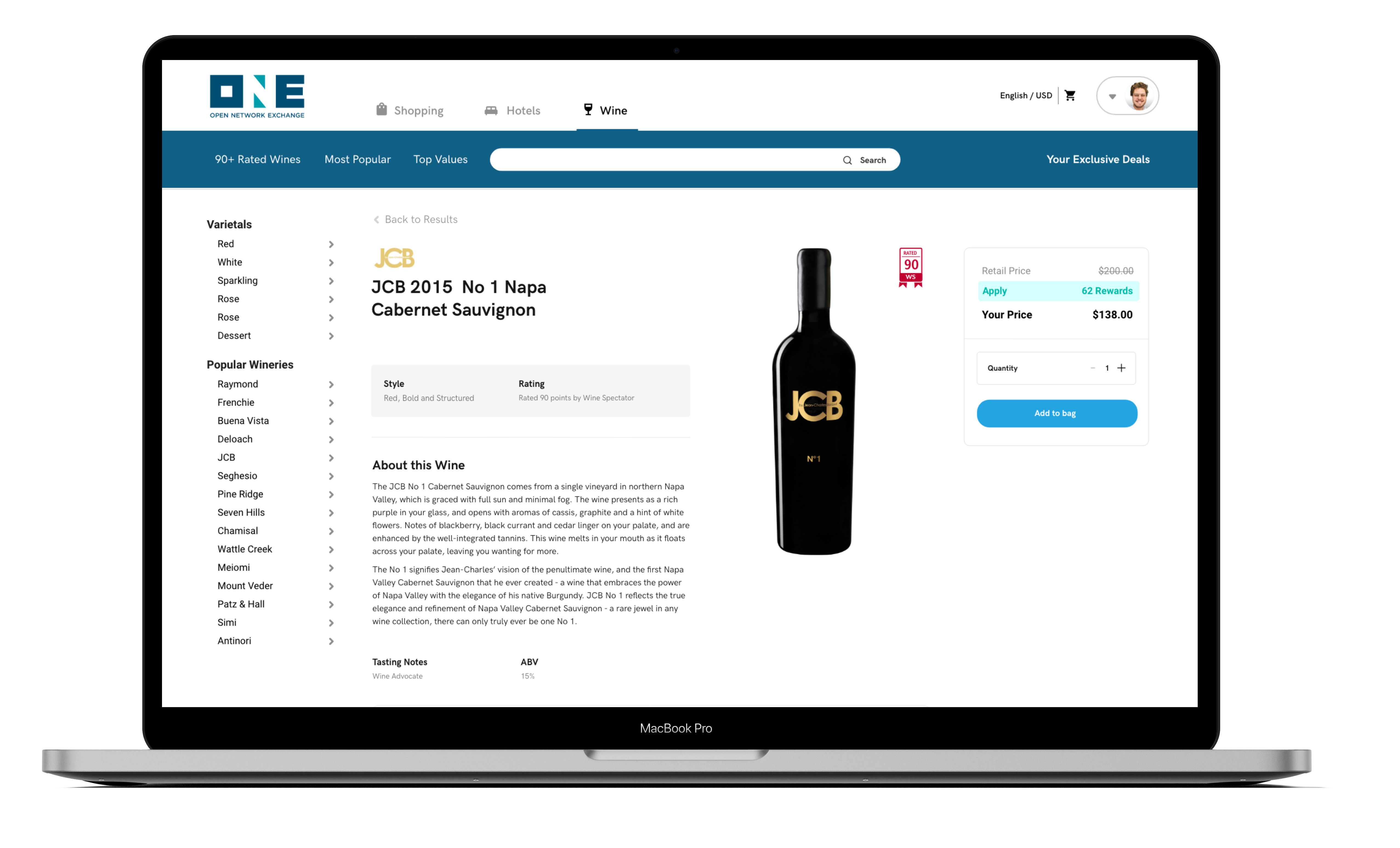
A bottle of wine is an unexpected place to begin a story about travel technology. The holiday is over. The passenger is home. But look at ONE’s marketplace illustration and there it is: a bottle, sitting inside a shopping page with travel categories in the navigation. It offers a clue to the company’s business. The next useful interaction with a traveler might have very little to do with booking another cruise.
- ONE supplies branded marketplaces, rewards technology and the operations behind them.
- Its buyers include travel brands and vacation clubs; their members do the shopping.
- The bet: more useful purchases between trips can help keep the next trip with the same brand.
ONE, short for Open Network Exchange, works on the long interval between purchases. A travel brand may have a customer’s attention during a holiday, then have to earn it all over again. ONE offers a way to put more things inside that relationship: hotel stays, merchandise, experiences and benefits, delivered through a marketplace carrying the partner’s identity.
A reunion with useful baggage
The company began in 2020, but the founders arrived with a history. John and Marcia Rowley had founded and owned International Cruise & Excursions, known as ICE. Their co-founder, Ciprian Morar, had worked at Expedia, helped establish its private-label business and later served as ICE’s chief technology officer. ONE reunited people who understood both the commercial relationships and the machinery needed to support them.

That background helps explain the offer. ONE can provide software, but it can also source inventory, operate a program and answer customers’ calls. The buyer can hand over several related jobs. A booking interface is only one part of the assignment; making the booking survive contact with an actual traveler is another.
There is a revealing snapshot from April 2022. At a Manila office hosted by Global Process Manager, ONE staff were training a customer service team for Princess Cruises’ MedallionClass passengers while Carnival executives visited. The photograph is ordinary office life. Its subject is the less visible half of travel technology: people learning how to help other people use it.

A bottle is part of the strategy
The marketplace gives a partner more occasions to be useful. A member can see account information, balances and membership levels in one place. The brand can offer additional benefits or a paid tier. ONE describes a service that can sit beside existing systems, which matters when an organization wants new capabilities without replacing everything it already uses.
Underneath sits a currency-conversion proposition. ONE’s technology accommodates loyalty rewards, vacation club points, promotional incentives and money, with program rules controlling the exchange into goods and services. Its technical materials also list cryptocurrencies. The point is practical: a balance becomes more interesting when someone can find a worthwhile way to spend it.
- 01Member
balance - 02Program
rules - 03Marketplace
purchase - 04Another
interaction
For suppliers, ONE promotes closed member distribution channels that protect pricing integrity. For brands, it offers a wider catalog and another route to customer spending. Those interests can fit together, provided the offer makes sense to the member. A reward that looks generous in a presentation still has to buy something appealing at checkout.
The commercial arrangement is configurable. ONE advertises software licensing and managed services covering sales, administration, sourcing and fulfillment. Its partner programs can include paid memberships. For a prospective buyer, the useful question is which of those jobs need outside help, and whether the added transactions can support the reward and service costs.
The expensive part was saying the booking number
The operational test is instructive. NICE’s case study says payment issues occupied 30-40% of ONE service calls, often taking 15-21 minutes. Existing self-service had adoption and system gaps. Analytics identified the concentration; ONE targeted payments, tuned speech recognition around booking references and customer speaking patterns, and automated the conversation.
“Once customers try the automated flow, they tend to stick with it.”
Ryan Romero, ONE, in NICE’s case study
2023 to 2024, as reported by NICE. Transaction growth, rather than company revenue growth.
The lesson is small enough to copy: identify a repetitive task, then test against the way customers actually perform it. A booking reference spoken slowly, with pauses, belongs in the design brief. The result also needs a precise label. More automated payments can indicate a better process; establishing profitability requires the costs on both sides.
From the back room to Bookit
In February 2025, ONE and Superlogic announced Bookit, a consumer platform combining travel, entertainment experiences and retail with rewards. The launch described access to more than two million hotel stays alongside flights, cruises and other purchases. It extended the proposition into a consumer-facing partnership: the inventory and engagement machinery could also support a destination shoppers visit directly.
The company is still selling that combined proposition to the industry. GNEX announced ONE as a Bronze Sponsor for its March 2026 Nashville conference, describing private-label software, sourcing and contact centers in the same offer. The mix is consistent: the technology is part of a larger operating assignment.
Competition makes the choice interesting. Arrivia also sells travel and loyalty capabilities to brands. Expedia Group offers a white-label travel platform. ONE’s case rests on its particular combination of commerce, reward currencies and program operations. Buyers should compare the work each provider will actually own, including service when a transaction needs attention.
My reading: this approach suits a business with an audience it can reach, benefits that audience wants and enough economic room to fund the program. A company needing only a booking screen should compare narrower options. For everyone evaluating the larger package, the bottle offers a useful test. Would your customer want it, understand the price and come back for something else?