Before Tim Larson was selling the idea of a different kind of house, he was helping people make a different kind of yearbook. In 1992, he arrived at Jostens as an intern. Sixteen years later, at 34, he became its president and chief executive. The teenager who had worked with the product was now responsible for the company behind it. There are more conventional routes to the executive suite. They generally involve fewer school photographs.
Today Larson leads Champion Homes, the factory-built housing producer, after taking over as president and CEO in December 2024. Yearbooks, recreational vehicles and houses make an unusual collection of career stops. Look at the work between the products, though, and a pattern appears: helping customers navigate a purchase, giving salespeople better tools, and connecting the people who make something with the people who use it.
That pattern matters in housing. A factory can make a home; getting a buyer from initial curiosity to a place to live requires rather more coordination. Larson’s career offers a way to understand why Champion has been spending attention, money and management effort on what happens beyond the factory floor.
First, there was a school yearbook
Larson was born and raised in Detroit Lakes, Minnesota. He knew Jostens as a class representative and yearbook editor before joining the business. The connection ran through his family, too. Both parents were teachers, and his father advised a yearbook. As Larson later recalled, “My father was a yearbook adviser.” Photographs brought home for cutting gave him an early encounter with the work.
His interest in computers gave that familiarity a practical use. After his senior year, Jostens asked him to teach students how to create yearbooks with computers at its yearbook camp. Here was a useful combination: someone who understood the technology and had recently been on the receiving end of the instructions.
He went on to study strategic communication at the University of Minnesota, spending the first two years as a full-time student. From 1994, he combined full-time work with study, completing his degree in 2001. Before joining Jostens full time, he also worked in the university’s sports information operation. The dates make an appealing correction to the tidy graduation-then-career biography: his career was already underway while the degree was still being assembled.
From Jostens intern to president and CEO. Larson was 34 when he took the top job.
A printed book, an online system
At Jostens, Larson moved through technology, e-business, marketing and general management. He became senior vice president and general manager of its Memory Book business in 2005, with responsibility spanning sales, manufacturing, finance, human resources, marketing and technology. It was a broad operating assignment at a business whose finished product still arrived on paper.
The work also included internet tools such as Yearbook Avenue, YearTech Online and Jostens Ring Designer. These products changed what customers could do before anything was manufactured. A student could work on a page; a buyer could explore a ring design. The digital part of the relationship sat upstream of a physical object.
There is a particularly concrete entry in Larson’s record: his name appears alongside Gary Lee Nelson, Eric J. Loring and Xia Chen on the U.S. patent “System and method for yearbook creation,” granted in July 2010. Its description connects online yearbook planning and creation with the production process that turns submitted pages into printed output.
The patent is a useful companion to the job titles. It describes the unglamorous connections a customer rarely sees: images, databases, completed pages and production systems. An online interface has to hand something usable to the factory. Otherwise, the attractive screen is merely a well-dressed delay.
- JostensDigital tools + physical keepsakes
- PolarisDealers + the ownership experience
- ChampionHomebuilding + the buying process
Thirty thousand miles of listening
Larson’s next major assignment took him to Polaris in August 2013, in a newly created role leading global customer excellence. The company made vehicles sold through dealers. Its leadership wanted a more coordinated experience across the different points where customers encountered the business, including sales, service and digital channels.
He began by going to see the system at work. Larson described traveling more than 30,000 miles, “listening to our dealers and customers.” A contemporary account put his visits at more than 100 dealerships. A dealer visit offers a different view from a head-office presentation: the relationship is happening there, with its useful details and awkward handoffs intact.
In January 2014, Polaris brought sales, sales operations, service, corporate marketing and its interactive team into a unified group under Larson. The organizational change gave the customer-experience assignment departments and responsibilities to match its title. People who had handled separate portions of the relationship were now working inside a common structure.
That sequence is revealing without requiring a personality test. First came visits to customers and dealers; then came a reorganization of the work around them. Listening had an operational consequence. The word “experience,” so easy to leave floating in a presentation, acquired a reporting structure.

“listening to our dealers and customers”
Tim Larson, describing his first miles at Polaris
The customer gets a front door
Larson joined Champion as chief growth officer on May 3, 2021. His remit included direct-to-consumer growth and brand transformation. When the board appointed him CEO and a director on December 13, 2024, succeeding Mark Yost, it specifically credited his work on the digital direct-to-consumer strategy and the expansion of the company’s retail footprint.
That background helps explain the appointment. The board was elevating an executive who had already been working on how buyers find and engage with Champion. At the time, Larson described his intended work as being “in support of both homeowners and our retailers.” The two audiences would remain central to the task.
Housing brings a different scale of commitment from a yearbook or a vehicle. The purchase also reaches into matters outside the product itself. A floor plan does not answer a question about a permit. A factory schedule does not prepare a site. The usefulness of a retail operation depends partly on whether it can help a customer through those adjoining decisions.
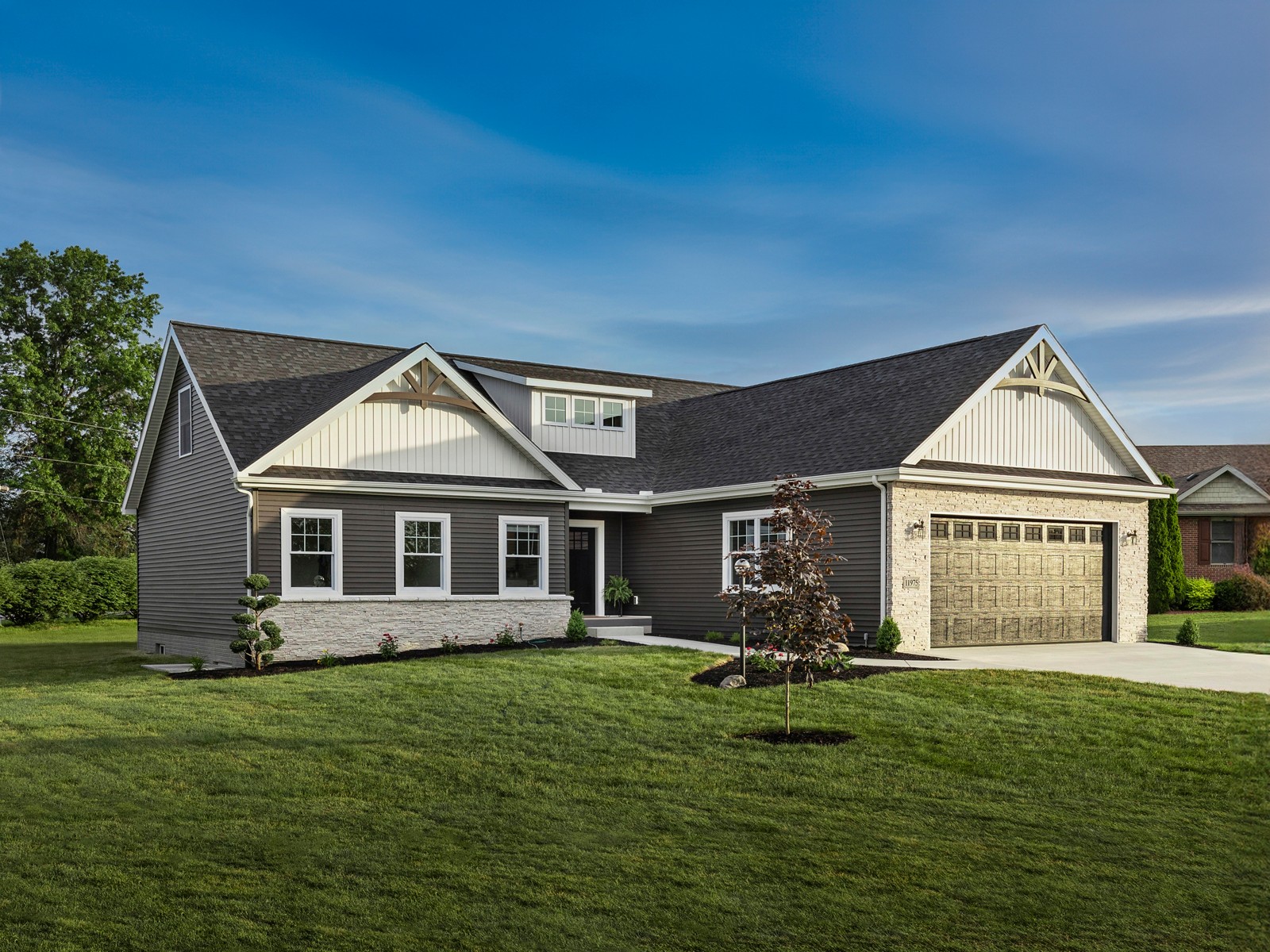
Growth, measured in places to buy
Champion’s agreement to acquire 11 Homes Direct retail locations, announced in May 2026 and completed that August, made the retail emphasis tangible. The locations extended across Arizona, California, Colorado, New Mexico and Oregon. Homes Direct’s buying process included help with permits, financing, home selection and site preparation. The acquisition brought those services, employees and locations into Champion’s network.
On October 5, 2026, Champion announced another agreement, this time to acquire Timberline Homes’ nine retail locations in Alabama, Mississippi and Florida. The deal remained pending, with completion expected in the fourth quarter of Champion’s fiscal 2027. Larson’s stated rationale centered on expanding the regional retail footprint and improving the homebuying experience.
These transactions follow the logic of his earlier assignments: put more of the customer’s interactions within reach of the business. They also introduce the ordinary difficulty of acquisitions. Locations must become part of an operating network; employees and customers need continuity. A purchase agreement gets the expansion started. The experience buyers eventually receive will be the more demanding test.
A larger map still needs local knowledge
Larson has also been changing who coordinates the work. In June 2026, Champion named Wade Lyall chief sales officer, John Kastanek chief customer experience officer and Andrew Houser senior vice president of manufacturing. The appointments accompanied the planned retirement of operations executive Joseph Kimmell. The three roles put explicit leadership around selling, customer experience and making the product.
Kastanek’s background includes 17 years at Polaris, giving the leadership team another connection to the vehicle manufacturer. At Champion, his responsibilities had included customer insights and feedback that informed product, engineering, manufacturing and operational decisions. The appointment continued a familiar organizational idea: customer information should reach the people making decisions about the product.
The commercial results demand a more qualified reading than an expansion map alone. For the quarter ended June 27, 2026, Champion reported sales of $710.2 million, up 1.3% year over year. Net income attributable to the company fell to $49.2 million from $64.7 million. Selling more and earning more were moving in different directions. For Larson, the task includes making the growing network work economically.
The part beyond the factory gate
In September 2026, Larson joined UMH Properties president Sam Landy at the U.S. Chamber’s Housing Summit for a discussion on scaling housing supply, moderated by Manufactured Housing Institute CEO Lesli Gooch. The discussion connected manufactured homes with the practical requirements around them: land, utilities, roads, site preparation, permits and financing.
It is a fitting setting for the current chapter of his career. Champion can control important parts of production and distribution, while a buyer’s progress still depends on decisions made elsewhere. Better coordination has value precisely because the process crosses so many boundaries. The factory gate is only one of them.
The distance from a Minnesota yearbook camp to a national housing discussion is considerable. The connecting work is easier to recognize: teach people how to use the tools, understand the seller’s role, and make the passage from interest to finished product less cumbersome. Larson now has houses, stores and a public company to organize around that work. The next chapter will be measured in how well those pieces fit together for the person trying to buy a home.
Follow the work
Company pages, career records and further reading.