Susan Tynan had four National Parks posters from hiking trips with her sister. She took them to a frame shop. Each cost $400 to frame. The total was $1,600, followed by weeks of waiting. The trips had supplied the pleasure; displaying their souvenirs had supplied an unexpectedly expensive administrative chore.
- Framing, online and in stores.
- Owned manufacturing.
- 48 stores; continuing operating losses.
There is a particular category of household possession that lives between being acquired and being enjoyed. A print stays rolled in its tube. A photograph stays on a phone. A child’s drawing goes into a drawer because buying a frame requires another decision, another errand, another estimate. Framebridge, which Tynan founded in 2014, sells a way out of that waiting room.
Its proposition is straightforward. Upload a photograph, send in an object or artwork, or take it into a store. Choose a frame and mat, with help if needed. Receive the finished piece ready to hang. The interesting question is what has to happen behind that apparently modest promise.
02First, own the difficult part
In her How I Built This interview, Tynan described an early plan to have outside framers make the first orders. Conversations with potential suppliers changed that plan: she could not be sufficiently sure of quality. Once the business needed a warehouse for materials, buying equipment and making the frames itself began to make sense. A consumer website was becoming a manufacturer.
That choice explains much of Framebridge’s place in the market. An independent frame shop can offer intimate advice and a wide selection. Michaels offers a national retail alternative. A ready-made frame asks you to handle the fit yourself. Framebridge combines a curated assortment, centralized production and direct ordering. It tries to make the custom job predictable enough to buy without a negotiation.
The important standardization happens around the object. Dimensions change; a repeatable production system can still handle them. Buying materials at volume and concentrating the work give the company ways to manage cost. But every additional order also creates an additional physical task. An advertising campaign cannot cut a mat or join a corner.
The first holiday season exposed that dependence. Tynan has recalled early operational trouble; in her NPR interview, customers were upset about late gifts even when the framing was right. A birthday present has a deadline that a beautiful finish cannot renegotiate. Capacity belongs inside the customer promise.
“There were too many options, the consultation was uncomfortable”Susan Tynan, on the framing trip that started it
03A price you can inspect
Today’s pricing makes the trade-offs visible. A digital print up to 9 by 12 inches costs $90 to print and frame; a physical item in that size band costs $115. At 18 by 24 inches, those base prices are $175 and $200. There is a $10 mail-in fee, and XL and Grand frames carry a $25 shipping fee each. Specialty finishes and upgrades add more.
That is a useful improvement in legibility, though it does not make custom framing an impulse purchase for every budget. A standard-size poster may need only an inexpensive shop-bought frame. An unusual or valuable piece may call for a specialist’s assessment. Framebridge occupies the space where a customer wants custom work and fewer decisions, and accepts a curated selection in return.
For a customer, the practical advantage is being able to see a decision taking shape before committing an object to it. Advice and previews reduce the uncertainty.
The range extends beyond wall frames to tabletops, multi-photo arrangements and gallery walls with life-size hanging guides. Free Designer’s Choice recommendations include mockups. The invitation is particularly useful for people who know what they want to display but cannot tell whether a black border, a wide mat or a cluster of smaller frames will make it work.
04The internet needed a shop
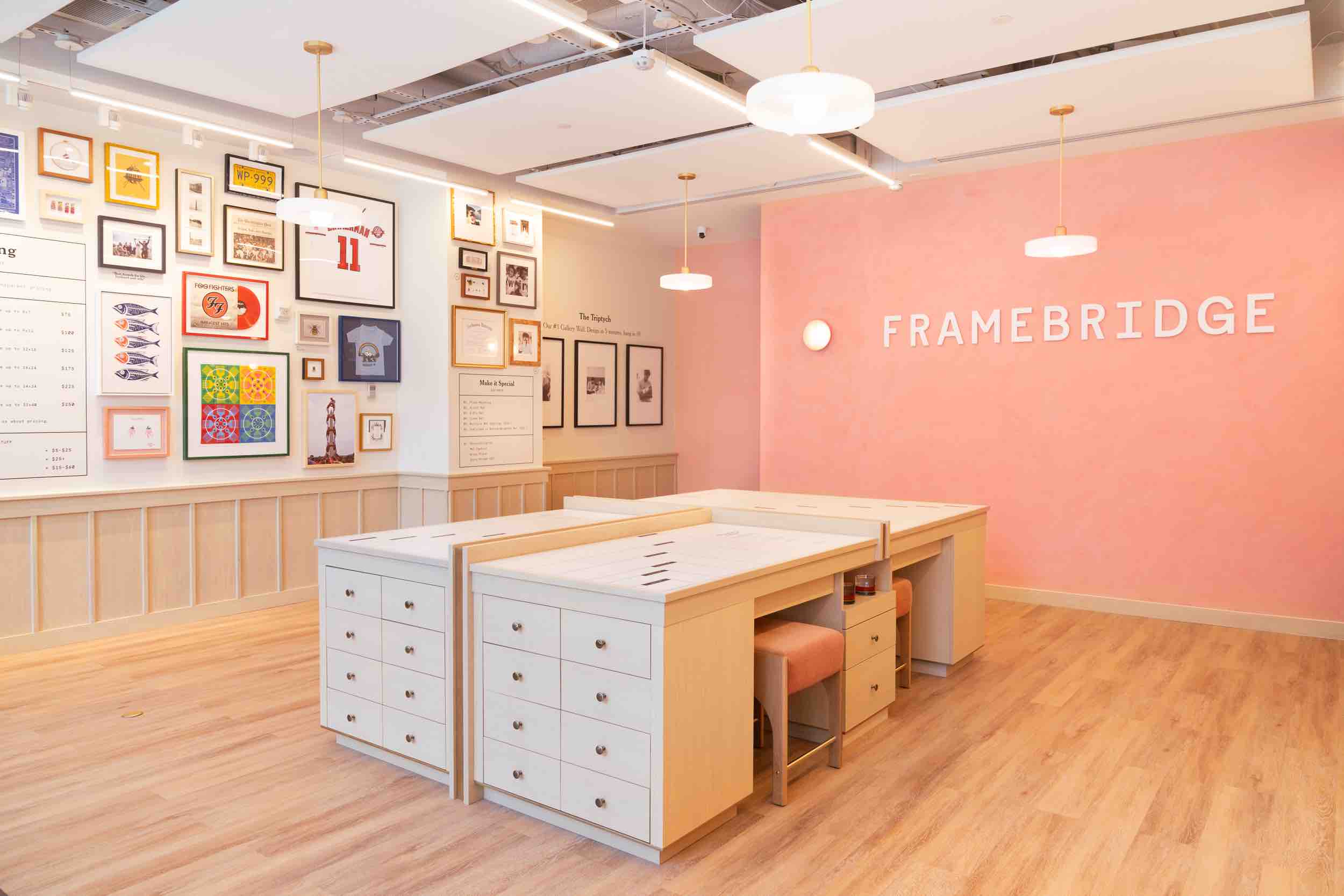
Framebridge opened its first store in Washington in 2019. In its own account, the move answered customer demand for the combination of ease, customization and design help. It is easy to understand the attraction. Mailing an irreplaceable drawing requires trust. Walking it to a person gives that trust a face.
The stores also complicate the familiar story about online brands escaping retail. Here, a shop can help someone start a purchase they finish at home. A person can inspect materials in daylight, consider the decision and return to the same order later. The workroom can remain elsewhere while the conversation happens nearby.
That movement between channels eventually put pressure on the company’s original commerce software. A Shopify case study describes maintenance swallowing engineering time and sales systems communicating poorly. Framebridge switched platforms, working with Pattern and SDG, and built a persistent cart tied to the customer profile. Shopify reports a 7.5% increase in overall conversion after the move. It is a vendor-reported result, but the underlying lesson is concrete: keep the specialized framing tools; stop rebuilding every ordinary retail function.
05More walls, more patience
The customers now include businesses as well as households. Framebridge’s corporate program serves commercial interiors and gifts; its published examples include The LINE DC and Lands’ End. Designers and artists have their own programs. These customers bring a different problem: making many coordinated pieces arrive where they belong, rather than finding one frame for one photograph.
Design partnerships widen the aesthetic range. A conversation that began when Tynan approached artist Josh Young about commissioning a painting in 2020 became a frame collaboration in 2024. One delightfully specific difficulty was making the Corso Como style look loosely hand-painted. Early attempts, the company says, were too perfect. Consistency still needs room for character.
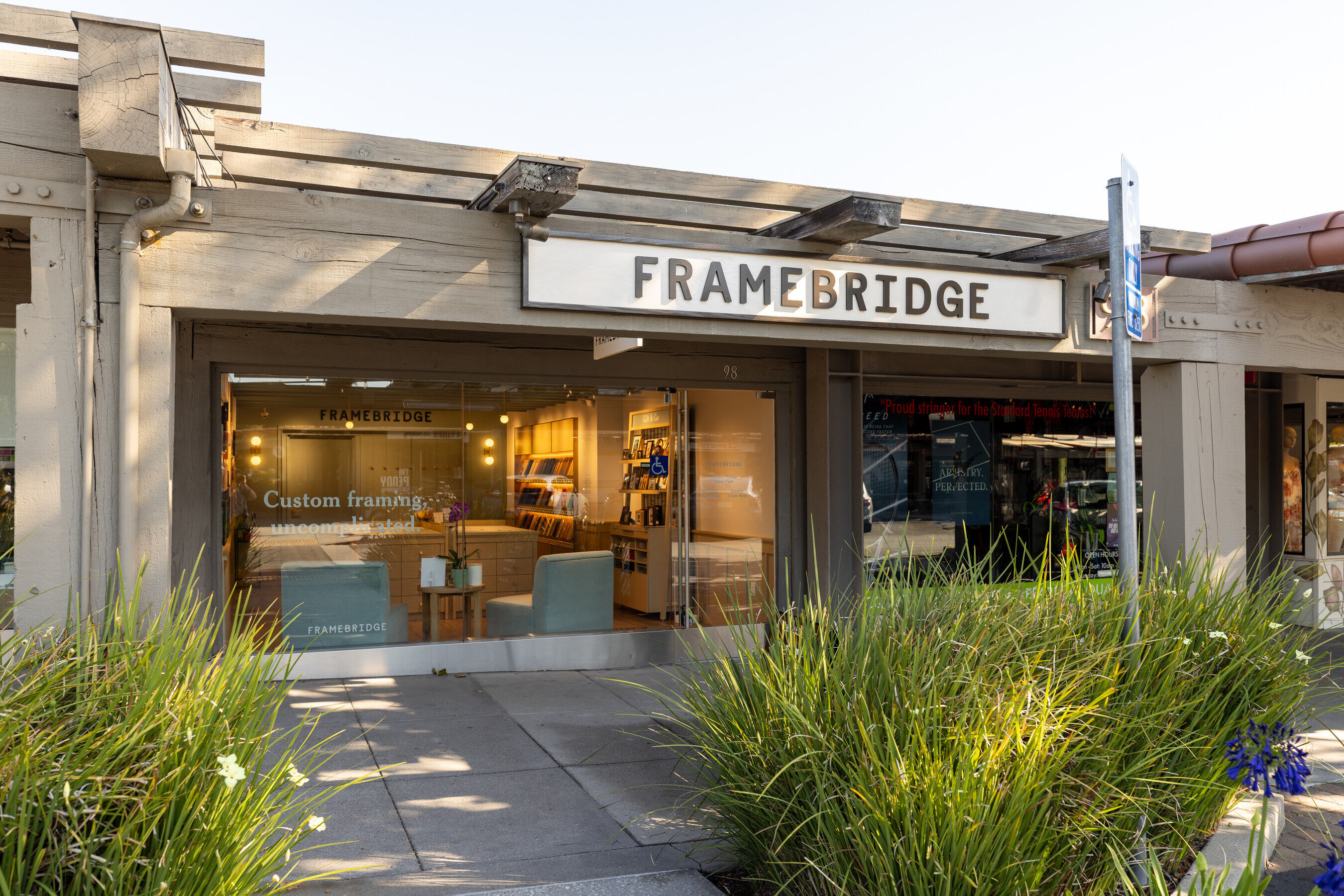
Expansion has required patient ownership. Graham Holdings acquired control in May 2020; Tynan pointed to its long-term orientation. By June 2026, Framebridge had 48 stores and four manufacturing facilities. Revenue increased in the first half, but Graham still reported significant operating losses. More storefronts establish reach; they do not establish profitability.
The transferable idea is to identify what keeps a willing customer from acting. For Framebridge, that includes uncertain pricing, bewildering choices and the awkward passage from a treasured object to a finished wall. Simplify those decisions, then build enough operational capacity to honor them. The economics depend on sufficient demand, reliable production and capital that can wait. The ordinary drawer full of unframed things contains an opportunity. Emptying it is a factory job.