A wall of little fabric samples makes a surprisingly good explanation of Michaels. In the chain’s new-format stores, its Swatch Bar puts 1,000 samples from the online assortment within reach. Feel the cloth. Scan a code. Order it home. The arrangement addresses a stubborn problem with buying fabric on a screen: pixels tell you very little about how something will feel against your skin.
- Keep the familiar: Michaels bought Joann’s intellectual property and private labels, including Big Twist.
- Follow the demand: fabric now appears in nearly 90% of Michaels stores.
- Make the trip useful: framing, instruction and personalization extend the business beyond supplies.
The Swatch Bar belongs to a larger experiment. What happens when a craft retailer becomes the place people turn after their other specialist shops disappear? In Michaels’ case, the answer involves sewing machines, birthday balloons, familiar yarn and an unusually revealing distinction: a business can fail while the things its customers love doing remain perfectly alive.
The hobby survived the shop
Joann’s closing left sewists and knitters with habits that needed a new address. Its problems included sluggish demand, inventory shortages and competition; it entered bankruptcy twice within a year before liquidation. Michaels did something narrower than rescuing the chain. In June 2025, it acquired intellectual property and private-label brands. The physical stores were outside that purchase.
That distinction matters. A knitter attached to Big Twist might follow the yarn. Michaels could offer that continuity through its existing stores without taking over Joann’s entire property footprint. The purchase price was not disclosed. Any claim that this was a cheap acquisition would therefore be guesswork.
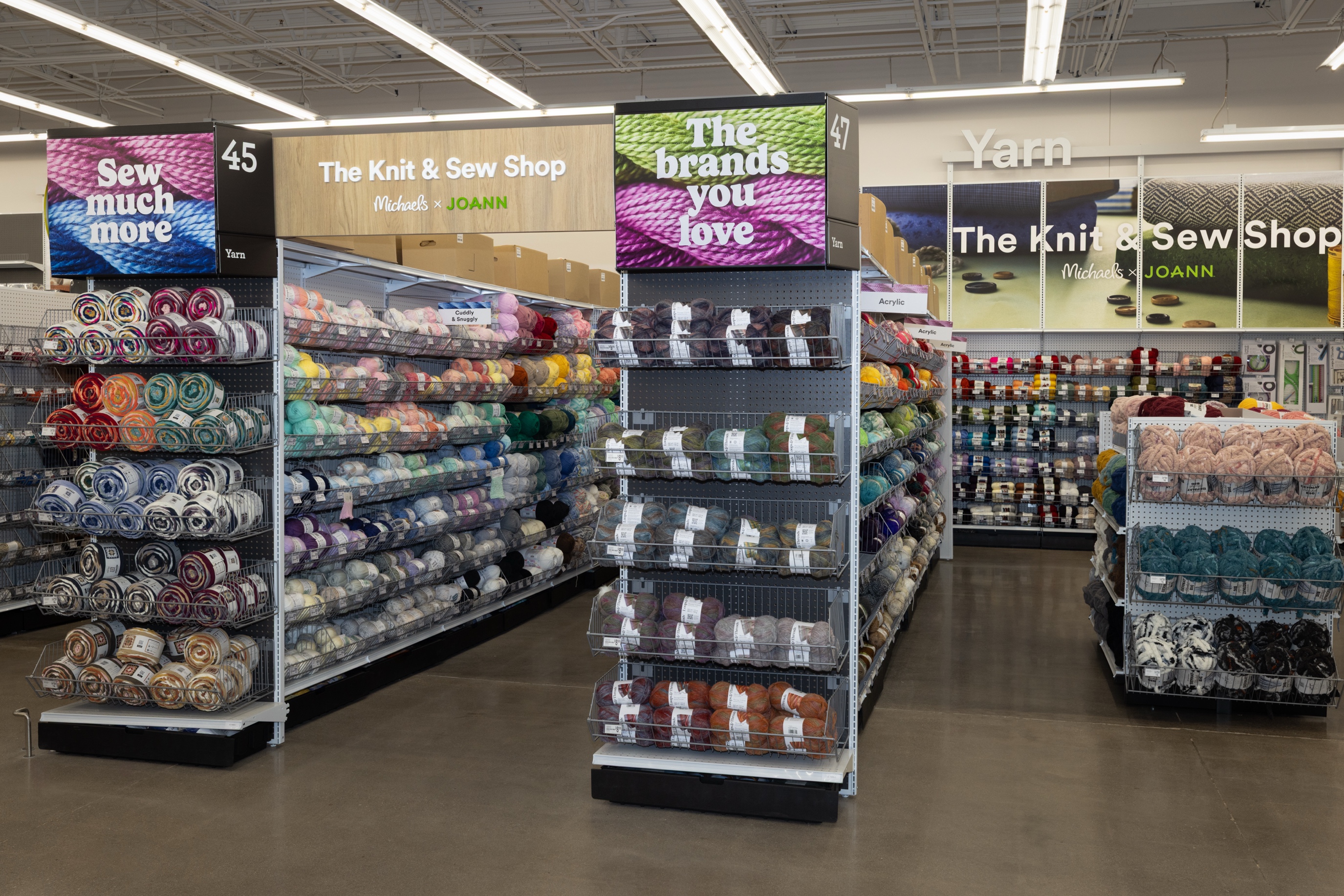
There was a signal before the expanded shelves. Michaels reported that searches for fabric on its website had risen 77% over the previous year, while sewing searches rose 39%. Those figures suggest shoppers were already asking Michaels to do more. They do not prove what caused the acquisition, but they help explain why adding fabric was more than an exercise in opportunistic branding.
By September 2026, The Knit & Sew Shop was in more than 1,200 stores. Fabric was available in nearly 90% of the chain, alongside more than 1,600 new products across the expanded department. The customers had lost a destination. Michaels was changing the map.
of stores
now carry fabric
A nearly nine-in-ten footprint · September 2026
A five-and-dime learns a new trick
The business began with a similar act of adjustment. Michael Dupey turned a struggling Dallas Ben Franklin variety store toward arts and crafts; Michaels dates its founding to 1973. Former store manager Jim Sadler later remembered Dupey’s knack for spotting the next thing: “He could pick out trends like no one else could.”
Today, the company reports more than 1,300 stores in 49 U.S. states and Canada. Its customers include parents assembling school projects, painters replacing brushes, hosts planning parties and small businesses buying materials. The common denominator is a project, often one requiring several kinds of supplies and a little help getting started.
That gives Michaels a particular place in the market. Hobby Lobby and independent specialists offer alternatives for creative purchases. Amazon and Walmart make supplies convenient. Etsy provides another outlet for handmade goods. Michaels combines broad physical distribution with framing, instruction and its own selling platform. That combination is useful when the customer’s problem stretches beyond finding the lowest-priced tube of paint.
Follow the project, then the money
The core economics are familiar: buy or develop merchandise and sell it through stores and online. Private labels sit beside national brands. Custom framing adds a service, supported by Michaels-owned manufacturer Artistree. Classes and parties create more reasons to visit. The commercial logic is to remain useful at several stages of making something.
The ownership has a clear historical price tag. Apollo-managed funds agreed to a 2021 take-private deal worth approximately $3.3 billion in equity, or $5 billion including debt. Those figures describe that transaction, not what Michaels is worth today. The company’s last public annual filing recorded $5.2711 billion in fiscal 2020 net sales. That is historical revenue, not a current scorecard.
MakerPlace adds another loop. Makers can sell handmade goods and offer instructional content. Its current seller plans list a 4% Standard transaction fee and a 2% Premium fee, with order-processing charges additional. Premium requires $500 in eligible annual Michaels spending. The incentive connects the seller’s finished product to the retailer’s supply aisle.
A business can fail while the things its customers love doing remain perfectly alive.
That is the opening Michaels is pursuing.
Give the errand a reason to linger
The physical experiment is more interesting than simply adding inventory. By August 2026, new-format stores had debuted in Easton, Ohio, Irving, Texas, and Rogers, Arkansas. They combine revised departments with personalization, project stations and party space. The Swatch Bar lets the store display possibilities without stocking every fabric locally.
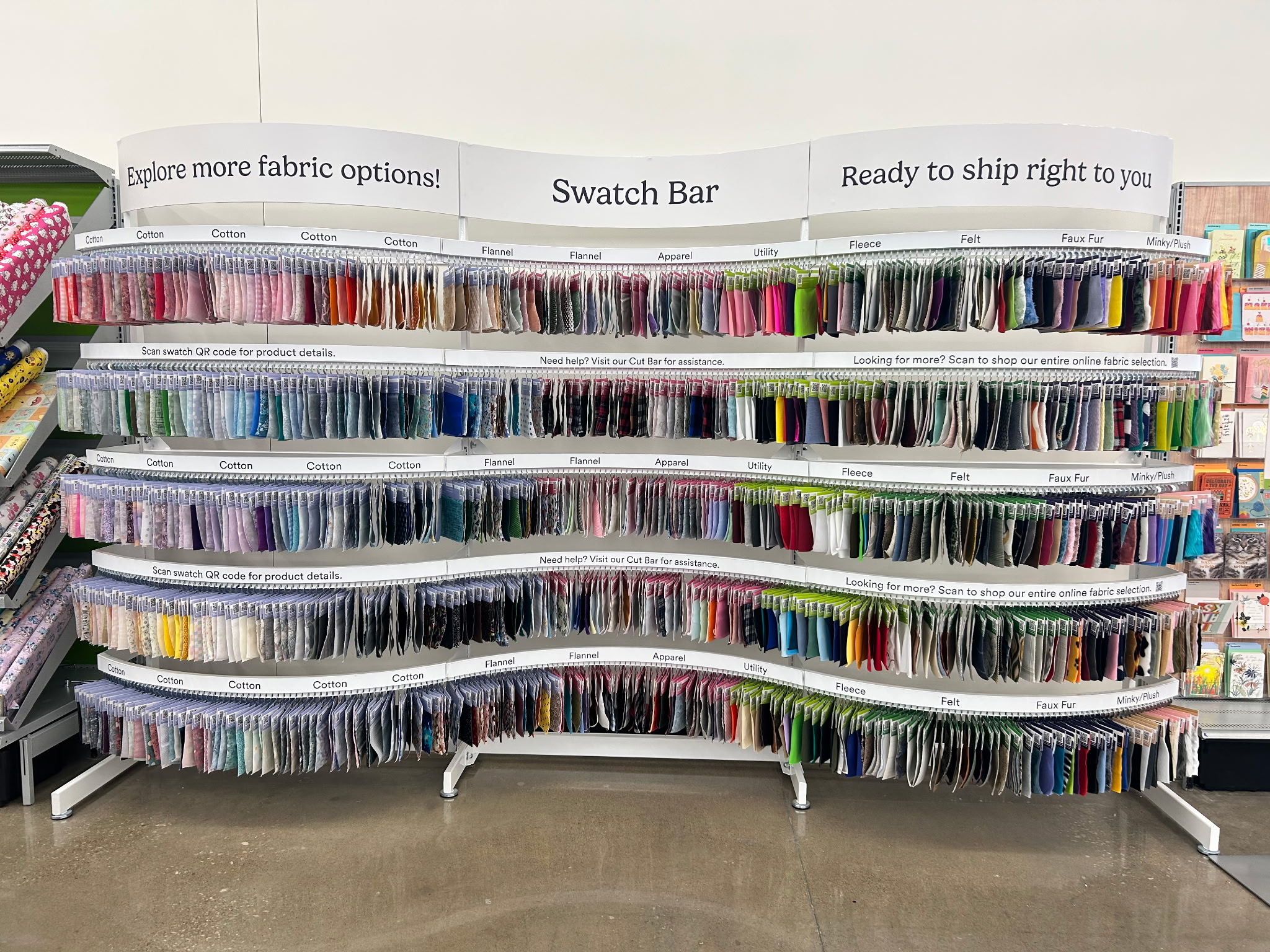
- 01TouchFeel the sample.
- 02ScanFind it online.
- 03ShipOrder it home.
In the new-format announcement, 10-Minute Custom Framing starts at $29: customers can print a phone photo and have it framed in as little as ten minutes. A small, specific service gives the shopper a finished result to take away, rather than another project waiting at home.
Partnerships supply more starting points. Jonathan Adler’s 2026 collections bring a recognizable design vocabulary to decor and DIY. An October 20 Hallmark announcement ties an upcoming holiday film to exclusive merchandise and activities beginning November 1. Both give shoppers a specific occasion or aesthetic to work toward.
The timing has some research behind it. A Michaels-commissioned Morning Consult survey released October 21 found that 80% of parents wanted hands-on, screen-free holiday activities. It is a company-sponsored snapshot of preferences, rather than evidence that those parents will spend their money at Michaels.
The next stitch has to hold
The practical lesson is to follow the unfinished job. Preserve a favorite material. Show someone how to use it. Offer the frame when the painting is finished. A smaller retailer could copy that sequence without copying Michaels’ footprint.
It works only if the help is real. Fabric cutting needs staff; classes need capable instruction; home delivery needs dependable fulfillment. A sample cannot rescue a missed deadline. And customers who already have a trusted independent shop may have little reason to switch. Michaels has identified where demand could go. Whether it stays will be decided one project at a time.
Pick your next project
Explore Michaels, The Knit & Sew Shop, MakerPlace and classes.
Watch Simple Sewing Ideas with SINGER or browse Michaels on YouTube. Follow Instagram, LinkedIn, X, Facebook and the newsroom.