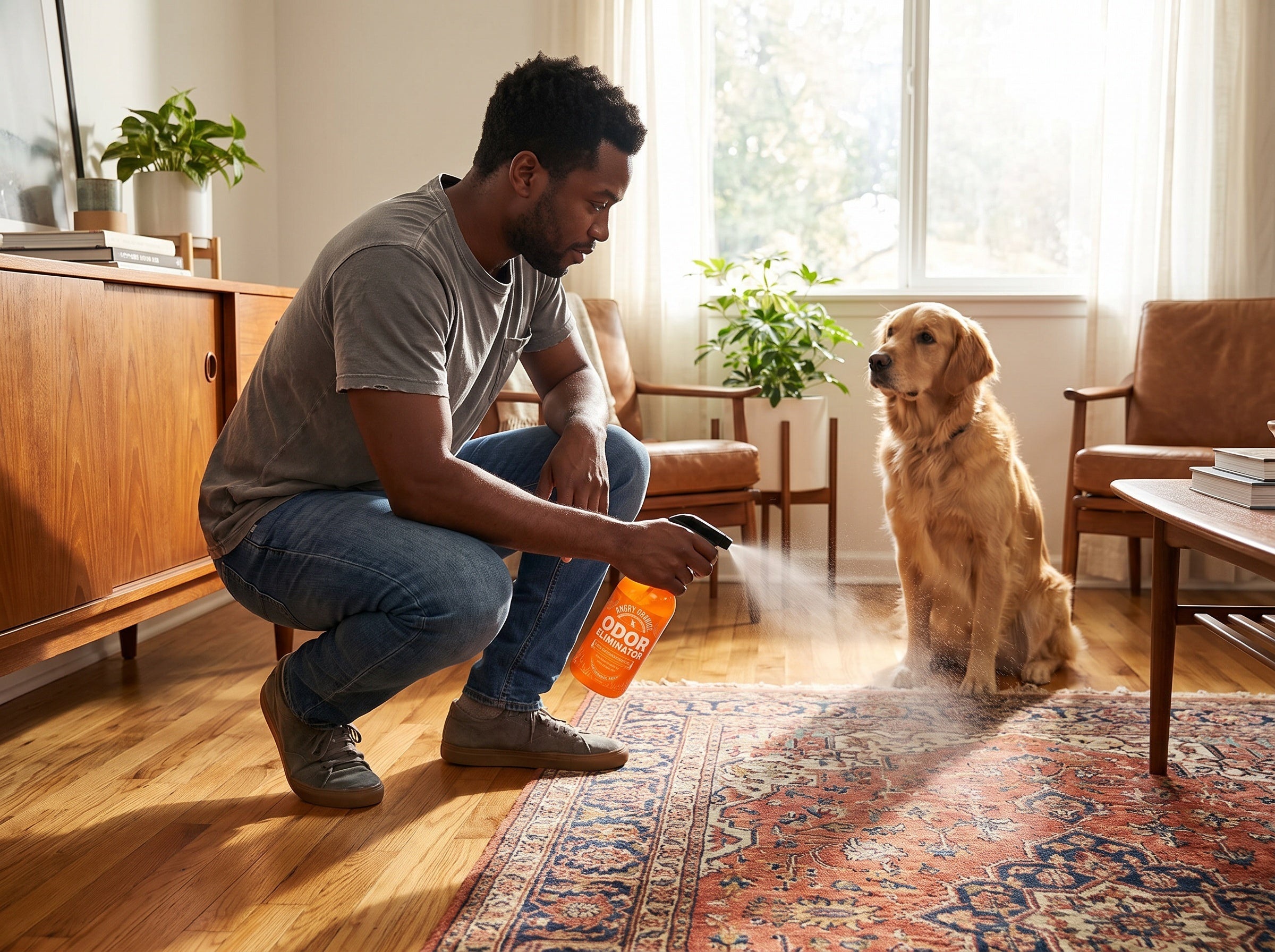
The bottle was small. The proposition attached to it was enormous. Angry Orange sold a concentrate for eliminating pet odors, a useful purchase for anyone whose dog had developed an inconvenient opinion about the carpet. Its founder, Adam St. George, had a working business. Thrasio saw something more: a product whose success could survive a change of owner, then improve under professional management.
- Thrasio buys consumer brands and runs the machinery behind them.
- Its acquisition sprint gave way to Chapter 11 and a focus on profitable brands.
- A 2026 brand sale and a product recall show both sides of ownership.
That distinction is the beginning of the Thrasio story. A founder can discover something customers want without possessing every skill required to expand it. Someone else might handle purchasing, advertising and distribution better. The tempting question was whether those improvements could become a repeatable system. A bottle of odor remover was about to carry rather a lot of corporate theory.
A bottle with a bigger job
Thrasio’s Angry Orange case study supplies a wonderfully practical answer. The operator refreshed packaging and listings, introduced ready-to-use formats alongside the concentrate, and expanded distribution. These changes addressed ordinary customer friction. A shopper could understand the bottle more quickly, buy a convenient version and find it in another channel. Innovation sometimes wears a spray nozzle.
The case study reported trailing twelve-month revenue rising from $2.5 million to $23.1 million. That is a company-reported snapshot, not a forecast. Still, it illustrates the attraction: purchase existing demand, then improve how the product reaches the buyer. You do not have to invent a new household problem when somebody’s household has already supplied one.
The acquisition machine
Carlos Cashman and Joshua Silberstein founded Thrasio in 2018. The company acquired private-label businesses selling through Amazon, taking ownership rather than merely advising their founders. For sellers, it offered a route to cash out. For consumers, the relationship was less visible: they bought a pillow or cleaning product under its own brand name, often without encountering the parent company.
Thrasio earns money from those product sales. Its expertise sits behind the transaction: listing content, advertising, product development, customer service and supply chains. There is no consumer subscription to the Thrasio idea. The economic test is whether the products leave enough money after their costs to support both the operating company and the capital used to buy them.
The company occupied a space between small ecommerce entrepreneurs and established consumer goods groups. Aggregators such as Perch, SellerX and Branded pursued similar acquisition opportunities. Thrasio’s pitch rested on a shared operating apparatus and experience across many brands. Its scale was distinctive; buying Amazon sellers was already becoming a crowded occupation.
By October 2021, Thrasio reported more than 200 brands and an acquisition rate exceeding 1.5 businesses a week. A Series D initial closing above $1 billion brought cumulative funding beyond $3.4 billion, including borrowing. Those figures describe financing and deal momentum. They do not establish the company’s total acquisition spending, and they certainly do not establish its profits.
October 2021
February 2024
May 2026
Capital raised, debt to be removed and a brand purchase price are different measures. They cannot be added into a scorecard.
The warehouse interrupts
The early warning was operational. Bankruptcy disclosure material says Thrasio engaged AlixPartners in February 2022 to address significant problems affecting margins. The response included a more disciplined acquisition strategy and disposal of excess inventory. Whatever the financial appeal of accumulating brands, somebody still had to count, store and sell the goods.
This is where the story becomes useful beyond ecommerce. Sharing a marketing team sounds efficient. Combining suppliers, stock forecasts, product information and seller knowledge introduces work of its own. That is an interpretation of the operating challenge, not a claim that every acquisition failed. A portfolio can contain excellent products while its parent struggles to manage the connections between them.
Thrasio filed for Chapter 11 on February 28, 2024. The announced lender agreement contemplated removing approximately $495 million of debt and postponing interest payments for a year after emergence. The company continued operating through the process. In June it emerged with $90 million of fresh capital and an explicit preference for its stronger brands.
“Customer loyalty and repeat usage have fueled rapid growth for the brand.”
Rick Dierker, Church & Dwight CEO, on Miss Mouth’s, May 2026
A smaller ambition, a valuable exit
Leadership changed with the strategy. Stephanie Fox became CEO at emergence; David Johnson replaced her in November 2024. Previously the chief transformation officer, Johnson brought experience from NielsenIQ and Procter & Gamble. The announced direction was familiar consumer goods work: strengthen brands, improve profitability and broaden distribution through retail and direct sales.
Miss Mouth’s Messy Eater offers a concrete result. The stain-removal brand expanded into Walmart and announced a nationwide Target launch in April 2026. Church & Dwight closed its acquisition the following month for approximately $325 million. The buyer reported about $80 million in 2025 net sales and $28 million in adjusted EBITDA for the brand.
That sale complicates an easy obituary. A business associated with a bankrupt aggregator could still attract an established manufacturer. It also changes the portfolio: Miss Mouth’s is now a former Thrasio brand. The transaction alone cannot tell us Thrasio’s return on its original investment or the financial health of everything that remains.
The bottle still has to work
Ownership carries less photogenic obligations, too. In January 2026, a recall covered about 1.5 million Angry Orange enzyme stain removers in the US, plus approximately 43,700 in Canada, because they could contain bacteria. The notice reported no incidents or injuries. It applied to specified enzyme stain-remover products, not every Angry Orange item. Buyers of affected bottles were instructed to stop using them and seek a refund.
The transferable lesson is modest enough to be useful. Start with demonstrated demand. Improve a particular inconvenience. Track inventory and margins before expanding the collection. Those steps require a product whose appeal survives the founder’s departure, reliable quality and a purchase price the underlying business can support. Without those conditions, a busy acquisition calendar offers little protection. The customer, after all, has ordered a cleaner carpet.