Consider the peculiar task of packing for a weekend away. There is dinner, perhaps tennis, somebody’s house, somebody else’s birthday. The problem is not a shortage of clothes. It is the small administrative burden of making everything belong together. Tuckernuck has built a business around that burden. Its real subject is the calendar.
- A multi-brand boutique with an American, coastal point of view.
- Original collections fill gaps the founders spotted while buying other labels.
- Outfit guides and physical shops help customers turn browsing into a plan.
A boutique without a postcode
In 2012, Jocelyn Gailliot, her sister Madeline Grayson and Grayson’s college friend September Votta started Tuckernuck. They liked the little shops discovered on vacation, where familiar labels sat beside something unexpected. They disliked the alternatives at home: too much choice in one place, too much sameness in another. “Department stores were overwhelming,” the founders recalled in a 2022 interview.
That is a useful distinction. A department store can organize clothes by designer. A good boutique organizes them around a person. Tuckernuck’s founders wanted the second experience available through a browser. The company took its name from a small island off Nantucket, a place they associated with discovery and summer. Its headquarters stayed in Washington, DC.

The beginning was scrappy, although the numbers require care. Entrepreneur reported a $500 launch, a camera, Shopify and an office above the sisters’ parents’ garage. Later reporting described less than $500,000 in early friends-and-family funding and accelerator support. Those are different measures. The charming opening budget should not be mistaken for the total cost of building a retailer.
First choose. Then make.
Look through Tuckernuck and the organizing principle becomes clear. A dress is accompanied by the shoes, earrings and occasion that make it useful. Modern Luxury described an assortment assembled for busy women with careers and children, and lookbooks organized around their lives. Customers can borrow the outfit rather than reconstruct it, tab by tab, across the internet.
The merchandise crosses clothing, accessories, home goods and gifts. The company also carries men’s and children’s products. Its own labels include Tnuck Sport and Tnuck Beach. The connective tissue is a recognizable taste: color, prints, heritage references and clothes that can look dressed without looking solemn. Someone has already done the matching.
In 2019, the company began making its own clothing. The founders had noticed gaps in design and price, particularly below $300. Private label let them fill those gaps while improving margins. Tuckernuck could sell a customer another designer’s discovery and its own answer to the thing nobody else was making. The retailer had acquired an unusually useful research department: its own buying history.
The retailer had acquired an unusually useful research department: its own buying history.
Collaborations extend that logic. Studio McGee’s 33-piece summer capsule arrived in May 2025, moving an interior designer’s interest in wallpaper and vintage textiles into clothes. Barbour followed with 11 exclusive designs that September, developed after the founders visited its British archives. Rooms, jackets and holiday wardrobes share a customer more readily than a conventional merchandise chart might suggest.
The part that could not be pretty
There is a limit to what an attractive photograph can accomplish. According to Ryder’s case study, Tuckernuck’s former fulfillment provider was taking seven to ten days just to dispatch orders. Think of the packed weekend bag again. A dress that leaves the warehouse after the occasion has passed is an inventory success and a customer failure.
Order dispatch, as reported in Ryder’s case study. Bars compare the former 10-day maximum with 2 days; delivery takes additional time.
Ryder connected Tuckernuck’s custom systems to its fulfillment operation. Reported processing and dispatch fell to 48 hours. This was a change of operating partner and systems, not a new slogan. For another retailer, the lesson is fairly concrete: measure the interval between taking somebody’s money and getting their purchase out of the building.
Software produced a similar reversal. Tuckernuck had left Shopify for a custom platform to gain control. Maintaining that control became a job of its own. Product director Bianca Vitarello described “a lot of pain and sleepless nights.” The business returned to Shopify, bringing its online and store operations onto shared infrastructure.
Shopify’s case study reports 40% growth in new customers after the return, plus more than 300,000 loyalty signups in under a year. These are vendor-reported results, not an experiment proving one platform caused the gains. Still, the decision is revealing. The distinctive work was choosing and presenting merchandise. Maintaining a bespoke commerce platform had become a distraction from it.
A shop you can step inside
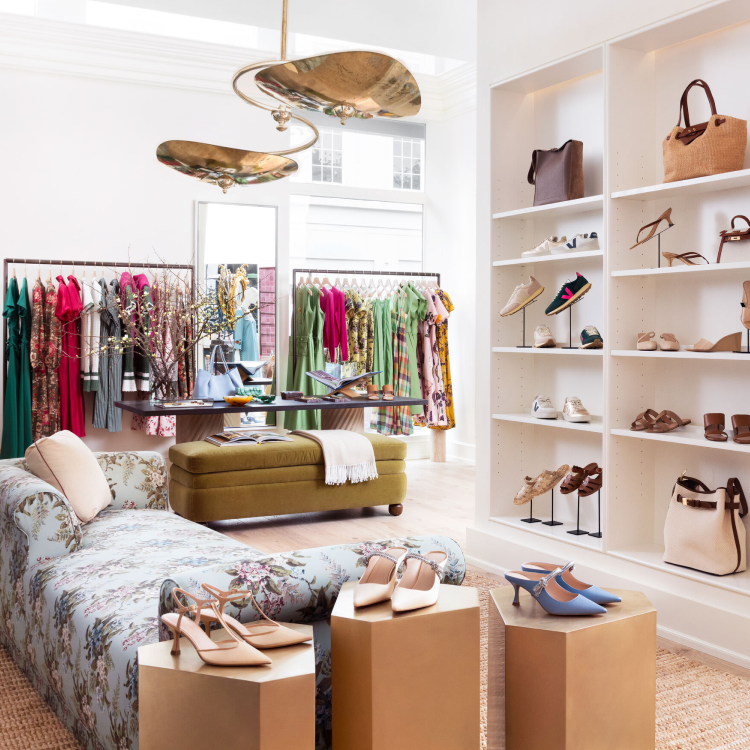
Physical retail makes the proposition tangible. After opening in New York in 2025, Tuckernuck introduced a 4,000-square-foot Georgetown flagship in March 2026. There are rooms to linger in, styling help and on-site monogramming. The assortment can be touched, tried and discussed. An online suggestion becomes a conversation.
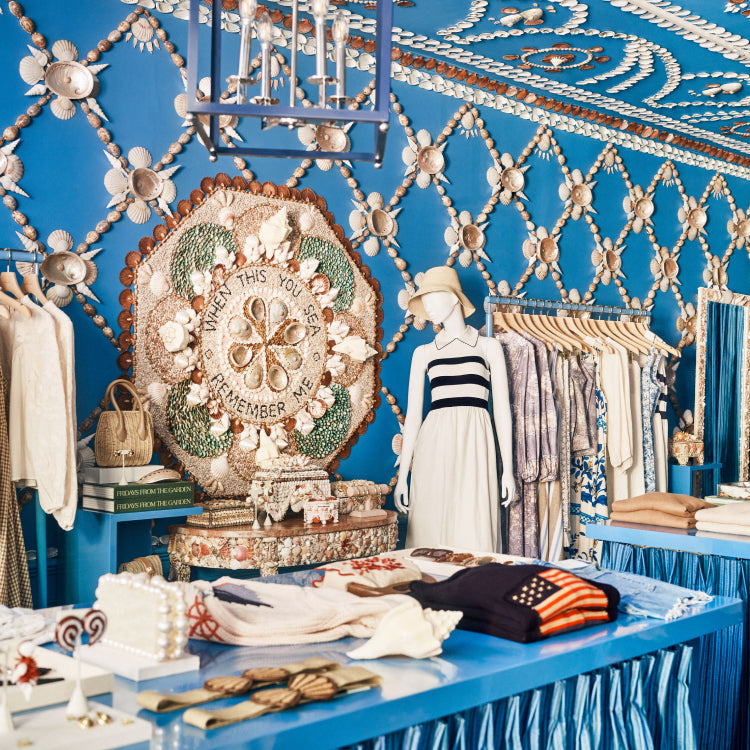
Then came Nantucket. Its capsule store occupies less than 500 square feet, with more than 40,000 shells hand-glued across the walls and ceiling. The installation took over 250 hours. This is a remarkably literal way to put a seaside memory inside a shop. It also makes the founders’ original idea legible without a paragraph of brand explanation.
Copy the homework
The useful lesson is the sequence. Define a customer precisely. Show her how products fit an occasion. Observe what she cannot find. Make that thing. Keep the delivery promise. Another business can copy that homework without copying a floral print.
There are conditions. This approach needs customers who value an editor’s judgment and can afford the assortment. It offers less to someone hunting the lowest price or deliberately avoiding a classic American look. Original inventory also makes forecasting matter, while elaborate stores add commitments a website alone does not carry.
For the right shopper, however, the benefit is pleasantly ordinary: fewer decisions before leaving the house. Tuckernuck supplies a plausible answer to what to wear, what goes with it and what to bring the host. The weekend still needs planning. The bag is a little easier to pack.