In 1939, Joe Albertson opened a grocery store in Boise with a scratch bakery, a magazine rack and ice cream made on the premises. These were small extravagances with a practical purpose. Milk could bring someone through the door. Fresh ice cream might give that person a reason to remember the place. Albertson had saved $5,000 and borrowed $7,500 from his wife’s aunt. He opened with partner L.S. Skaggs. The customer had to come back.
- Regional stores share national capabilities.
- Own Brands: $16.9 billion in fiscal 2025.
- After the failed merger, a standalone strategy.
That little store offers a useful way into Albertsons Companies today. The names above its doors include Safeway, Vons, Jewel-Osco and Shaw’s. Behind them sits a shared business of buying, distribution, manufacturing, pharmacy and software. The interesting question is how much a grocer can combine behind the counter while preserving the reasons people choose a particular store.
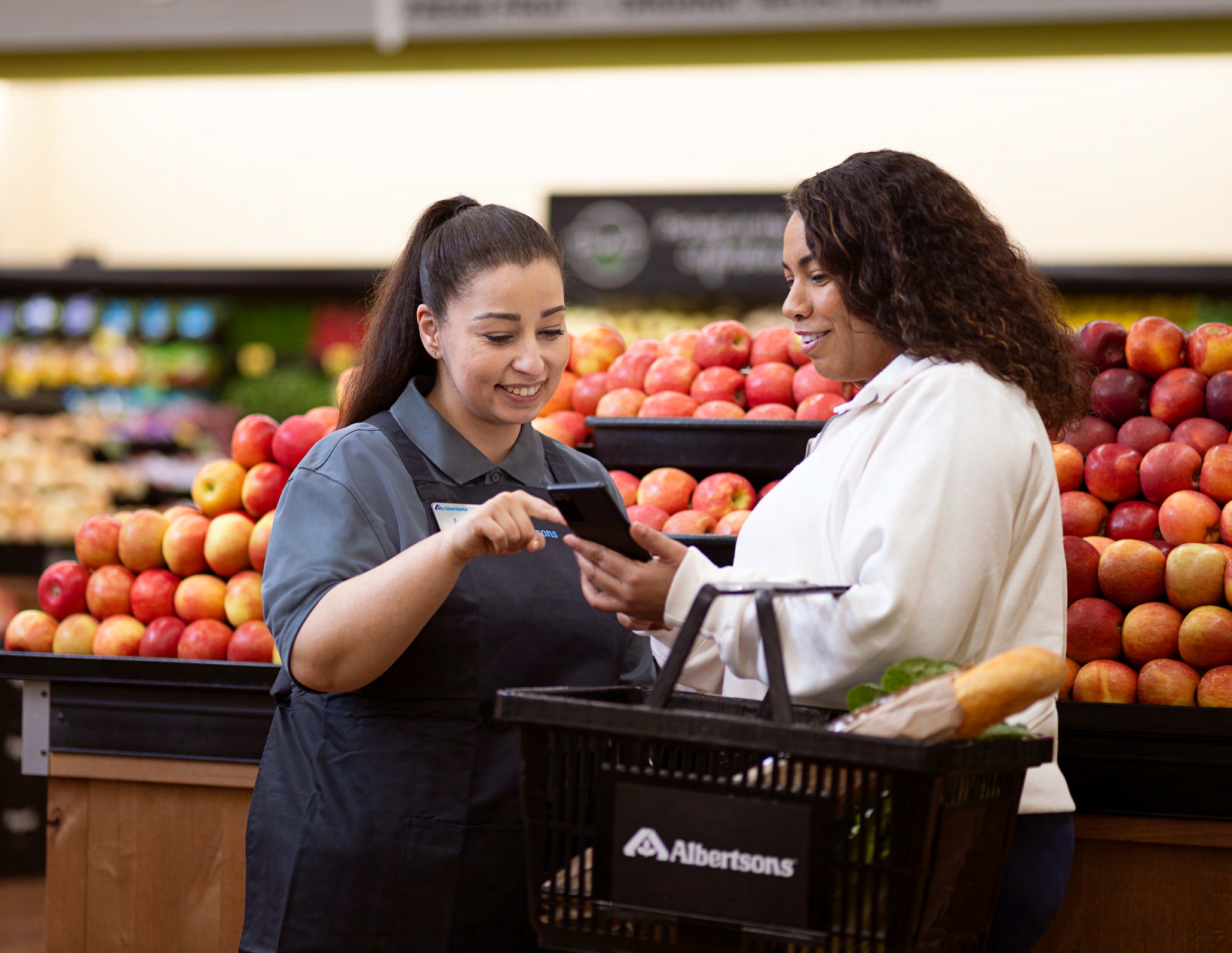
Keep the sign. Share the engine.
Albertsons sells the weekly shop: produce, meat, seafood, bread, pantry staples and prepared meals. Pharmacies add prescriptions and vaccines; fuel centers add another errand. Its customers are households trying to fit food shopping into ordinary life. Some want a bakery counter. Others want a basket delivered before dinner. The company reported serving an average of 36.5 million customers weekly in fiscal 2025.
The assortment overlaps with Kroger, Walmart, Costco, Aldi and Amazon’s grocery businesses. Albertsons’ particular configuration combines regional supermarket names, full-service departments, exclusive products and online ordering. It competes for convenience and familiarity as well as price. A shopper can recognize the local banner without needing to know who owns the distribution center.
The scale took money and dealmaking. The Safeway acquisition closed in January 2015; the FTC described the proposed transaction as a $9.2 billion merger and required 168 store divestitures. Albertsons’ modern footprint carries that history. Combining businesses can expand purchasing and distribution capacity, while keeping established names avoids asking every customer to start a relationship from scratch.
The brand hiding in your basket
Consider a carton of Lucerne milk or a jar carrying the Signature SELECT label. These belong to Albertsons’ Own Brands portfolio, alongside O Organics and Open Nature. In fiscal 2025, the portfolio generated $16.9 billion in retail sales across more than 14,000 items. That is a substantial consumer-products business tucked inside a supermarket operator.
Exclusive goods give shoppers a reason to return and let the retailer shape products and price points. But ownership of the label does not mean ownership of every factory: company facilities manufactured 9.9% of Own Brands units that year. Suppliers made the rest. The expertise lies partly in developing and sourcing an assortment that works across many stores.
The core business earns revenue by selling merchandise and services above their costs. Advertising adds another customer: the brands trying to reach shoppers. Albertsons Media Collective sells access to that audience. Its April 2026 Google partnership brings shopper signals to YouTube and Display & Video 360, with product-level sales reporting. A grocery receipt becomes useful to the advertising business, too.
Own Brands · Digital tools
Dinner, minus the scavenger hunt
For shoppers, the practical digital tools are less abstract. The for U program offers personalized deals and rewards. Drive Up & Go lets a household collect an online order; delivery brings it home. DoorDash became a delivery partner in 2021, initially covering nearly 2,000 banner stores. These options make the same neighborhood inventory accessible through several different routines.
In December 2025, Albertsons introduced a shopping assistant powered by OpenAI models across its banner websites. It can turn recipes into carts, interpret an uploaded grocery list and suggest meals from ingredients already in the fridge. The appealing detail is the leftover food. Helping someone use what they already bought may be a better invitation back than another screen full of products.
None of this eliminates the physical work. Someone must order the strawberries, keep them cold, choose a satisfactory substitute and get the basket ready. For a shopper, the useful test is straightforward: compare the completed basket, including service charges, with a normal store trip. Availability, fees and delivery coverage determine whether the extra convenience earns its keep.
The deal that could not cross the street
In October 2022, Kroger and Albertsons proposed a $24.6 billion combination. Their argument centered on competing with larger retail rivals. Regulators focused on another scale: the local market where two nearby supermarkets compete for the same shoppers. A national efficiency argument could not settle the question of what happened on those streets.
On December 10, 2024, courts in Oregon and Washington halted the transaction. Albertsons announced its termination the next day. Regulatory approval failed before the companies could test their combined operation. The court decisions changed the available choices; they do not establish a private change of heart among executives. Albertsons then pursued a standalone strategy and sued Kroger, which disputed its allegations.
The proposed purchase price was never a completed acquisition cost. The costs already incurred were real: S&P Global put Albertsons’ merger-related spending at approximately $400 million through September 2024. The company sought a $600 million termination fee as part of its lawsuit. A demanded fee should not be mistaken for cash received.
A bigger app cannot fix every aisle
Susan Morris, who began her career in an Albertsons store in the Denver market, became CEO in May 2025. Her nearly four decades inside the business fit its stated emphasis on associates and customer service. In October 2026 she announced a comprehensive business review, including simplifying the organization and redirecting savings toward customer value.
The numbers explain the urgency. Second-quarter fiscal 2026 digital sales rose 11%, while identical sales excluding fuel fell 0.8%. Those measures overlap: digital sales are included in identical sales. Online growth therefore does not demonstrate that the whole business is growing. Albertsons also spent approximately $900 million on capital projects during the first 28 weeks, including stores and technology.
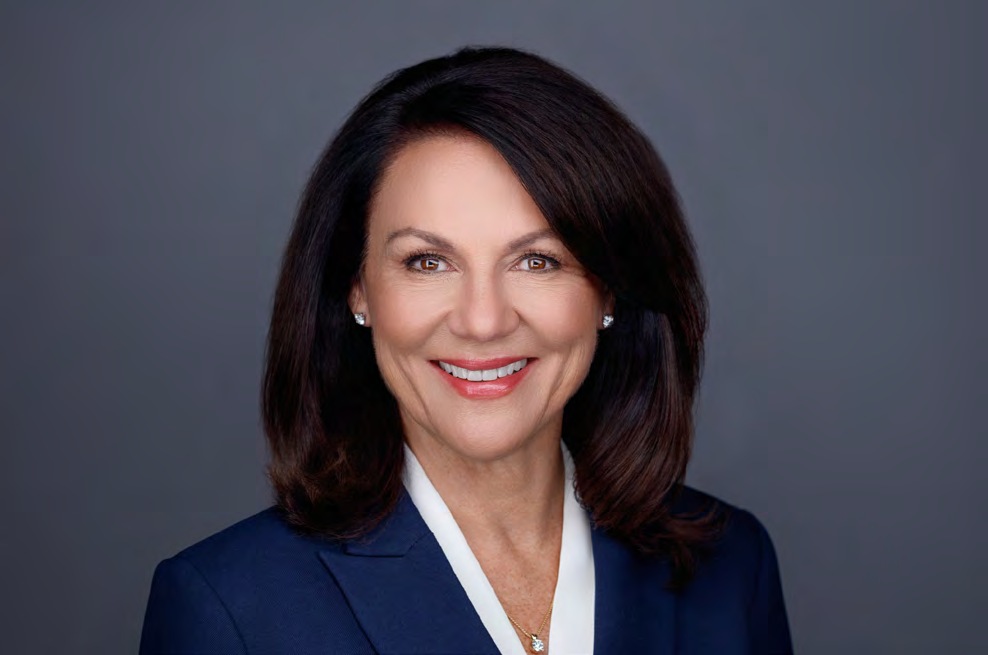
“a cost structure we can no longer afford”Susan Morris · October 2026
There is a lesson here for anyone running a business with several local identities: share the expensive capabilities customers rarely see, and preserve the details they value. That is an interpretation of Albertsons’ structure, rather than proof of a universal formula. It depends on reliable operations, useful local differences and prices customers accept. When those conditions slip, a familiar sign and a clever shopping assistant have limited power. Joe Albertson’s ice cream still needed a customer willing to return.