Consider a loaf of bread. In the early 1900s, a grocer could buy it from a baker, mark it up and wait for someone to carry it home. Barney Kroger saw another possibility: bake it himself. Lower the cost. Sell a fresher loaf. In 1901, his company established its own bakeries. The interesting part was the distance removed between making something and putting it on someone’s table.
- Kroger combines groceries, private brands, pharmacy and digital shopping.
- Regional stores give it something a distant warehouse cannot: proximity.
- A costly delivery reset tests whether that proximity can pay.
A century later, the company tried a more elaborate answer to that same problem: automated warehouses, built with British technology partner Ocado. Then came the retreat. Kroger’s fiscal 2025 accounts recorded $2.5 billion in fulfillment-network impairment and related charges. An old grocery question had acquired a very modern price tag.
The loaf before the robot
Kroger began in Cincinnati in 1883, when Barney invested $372 of his savings in a grocery store. His rule was plain: “Be particular. Never sell anything you would not want yourself.” The business grew by paying attention to things customers could recognize without a presentation: freshness, price and convenience.
Its own products became part of that bargain. Kroger’s corporate history traces an early experiment to his mother turning surplus cabbage into sauerkraut. Today, the approach covers several shopping budgets. Smart Way serves the price-conscious shopper. The Kroger brand supplies everyday staples. Private Selection offers a step toward more elaborate eating; Simple Truth addresses natural and organic shopping.
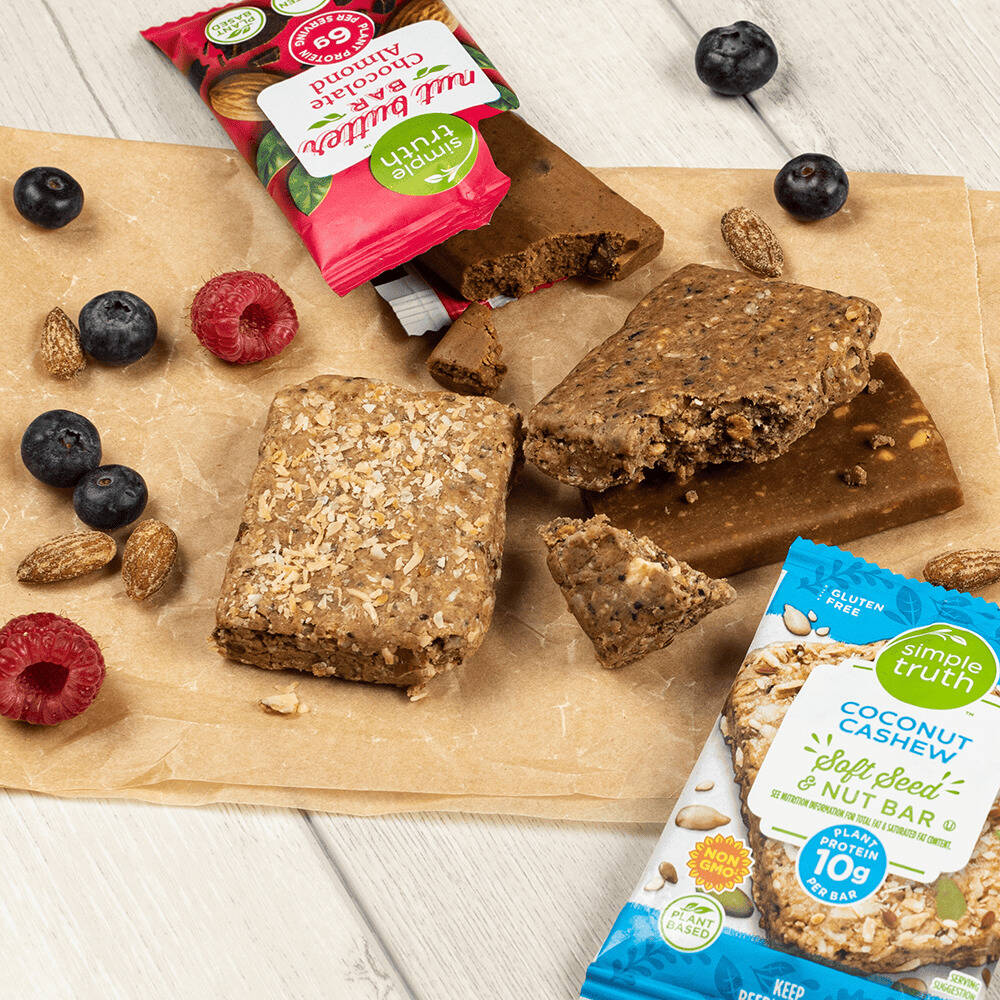
The distinction matters. A supermarket selling everybody else’s cereal must persuade customers to choose its location. A supermarket with products people can only buy within its family has another reason for them to return. Manufacturing and private-label sourcing also give it more influence over the assortment and economics of the shelf.
A different name on the door
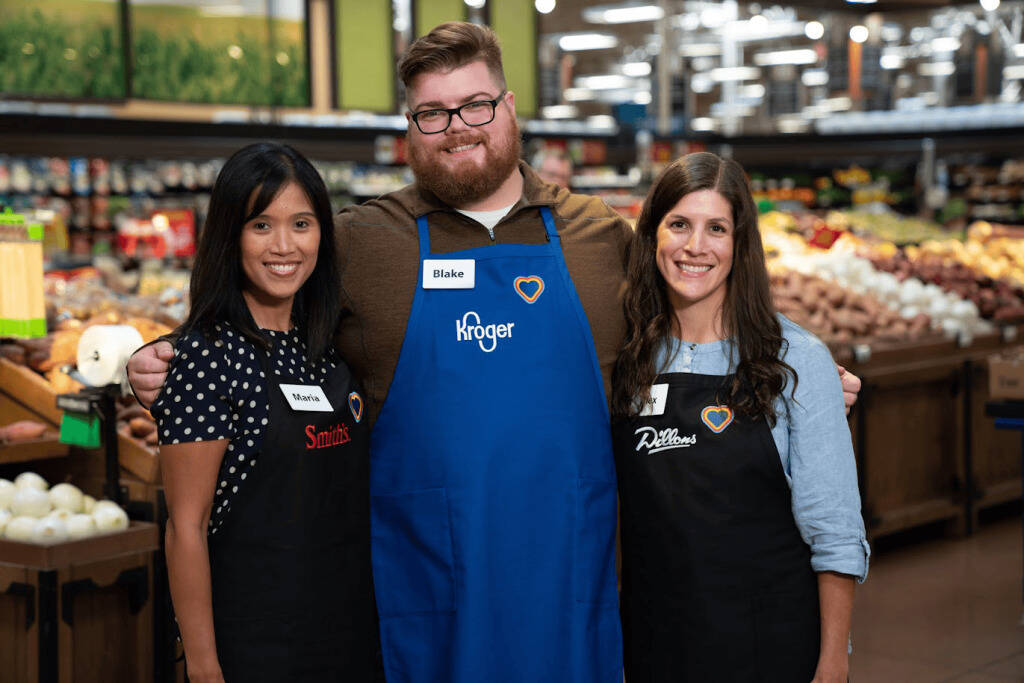
A shopper in Southern California might know Ralphs. Someone in Colorado might know King Soopers. In the Pacific Northwest, Fred Meyer combines groceries with broader merchandise. These familiar names sit inside Kroger’s business. Acquisitions assembled a network with local identities rather than one uniform sign above every entrance.
The customer is usually doing something gloriously ordinary: feeding a household, buying detergent, collecting a prescription, sorting out dinner. Kroger bundles those errands. Its products include fresh produce, pantry goods, prepared food and Home Chef meals; its wider operation includes pharmacies and fuel centers. Online ordering adds pickup and delivery to the same weekly routine.
This positions Kroger between several kinds of rival. Walmart combines food with general merchandise. Costco sells the warehouse-club proposition. Aldi emphasizes a narrower, price-led assortment. Amazon brings its online reach and Whole Foods stores. Kroger’s particular combination is a full supermarket shop, regional familiarity, private brands and a loyalty relationship that can follow the customer across channels.
The card has two customers
Most of the money still arrives through selling things. Kroger reported $147.642 billion in fiscal 2025 sales. But a repeat grocery visit creates something besides revenue: a record of what a household buys. Its 84.51° subsidiary, established in 2015, helps turn those patterns into consumer insights and marketing.
In its 2024 press kit, 84.51° said Kroger’s loyalty program captured 95% of sales. That gives personalized offers an unusually broad foundation. It also gives consumer brands a way to buy advertising and evaluate purchasing responses through Kroger Precision Marketing. The shopper wants a useful discount; the advertiser wants evidence that an offer worked.
The last few miles can undo the cleverness of the first few seconds.THE DELIVERY PROBLEM
For a household, the practical starting point is simpler: check local availability, compare the basket and use relevant digital coupons. Kroger’s reviewed Boost FAQ lists free pickup for loyalty members on qualifying orders of $35 or more. Paid Boost tiers add delivery benefits. Frequency matters: a subscription is useful only when the eligible orders justify its fee.
When the warehouse lost the argument
In 2018, Kroger and Ocado announced their partnership, with plans to identify up to 20 automated warehouse sites over the agreement’s first three years. The attraction was understandable. Centralized picking could support online shopping without sending every order through a supermarket aisle.
The difficulty appeared in the network’s operating and financial performance. After reviewing ecommerce, Kroger closed facilities in Wisconsin, Maryland and Florida in January 2026 and canceled the Charlotte site. It widened relationships with Instacart, DoorDash and Uber Eats, while continuing selected automated operations. Ocado’s December 2025 announcement disclosed a $350 million compensation payment agreed with Kroger.
Fiscal 2025 impairment and related charges
Agreed Ocado compensation payment
Projected 2026 ecommerce operating-profit improvement
The $2.5 billion charge is not a receipt for the entire experiment. Nor should it be confused with the roughly $2.6 billion estimate announced earlier. The projected $400 million improvement was management’s expectation for the reset, not proof that online groceries had become profitable.
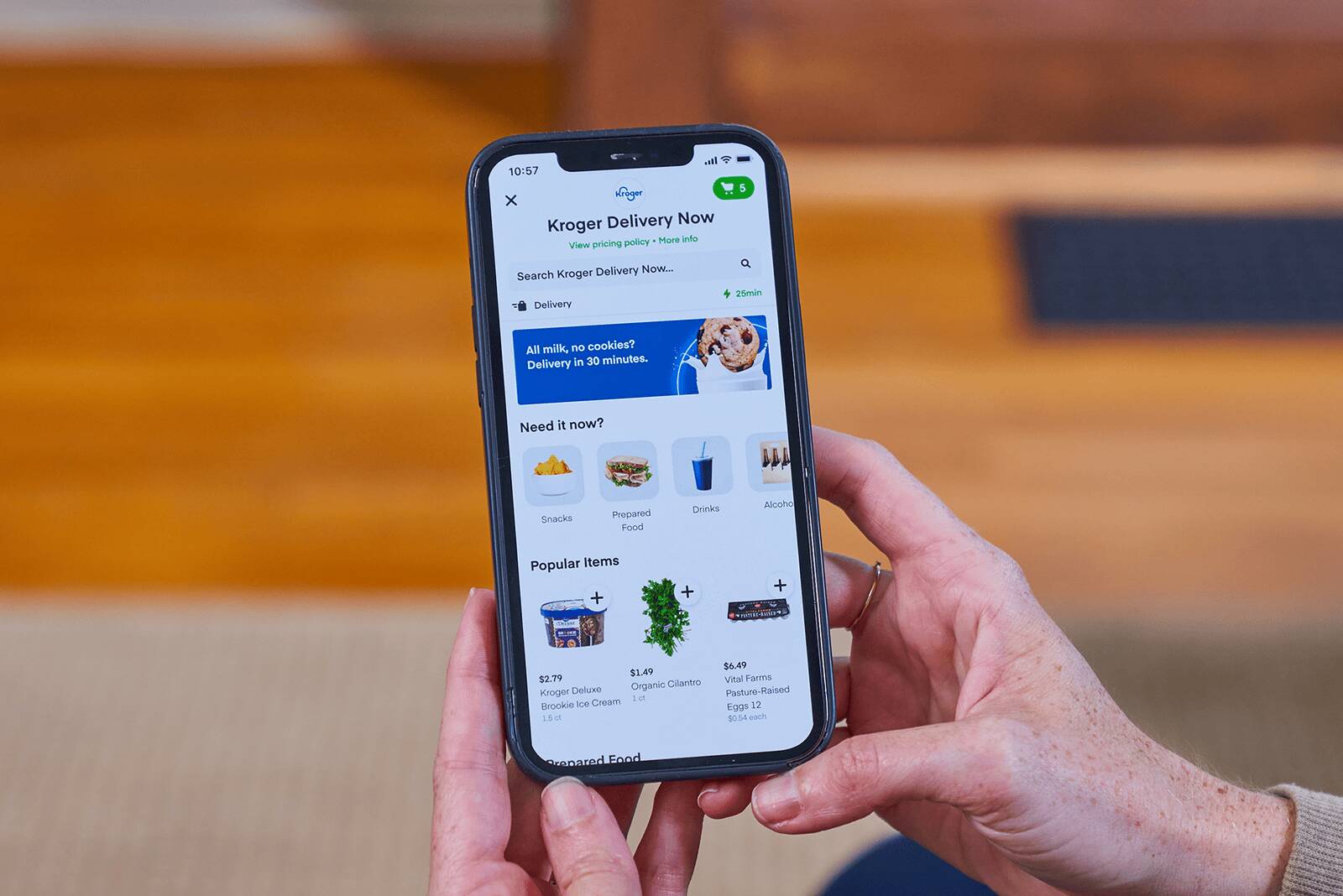
The useful inference is geographical. Automation needs enough orders, close enough together, to spread its fixed costs and support efficient routes. Kroger’s filing explicitly points to demand density and cost structure when discussing remaining facilities. A store already near shoppers can be valuable even when its picking process looks less futuristic. The last few miles can undo the cleverness of the first few seconds.
The next order has to earn its keep
The reset followed another disappointment: courts blocked the proposed $24.6 billion Albertsons combination in December 2024. Greg Foran became CEO in February 2026. By October 20, his updated plan emphasized customer value, fresh food, private brands and profitable digital growth, supported by operating savings. Its growth targets remain targets.
A smaller operator can copy the discipline: calculate the whole cost to serve, use nearby assets and test expansion against actual demand. That approach loses force where stores are absent or overloaded, routes are sparse, or partner fees consume the margin. Kroger’s next test is wonderfully concrete. Can it deliver the weekly shop at a price that makes both the customer and the business come back?