In 1940, George Jenkins gave his customers a door they did not have to open. His new Publix supermarket in Winter Haven, Florida, had electric-eye doors, air conditioning and fluorescent lighting. These were practical improvements with a particular point of view: the person buying dinner should not have to wrestle with the building. An ordinary errand could feel considered.
- Employee ownership gives eligible associates a financial stake in the business.
- Fresh counters, pharmacies and private labels make Publix useful across a household’s week.
- Delivery taught a harder lesson: convenience still needs enough orders to pay for itself.
A door that opened itself
Jenkins had opened his first grocery store in 1930, then another in 1935. He closed both to open the 1940 supermarket. That detail matters. He was prepared to replace a working format when he thought the experience could improve. The new store was a wager on how shopping ought to feel, expressed in equipment, light and cool air.
The wager became an institution. Publix now serves eight southeastern states, selling food and the things that accompany it: a birthday cake, flowers, a prescription, something hot when nobody wants to cook. Its customers are households solving several small problems at once. The weekly shop is the main event; lunch and tonight’s dinner can be reasons to visit sooner.
Give the person a stake
A pleasant store can be copied. A rival can buy the same lights. The more interesting question is what happens when a shopper needs a person. Publix’s answer includes ownership. Through its PROFIT retirement plan, the company contributes Publix shares for eligible associates at no cost to them. Associates can also buy stock under the company’s purchase arrangements.
The shares do not trade on a public exchange. Publix restricts purchases to current associates and board members. This creates a financial connection between work today and the business’s future. The reasonable inference is that service expectations become more persuasive when an employee can participate in the value they help create. It remains an incentive, with eligibility rules, rather than a guarantee of cheerful behavior.
“Our greatest asset is our associates.”
Kevin Murphy · CEO · March 2026
Murphy’s own career gives the promotion story some texture. He joined Publix in 1984 as a front service clerk in Margate, Florida, became a store manager in 1995 and took the CEO job in January 2024. For someone starting at a store, that is a visible route upward. It also puts operational experience near the top of the organization.
The deli is only the visible part
For shoppers, this machinery resolves into familiar choices. Buy ingredients and cook. Order a deli sub and skip the cooking. Pick up a cake for the occasion you remembered slightly late. Fill a prescription while the rest of the basket comes together. Publix competes for these trips with Walmart, Aldi, Kroger banners, warehouse clubs and other supermarkets, depending on the neighborhood.
Its offer combines a broad grocery assortment with staffed departments and prepared food. National brands sit alongside Publix labels. The business earns margins on those purchases, supported by its own distribution and manufacturing operations, including dairy production. The service at the counter depends on less visible decisions about availability, production and replenishment. A charming store cannot sell the dinner that never arrived.
Distribution
Fresh counters
routines
An operating relationship, not a measured causal model.
The pharmacy adds another reason to return. Publix opened its first in 1986 in Altamonte Springs. Club Publix, introduced in 2020, brings offers and digital features to that relationship. For a customer, the useful move is straightforward: check the weekly offers, choose the shopping method that fits the day and compare the total cost. Familiarity is convenient; it is still worth doing the arithmetic.
The trucks needed more orders
Publix learned that arithmetic from the other side. In 2001, it launched PublixDirect, an online grocery service fulfilling orders from a distribution center. By August 2003, the service was closing. Archived reporting records a $7.95 delivery charge on orders of at least $50. The trouble was insufficient volume. Expansion plans had already been paused earlier that year.
A delivery service needs customers close enough together, ordering often enough, to justify the picking and driving. That is the operational lesson suggested by the failure. A trusted supermarket name can encourage someone to try the service. It cannot, by itself, put another order on the same route. The economics have to survive the distance between front doors.
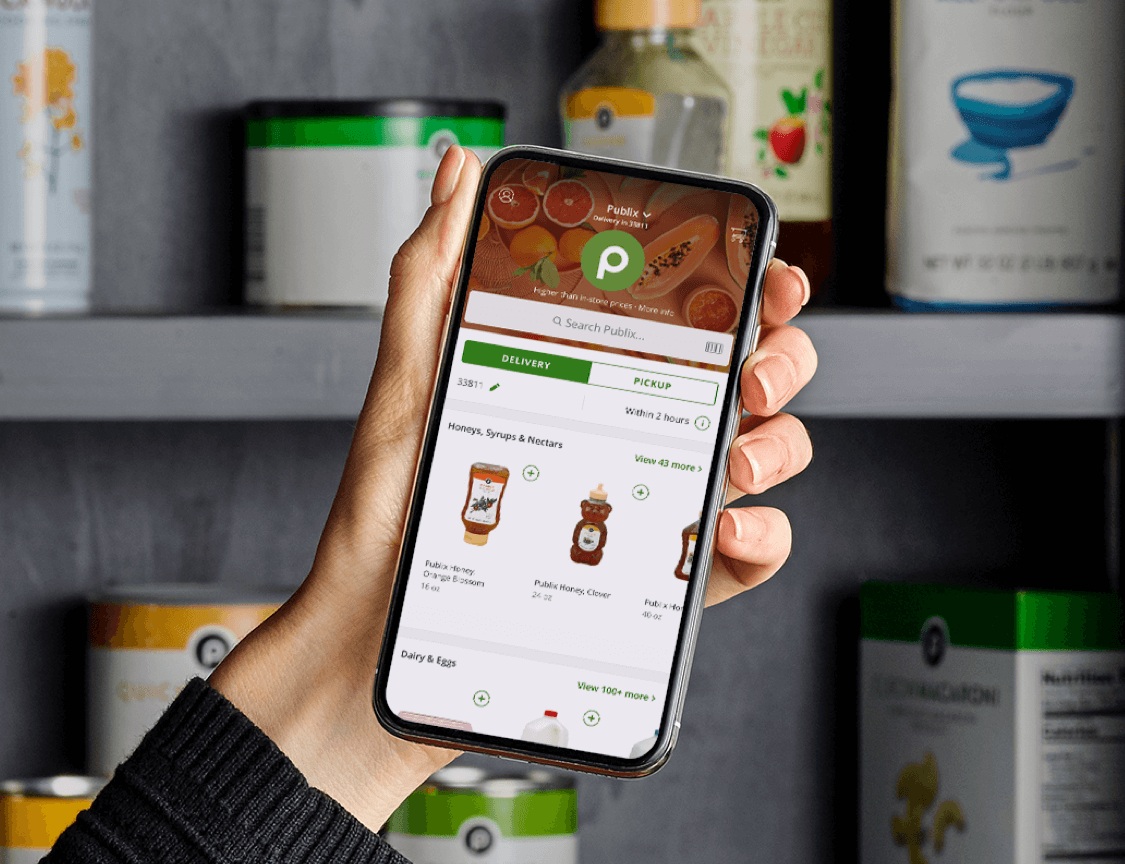
In 2016, Publix began testing delivery with Instacart. The arrangement changed the mechanism: a specialist partner supplied the delivery service around the grocery business. Customers can now order delivery or curbside pickup where available. Convenience carries a visible tradeoff. Publix’s published policy says online item prices are higher than physical-store prices; fees and tips may also affect the final bill.
The price of another visit
Scale gives Publix room to invest. Sales reached $62.7 billion in 2025, up 5% from 2024. Its annual report projected about $2.4 billion in capital spending for 2026, covering stores, distribution, technology and property. Those are substantial commitments to keeping a physical retail system useful.
Q2 2026
Q2 2026
New locations can help total sales while comparable stores face pressure.
Yet comparable-store sales declined 0.5% in the second quarter of 2026. Publix cited Medicare drug-price changes and economic conditions affecting consumer spending. The distinction matters: a company can grow overall while existing stores face pressure. Service still competes with the household budget.
Another operator can copy the discipline: attach a meaningful reward to the behavior you want, build the supply system behind the promise and test demand before expanding expensive infrastructure. The conditions matter. Ownership cannot repair unreliable execution; delivery cannot outrun weak order density. Publix’s enduring challenge is wonderfully ordinary: make the next shopping trip worth taking.