The odd thing about Costco is how much of its business depends on what you cannot buy. Walk into a warehouse expecting a particular brand, size and flavor, and you may leave disappointed. Walk in willing to let the buyer choose, and the bargain begins to make sense. The member gives up some choice. Costco puts a larger order behind the choices that remain.
- Fewer products concentrate purchasing power.
- Membership fees support a low-margin retail operation.
- Bulk value depends on what you actually use.
A smaller menu, a bigger order
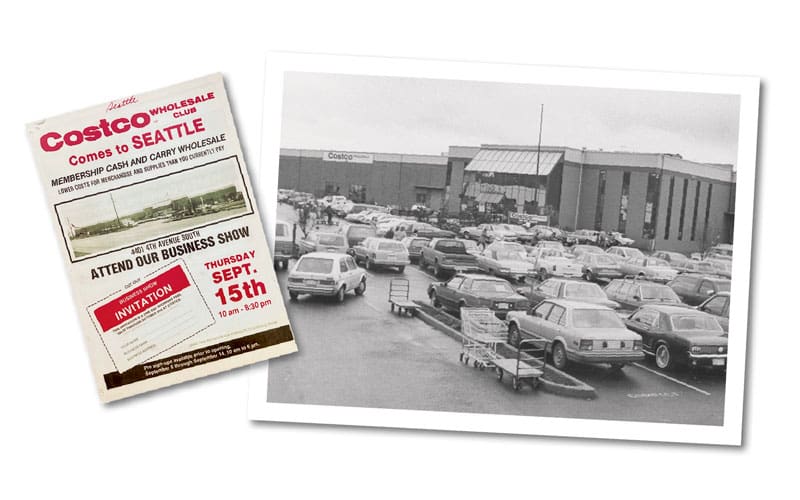
That arrangement has a history. Sol Price’s Price Club opened in San Diego in 1976, initially serving business buyers. Jim Sinegal learned the warehouse trade there. In 1983, he and Seattle retailer Jeffrey Brotman opened Costco. They were adapting an existing idea: give members access to goods without loading the price with the costs of conventional retail presentation.
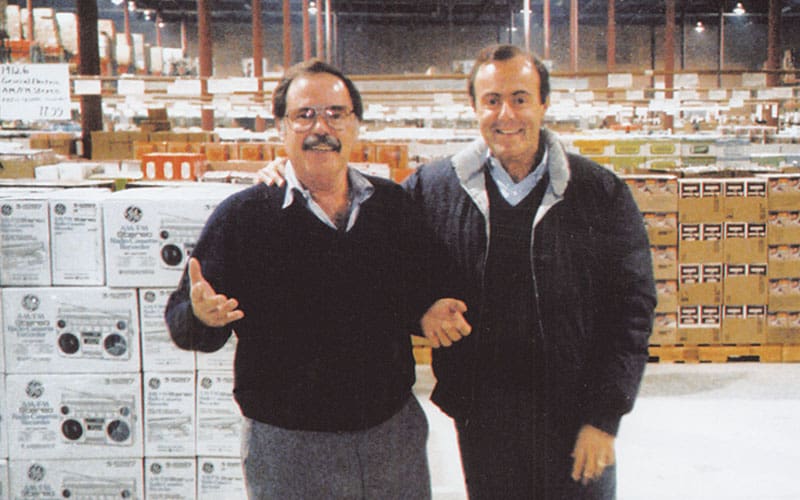
Costco and Price Club merged in 1993. Their combined operation had 206 locations and $16 billion in annual sales. The significance was more than size. Two practitioners of the same unusual discipline were now working inside one company. The bargain warehouse had become something that could be repeated.
Today, Costco’s core warehouses carry fewer than 4,000 active stock keeping units. A warehouse can feel enormous while offering relatively few alternatives within a category. That distinction is the trick. A smaller assortment concentrates purchases, reduces inventory complexity and gives each selected item more room to sell.
Consider the work hidden inside an ordinary shelf: selecting products, negotiating purchases, moving cartons, replenishing displays and clearing slow sellers. Every additional variation creates another decision. Costco’s approach removes some of those decisions before the customer arrives. The pallet and the plain floor are visible evidence of a purchasing system.
“Keep costs down and pass the savings on to our members.”Costco’s operating philosophy
The card pays for a promise
There is an entry price. In the United States, Gold Star and Business memberships cost $65 a year; Executive costs $130, before applicable taxes. Executive members receive 2% rewards on qualifying purchases, subject to exclusions and a $1,250 annual maximum. The upgrade therefore has arithmetic as well as aspiration behind it.
Eligible annual spending that covers the $65 Executive upgrade through rewards alone. Other benefits and taxes excluded.
For Costco, the fee adds a revenue stream alongside merchandise sales. Fiscal 2026 brought $297.247 billion in net sales and $5.907 billion in membership fees. Total net income was $9.226 billion. Calling all those fees profit would skip the expenses of running the business. Their importance is that customers pay for access before choosing individual products.
The customer is both a household shopper and, often, a commercial buyer. Business Centers tailor supplies to offices, convenience stores and food service. Families use the same broad proposition for groceries and household replenishment. The common requirement is enough recurring demand to make the trip, quantities and annual charge worthwhile.
Sam’s Club and BJ’s offer the closest warehouse-club alternatives. Supermarkets, Amazon and specialist stores compete for individual purchases. Costco’s position sits between the weekly grocery run and the wholesale supply trip. Its assortment asks shoppers to accept a buyer’s judgment in exchange for value, rather than promising that every possible preference will be waiting on a shelf.
One name on a very large cupboard
Kirkland Signature arrived in 1995, gathering private-label goods beneath one name. Earlier products had appeared under separate labels, including Chelsea toilet paper and Meridian coffee. Consolidation made the promise easier to recognize. It also connected the reputation of very different purchases: disappointment in one category could travel to another.
Costco’s expertise extends beyond negotiating a low invoice. It must choose products people will trust repeatedly. Its published mission emphasizes quality alongside price. Its code places care for members and employees, and respect for suppliers, ahead of rewarding shareholders. These are stated priorities, useful for understanding the decisions management asks people to make.
The services follow that membership logic. Pharmacy, optical, hearing aids, tires and gasoline give customers additional reasons to visit. Costco Travel, launched in 2000, applies negotiated buying to vacations, rental cars and cruises. A member can compare a holiday package as readily as a household purchase, although the quantities are rather harder to store.
The furniture that did not fit
The formula has limits. In 2009, Costco announced the closure of its two standalone Home stores, in Kirkland, Washington, and Tempe, Arizona. Sinegal pointed to the economic slowdown and particular weakness in home furnishings. Management concluded that the separate format did not fit its long-term expansion plans.
The annual report recorded $17 million in net provisions for impaired assets and closing costs that year, primarily associated with those closures. That is an accounting charge, not the experiment’s complete lifetime cost. It offers a concrete reminder that buying power alone cannot settle questions of demand, timing or store format.
The part worth borrowing
For another operator, the useful lesson is to simplify expensive complexity before promising savings. Concentrate demand, reduce unnecessary handling and make quality consistent enough to earn another purchase. A membership fee needs a reason to exist; adding one does not create that reason.
For shoppers, the test is equally practical. Compare unit prices, count what will get used and include travel, storage and membership costs. Small households, distant shoppers and people who need a particular brand may find a supermarket or specialist more convenient. A large pack that expires is an expensive bargain.
Costco is also changing the journey. Its nationwide U.S. DoorDash partnership launched in September 2026. September retail-month sales reached $30.02 billion, up 13% from a year earlier. More ways to order widen access, while delivery charges still belong in the customer’s calculation. The underlying question remains wonderfully ordinary: will the next purchase make the card worth keeping?