The first thing Jon Beekman sold was a delay. His customers paid for a gift, but the recipient could not immediately get at it. There was a wooden crate, a sealed lid and a crowbar. What would be an annoyance in any other parcel became the entertainment. Everyone in the room could watch a man work for his present.
That small act explains Man Crates better than a list of beef jerky, whiskey glasses or grilling tools ever could. The company sells themed gifts for men. Its signature product turns the wrapper into the opening act. The buyer gets an answer to a familiar question - what do you give a man who is difficult to shop for? - and the recipient gets a performance before he gets the stuff.
- Man Crates began with a $1,000 test after Beekman's earlier group-gifting venture fell short of his hopes.
- The wooden crate and included crowbar made opening the package part of the product.
- The line grew from one crate into food, barware, personalized gifts, ammo cans and maker kits.
- The brand now appears in Thoughtfully's catalog, where the Man Crates domain redirects.
The idea came before the contents
Beekman had already spent time in gifts. His previous company, GroupIt, tried to organize group purchases. It licensed its technology and was acquired, but by his own account it was not the success he had hoped for. He took away a specific lesson: spend less money before you know whether anyone will buy. When he pitched his next venture at home, he promised his wife that the initial test would cost only $1,000.
That limit shaped the experiment. He built an early site himself. Some of its product images were mockups. There was only one actual Man Crate for roughly the first six months, he later told Mixergy. He had a crate-opening concept before he had a polished assortment to put inside it. In most retail meetings, that would sound backward. Here, the box was the part worth testing.
“Sell it before you build it.”
He bought early items at stores and used search ads to learn whether strangers would click, convert and pay. The important number was not how many friends liked the idea. It was whether a repeatable acquisition channel could bring buyers at a workable cost. The first venture had taught him what enthusiasm without purchase can conceal. This one asked for the credit card sooner.
A present with a plot
Traditional gift baskets make everything visible and easy. Man Crates offered suspense and a tool. A sealed box gave the recipient a task, which gave the giver a story. The crate was memorable even when its contents were familiar: jerky, hot sauce, whiskey accessories. This was not an invention of new categories of merchandise. It was a change in the order in which the customer experienced them.
The choice also gave the brand a photographable moment. A person wrestling with a crate is more interesting than a person removing tissue paper. A 2015 San Francisco Chronicle report said roughly 60% of its customers at the time were women. That matters: the company's masculine language was aimed at the person receiving the gift, while much of the buying was done by someone else. The product had to satisfy both. It needed to be easy to choose and satisfying to watch.
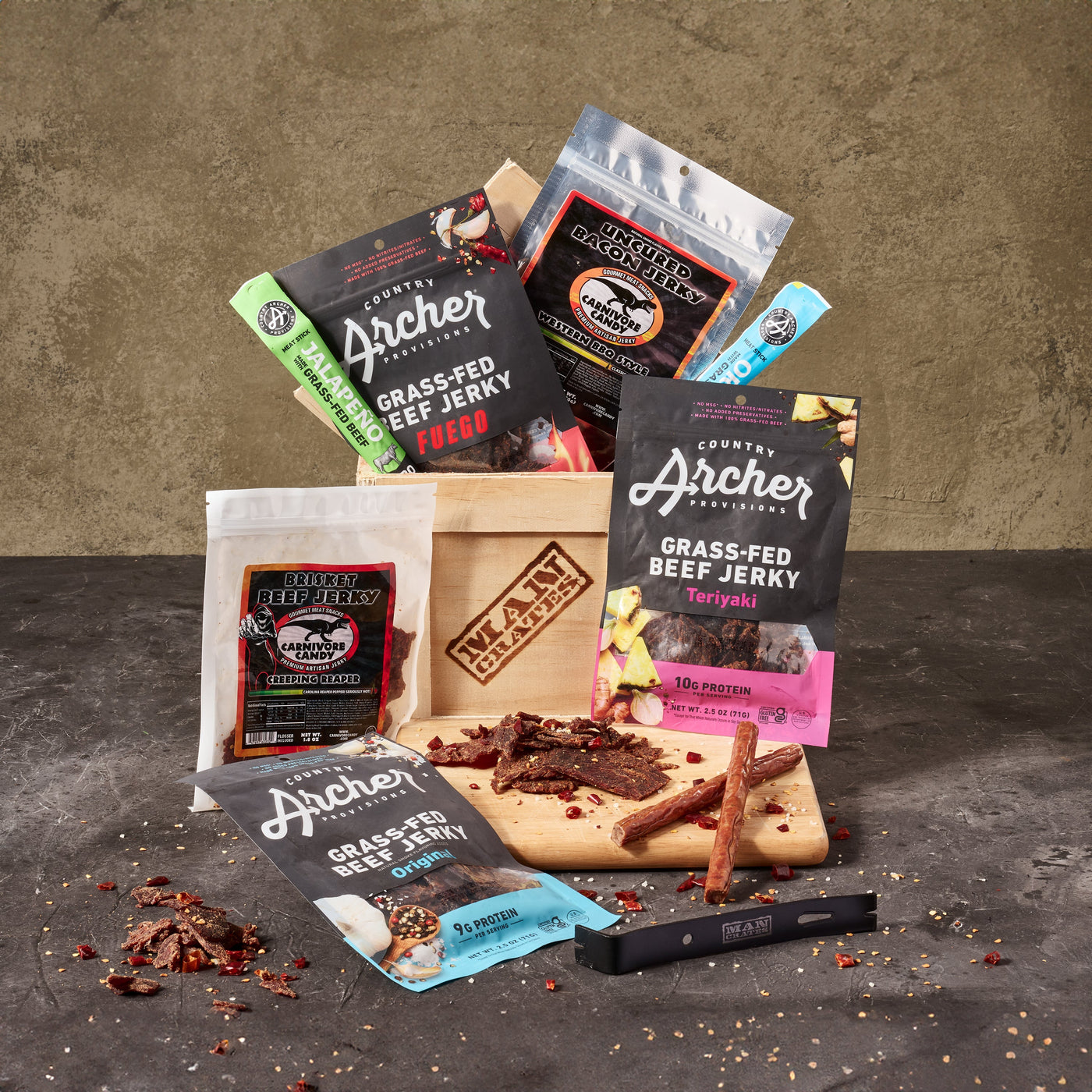
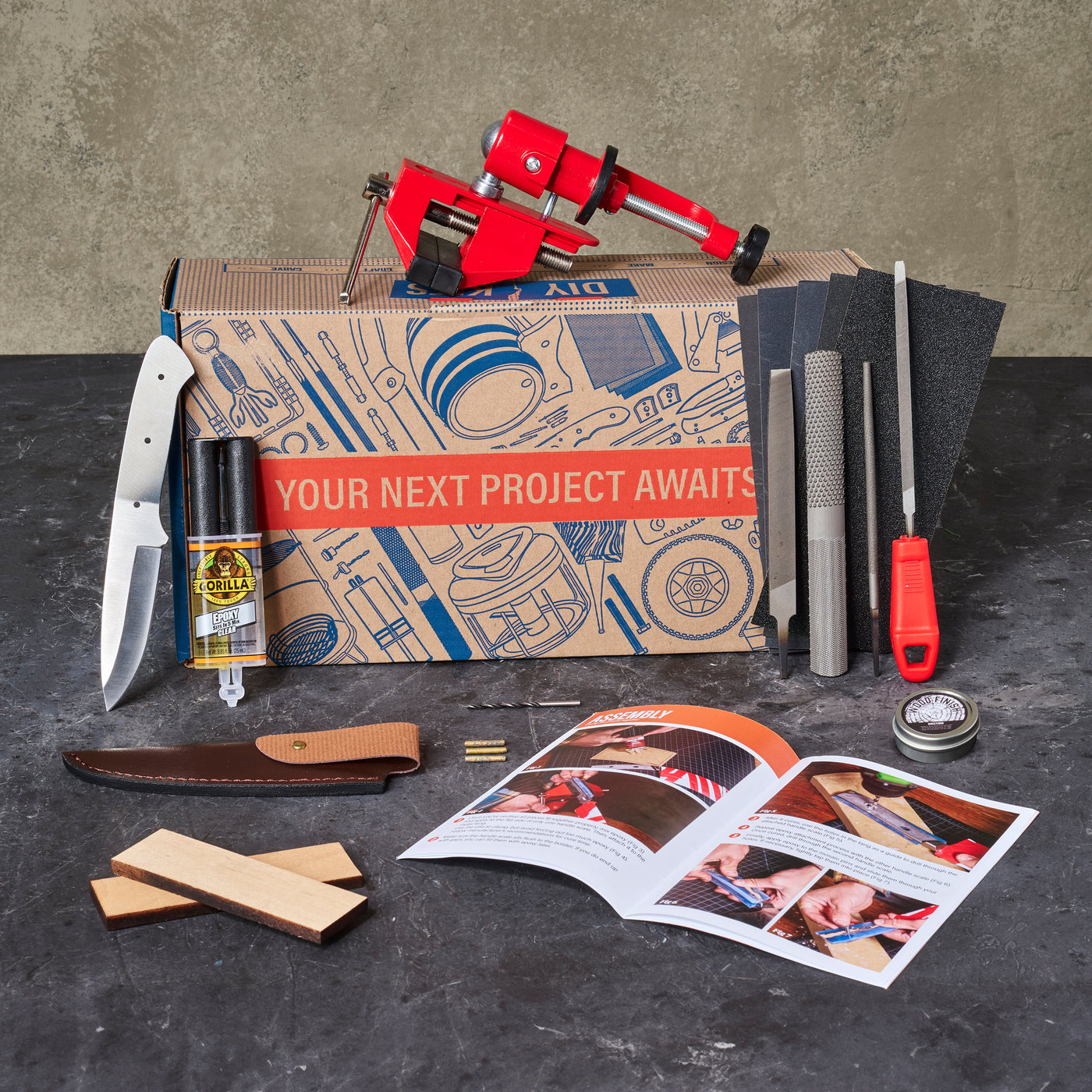
The original joke proved expandable. By 2016 Beekman described an 85-package catalog ranging from $20 to $180. There was a Premium Jerky Ammo Can, a whiskey crate with a personalized decanter and glasses, and a gift-card code sealed inside a brick. Maker kits invited recipients to carve a pipe, cure bacon or brew beer. Today's Thoughtfully catalog still presents Man Crates products, including hot sauce crates, jerky, steak-night sets and knife-making kits. Some listings are in stock; others are sold out. The assortment is a living retail catalog, not a museum of the startup years.
The costly part is the point
The business model is straightforward retail: source and assemble themed products, sell them online, charge for the package and the experience. Corporate gifting extended the same idea to colleagues and clients. But the operational burden is less straightforward. Wood is heavier than a gift bag. A crowbar is extra inventory. Personalization adds processing time. A food set introduces freshness and stock problems. The inconvenience is exactly what the customer sees, so a cheap imitation can quickly become an expensive disappointment.
The company learned to broaden without depending on every item being inside a nailed box. Ammo cans are reusable containers. Maker kits turn the gift into an activity after the opening. Personalized glasses or golf balls give the recipient a durable object. This is how Man Crates differs from a conventional basket seller or a men's subscription box: its central promise is a one-time, occasion-ready surprise with a scripted opening. That promise can travel across formats, but it must still feel worth the ceremony.
In 2015 the company announced a $3.1 million seed round with investors including Rothenberg Ventures, Sovereign's Capital, OVO Fund, Corazon Capital and Tekton Ventures. It said holiday-season growth had reached 400% year over year. In 2016, the San Francisco Business Times described it as a $20 million revenue business, and Inc. ranked it No. 51 on the Inc. 5000. Those are historical markers, not a readout of current sales. The current Man Crates storefront sits within Thoughtfully; the old domain redirects there, and Thoughtfully's help pages say Man Crates accounts were merged into its site. Beekman's Praxis biography says he exited in 2023.
What a copycat should copy
The useful lesson is not “put a tool in the box.” That would produce a lot of awkward packages. Beekman isolated one hypothesis - whether the opening itself could sell a gift - and tested it before building a large catalog. He also chose a mechanism customers could explain in one breath. A recipient pries open a crate. The contents are a reward; the struggle is the advert.
A retailer trying the same move needs an occasion people care about, an audience comfortable with the joke and margins that can pay for special packaging. The recipient must enjoy the task. If opening feels like a chore, the performance curdles. For a fragile, urgent or highly practical purchase, the neat cardboard box may still be the better gift. Man Crates worked because the little bit of resistance was invited, visible and solvable. The crowbar came with the problem.