The company selling solar the way Netflix sells movies: no download, just a monthly bill
Rooftop solar has always been sold like a mortgage: big money down, decades of commitment. Terra Energy sells it like a phone plan instead - $0 upfront, a three-year term, and up to half off the power bill from day one.
For about twenty years, the rooftop solar industry sold homeowners a strange proposition: spend roughly $30,500 today, wait the better part of a decade to break even, take on a loan and often a lien on your house, and sign a contract that might outlast your dog, your car, and possibly your marriage. It worked for early adopters and people who love spreadsheets. For everyone else, the math was a wall. Terra Energy, a Miami company founded by Jaime Martinez, decided the panels were never really the problem. The paperwork was.
So Terra did something almost aggressively simple. It stopped selling solar as a thing you buy and started renting the outcome. Homeowners pay nothing upfront. Terra designs the system, pulls the permits, installs the panels, and keeps ownership of the hardware on your roof. You sign a three-year subscription, watch your electric bill drop by up to 50% starting in the first month, and if you decide it is not for you after the initial term, you can walk. Insurance and maintenance are included. There is no lien on the house.
Our approach delivers energy that saves customers significant money on day one, with no debt, no equipment burden, and no long-term lock-in.- Jaime Martinez, Founder & CEO
The pitch is a phone plan, not a power plant
Martinez has a line he keeps coming back to: signing up for solar should feel like signing up for cell phone service. Not a mortgage, not a home renovation, not a 25-year commitment - a product that is, in his words, digestible. A short-term commitment, like a car lease. The comparison sounds like marketing until you notice how completely it reorganizes who carries the risk. In the traditional model, the homeowner owns the asset, and therefore owns every problem: the financing, the roof penetrations, the inverter that fails in year seven, the resale headache. In Terra's model, Terra owns the asset and every problem attached to it. The customer owns exactly one thing - a smaller bill.
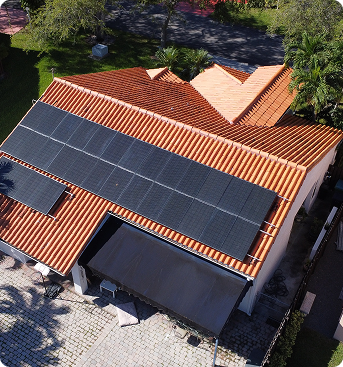
That single flip - who holds the risk - is the whole business. It is also why Terra's numbers read less like a solar brochure and more like a subscription company's metrics deck. The most telling figure is not megawatts installed; it is retention. Terra says that past the three-year mark, 98% of its Mexican customers stay, and in Florida the figure is 100%. Churn that low is the kind of thing SaaS founders frame on the wall. When people can leave and almost none do, it usually means the product quietly kept its promise.
The number that makes the sale
Ask why the subscription clears the wall that ownership never could, and the answer is one comparison. Buying a system means writing a large check now against savings that arrive slowly over years. Terra means writing no check and pocketing savings immediately. Below is the same decision, two ways.
Traditional solar recoups its cost over years of bill savings. Terra front-loads the savings and keeps the invoice off your desk. Figures are approximate and vary by home and utility.
There is a monthly rate, of course, and it is not free money - Terra's subscription carries a fixed price with a 1.9% annual escalator, roughly tracking the slow creep of utility rates it is designed to beat. The bet Terra is making is that a predictable, lower bill with someone else handling the hardware beats an unpredictable, higher bill you own outright. So far, the retention numbers suggest customers agree.
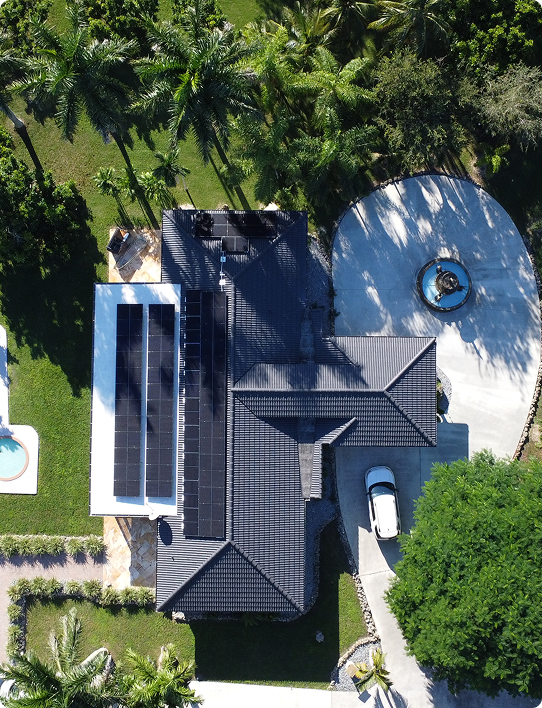
Built in Mexico first, then run back
Terra is not Martinez's first attempt at this idea - it is his second run at the same playbook. The company grew out of an Ivy League startup into what became Mexico's leading rooftop solar business, where Terra says it operates in more than 100 cities, commands 40%-plus market share in many of them, and partnered with HSBC on what it describes as Mexico's first residential solar structured finance deal. Across Mexico and the US, Terra counts more than 8,000 customers, adds around 200 installations a month, and says customer systems have generated on the order of 1,000 megawatts of clean energy.
Martinez himself is an unusual fit for a door-to-door-adjacent industry: a chemical engineer with a renewable-energy focus and an MBA in finance from Cornell, with earlier stops at Pemex and Emerson. He is, by the company's own telling, a kitesurfer and a chess player, a husband and father of two. The chess part tracks. Terra's edge is not a better panel; it is a better sequence of moves - controlling design, installation, and service in-house so it can absorb the risk it takes off the customer.
It's a short-term commitment, like a car lease or cell phone service.- Jaime Martinez, on why the model finally sells
$105 million, and lenders who like the model
In January 2026, Terra closed a series of fundings totaling $105 million to bring the model north and west. The structure is worth reading closely, because it tells you how the business actually works. The headline piece is a $35 million green loan from Breakwall Capital, layered with equity from ARC PE and Azora Capital and credit facilities from Banesco and First Horizon Bank. This is not a company raising a pile of venture cash to burn on growth; it is an asset-backed operation borrowing against roofs full of hardware it owns. When you own the panels, you can finance them - and you capture the tax credits and incentives too.
- Breakwall Capital - $35M green loan
- ARC PE & Azora Capital - equity
- Banesco & First Horizon - credit facilities
The money is aimed at the three hottest solar markets in the country: Florida, where Terra is already the largest residential provider by volume; Texas, where it has now launched; and California, which is underway. The speed of the Florida climb - roughly 18 months from arrival to the top by volume - is the proof point the raise is built on. Do it once in Mexico, do it again in Florida, and investors start to believe the model travels.
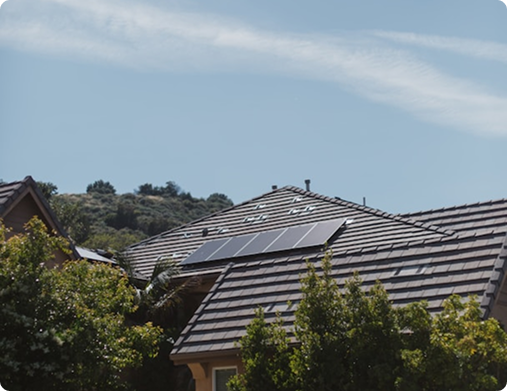
In Houston, it starts to look like a utility
The most revealing move came in June 2026. In Houston, Terra launched what it calls the area's lowest-cost home energy plan - and it is not just panels. It bundles rooftop solar, whole-home battery backup, and retail electricity into a single plan, and Terra registered as a Texas electricity broker to do it. Read that again: a solar installer is now selling you the electricity too. Add a battery - Terra's storage option runs up to 40 kWh - and the customer gets backup power and something closer to energy independence, all on one bill from one company that owns the gear on the roof.
This is the tell for where Terra is heading. Thousands of owned rooftop systems, each paired with storage, managed centrally through Terra's app, start to look less like a pile of individual installs and more like a decentralized power network - a virtual power plant assembled one roof at a time. The company frames its competition as Netflix and cell carriers rather than other installers, and the Houston bundle explains why. It is not trying to win the solar sale. It is trying to become the thing that shows up on your utility statement.
From class project to Florida's biggest
Where it could stall
The model is not weatherproof. Terra owns the panels, which means Terra also owns the exposure - to tax-credit and incentive policy that can shift with an administration, to interest rates that make asset-backed financing more expensive, and to the operational grind of installing and servicing hundreds of systems a month across multiple states. A subscription that leans on federal incentives has to keep working if those incentives thin out. And a 100% retention figure in one state, in the early years of a fast climb, is a promising signal rather than a settled law of nature. The interesting question is not whether the pitch works - it plainly does - but whether the economics hold as Terra scales from thousands of roofs to hundreds of thousands.
For homeowners, though, the appeal is refreshingly concrete. If you have wanted solar but balked at the check, the loan, or the decades-long contract, Terra's offer is the version that removes all three: put panels and a battery on your roof, pay nothing today, cut your bill, and keep the option to leave. Whether that is the future of home energy or just the smartest sales structure the industry has produced in years, it has already done the hard part - it got people to say yes.