The useful thing about Jaime Martinez’s solar pitch is that it can be understood before the coffee cools. Put panels on the roof. Pay no upfront cost. Let Terra maintain the equipment. Commit for three years, not a generation. If the service no longer earns its place after that, the customer can leave. An industry accustomed to discussing tax credits, kilowatt-hours, liens and twenty-five-year agreements is suddenly being described with the breezy familiarity of a cell-phone plan.
The ease is carefully manufactured. Behind the short sentence sits a company that sells, engineers, permits, installs, monitors, maintains, insures and owns its systems. Martinez has not removed the complexity of residential solar. He has moved it off the homeowner’s desk and onto Terra’s.
That distinction explains much of his career. Martinez is a Mexican chemical engineer with graduate training at Cornell and experience at Pemex and Emerson. His public biography supplies two details that seem almost mischievously apt: he has played chess for decades and is an avid kitesurfer. One pastime rewards position; the other begins with the admission that the wind will do as it pleases. Energy markets demand both temperaments.
The objection that would not go away
About two decades ago, fresh from undergraduate study, Martinez worked on an oil-and-gas trading floor in Houston. The screens showed commodities and margins. He kept noticing the system around them: an aging grid, power lost over distance, large plants sending electricity through a centralized network. He began imagining generation closer to the point of use, a decentralized utility made from many small sites.
“I’ve always been obsessed with energy,” he has said. “It drives progress and evolution. Every time humanity discovers a new way to harness more of it, we advance.” It is a grand thesis. His implementation is pleasingly domestic. The revolution lands beside the roof vent, waits for the permit office and appears on a monthly bill.
“Energy is progress.”Jaime Martinez
Mexico’s energy reforms opened a practical path. Martinez and his friend Luis Roberto Perez Aguirre developed Proyecto Terra around a financing and management system for rooftop panels. Outside investors could own the equipment; households could use the power without buying the system; software could manage the portfolio and the sale of excess electricity. The idea attacked two barriers together: the cost of equipment and the reluctance to sign a long contract.
Recognition arrived early. In 2017, Martinez was selected for Innovators Under 35 Latin America. In 2018, he appeared in Renewable Energy World’s first Solar 40 Under 40. Awards are pleasant mantel furniture, but the useful part was the validation of the mechanism: finance the asset, distribute the generation and turn a daunting capital purchase into an ordinary service.
The original system also had a software spine. Algorithms managed excess energy sales and optimized returns across a portfolio of small rooftop installations. Each house was modest; aggregated, the roofs began to behave like infrastructure. That was the conceptual trick. A power plant no longer had to look like a power plant. It could be scattered across a city, disguised as ordinary architecture, with finance and code binding the pieces together. The same design served several parties at once: households received cheaper electricity without purchasing panels, investors owned productive assets, and generation occurred closer to demand. Martinez called the ambition clean and cheap energy for the whole world. He began with the square footage nobody was using.
A short contract creates a long job
Terra lists 2016 as its founding year and began operating in the United States in 2023. Its American home is Miami, where the company took the model into Florida before moving toward Texas and California. The national ambition matters less than the order of operations. Martinez says Terra enters a small service area where it believes it can underprice the incumbent utility, learns the peculiar rules and costs of that market, and expands outward. Solar may fall from the same star, but permitting departments remain gloriously local.
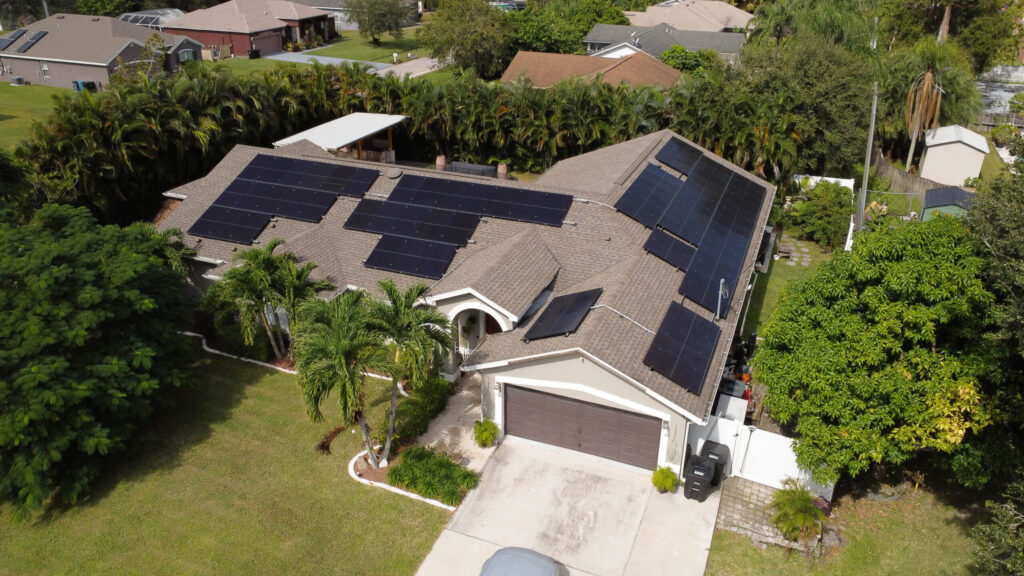
The subscription’s initial term is 36 months. There is no upfront investment, and maintenance is included. In April 2026, the company said its fixed monthly rate carried a 1.9 percent annual escalator. Customers could leave after the initial term without paying for removal. For Terra, which owns the panels, that promise creates a potentially expensive obligation. For a homeowner, it takes a crowbar to one of the largest objections: the fear of being stuck.
Martinez’s answer is unapologetically commercial. Terra intends to remain the best energy provider at that address. If it succeeds, cancellation is a right rarely exercised. The company reported that 98 percent of eligible Mexican customers stayed beyond three years. In Florida, every customer who had reached that mark was still subscribed when Terra discussed the number in April 2026. Those are company-reported figures, young in the American market, but they reveal the wager. Optionality is being used as both a sales tool and an operating discipline.
Company-reported retention among customers who had passed the initial 36-month term, as of April 2026.
This flips a familiar founder instinct. Many businesses seek safety in lock-in. Terra offers an exit and tries to make staying preferable. A long agreement can postpone judgment. A renewable relationship receives judgment every month, neatly folded into the electricity bill.
Simplicity has a back room
Residential solar often resembles a relay race in which several runners have never met. A sales company passes the customer to an installer; engineering and permitting move through other hands; financing packages the long stream of payments; service inherits whatever remains. Each handoff adds cost, margin and the chance that a baffled homeowner becomes the project manager.
Martinez chose vertical integration. Terra controls sales, engineering, logistics, support and asset management. It owns the systems instead of treating the contracts chiefly as material for securitization. The arrangement is capital-hungry and operationally fussy, but it lets the company design the consumer promise and the machinery that must honor it.
In January 2026, Terra announced $105 million in combined financing. The package included a $35 million green loan from Breakwall Capital, equity from ARC PE and Azora Capital, and credit facilities from Banesco and First Horizon Bank. By April, the company reported 10,000 customers. Two months later, Martinez said Terra was adding roughly 1,000 customers each month.
Texas brought a new variation: rooftop panels, a 40 kWh whole-home battery and retail electricity presented on one bill. California was next on the 2026 map, followed by broader expansion across the South. The model is not copied thoughtlessly from one state to another. Batteries matter differently in Texas; utility prices, incentives and permits shift by postcode; the customer still wants one comprehensible answer.
“Our approach is to make a product that is very digestible and easy to sign up for from the customer side.”Jaime Martinez
The founder as complexity porter
Martinez describes a CEO’s work in spare terms: define the vision, communicate it clearly, secure the capital and assemble the team capable of making it real. His confidence is similarly blunt. He says he never doubted the company because the fundamentals were present; execution was the remaining matter. There is swagger in that sentence, though it is the engineer’s sort, braced by a spreadsheet.
He now connects the original energy obsession to artificial intelligence. More computation requires more power. To Martinez, the appetite merely repeats a historical pattern: available energy expands what civilization can do. Terra’s rooftops are far from the vast data-center load that dominates the AI electricity debate, yet the larger point is coherent. A grid under rising demand benefits from generation spread across the places where people already consume power.
The aspiration has remained remarkably stable. In 2017, Martinez stated his objective as producing clean, cheap energy for the whole world. The phrase has the width expected of a young founder. Nearly a decade later, the method has become narrower and more concrete: select a service area, price the system, handle the permit, install the panels, answer the support request, maintain the asset, persuade the customer to renew.
This is where his chess and kitesurfing biography stops feeling ornamental. Terra is placing pieces for a long game inside a market that changes direction without consulting the forecast. Policy shifts. Financing tightens. Utility rates move. Equipment improves. The company promises upgrades because a decade is a long time to leave technology untouched, even when the first customer commitment is short.
The elegance of the idea is not that solar became effortless. Roofs remain stubborn objects. The elegance is that effort acquires an owner. Martinez wants Terra to carry the forms, hardware, financing risk and maintenance so a household can make a smaller decision: is this a better source of energy for this home, at this moment?
If the answer stays yes, the subscription renews. If it turns no, the panels can come down. Freedom, in this model, is not the end of the relationship. It is the monthly reason to deserve one.