A patient taps a card at a hospital reception desk. The terminal beeps. For the patient, the transaction is over. For the hospital, several questions remain: Which account gets credited? Where did the card number travel? Can someone issue a refund without asking for the card again? A small payment has acquired a surprisingly large administrative life.
- Tempus connects payment devices, websites, and business software through a secure gateway.
- Its specialty is fitting payments into complicated operations, including Epic healthcare systems.
- PNC acquired the business in 2021; merchant processing remains a separate service.
That gap between the beep and the bookkeeping is where Tempus Technologies works. Based in Auburn, Indiana, and founded in 1987, the company develops payment software, gateway services, and integrations. Its proposition is practical: customers should be able to pay in familiar ways while the organization behind the counter keeps its systems connected and its sensitive data protected.
The card number takes a different route
Payment security has a geography. A card number can pass through equipment, applications, and networks. Each place it appears creates another place that needs protecting. Tempus offers point-to-point encryption, or P2PE, alongside tokenization. In plain English: protect the payment data along its route, and use a substitute identifier where the actual card number is unnecessary.
The distinction matters when a business wants to remember a transaction. A refund, a report, or a later payment should not require scattering readable card details across office computers. Tempus describes its gateway as PCI P2PE validated and identifies itself as a PCI Level 1 Service Provider. Those are specific security credentials, rather than a promise that every connected business becomes secure automatically.
Business software can use a token reference in place of the card number. Configuration and payment channel determine the implementation.
Its implementation manual supplies the useful complication. A merchant opting a device out of P2PE must acknowledge responsibility for the security consequences and the loss of the solution's PCI DSS scope reduction. The lesson is refreshingly unglamorous: a security feature delivers its benefits only when the installation and operating practices preserve it.
A hospital is several checkouts wearing one name
Consider the range of payment encounters inside healthcare. Someone pays at reception. Someone else uses an unattended kiosk. A patient opens a bill at home. A pharmacy accepts a healthcare-benefit card. Calling all of these encounters “checkout” conceals the different software, permissions, and records involved. Tempus has built its offering around those differences.
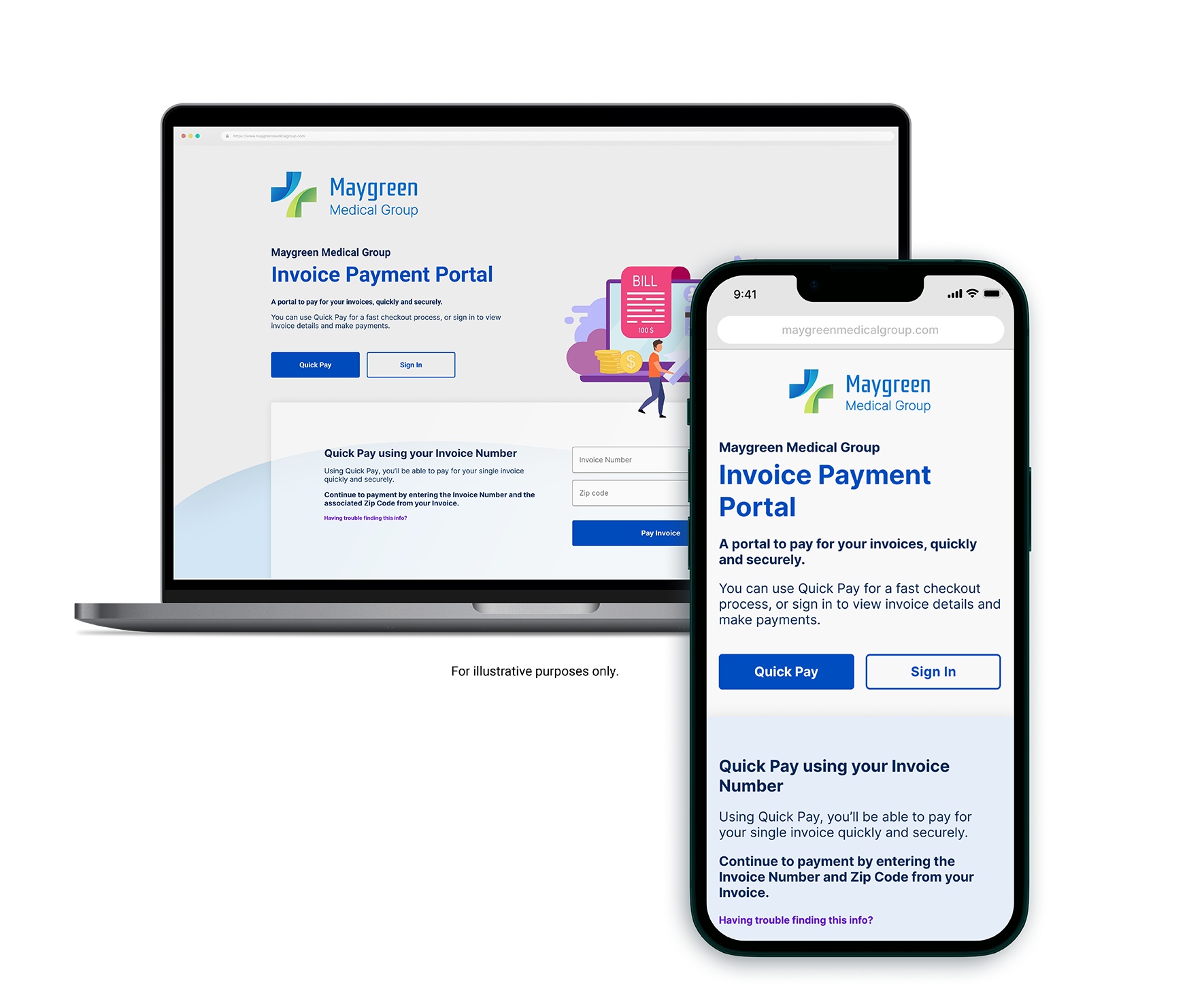
The company lists integrations with Epic's Welcome kiosks, Resolute hospital and professional billing, MyChart portals and eVisit, and Willow pharmacy modules. This is a useful description of its expertise: connecting payment acceptance to the places where healthcare organizations already work. Epic remains a separate vendor, with its own agreement and fees.
Pharmacies get a more specialized package. PaymentMate for Pharmacies includes a POS computer, application, terminal, and accessories. Tempus says the solution is SIGIS certified for healthcare-benefit cards, including HSA, HRA, and FSA cards. The industry directory independently lists Tempus and its PaymentMate Rx offering. Here, accepting a payment means understanding which kind of payment the customer has brought.
The product is also the fitting
PaymentMate is the recognizable product family. Desktop software runs on Windows; mobile editions are offered for iOS and Android; terminal editions support Ingenico devices. Payment portals and web services extend acceptance online. Invite2Pay sends payment requests by text or email. Reporting tools help staff find and manage transaction activity after the customer leaves.
Beyond healthcare, Tempus targets retail, automotive businesses, education, insurance, and financial services. The recurring problem is integration. A dealership has a dealer management system; another business has an enterprise resource planning platform. Tempus offers APIs and developers to connect payment functions to those existing systems, plus implementation help, training, and US-based support.
Buyers comparing gateways such as NMI or in-person payment tools such as Stripe Terminal should look closely at their own workflow. Tempus emphasizes custom implementation, existing business systems, and industry-specific requirements. That emphasis gives a comparison something more useful to measure than the length of a payment-method list.
For a buyer, that suggests a sensible evaluation: bring an actual refund, a reconciliation task, and a difficult payment scenario to the demonstration. Ask the vendor to follow each one through the systems staff use. A smooth tap is pleasant. A payment correctly attached to the right account is what makes the afternoon manageable.
Why a bank wanted the connector
On January 27, 2021, PNC announced an agreement to acquire Tempus. PNC's subsequent annual reporting confirmed the acquisition. The bank described a plan to combine Tempus's capabilities with its treasury platform, giving corporate clients a broader way to handle payments and collections. The strategic attraction was the connection between payment acceptance and banking.
“We look forward to expanding our services and product set”
Jason Sweitzer, then president, in PNC's January 2021 announcement
That was an expansion argument. PNC said Tempus would keep its Auburn operations, employees, and channel relationships. Today, Tempus's leadership page names Mike Gallagher as president and Melissa Irk as chief operating officer. The ownership story and the current management story belong to different dates.

Read the agreement before the beep
Tempus occupies the gateway and integration layer of the payments market. Its disclosures explicitly separate that work from merchant processing services supplied by third parties. PaymentMate requires a gateway account and an executed agreement. Buyers should therefore request an itemized proposal covering gateway access, devices, integration, support, and separate processing charges, then compare the complete operating arrangement.
The approach fits organizations whose existing systems and payment channels need careful coordination. A business with a single uncomplicated checkout should weigh whether custom integration earns its keep. A hospital or pharmacy should test the particular modules, devices, and payment types it needs, rather than treating a broad compatibility claim as an implementation plan.
In October 2026, Tempus published an article about connecting in-store, online, and mobile acceptance. The subject neatly describes its continuing bet. Customers keep finding different ways to pay. Someone still has to make those payments arrive in the right place, with the right records attached. Tempus sells the work that makes the beep believable.