A wedding dress is an unusually bad place to discover a payment problem. The customer has made a decision that may have taken months. A stylist has helped her make it. Now a small machine on the counter gets a vote. In January 2018, David’s Bridal and its technology partners announced a checkout upgrade across more than 300 U.S. stores. Ingenico supplied the terminals. Aurus connected the payments.
- The job: connect payments across stores, websites, phones and kiosks.
- The buyer: retailers with complicated operations and existing technology.
- The bet: make adding a payment choice less disruptive.
The announcement described chip-card acceptance, tokenization and point-to-point encryption. These are technical words for an intensely human objective: let the person selling the dress concentrate on the person buying it. Michael Toth, then the retailer’s CIO, said the system “allows our in-store stylists to focus on what really matters - the customer.”
That is a useful introduction to Aurus. It operates in the space between the experience a retailer promises and the machinery required to deliver it. Customers see a terminal, a phone or a checkout button. Aurus works on the connections behind them.
The dress comes first
Aurus began in 2000, originally under the name TalentBeat. Founder and CEO Rahul Mutha’s biography describes a garage and two employees. Co-founder Punam Mutha, now President and COO, brought a technical background before moving into operations and finance. The company combines a Massachusetts headquarters with engineering operations in Pune, India.


There is an appealing footnote in Rahul’s background: his published biography lists research with NASA and JPL on semiconductor degradation in outer space. Retail payments are more earthbound. They still demand attention to what happens when conditions become awkward.
A grocery purchase may involve a benefits card. A restaurant payment may happen at the table. A shopper may buy through a browser and return the item to a store. Treating these as unrelated transactions leaves the merchant with the work of joining them later.
Keep the card out of the conversation
Aurus’s security story starts with a boundary. Its 2013 patent describes separating sensitive payment handling from the point-of-sale infrastructure. The card terminal sends payment information to a remote authorization service while isolating that information from the store’s wider systems. The aim is to reduce the merchant’s PCI compliance scope: the systems that must meet card-data security requirements.
Consider what a token does. It gives the merchant a substitute reference for sensitive payment data. The reference can travel through the business without requiring every application to hold the underlying card number. That distinction matters when a transaction has a second act: a return, another channel, a customer-service inquiry.
The practical lesson is to ask where sensitive information actually goes. A new checkout screen can look reassuringly modern while the systems behind it remain tangled. Aurus’s proposition addresses the architecture beneath the screen.
The freedom to keep what works
AurusPay sits among the merchant’s channels, payment devices and processors. J.P. Morgan’s partner listing describes support for card-present and online transactions, multiple terminal types, customizable checkout and operational tools. This is infrastructure for businesses whose existing arrangements already contain plenty of moving parts.
The platform’s supporting products divide up the chores. StorePlace handles transaction visibility and reconciliation. X-Switch connects processors and devices. TokenVault holds tokenized payment information. The company also supplies application development and maintenance, giving merchants a route for requirements that exceed the standard product.
The partnerships reveal the strategy. TCS paired Aurus with OmniStore in 2017. CITCON added Chinese mobile-wallet acceptance in 2019. Riskified brought its fraud-management and chargeback-guarantee offering in 2022. These announcements describe different additions to a shared payment environment, rather than a requirement that every capability come from one supplier.
“allows our in-store stylists to focus on what really matters - the customer”
Michael Toth · David’s Bridal · 2018
That puts Aurus in a market alongside independent orchestration platforms such as FreedomPay and unified-payment providers such as Adyen. Connecting channels is a shared ambition. Aurus emphasizes choice among processors and devices, backed by integrations and engineering services. A buyer still has to examine the particular connections a deployment needs.
The economics deserve the same care. Aurus advertises flat platform fees, menu pricing, no per-transaction platform fees and hardware passed through at cost. That proposition concerns its platform charge. A merchant comparing offers should also count acquiring, interchange, implementation and support. The useful number is the total cost of running the intended operation.
The checkout leaves the counter
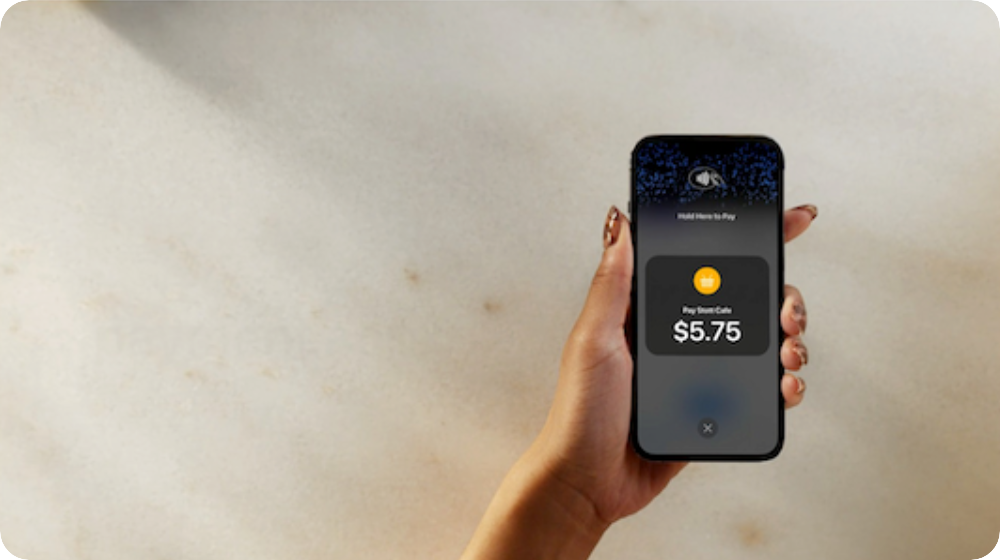
The next checkout may already be in an employee’s hand. Aurus introduced Vayu Lite in June 2023 to let merchants repurpose mobile hardware for contactless payments. In January 2025 it announced Tap to Pay on iPhone. Supported devices and a suitable app matter; the attraction is taking payment where service happens.
Online, another kind of convenience arrived through Paze. Aurus’s July 2024 announcement named Wakefern banners ShopRite and The Fresh Grocer among early adopters. Eligible cards could appear in a digital wallet, removing manual card entry from the purchase. For a shopper, the benefit is a shorter task. For the retailer, it is another payment choice carried by an existing platform.
In June 2026, Aurus and Bite announced a kiosk partnership combining self-service ordering with payment acceptance. Their stated goals include better order flow and operational efficiency. Those are aims, not measured results from a named joint deployment.
For a retailer considering this approach, start with one complete journey: purchase, refund, reconciliation. List the devices, processors and countries involved. Test the awkward cases before admiring the happy path. A business with one straightforward checkout may have little reason to add an enterprise integration layer.
That exercise also changes the buying conversation. Ask a supplier to demonstrate a refund across channels, not just a successful sale. Ask who investigates a mismatch between the payment record and the accounting record. Ask what happens when a device needs replacing. These questions turn an abstract promise of flexibility into a sequence of observable tasks. They also reveal the division of responsibility between the retailer, the platform, the processor and the hardware provider. For a business running many stores, understanding those handoffs belongs in the purchase decision.
The interesting idea is transferable: make the connections dependable enough that the experience can change. The dress, the groceries and the dinner order should get the attention. The payment should let them.