Consider what a phone-store receipt leaves out. It records a device, a price, perhaps an accessory. It cannot show the carrier activation, the promotion rules, the inventory record, or the commission someone will reconcile afterward. The customer experiences one purchase. The retailer has several systems to satisfy. Somewhere between those two versions of events, a perfectly ordinary sale becomes complicated.
That gap is realtime’s territory. The enterprise software company builds for wireless carriers and their retail networks, connecting checkout with the operational work around it. In July 2025, it reported serving more than 14,000 locations across the United States, its territories, and Canada. The interesting question is how much of a transaction one supplier can bring together.
- Start at the counter. RTPOS handles wireless sales, activations, promotions, and stock.
- Follow the money. Acquisitions added payments and postpaid reporting.
- Connect the people. Separate tools serve managers, employees, and customers.
A receipt with a lot going on
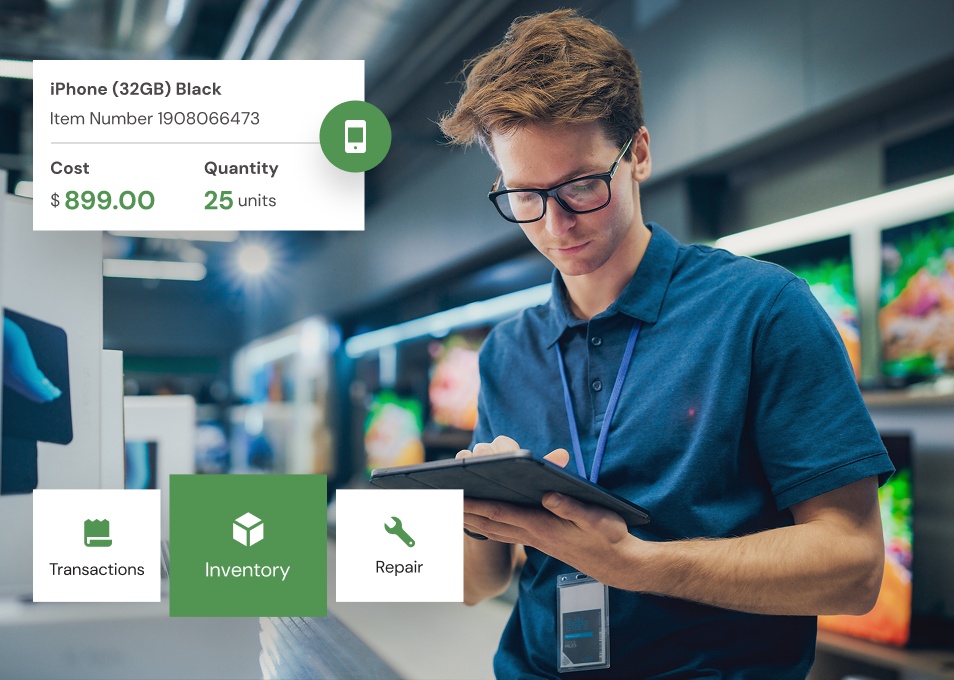
A conventional checkout system can record that something sold. Wireless retail asks more of it. A device may carry its own serial identifier. An offer may depend on carrier rules. An activation must connect to another organization’s systems. realtime’s RTPOS brings those tasks into a configurable workflow, alongside trade-ins, warranties, and payments. Its inventory tools track both serialized devices and ordinary stock across locations.
The distinction matters because the store employee stands where all these requirements meet. Software that moves a rule into the transaction can spare that employee another decision or another application. A promotion engine applies discounts and rebates; APIs connect carrier systems and payment platforms. The practical ambition is to let the employee concentrate on the person waiting.
First, learn the rules
realtime’s current history dates the company to 2013 and the first RTPOS release to 2014. Its early focus was the indirect and prepaid market: stores and dealers working within larger carrier networks. Here, specialization meant accommodating the rules of an industry whose customer-facing simplicity depends on considerable coordination behind the counter.
This is a market with other specialists. iQmetrix’s RQ platform also offers carrier activation integrations, inventory management, reporting, and commission reconciliation. That comparison makes realtime easier to place: telecom retail infrastructure, with payment services attached. The meaningful buying question is which supplier fits a particular carrier relationship and operating process. A long feature list will only get the conversation started. An integration is valuable when it carries the right information through the actual task, including the exceptions. Retail software has to survive the awkward sale as well as the easy one.
Buy the missing steps
In August 2022, realtime, then branded RT², acquired InComm Agent Solutions from InComm Payments. IAS, previously known as Qpay, brought an established payments business. The announcement also described a larger serviceable footprint extending into Canada and Puerto Rico. A software company could now address more of what happened when money changed hands.
“We now have end-to-end visibility of the customer transaction”
Omar Azrag, CEO · IAS acquisition announcement, 2022
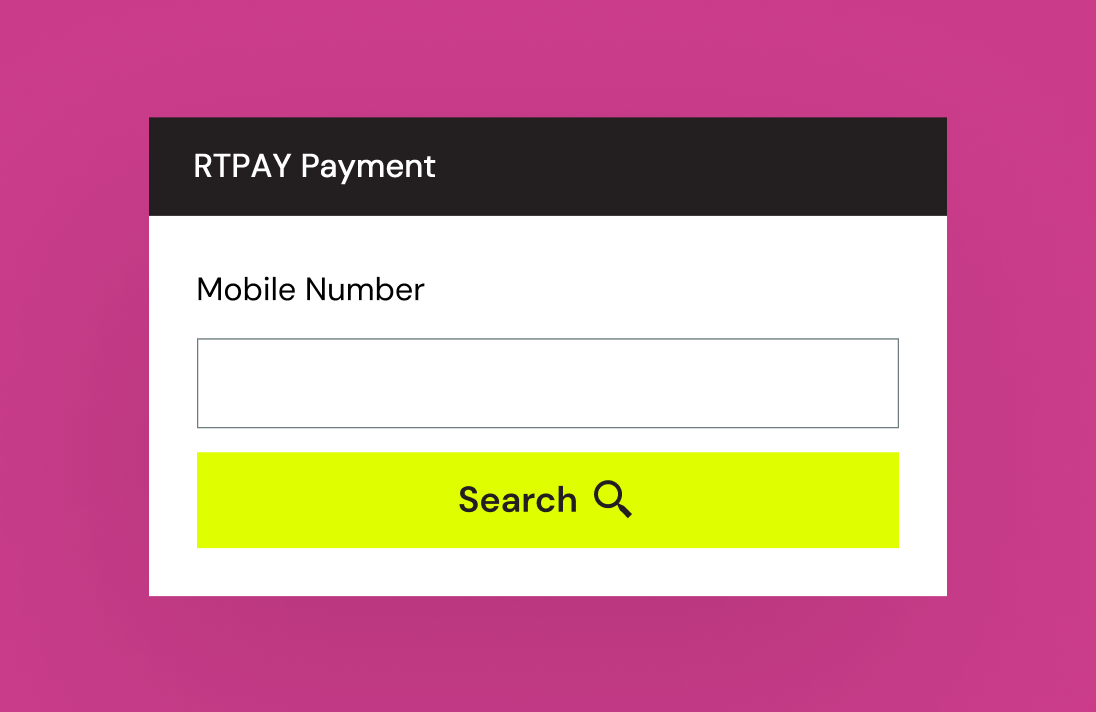
RTPAY makes that expansion tangible. A wireless store can act as a walk-in payment center for carriers and other billers, including utilities. The product explicitly addresses unbanked and underbanked customers. Web and API access, immediate payment posting, and commission reconciliation connect the customer’s visit to the financial record. For a retailer, the proposition includes another reason for someone to return.
Then came a different kind of plumbing. In January 2024, the company acquired Your Ware Software, which specialized in business intelligence, sales, and compensation reporting for postpaid wireless retailers. The announcement described access to another 4,000 serviceable locations. That was an expansion opportunity, rather than a count to casually add to the company’s existing installed footprint.
The two purchases reveal a consistent direction: extend the platform into neighboring work that its customers already do. The company says major customers’ requests for greater efficiency helped drive the payments expansion. Fiserv supplies another piece of the picture; its public partner video describes integrating payment technology into realtime’s enterprise platform.
The people on both sides of the screen
Managers need a different view of the sale. RTBDI brings POS information into dashboards, with automated analysis, configurable visualizations, and mobile access. RTME turns sales information toward employees through performance tracking and incentives. Its tokens can be redeemed for gift cards or cash. The reward is deliberately concrete: the dashboard can lead to something spendable.
Customers get a screen of their own through RTVSA, the Virtual Sales Assistant. It displays item-level pricing and promotions and supports secure account validation and payment confirmation. realtime markets it as compatible with other POS systems. That detail suggests a useful degree of flexibility: a retailer can examine this part of the experience without assuming every existing application must disappear.
Those different screens are worth considering together. A manager wants patterns across stores; an employee wants to know what to do next; a customer wants to understand the price and confirm the payment. The same sale produces each of those needs. Connecting the records gives software a chance to answer them without repeatedly asking people to reconstruct what happened.
The useful test is a real sale
For buyers, the practical exercise is to follow an actual activation through every system it touches. Ask which carrier integrations are supported, how promotions are maintained, where failed payments surface, and how commissions are reconciled. Put implementation, training, and ongoing service into the proposal. A specialized platform makes sense when those coordination costs are substantial; a simpler operation has less complexity to recover.
A useful demonstration would include a promotion that does not apply, a stock transfer between locations, and a payment that needs checking. Those examples expose the boundaries between applications. They also turn the cost discussion into something concrete: how much work remains for staff after the software is installed? Integration can remove repeated effort, but the business still has to maintain accurate records and clear responsibilities. The lesson other operators can copy is to measure the whole task, including the time spent resolving exceptions afterward.
The company’s own organization contains a small irony. It builds for physical stores while its careers page describes a fully remote U.S. team, without physical offices. In 2025 it adopted the realtime name after a year of cloud infrastructure modernization. Inc. lists it at No. 2,705 for 2025, following No. 962 in 2024. The continuing test happens at a smaller scale: one employee, one customer, and a transaction that should feel straightforward.