urban-mobility
(20)
The Factory Built a Venture Lab - Then the Venture Lab Learned to Build Companies
Born inside an automotive supplier, Fark Labs now moves founders from whiteboard to factory floor, city street and overseas market. Its wager is that venture capital works better when it comes bundled with engineers, corporate buyers and a passport.

BGI Built a Bridge From the Lab to the Market - Then Put It in a Greenhouse
The Lisbon accelerator began by exporting ambitious founders to Boston. Fifteen years later, it is putting science through a tougher test: will it survive contact with farms, cities, customers and capital?

The Dashcam That Wants to Give a City Eyes
NAYAN’s cameras ride buses, police vehicles and commercial fleets, turning ordinary journeys into a live index of potholes, violations and risky driving. The clever part is not the lens - it is the workflow that turns street footage into evidence someone can act on.

Why Uber paid $617 million for a place to park
SpotHero turned spare garage capacity into something drivers could buy before leaving home. Its $617 million sale to Uber puts a price on fifteen years of making parking less of a guessing game.

Metrolinx Bet $13 Billion on One Toronto Rail Line - Here’s What Transit Builders Should Copy, and What They Should Never Repeat
The agency made regional integration feel ordinary with one fare card and free transfers. Then a 19-kilometre light-rail project took 15 years and roughly $13.1 billion to open - a case study in both the power and peril of building the connective tissue of a city.

The Spanish startup that bet electric bikes could beat gas, then quietly started selling gas bikes too
A team of university racing engineers set out to make an electric bike that rides like a real motorbike and costs like one too. Then they hedged the bet - and started selling petrol versions of the same machine.

Jeeny Is Turning the Ride-Hailing App Into the Trip Itself
The Saudi-Jordanian app began by making taxis easier to find. Now it is stitching rides, parcels, payments, advertising and travel into one regional mobility layer - while trying to keep the economics attractive on both sides of the car door.
One Fare at a Time, Snapp! Built Iran’s Everyday Operating System
Snapp! started by putting a price on a Tehran taxi ride before the passenger got in. A decade later, that small piece of certainty anchors a 20-service super app built for the peculiar scale, sanctions and street logic of Iran.
Waymo Has Left the Lab. Now It Has to Teach Cities to Trust an Empty Driver’s Seat
Alphabet’s robotaxi company has turned autonomous driving into a service people can summon. Its next test is less cinematic and more difficult: making safety, fleet economics and public trust work in city after city.

Beam Mobility
The Singapore startup that turned the shared e-scooter into a negotiation with city hall - and is now merging its way to more than 100 cities.
Swap Energi
Swap Energi is an Indonesian e-mobility startup that runs Southeast Asia's largest battery-swapping network for electric motorcycles. Instead of waiting to charge, riders exchange a depleted portable lithium-ion battery for a fully charged one at more than 1,500 stations - a process that takes roughly nine seconds. The company pairs this energy network with its own SMOOT smart electric motorcycles and a rider app, and has raised about US$29 million to electrify Indonesia's fleet of over 125 million two-wheelers.

Yango
Yango is a Dubai-headquartered technology company that started as a ride-hailing brand from the Yandex Taxi team in 2018 and has grown into a global everyday-services ecosystem. Operating in more than 30 countries across Africa, the Middle East, South Asia, Europe, and Latin America, Yango bundles mobility, food and grocery delivery, mapping, fintech, advertising, entertainment, and AI into locally adapted apps. Rather than owning fleets, it partners with local taxi companies and businesses, using a 'hyperlocal' playbook to tailor each product to regional cultures, currencies, and infrastructure.

Joyride
Joyride is a Toronto-based mobility software company that gives operators, cities, dealers and OEMs a white-label platform to launch and run shared and rental fleets of e-bikes, e-scooters, golf carts, low-speed vehicles and other lightweight vehicles. Its hardware-agnostic system turns vehicles into connected, keyless and trackable assets, pairing branded rider apps with a fleet-management dashboard, IoT connectivity, payments and increasingly AI-driven operations tools. Founded in 2014 and backed by Yamaha Motor, Joyride powers fleets across 250+ markets on five continents.

PIX Moving
PIX Moving is a city-robotics company that builds modular, drive-by-wire electric 'skateboard' chassis and autonomous 'mobile spaces' such as its RoboBus and RoboShop. Founded in 2014 and rooted in both Silicon Valley and China, PIX combines metal 3D printing, generative design, and self-driving software to turn vehicles into reconfigurable rooms on wheels - a shuttle that can become a cafe, gym, retail pop-up, or library. It sells its chassis and full vehicles to developers, cities, and mobility operators, and runs a Robot-as-a-Service model aimed at deploying fleets across dozens of countries.

CLIP
CLIP is a Brooklyn-based clean mobility company that makes a portable, tool-free device that clips onto a regular bicycle's front fork and turns it into an e-bike in seconds. Founded in 2018 by Som Ray and Clement de Alcala, the friction-drive motor weighs under 10 pounds, fits in a backpack, and provides pedal assistance up to 15 mph - positioning itself as a far cheaper, lighter alternative to buying a full e-bike. The company sells to consumers starting at $499 and is pushing a lower-cost model, BOLT, aimed at bike-share fleets and emerging markets.
Volley Automation
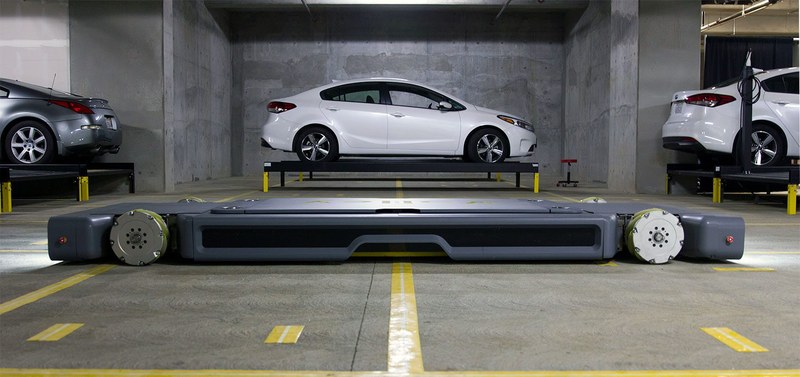
Volley Automation builds AI-enabled robotic parking systems that use fleets of autonomous guided vehicles (AGVs) and proprietary control software to shuttle cars into optimized storage inside garages. The result is up to 2x denser parking, no below-grade digging, valet-like convenience without attendants, and lower embodied carbon than a conventional concrete ramp garage. Founded in 2018 and now headquartered in Denver, Volley works with developers on projects across New York, Nashville, California, Florida and Massachusetts.

Upshift
Upshift is a San Francisco car subscription service for people who drive a few days a month but don't want the cost and hassle of owning a car. Members pick a flexible monthly plan, get a clean late-model hybrid (Toyota Prius or Corolla Hybrid) delivered with insurance, maintenance, and refueling included, and skip parking tickets, repairs, and long-term loans. Founded in 2012 by Ezra Goldman and Ayako Hiwasa, the company frames itself as 'the ownership alternative for low-mileage city drivers' and is positioning for an autonomous, connected, electrified future of car non-ownership.

Transit
Transit is a Montreal-based mobile app that turns the chaos of public transportation into a single, legible screen. It aggregates real-time schedules, GPS vehicle locations, and crowdsourced rider data across more than 1,100 cities in dozens of countries, layering in bikeshare, carshare, ridehail, microtransit, and mobile ticketing so people can navigate a city without owning a car. Founded by Sam Vermette and Guillaume Campagna, Transit partners directly with transit agencies who endorse and increasingly sponsor the app for their riders.
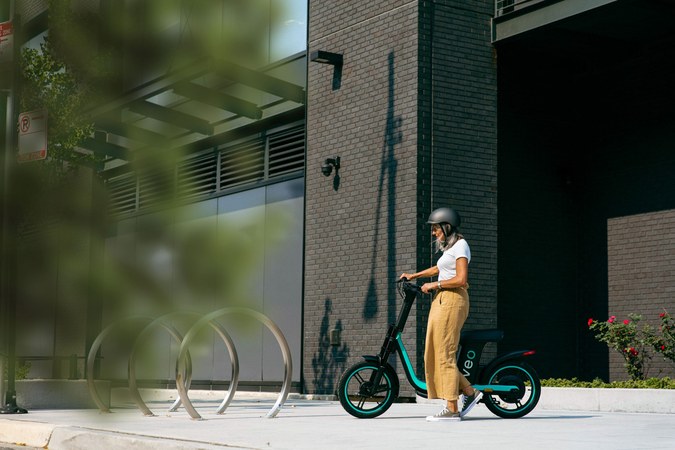
Veo
Veo is a Santa Monica-based shared micromobility company that designs, manufactures and operates electric scooters, e-bikes and cargo bikes for cities and university campuses across North America. Founded in 2017 by Purdue graduates Candice Xie and Edwin Tan, Veo built the industry's most diverse vehicle fleet through an in-house design team and became the first profitable shared micromobility operator in the U.S. Rather than chasing growth at any cost, Veo bet on deliberate expansion, exclusive city and campus contracts, and durable, purpose-built vehicles - a strategy that delivered unadjusted EBIT profitability in 2024 while many better-funded rivals retreated.

Uber
Uber is a global technology platform that connects riders, drivers, eaters, couriers, and shippers through a single app. What began in 2009 as a way to summon a black car in San Francisco has grown into a multi-sided marketplace spanning ride-hailing, food and grocery delivery (Uber Eats), and freight logistics (Uber Freight). It operates in roughly 70 countries and 10,000+ cities, serving more than 200 million monthly active users and completing over 13 billion trips a year.