The most revealing thing Metrolinx has built is not a tunnel. It is a transfer that no longer feels like paperwork. Tap onto a Toronto bus, move to a GO train and, when the trip qualifies, the second fare disappears. The rider does not need to know which government owns which vehicle or which accounting system settles the bill. The trip simply continues.
That disappearing seam explains both the promise and the trouble of Metrolinx. Created by Ontario in 2006, the Toronto-based agency is supposed to make a region of separate cities and transit operators behave like one network. It runs GO Transit’s green trains and buses, operates the UP Express airport link, owns the PRESTO payment platform, plans regional transportation and delivers a portfolio of subway, light-rail and station projects. Roughly 7,200 people work inside this unusual bundle of operator, software platform, planner and construction client.
FY 2024-25
FY 2024-25
to opening
A company made of seams
Calling Metrolinx a transportation company is accurate in the way calling a smartphone a telephone is accurate. Its consumer products are easy to name. GO Transit moves regional riders by train and bus. UP Express makes the trip from Pearson Airport to Union Station in 28 minutes. PRESTO lets riders pay with a card, phone, watch, credit card or debit card across participating systems. One Fare handles the institutional choreography required to make eligible transfers free.
Behind those products sits the enterprise machinery: timetables, control rooms, safety rules, procurement, construction, property, data and fare settlement. Metrolinx also owns infrastructure that other organizations operate. The TTC, for example, runs Line 5 Eglinton day to day; Crosslinx Transit Solutions maintains it; Metrolinx owns it. That division can unlock specialized partners. It can also turn a small defect into a meeting with four logos on the agenda.
One trip, three layers most riders should never have to notice
The customers are commuters, students, tourists, airport travellers, families on weekend passes and anyone whose trip crosses a municipal boundary. In fiscal 2024-25, GO and UP Express carried 71.8 million trips, about 94 percent of pre-pandemic volume. PRESTO reaches further: more than 90 percent of transit payments across its participating network move through the platform. Metrolinx does not win by offering every local ride itself. It wins when many operators can plug into the same journey.
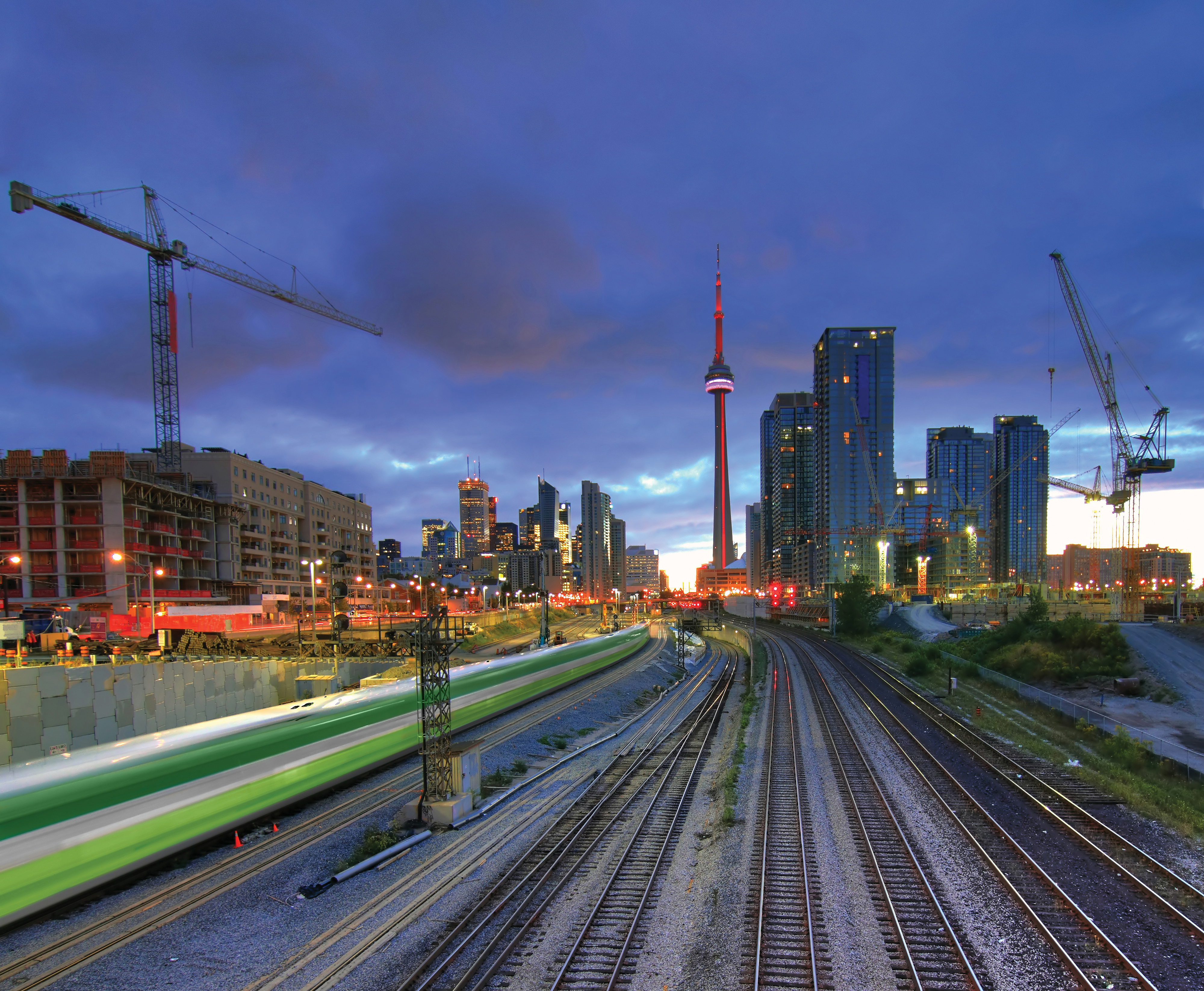
The product nobody brags about at dinner
PRESTO is the most portable part of the Metrolinx playbook. The plastic card was never the clever bit. The clever bit was persuading different transit agencies, fare policies and back-office systems to share a transaction layer. Digital cards arrived in Google Wallet and then Apple Wallet. Contactless bank-card payment widened the entrance again. One Fare, launched in 2024, turned all that plumbing into a sentence a rider can love: pay once when transferring between participating services.
The best regional platform makes the region’s organizational chart disappear.The Metrolinx lesson worth stealing
In the program’s first year, riders made more than 38 million One Fare transfers and saved more than C$123 million. A University of Toronto student featured by the agency estimated a five-day commuting schedule saved her about C$143 a month. This is infrastructure with a receipt. The benefit arrives in minutes and dollars, not only in a ceremonial rendering of the year 2041.
Metrolinx’s business model reflects its public job. It is not funded like a startup and has no conventional valuation or venture rounds. Fares and other activities generated C$707.7 million in total revenue in fiscal 2024-25, including C$510.8 million in fare revenue. Operating expense was C$2.064 billion, leaving a C$1.289 billion subsidy requirement. Ontario supplies the operating support and the bulk of capital funding because mobility creates value beyond the farebox: access to jobs, less road pressure, developable land near stations and lower-emission travel.
What failed first on Eglinton
Then there is Line 5. Construction on the Eglinton Crosstown began in 2011. The route was supposed to stitch 25 stations and stops across 19 kilometres, more than half underground, connecting two GO lines, UP Express, three subway stations and dozens of bus routes. Passengers finally boarded on February 8, 2026. By then the project baseline stood at approximately C$13.087 billion.
There was no single loose bolt that explains 15 years. The earliest failures were coordination failures: plans changed, vehicle and construction schedules did not line up neatly, and responsibilities sprawled across Metrolinx, Infrastructure Ontario, the Crosslinx consortium and the future operator, the TTC. Ontario’s auditor general found C$436 million in sunk and additional costs between 2009 and 2018 across Metrolinx’s LRT program, including cancellations, delays, costs above contract values and vehicle-supplier problems. It also criticized weak scoping and invoice oversight on large consulting contracts.
Issues still on the list in 2023. Public briefings identified hundreds of testing and quality items, including track concerns. Later, the signalling and train-control software became the “nerve centre” problem, cycling through repeated releases before service could begin.
As physical construction neared completion, the bottleneck moved into systems integration. Track geometry had to work with vehicles. Software had to control trains safely. Station permits, documentation, emergency procedures and TTC crew training all had to converge. In 2024, the chief executive said signalling and train-control software still contained defects and was approaching a seventh iteration. Concrete was visible. Readiness was not.
What changed their mind was evidence. After years of dates slipping, Metrolinx stopped forecasting an opening until high-risk testing was done. Trains ran in simulated service. The TTC trained operators. Revenue-service demonstration finished in December 2025, substantial completion followed, and operational control transferred to the TTC. The approach was frustratingly quiet for a public waiting on answers, but the final gate became operational proof rather than another hopeful calendar promise.
The copyable playbook
Erase the boundary
Design for the user’s whole job, even when several organizations deliver it. One Fare is useful because it removes a penalty riders never wanted.
Fund integration
Interfaces need named owners, budgets and acceptance tests. “The vendor handles it” is not a systems-integration plan.
Prove it end to end
A station can look finished while the railway is not ready. Test the complete customer journey under operating conditions.
Publish the savings
Kilometres matter; so do fares avoided, minutes saved, accessible connections and service frequency people can feel.
GO Expansion applies the same platform instinct to physical rail. The goal is to turn a peak-hour commuter railway into faster, more frequent, two-way all-day service. Work spans five corridors, new stations, bridges, grade separations, Union Station capacity, signalling and storage. Since April 2024, more than 300 weekly train trips have been added, including 15-minute weekend service on the Lakeshore lines and the first weekend trains to Kitchener.
That is how Metrolinx differs from a local operator such as the TTC. Its market is the regional layer: the trip from one municipality’s bus to another mode, the airport passenger arriving downtown, the commuter whose schedule no longer fits a nine-to-five train. Cars, ride-hailing, cycling and remote work are the practical alternatives. VIA Rail overlaps on a few corridors. Agencies such as TransLink in Vancouver and exo in Montreal offer institutional comparisons, but none competes for Metrolinx’s statutory mandate.
When this model does not work
| Condition | What breaks | Better response |
|---|---|---|
| Partners keep incompatible incentives | The common platform becomes another layer of negotiation. | Align funding, service rules and measurable outcomes before launch. |
| Interfaces lack one accountable owner | Defects bounce among builder, maintainer, owner and operator. | Name integration authority and define acceptance evidence. |
| Demand is too thin | High-frequency fixed infrastructure burns subsidy without enough mobility value. | Start with buses, pilots or staged service. |
| Transparency trails disruption | Residents absorb years of noise while trust drains faster than construction advances. | Report milestones, risks and changes in plain language. |
Metrolinx’s expertise is not just trains. It is orchestrating a market where nobody has complete control: provincial policy, municipal streets, private contractors, freight railways, technology vendors and millions of personal schedules. The agency’s culture statement - serve with passion, think forward, play as a team - sounds pleasant. Line 5 gives “play as a team” teeth. On an integrated system, collaboration is not morale. It is a technical requirement.
The next test is whether the lesson survives success. Line 5 and Line 6 are open. Ontario Line tunnelling is underway. GO Expansion is moving into heavier construction. New subway extensions and stations are advancing across the region. Metrolinx can point to real service, not only future maps. But each project adds another seam, and every seam is where the agency’s best idea and worst habit meet.
The useful conclusion is neither celebration nor cynicism. Metrolinx shows that a regional integrator can make fragmented systems feel coherent, save riders real money and create journeys no single operator could offer. It also shows that a contract cannot outsource accountability. Copy the common layer. Copy the whole-trip metric. Copy the end-to-end test. Leave the ambiguous handoff on the platform.