A bus stop occupies very little space in a chief executive’s biography. In Nir Bezalel’s case, it deserves more. He is one of three named inventors on a patent called “System and method for determining transit stop location.” The title has the elegance of a filing cabinet. The problem behind it is easier to appreciate: a traveler consulting a phone needs the stop to be where the phone says it is.
The patent, granted in the United States in April 2020, uses location entries from mobile devices displaying information about a stop to help determine its position. Bezalel shares the inventor credit with Binyamin Galon and Roy Bick. There is no executive glamour in the title, no grand promise of a transformed civilization. Just a stubborn little question about where people should wait.
It is a useful entrance into his story. Bezalel became Moovit’s CEO in March 2024 after years in its engineering leadership. His work sits in the gap between the tidy route drawn on a screen and the untidy journey someone has to make. A misplaced point can become a missed connection. The map may be beautifully composed; the passenger still has to find the bus.
The coordinate problem
Transit information has an awkward relationship with the physical world. A timetable describes an intention. A location describes a place. A useful journey requires both to hold up at the moment someone needs them. That makes accuracy a product decision with consequences outside the product. The rider has already put on a coat, left a building and chosen a direction.
Bezalel’s technical record reaches beyond stops. He is also named on a published patent application for statistical determination of a trip itinerary, alongside Galon and Simon Karnis. Other applications list him among inventors working on transportation billing and deployment of transport-on-demand vehicles. Applications are proposals for protected inventions; they do not, by themselves, establish what reached a commercial product. They do show the subjects on which his name appears.
Taken together, those subjects trace several stages of a trip: finding a place, understanding a journey, allocating a vehicle, working out a charge. They give the engineer in his biography something specific to do. The practical details are rather more revealing than a list of technologies. A person can have a long software résumé and still never have wrestled with the location of a bus stop.
Subjects of patents and published applications naming Bezalel. This is a conceptual sequence, not a diagram of the Moovit app.
An engineer’s route to the top
Before Moovit, Bezalel held R&D leadership positions at OptimalTest and Nova Measuring Instruments. He studied computer science at Ben-Gurion University. The career then moved into a consumer product that people would consult while navigating cities, where the results of engineering work were experienced in minutes, walks and connections.
He joined Moovit’s early operation as vice president of R&D in 2012. The engineering group began with six developers and, during his leadership, grew to more than 150 members. Those are historical figures, describing the organization’s expansion over time. They are also a reminder that a widely used app begins with a surprisingly small number of people trying to make it work.
In 2020, he became CTO with responsibility for business strategy. Four years later came the CEO appointment. The sequence widened his brief in stages: engineering, technology and strategy, then the company itself. It is an unusually legible route through an organization. He arrived with a technical assignment and stayed as the assignment grew around him.
“I’m excited to announce my next stop: moving into the role as Moovit’s CEO.”
Nir Bezalel, announcing his appointment in 2024
His announcement borrowed the language of the product. “My next stop” was a small joke, appropriate to a company whose customers spend so much time thinking about precisely that. He thanked Nir Erez for his leadership and anticipated continuing to work together. The new title did not require a new cast of characters.
Erez, Moovit’s co-founder and outgoing CEO, moved into the presidency and an advisory role at the handover. The relationship mattered because Bezalel had been inside the company through its earlier chapters, rather than arriving to learn them after taking charge. The two had worked together since the beginning. Succession here carried both continuity and a change in who held the final responsibility.
- 2012VP of R&D
- 2020CTO & Business Strategy
- 2024Chief Executive Officer
By then, the ownership story had changed too. Intel acquired Moovit in 2020 for $915 million, linking its mobility services to Mobileye’s autonomous-transport plans. Bezalel now appears in Mobileye’s leadership roster as a senior vice president as well as Moovit CEO. The app’s familiar daily purpose sits inside a much larger corporate project.
The itinerary gets longer
A person planning a trip can discover that the route is the easy part. The ticket lives elsewhere. The next operator has another system. The last stretch begins after the train stops. During Bezalel’s CEO tenure, Moovit extended the amount of that journey a user could handle within its product.
Cross-regional planning expanded in 2024. A subsequent integration with Distribusion brought intercity ticket purchasing and validation across Europe into Moovit, including access to operators such as Deutsche Bahn, Trenitalia and National Express. Planning, paying and boarding become connected tasks rather than separate errands.
That development is relevant to Bezalel’s story because it shows the product territory of his executive years. It does not make him the individual author of every partnership or feature. Companies build these things through teams. His role is to lead the organization that decides which parts of the journey it should take responsibility for.
In his message closing 2025, he emphasized accuracy, real-time systems and automation, alongside expanded ticketing and autonomous-shuttle operations in Europe. Looking toward 2026, his priorities included the app experience, Park & Ride and Moovit+. These are recognizably everyday concerns. A traveler might be impressed by the possibilities of artificial intelligence and still mainly want to know where to leave the car.
A hundred people, thirteen teams
One public glimpse of Bezalel’s working world comes from Moovithon 2026. More than 100 colleagues took part across 13 teams, building and presenting proposals aimed at improving the app. The judging group included Erez and an AI-specific judge. Bezalel’s response dwelt on the people behind the ideas, praising creativity, energy and collaboration.
A hackathon is a compressed version of a familiar engineering pleasure: briefly, the thing you want to try can move to the front of the queue. Then the ordinary questions return. Does it help? Can it be supported? What happens outside the demonstration? Bezalel expressed excitement about turning the ideas into effects for users. The celebration concerned proposals; the next job was making something of them.
The event offers a modest, concrete detail about his public leadership. The former R&D chief was still talking about builders and the work they wanted to put into riders’ hands. It would be too much to make a whole personality out of one post. It is enough to notice where he placed his attention.
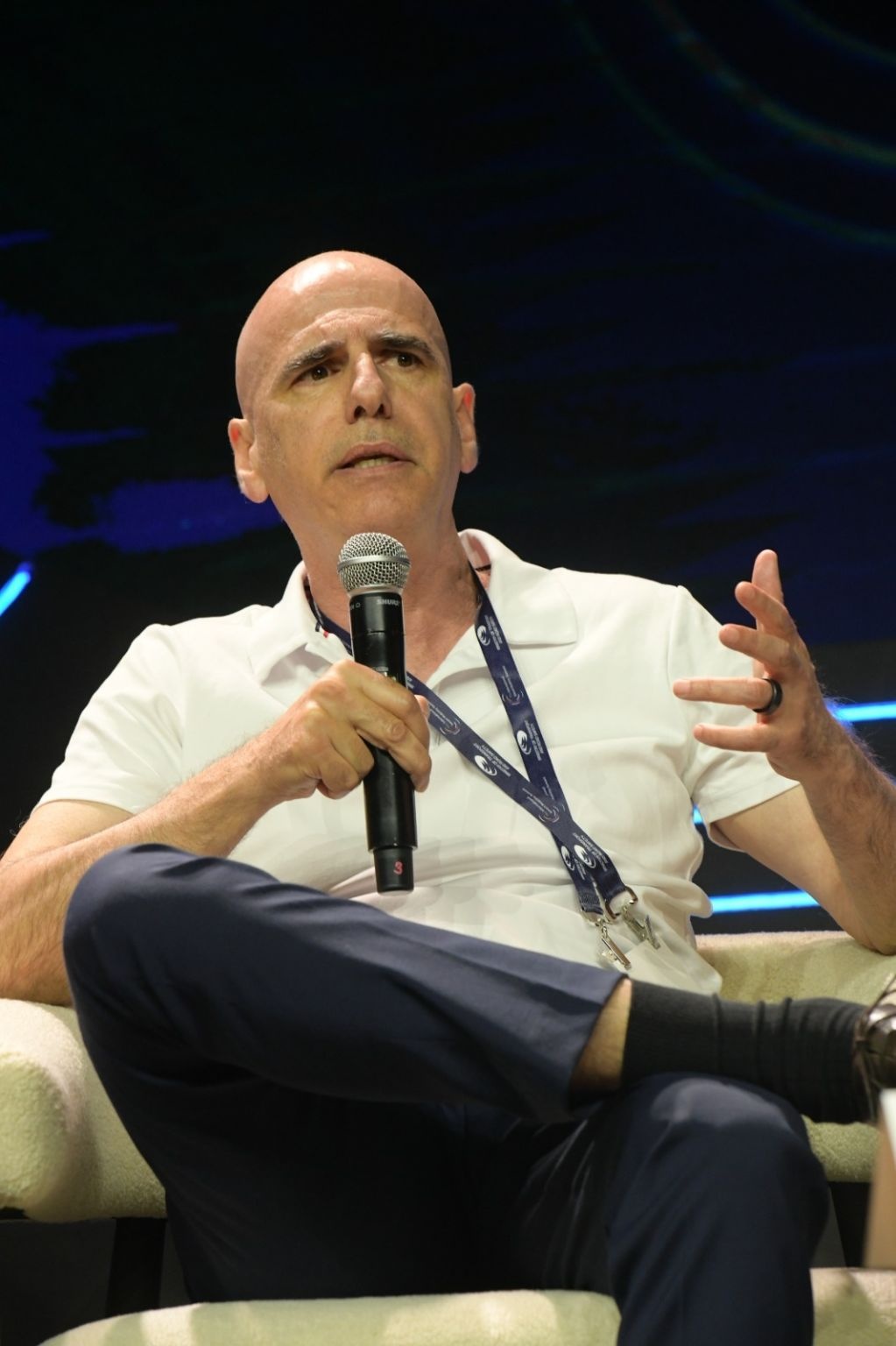
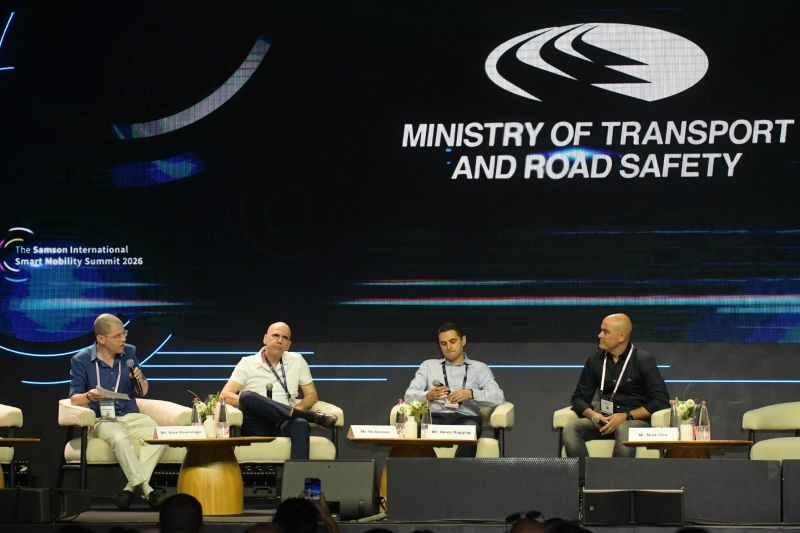
At the Samson International Smart Mobility Summit in 2026, he shared a discussion with Optibus CEO and co-founder Amos Haggiag and Gett CEO Mark Oun. The subject was transport data and AI, including their use in operational decisions and passenger experience. His account of the event emphasized industry colleagues, partners and policymakers. The bus journey, once again, had quite a few organizations behind it.
The next turn belongs to the business
The commercial question was present from the day Bezalel became CEO. In March 2024, he described a focus on consumer revenue and a path toward positive cash flow that year. That was a stated objective. A leadership story has to leave room between an objective and its eventual result.
By July 2026, Moovit was being reorganized around Mobileye’s robotaxi ambitions. Approximately 60 positions, about 30 percent of the workforce, were being cut as resources moved away from parts of the B2B business. The new emphasis included fleet supply, demand optimization, trip planning and rider engagement. For Bezalel, the wider assignment had become more pointed.
The operating figures also complicate the easy story of scale. Moovit had about 60 million monthly active users and 1.7 billion cumulative users, while its 2025 revenue was $39 million and its net loss approximately $11 million. A cumulative user count describes accumulated reach; it should never be mistaken for the number using an app in a typical month. Neither figure alone answers the question of how the company earns its living.
This is the current tension in Bezalel’s career. He helped grow the technical organization, inherited the chief executive’s responsibilities and now leads through a change in the company’s intended role. Engineering experience supplies context, but it cannot remove the choices about investment, staffing and customers. Those choices have become part of his work.
Outside the company, he lives in Rehovot with his wife and three children. The professional story remains anchored in the product he joined to build: a traveler opens an app because there is somewhere to be. Bezalel’s route to the top has brought him farther from individual coordinates and closer to decisions about the whole business. Somewhere below those decisions, a bus stop still needs to be in the right place.