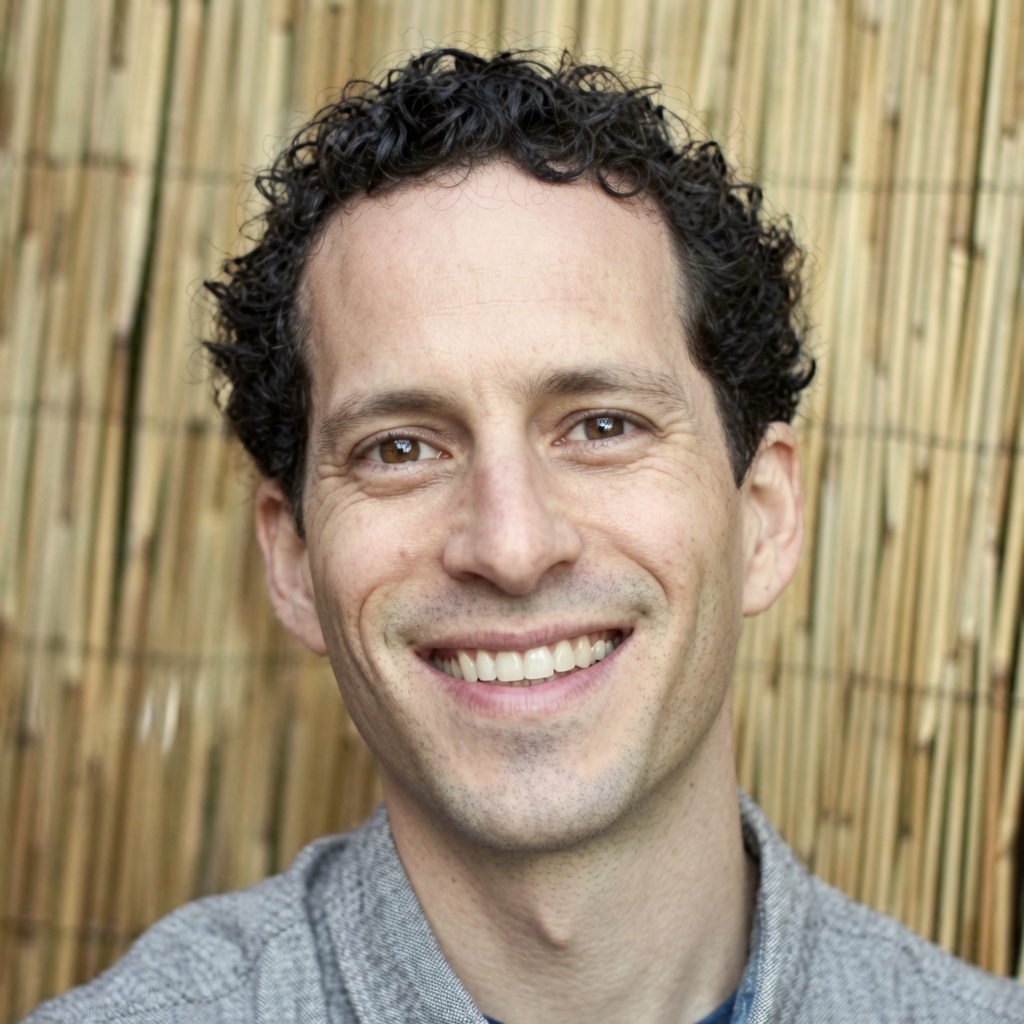
Ezra Goldman built his first shared transportation system in 1999. It was not a slick Silicon Valley pitch deck moment. It was a bunch of kids' bikes, spray-painted bright red, adorned with hammer and sickle logos, and dropped on a college campus for anyone to use - for free. The communist joke was intentional. The problems that came with it were not.
Bikes got stolen. Bikes got vandalized. Bikes piled up in popular spots and vanished from where people needed them. His campus organization was voted #1 in student funding every single semester - which is a remarkable fact when you consider that his "product" was structurally identical to the headaches Lime and Bird would spend hundreds of millions of dollars trying to solve twenty years later.
"Members subscribe to a car that's there when you need it, and gone when you don't."
- Ezra Goldman, Co-Founder & CEO, UpshiftGoldman graduated from Reed College with a degree in anthropology - which, if you squint at it right, turns out to be excellent preparation for a career studying why humans move the way they do and refuse to change. He earned his LEED AP certification in 2003, then headed to MIT for a master's in Urban Planning, Design, and Mobile Technology. While there, he helped design a shared folding electric scooter for Piaggio at the MIT Media Lab. This was 2006. The shared micro-mobility revolution wouldn't arrive for another decade.
Copenhagen and the Bike Question That Changed Everything
After MIT, Goldman headed to the University of Copenhagen for a PhD in Transportation. He spent a year conducting interviews - in Danish - trying to answer one deceptively simple question: why do Danes ride bikes so much, and what would make them bike more?
He got his answer. And it wasn't the one the cycling-utopian crowd wanted to hear.
Biking, Goldman found, doesn't replace car ownership. It replaces bus trips. Trains. Short walking routes. The car sits in the garage and Danes still love it. This finding recalibrated his entire trajectory. If you can't bike your way out of the car problem, you have to rethink the car itself.
Goldman spent a year conducting PhD research in Denmark, running interviews in Danish about cycling behavior and what would motivate more people to ride. His conclusion - that biking doesn't replace car ownership, only other transit modes - was the insight that eventually pointed him toward fractional car subscriptions instead of yet another bike-sharing scheme.
He lived in Copenhagen for three years, managed a software startup there for two of them, and returned to the United States with a clear thesis: the problem isn't that people drive - it's that they own cars for the 5% of the time they need them, and pay for them 100% of the time.
The Lyft Experiment Nobody Talks About
In 2017, while bootstrapping Upshift, Goldman did something unusual for a startup CEO: he drove for Lyft. Not for a weekend. For four months. Hundreds of rides. He wanted to understand, firsthand, what gig-economy transportation actually felt like from the inside.
What he saw convinced him to build Upshift differently. Every Upshift team member - including the people who deliver and pick up cars - is a full employee, paid at minimum 1.5x minimum wage plus benefits. The delivery staff uses bicycles to do operations. A company built on cars whose own team doesn't drive to work.
"Our mission is to eliminate car ownership, car accidents, and carbon emissions while creating living jobs and livable cities."
- Upshift Company MissionThe Pivot That Made Upshift Work
Upshift was originally a car co-ownership platform. Goldman and co-founder Ayako Hiwasa launched it in 2012. By 2018, car vandalism and stagnating revenue forced a reset. Rather than patch the model, they scrapped it.
The new model: fractional car subscriptions. Members choose 4, 8, or 12 driving days per month. A car - Toyota Corolla Hybrid or Prius, getting 50-57 MPG - shows up at their door. Insurance included. Maintenance included. Refueling included. Dog seat hammocks available. When you're done driving, you walk away. No parking stress, no depreciation anxiety, no lease commitment.
It's the anti-lease. The anti-Hertz. The thing that works for the 40 million people who drive between 3,000 and 9,000 miles a year - not enough to justify full ownership, too much to rely on ride-share alone.
The Funding Story Nobody Expected
When the usual venture capital channels didn't move fast enough, Goldman went to the crowd. Twice. Via Republic and WeFunder, Upshift raised from over 3,500 individual investors - people who believed in the model enough to put money in at as little as $100. The company also earned backing from institutional names that carry real signal: MINI (BMW's urban-mobility arm), Ford, 3rd Sphere, and Climate Capital.
Upshift Funding Backers
Remote Control Cars Are Not Science Fiction
In early 2024, Goldman announced a partnership with Elmo, an Estonian deep-tech company that had been operating remote-controlled vehicles on public streets in Europe since 2022 - including a cross-border teleoperation demonstration spanning 4,300 km and a remote-driving speed record of 157 km/h. The deal brought teledriven car delivery to California.
The practical upshot: a car can be driven to your door by a licensed remote operator sitting in a control center, without a driver physically in the vehicle. No waiting for full autonomous vehicles. No regulatory maze. A trained human, a vehicle, and a data connection. It's the autonomous era, with the training wheels still on - which is exactly the kind of pragmatic step Goldman has always favored over moonshots.
What Ezra Goldman Reads When He's Not Driving Lyft
His recommended book is "The Absent Superpower" by Peter Zeihan - a geopolitics work about American energy independence and the reshaping of global supply chains. His favorite productivity tool is Google Sheets. For a man building a mobility company with teledriving ambitions, there's something very grounding about that combination.
By 2024, Upshift was reporting 30% month-over-month growth. VCs were reportedly reaching out proactively. The company that couldn't get the traditional funding circuit excited in its early years was suddenly the thing people wanted to talk about - not because it pivoted to AI, but because it stuck to a hard, unglamorous problem and eventually made it work.
The car that comes to your door, stays as long as you need it, and leaves when you don't. Ezra Goldman has been building toward that sentence since 1999. It just took 25 years of bikeshares, electric scooters, Copenhagen interviews, Lyft rides, and one very good pivot to get there.