The Spanish startup that built an electric bike to beat gas, then quietly started selling gas bikes too
A team of university racing engineers set out to make an electric bike that rides like a real motorbike and costs like one too. Then they hedged the bet - and started selling petrol versions of the same machine.
In the world of electric vehicles, gasoline is supposed to be the villain. Which makes what happened in a workshop near Alicante, on Spain's eastern coast, a little strange. NEXT Motors spent the better part of a decade building an electric motorbike good enough to make petrol feel obsolete - a 125cc-class machine that hits 130 km/h, carries roughly 200 kilometers of range, and rides like something you'd actually want to own. Then, in 2025, the company did the unthinkable for an EV brand. It started selling the same bikes with a petrol engine.
That decision tells you most of what you need to know about NEXT Motors. This is not a company selling a vision of the future. It is a small team, about 13 people, selling vehicles to people who need to get across a city today - and it would rather meet a customer where they are than lecture them about where they should be.
OriginFrom a racing garage to a real company
The founders did not come from a business school pitch competition. They came from a motorbike. Several of them met at Miguel Hernandez University in Elche and competed in MotoStudent, the international student racing series where engineering teams design and build a working race bike from scratch. In 2016 their team won the World Championship in Innovation. The obvious next step would have been to keep chasing the track. Instead they asked a more useful question: could the same engineering discipline that builds a race bike build a commuter people could afford?
NEXT Electric Motors was founded in 2017. Its CEO, Xulei Xu, brought a background in finance and international trade rather than motorsport - a pairing of the person who knows how a motor should feel with the person who knows how a business should be built. The company passed through Lanzadera, the Valencia accelerator funded by supermarket magnate Juan Roig, and earned the European Commission's Seal of Excellence along the way.

The first product shipped in 2019: the NX1, a 50cc-equivalent electric moped with a removable battery and around 120 km of range. It was modest, and it worked. By 2020 the company had sold more than 400 of them - not a number that shakes an industry, but proof that people would buy an electric two-wheeler from a young Spanish brand they had never heard of. Proof is the currency hardware startups actually trade in.
The ProductWhat racing engineers put into a commuter
The turning point came at EICMA 2022, the giant Milan motorcycle show, where NEXT unveiled the NX2. On paper it reads like a 125: around 10 kW nominal power, 15 kW peak, a top speed of 130 km/h and a claimed range up to about 200 km (call it ~150 km in real riding). What separates it from a golf-cart-with-handlebars is the detail. There is ABS on both wheels, a colour TFT dashboard, cruise control, a reverse mode for wrestling the bike out of a tight parking spot, and three ride modes. It costs roughly what a decent petrol 125 costs. That last fact is the whole strategy.
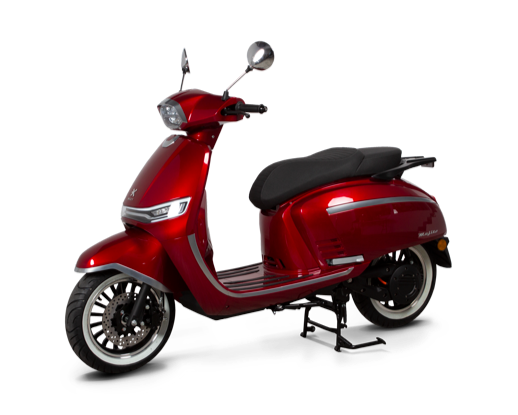
Alongside the NX2 sits the NXPlus, a scooter built around one genuinely clever idea. Its two lithium batteries slide out and come with you - up the stairs, into the elevator, onto the kitchen counter to charge overnight. That solves the single biggest reason city dwellers give for not buying electric: there is no charger where they park. If the battery rides home with you, the parking spot no longer matters. The lineup rounds out with the retro-styled Mojito scooter and, at the small end, the NX1 moped.
NX2 - how the numbers stack up

The TwistWhy an EV brand started selling petrol
Then came 2025 and the move that raised eyebrows. NEXT launched the NX2 125i and NXCross 125i - gasoline versions of its own designs - describing itself as the first European brand to offer the same model in both electric and combustion. The company framed it plainly: give customers "freedom to choose the type of energy that best adapts to their lifestyle," under the line "Next Motors doesn't change, it evolves."
Read cynically, it looks like a retreat. Read honestly, it looks like a company that has actually spoken to buyers. Plenty of riders love the idea of electric until they hit range anxiety, charging logistics, or the sticker price of a bigger battery. Offering the petrol version keeps that customer inside the brand instead of sending them to a rival showroom. It also gives NEXT a cheaper entry model - the NX2 125i lists around EUR 2,499 - to pull people in. The bet is that the drivetrain should be the customer's decision, not the founder's ideology.
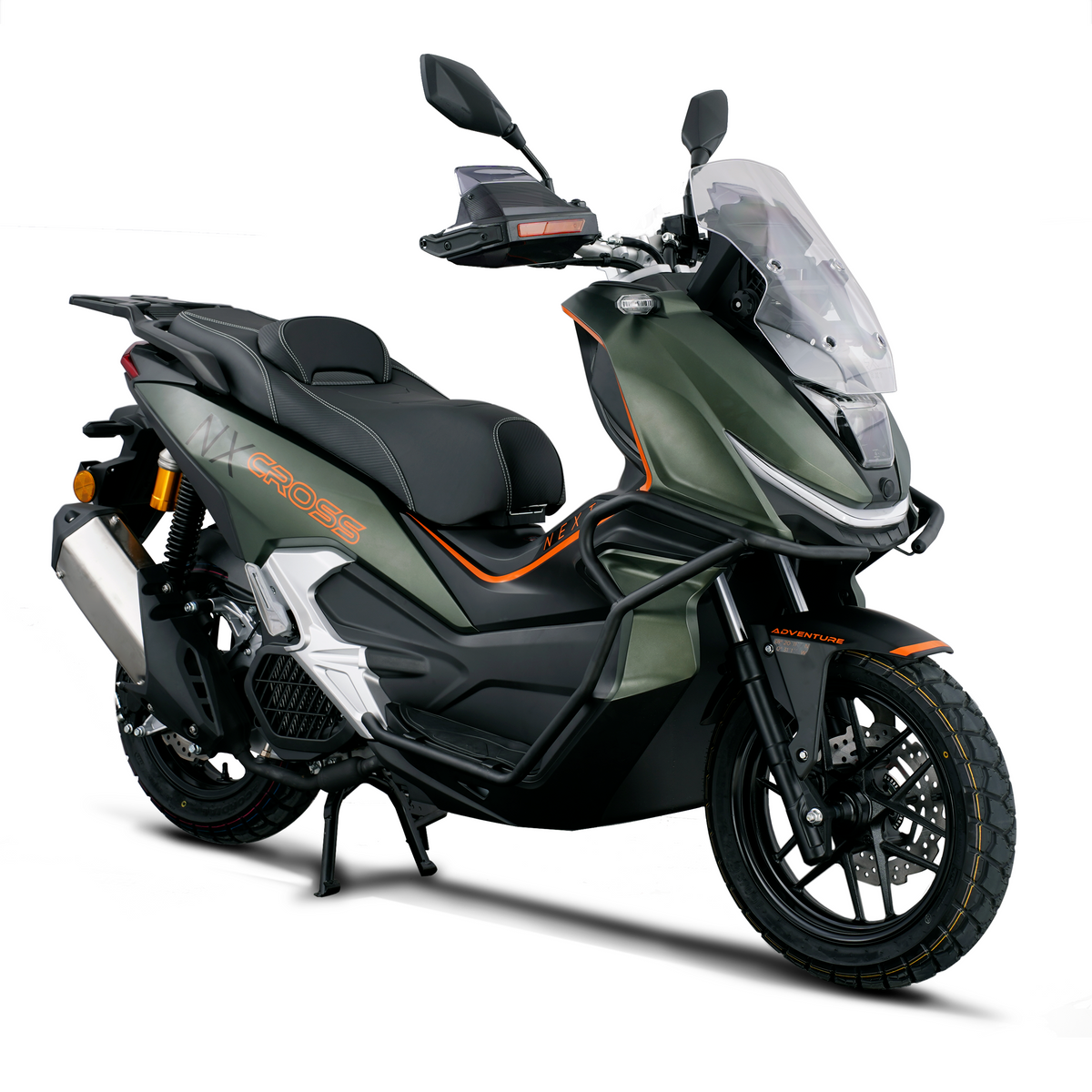
It is worth being clear-eyed about the risk. A brand built on "the electric alternative to combustion" now sells combustion, and that could muddy a message it spent years sharpening. But there is a version of this that is not compromise at all. If the design, the app, the dealer network and the ownership experience are the product, then the engine underneath is just one spec among many - and letting the buyer pick it is a feature, not a surrender. NEXT is wagering that customers reward the choice more than they punish the inconsistency.
The ModelSelling motorbikes like sneakers
How the bikes reach riders is as telling as the bikes themselves. NEXT sells direct-to-consumer through its own online store - you can configure and buy a motorbike the way you would order a pair of trainers - and backs that with an offline dealer network across Spain, Portugal, France, the Benelux countries, Germany, Italy and beyond. After-sales runs through partners including Norauto, so a buyer in a city with no NEXT showroom still has somewhere to take the bike. On top of consumer sales sits a B2B fleet program aimed at urban delivery and rental operators, where low running costs and swappable batteries make the sharpest case.
Who actually rides these things? Broadly, three groups. City commuters who want the running costs of electric without giving up motorway-legal speed. Delivery riders clocking long daily distances, for whom a battery that swaps in seconds beats one that charges in hours. And small rental and fleet operators who care about total cost of ownership more than horsepower. NEXT has signed distribution deals in markets from the Netherlands to Germany to serve exactly those riders, and passed 400 units on its very first model - modest, but real traction in a segment where plenty of flashier startups have shipped nothing at all.
The funding story is deliberately unglamorous. NEXT raised a round of roughly EUR 500,000 fully subscribed by Kereon Partners, alongside support from Lanzadera, Programa Orbita and regional innovation funds, and has used debt financing rather than diluting itself into oblivion. Public trackers disagree on the exact totals - a sign of how quietly the company has operated - but the shape is clear: this is capital-efficient hardware, not a blitz-scaled moonshot.
The FieldSmall fish, crowded pond
The competition is not gentle. China's NIU sells electric scooters by the hundreds of thousands. Barcelona's Silence has built a fleet-focused business and the backing to match. Super Soco, Zero Motorcycles, SEAT Mo and the higher-funded Stark Future all crowd the same space, and behind all of them sit the incumbent petrol 125s the whole category is trying to replace. NEXT is one of the smallest players on that field.
Its edge is not scale or spec-sheet supremacy - it is refusal to pick a side. In a market where most brands sell you a belief system, NEXT sells you the choice. Electric if you want it, petrol if you need it, swappable batteries if your parking spot has no plug, a Shopify checkout if you'd rather not visit a dealer. None of that is revolutionary on its own. Stacked together, it is a coherent answer to a real question: what would it take to actually get someone off a petrol scooter - or at least into your version of one.
Whether that pragmatism scales is the open question. A 13-person team competing against Chinese manufacturing and venture-fat rivals has a narrow road to walk. But NEXT Motors has been walking narrow roads since it was a student racing team, and it is still here, still shipping, still selling to people who just want to get to work.