A parking garage can be half empty while the streets outside feel full. The driver sees brake lights, a loading zone and a meter with an argument printed on it. The garage operator sees unsold hours. SpotHero built a business connecting those two views. In April 2026, Uber paid $617 million in cash to own it.
That price, disclosed in Uber’s second-quarter filing, gives a distinctly unglamorous activity a rather glamorous number. SpotHero does not need to pour concrete to add another garage to its marketplace. It needs permission to sell parking there, accurate availability and a way for the customer to get inside. The proposition is simple enough to fit on a phone. Making it work involves the people and equipment at the other end.
The company now reports more than 14,000 locations across over 400 cities in the United States and Canada. Its familiar blue map pins represent garages, lots and valet facilities that drivers can compare and book. For Uber, the acquisition reaches a customer its ride-hailing service does not serve on that particular trip: someone holding their own car keys.
Cash paid by Uber for 100% of SpotHero’s equity.
A transaction price, not annual revenue.A Cubs game opened the account
Before the booking engine came the complaints. SpotHero began as a blog about Chicago parking, including rising meter prices and advice for drivers. Mark Lawrence and Jeremy Smith were among its founders; Larry Kiss joined the founding team and remains identified by the company as its chief architect. Their early problem was personal and recognizably Chicagoan: driving was useful, parking was maddening, and tickets were expensive.
The website took its first reservation in July 2011 for a space in Wrigleyville during a Cubs game. The original peer-to-peer idea let people sell access to their own spare parking. It had an appealing neighborhood logic. It also meant assembling the marketplace a few spaces at a time.
The decisive change arrived the following month. Central Parking System supplied parking for the Chicago Air & Water Show. SpotHero credits that relationship with shifting its strategy toward commercial operators. The early idea had found demand; concentrated supply made a different business possible. One operator could offer inventory, operating knowledge and credibility with other operators.
That is a useful detail for anyone building a marketplace. The obvious customer problem may conceal a supplier problem. SpotHero did not have to abandon the driver’s frustration. It changed whom it asked for the parking.
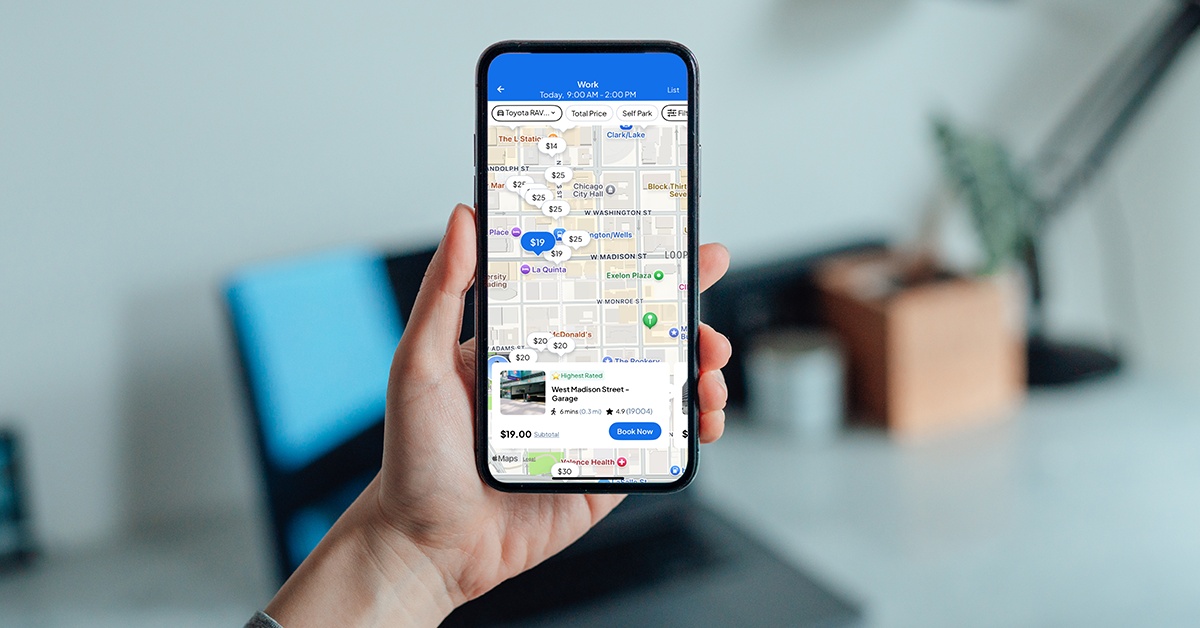
The customer buys an easier arrival
A commuter can compare garages near the office. A concertgoer can sort out parking before joining the traffic outside the venue. An airport traveler can book ahead, while a monthly parker can look for a recurring arrangement. The shared benefit is moving a decision from the driver’s seat to a calmer moment before departure.
The booking flow is straightforward: enter a destination and time window, compare facilities, pay, then follow the parking pass. Redemption might involve scanning a code, showing an attendant the reservation or registering a license plate. The website also offers guest checkout. A person who needs parking once does not necessarily need another long-term relationship with an app.
The reservation is generally an allocation of capacity, rather than a particular numbered bay held empty. SpotHero’s guarantee promises parking at the paid price or a refund. That distinction matters: the platform depends on operators keeping inventory accurate and recognizing a valid pass when the vehicle arrives.
The practical shopping rule is to compare the whole stay. Check the final checkout total, vehicle restrictions and entry instructions. If you need to leave and return, verify that the facility permits it. A lower price loses its appeal when the garage does not fit the car or the reservation does not fit the evening.
The price belongs to a reservation window, so a useful comparison starts by entering the same arrival and departure times everywhere. SpotHero says applicable taxes and fees appear in the checkout total; some facility-specific charges, such as an oversized-vehicle fee, may be payable on site. Its FAQ allows cancellation until the minute before a reservation begins for a full refund. That flexibility helps with changing plans, but it gives the driver a deadline to remember. Read the pass before starting the car.
An empty hour has a sell-by date
The operator has a different shopping list. A space that sits empty through lunch cannot sell that same lunch hour tomorrow. SpotHero offers another route to customers, alongside the people who discover a garage by driving past it. The marketplace earns commissions on parking sold; it has also introduced per-reservation service fees for drivers.
That creates a balancing act. Drivers welcome a convenient price. Operators want bookings that improve revenue after the cost of selling them. A discounted reservation can make sense for otherwise idle capacity, but shifting a customer who would have paid more directly is a different result. The relevant measure is what the facility keeps, not simply how busy the booking screen looks.
SpotHero’s Control Panel lets operators change availability and rates, monitor reservations and review revenue. Its event tools account for the time around a scheduled event and allow pricing tiers against inventory. Those controls reflect a physical business: a baseball game, an office day and an overnight stay do not occupy the same hours.
Scan2Pay catches another customer: the driver already standing in the lot. At participating ungated facilities, a QR code opens a checkout flow for a duration, license plate and payment, without requiring an app download. SpotHero’s published offer includes complimentary signage and installation. It gives operators a digital transaction even when the customer never planned ahead.
Teaching the rate board to notice demand
SpotHero IQ applies machine learning to parking prices. In its engineering account, the company describes considering usage patterns, demand and prices at comparable facilities. A static sign can distinguish weekdays from weekends. Software can consider more combinations and update them without someone rewriting the board.
In March 2021, SpotHero announced dynamic pricing at more than 1,000 facilities. The expertise involved is specific: understanding parking inventory, modeling local demand and turning that information into rates operators can use. The word “AI” adds little without that connection to a real facility.
There is an obvious boundary. Better pricing cannot manufacture a convention, reopen an office or make an unsuitable garage accessible. It also needs trustworthy inputs. If the inventory is wrong, a clever price merely makes the wrong space easier to buy. The software’s value depends on operating discipline outside the software.
“Give Drivers the Right of Way”
One of SpotHero’s published core values
Growth met an empty city
Expansion took both capital and acquisitions. SpotHero bought Parking Panda in 2017, adding city coverage and venue relationships. A $50 million Series D led by Macquarie Capital followed in August 2019, bringing announced funding at that point to $118 million. The stated uses included marketplace growth, technology and mobility partnerships. Building a booking network was a sustained investment.
Then the destinations disappeared. Reporting published in February 2022 put SpotHero’s April 2020 bookings 90 percent below February 2020. Multiple rounds of layoffs ultimately halved the workforce. The collapse exposed the business’s dependence on people having somewhere to go, however convenient its app had become.
When the trips stopped
Bookings index, February = 100. April’s value is calculated from the reported 90% decline.
The company’s own history records a response in the product: touchless redemption, extending contact-free payment through the arrival process. But fewer touches could not replace missing customers. Recovery depended on trips returning as well as on keeping a functioning company available to serve them.
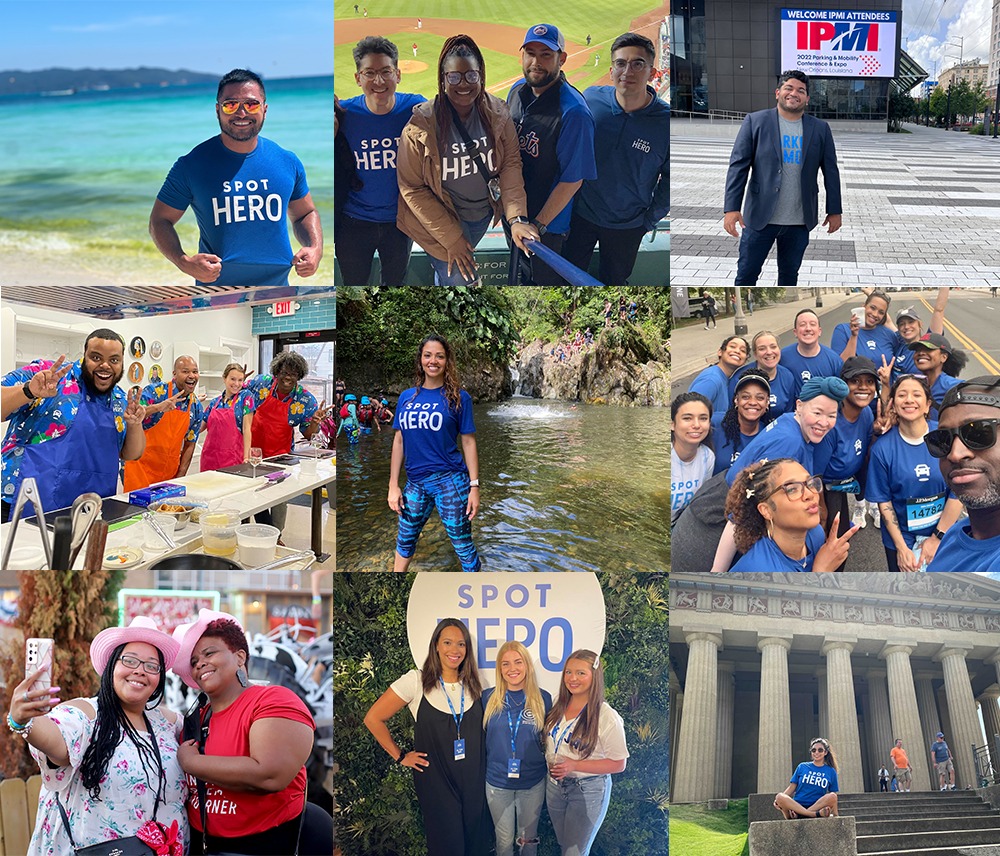
SpotHero says its first engineer and first Customer Hero joined in 2013. That pairing captures the work better than a fashionable technology label. Someone builds the reservation flow; someone answers when reality refuses to follow it. Its stated culture emphasizes feedback, relationships and enjoyment of work. The pandemic supplies the necessary context for reading those cheerful values.
For an operator considering the platform, a practical starting point is to identify which hours actually need customers. An event lot with uncertain demand presents a different problem from a garage already full every weekday morning. List accurate availability, make the entrance instructions unambiguous and compare the proceeds with what those spaces previously earned. This is an inference from the marketplace’s mechanics, rather than a promised result: distribution is most useful when it brings additional business the facility can reliably accommodate. More bookings alone do not settle that question.
Uber buys the next introduction
SpotHero competes with reservation alternatives such as ParkWhiz and with buying directly from a garage. The useful distinction is local and practical: which service has the right facility, price and terms for this trip? SpotHero’s broad network and operator tools strengthen its position, but the booking concept itself is available elsewhere.
Partnerships put the service closer to a journey already being planned. Its 2019 Waze integration connected a booked space to navigation. Uber’s acquisition extends that distribution logic through ownership. In the February 2026 announcement, Uber outlined native parking reservations focused on commuting, events, venues and airports, with parking benefits expected for Uber One members over time.
“Joining forces with Uber will allow us to bring that experience to millions more drivers,” Lawrence said in the announcement. Those were plans for expansion, not evidence that every proposed feature was already available. The purchase itself became definite on April 16, when Uber acquired all outstanding equity.
The lesson worth borrowing reaches back to that first operator deal. Find usable supply, earn the supplier’s trust and make the transaction dependable at the moment it matters. For the driver, the final test remains wonderfully undramatic: arrive at the right entrance, get through the gate and go do something more interesting than park.