specialty-insurance
(22)
Venbrook is buying the expertise your next claim might need
From college athletes to commercial landlords, Venbrook has assembled specialists for risks that rarely stay in one department. Its next challenge is making those businesses work together.
The £250 Million Bet on Making Insurance Less Like Email
Verisk bought Sequel for £250 million to digitise the stubbornly human London insurance market. The result is a software suite built to remove rekeying and spreadsheet drift - while leaving judgment to brokers and underwriters.

Artificial Labs Is Teaching London’s Insurance Market to Read Its Own Paperwork
The London insurance market still runs on expertise, relationships and a heroic quantity of documents. Artificial Labs has spent a decade turning that paperwork into data - and the industry's judgment into software that can move at market speed.
Intact Built a $25 Billion Insurance Machine - Then Sent It Toward the Fire
Canada's largest property and casualty insurer grew by treating insurance as an operating system: price risk better, control more of the repair, and buy only what the machine can improve. The catch is that climate volatility keeps stress-testing every advantage it has built.

TIMBY Found a Business in the Stuff Traditional Insurance Leaves Moving
Cargo, cranes, warehouse inventory and oilfield gear live in the awkward gaps between standard policies. TIMBY built a specialty underwriting shop for those gaps - then sold it without giving up the name on the door.
Buckle Raised $106 Million to Insure Uber Drivers. It Survived by Becoming Insurance's Plumbing.
The Atlanta startup wanted to be the USAA of the gig economy. When the rideshare math refused to cooperate, it traded a consumer dream for a quieter, colder business - renting out its insurance license to other people's ideas.
The Grid Failed. Adaptive Insurance Paid in Days.
Most insurance waits for proof of loss. This Austin startup watches for the event itself - then turns a dark grid, a flooded home or a brutal deductible into a faster, prearranged path to cash.

The Insurance Giant Hiding Behind the Repair Bill
AmTrust built an $8.8 billion premium engine by insuring the businesses and breakdowns bigger carriers can overlook. Its next policy is being written in software, claims data and a network of specialist partners.

The 125-Year-Old Insurer Learning to Price Tomorrow’s Weirdest Risks
Hiscox began with marine risk at Lloyd’s. Today it sells a policy online in minutes, models California wildfire years ahead and still makes room for the odd painting, satellite or kidnap case.
W. R. Berkley Corporation
W. R. Berkley became one of America’s largest commercial insurers by building roughly 60 specialist businesses and letting them stay close to the risk. The center supplies capital; the edges supply judgment.

Assurant
You may never shop for Assurant, yet it may already be standing behind your phone, car, apartment or mortgage. The $12.8 billion company has built a business out of everything that happens after the sale.
AIG
AIG spent years shrinking a sprawling financial empire into a sharper general insurer. Now it is betting that global reach, underwriting discipline and AI-assisted decisions can make a 107-year-old company faster without making risk feel simple.

Ryan Specialty
Ryan Specialty built a $3 billion business around the risks ordinary insurance markets would rather not touch. Its real product is a carefully engineered meeting between difficult exposures, specialist judgment and willing capital.
The Baldwin Group
The Tampa firm grew from a Florida brokerage into a $1.5 billion national platform. Its next act is less about selling policies than connecting advice, underwriting, embedded distribution and AI into one insurance operating system.
Radian
For nearly 50 years, Radian helped lenders say yes to buyers with less than 20 percent down. Now a $1.67 billion bet on Lloyd's insurer Inigo is turning that familiar mortgage specialist into something broader - and changing which risks it wants to keep.

The Hanover Insurance Group
The 174-year-old insurer has made a modern wager on an old-fashioned middleman: the independent agent. Behind that choice sits a broad coverage portfolio, specialized risk expertise and a business built to price the unexpected.

Hedge
Hedge is an AI-native specialty insurance wholesaler that sits between retail brokers and specialty carriers, using AI agents to place hard-to-insure businesses faster and cheaper. Founded in 2026 by Luke Button and Luke Rosa and backed by Y Combinator (P26 batch), Hedge automates the manual quoting workflow - reading submissions, selecting markets, completing carrier applications, negotiating quotes, and issuing documents - so brokers get coverage in minutes instead of days.

Ledgebrook
Ledgebrook is a tech-enabled excess and surplus (E&S) lines managing general agent (MGA) that aims to give wholesale insurance brokers the fastest, easiest quoting experience. Founded in 2021 by former actuary Gage Caligaris, the company pairs a next-generation tech stack - which enriches and prefills broker submissions and speeds rating - with experienced human underwriters to write specialty commercial coverages such as general liability, excess liability, professional liability, allied healthcare, and architects & engineers. Having written its first policy in May 2023, Ledgebrook passed a $100M premium run rate and closed an oversubscribed $65M Series C in June 2025, bringing total funding to roughly $119M.

Anzen
Anzen is a San Francisco insurtech building Anzen Pro, an AI-powered operating system for commercial insurance distribution. It reads brokers' emails, attachments and forms, turns unstructured submissions into structured data, routes each account to the right underwriters across a network of 130+ carriers and 500+ underwriting contacts, then compares quotes and generates proposals automatically. Started in 2020 as a marketplace for executive risk coverage, Anzen now helps thousands of retail agents automate submissions, quoting, compliance, renewals and claims - work that has stayed stubbornly manual in the commercial insurance industry.

Flow Specialty
Flow Specialty is a Mountain View insurtech that set out to automate the grind of specialty wholesale insurance placement with AI. Founded in 2021 as Capitola and rebranded to Flow in April 2024, the company built what it called the industry's first AI insurance broker: a system of backend AI agents - branded 'Platformless AI' - that read submissions, match risk to carrier appetite, build quotes and support human brokers end-to-end without asking retail agents to log into anything. In 2024 its AI reportedly became the first system to pass an RPLU underwriting certification exam, and the firm claimed a 50% quote-to-bind ratio, roughly double the industry norm. In June 2026, ReSource Pro acquired Flow's technology, IP and core team, appointing founder Sivan Iram to lead a new 'AI Factory.'
Kalepa
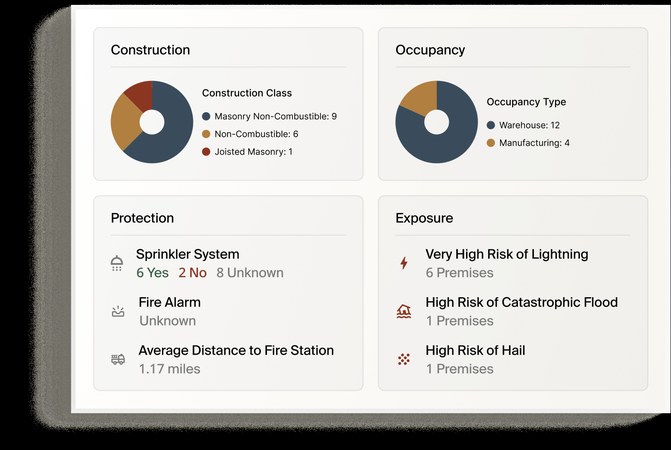
Kalepa is a New York-based insurtech building AI software for commercial insurance underwriters. Its flagship platform, Copilot, ingests submissions, extracts and structures messy documents, surfaces hidden risk exposures from billions of data points, and helps underwriters triage, price, and bind business faster and more profitably. Founded in 2018 by Paul Monasterio and Daniel Hillman, the company is backed by Inspired Capital and IA Ventures and works with carriers including Munich Re Specialty, Bowhead Specialty, SECURA, and Canopius.
Federato
Federato is an AI-native insurance platform built around a framework it calls RiskOps - software that connects portfolio strategy to the day-to-day decisions underwriters make on individual policies. Founded in 2020 by Stanford researchers Will Ross and William Steenbergen, the company sells to property-and-casualty carriers, MGAs and mutuals, and reports customers regularly see a 90% improvement in time-to-quote and a 3x lift in profitable business bound. In November 2025 it raised a $100M Series D led by Goldman Sachs Alternatives.