An insurance company named after a road junction sounds almost too sensible. Venbrook took its name from Ventura Boulevard and Fallbrook Avenue, near its first office in Woodland Hills. The crossroads turn out to be a useful way into the business: a collection of brokers, underwriters and claims specialists built to meet where a customer's problems overlap.
A landlord needs protection for a building and the income it produces. A college needs accident coverage for athletes, health plans for students and benefits for staff. A contractor needs someone who understands the work well enough to ask awkward questions before a claim makes them unavoidable. Venbrook has spent years adding businesses that can handle those separate conversations.
The result is an insurance distribution and services group with a broad reach across the life of a risk. It advises customers, arranges coverage, develops specialty programs and handles claims through its subsidiaries. Its appeal is practical: more of the people needed to solve a complicated insurance problem can sit inside the same organization.
The shopping list tells the story
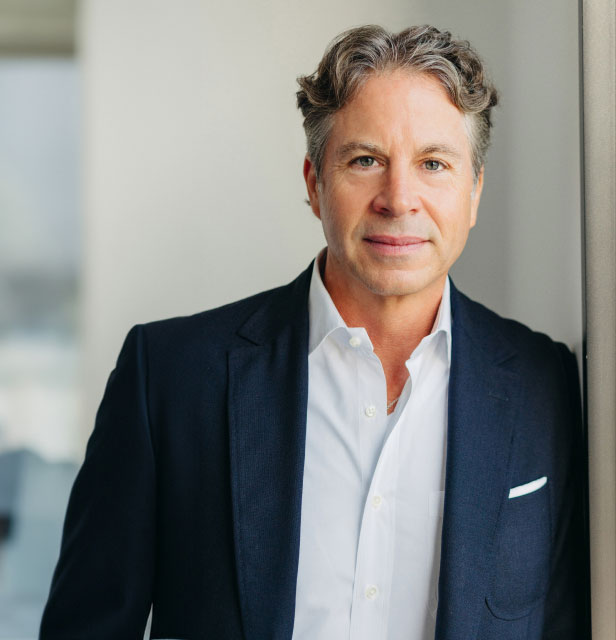
Venbrook's own history starts with CalPro Brokerage in 1995. Retail brokerage Venbrook Insurance Services followed in 2000; Venbrook Group and its specialty services division were formed in 2006. Those dates describe different stages of the business, rather than a single neat birthday. Founder and CEO Jason Turner remains at the center of the group.
The early expansion followed recognizable customer needs. Transportation and fitness programs arrived in 2009. Construction and real estate divisions followed in 2010, employee benefits in 2013 and an in-house claims division in 2014. Each step added another reason for a customer to keep the relationship after the initial policy purchase.
In October 2016, Venbrook secured $42 million in debt financing from Madison Capital Funding. It acquired Brooks Insurance Agency that year, establishing a wholesale division. The distinction matters: the financing was borrowed capital, while Brooks brought access to insurance markets for other brokers. The amount raised should not be confused with Brooks' purchase price.
Student Insurance joined in 2018. Carl Warren & Company followed in 2019, expanding public entity claims capabilities. After partnering with private equity firm Parthenon Capital in 2020, Venbrook announced the 2021 purchases of employee benefits specialist RD Parisi and independent adjuster David Morse and Associates. That year's expansion also included construction specialist Alpharetta Underwriters and Boston brokerage InterContinental Insurance Brokers.
The pattern is more revealing than the deal count. Venbrook bought expertise that could become useful to customers elsewhere in the group. Parthenon supplied capital and strategic support for that expansion. The commercial bet is that a specialist's existing relationships become more valuable when the specialist has more services to offer.
One customer, several kinds of trouble
Venbrook's commercial insurance practice covers property, casualty, professional liability and other business exposures. Its employee benefits teams work on medical, dental, vision and disability plans, alongside enrollment and compliance support. Private client specialists handle personal insurance for people whose homes, possessions and liabilities require individual attention.
The customer list is therefore a set of different markets. Businesses and employers buy advice and coverage. Colleges buy student and institutional protection. Affluent individuals need personal risk management. Insurance carriers and public entities need claims services. Retail insurance agents turn to Brooks when their own market access does not solve a placement problem.
That last relationship is easy to miss. A wholesaler works between a retail broker and an insurance carrier. Brooks provides access to both admitted and excess-and-surplus markets, including difficult or unusual risks. Its offering ranges from contractors and vacant buildings to nonprofit directors' liability, special events and cyber coverage. An independent agent can use that expertise without employing specialists in every line.
- UnderstandRetail advice identifies the exposure.
- PlaceWholesale access and specialty programs help arrange protection.
- ResolveClaims teams investigate, administer and manage losses.
Capabilities across the group; the services engaged depend on the assignment.
As an insurance intermediary and services business, Venbrook's commercial model combines coverage distribution with specialist work. Brokerage compensation generally involves commissions or agreed fees; claims administration is a contracted service. That describes the economics of the activities, rather than a disclosed breakdown of Venbrook's revenue. The carrier underwriting a policy remains an essential participant.
Venbrook competes in the space occupied by national brokerages, regional independent brokers, specialty wholesalers and claims administrators. Its case for winning business rests on the combination of those capabilities. Breadth alone does not establish an advantage. The useful test is whether the team understands the customer's particular exposure and can coordinate the relevant people.
A landlord program with seven-state boundaries
Comstar LRO makes that proposition concrete. In June 2026, Venbrook introduced an enhanced version of its property program for residential and commercial landlords. LRO stands for Lessor's Risk Only. The intended properties include retail centers, offices, mixed-use commercial buildings and multifamily dwellings.
The program combines property and liability protection, with features for buildings, business personal property, business income, equipment breakdown and ordinance or law coverage. Shared spaces matter too: a landlord's responsibility can extend into the parking lot, lobby or sidewalk. A building's insurance problem does not stop at its walls.
At launch, Venbrook said the program could write up to $115 million in total insured value and was available in California, Arizona, Nevada, Oregon, Washington, Idaho and Utah. It named carriers including Lloyd's syndicates. Geography and underwriting eligibility are therefore central to the product's usefulness; a property outside the listed territory needs a different route.
Other programs aim at equally specific problems. Alpha Underwriters handles difficult liability exposures, including construction. FITCO provides coverage for independent fitness instructors and personal trainers, from yoga and Pilates to aquatics and spinning. A firm that understands a contractor's subcontracting arrangements needs a different set of questions for a person teaching a poolside exercise class.
The campus business has its own timetable
Higher education offers an unusually clear view of Venbrook's customer base. In May 2026, Student Insurance said it partnered with nearly 80 California community colleges for sports and accident benefits. It also described an exclusive 25-year partnership with Anthem supporting its Sports Accident Insurance Network, or SAIN.
The division reported 100 percent growth over three years, without specifying the measure in the announcement. More concrete was its planned expansion into Minnesota, New York and New Jersey for the 2026-2027 school year. That is a useful distinction for readers: the new territory is identifiable, while the growth percentage needs its original qualification.
The offering reaches beyond injuries on the playing field. It includes student health plans, international student coverage, study-abroad protection, telehealth, dental and vision options. There is even pet insurance for students. Campus life contains more insurable complications than the bursar's office might care to contemplate.
Venbrook's larger group can also bring employee benefits, property and casualty coverage and general liability services to an institution. For a college, the potential benefit is access to several relevant specialties through a connected organization. The actual decision still turns on plan design, provider access, service and price.
The real test arrives after the paperwork
Claims work gives Venbrook a role after a loss. Its claims division draws on businesses including Carl Warren, DMA Claims, David Morse and OneSource. Services include third-party administration, independent adjusting, complex claims management and support for managing general agents and insurance programs.
There are distinct jobs inside that description: inspecting damage, investigating circumstances, managing litigation and pursuing recovery from responsible parties. Venbrook advertises an online claims system with remote access to data and reporting. For customers, the practical question is who owns each task and how quickly information moves between the people doing the work.
The group's 2026 appointments put that operating challenge in focus. Awais Farooq became chief claims officer in February, with a remit to advance claims operations. In March, Tom Sleeper became president of retail property and casualty, charged with strengthening and unifying the national operation. Kenneth Ward joined as chief financial officer in June.
Those appointments support an interpretation of Venbrook's next phase: integrating the capabilities it has assembled. They do not establish that an earlier system failed. The harder management task is to make a collection of specialist businesses feel coherent to a customer who has no interest in the acquisition history.
Eighty managers, one required class
There is a more personal operating detail in Turner's May 2026 writing about mental health. He said Venbrook made mental health first aid training mandatory for roughly 80 managers. The aim was to help leaders recognize warning signs, respond with empathy and know which resources were available.
“If this training helps even one person in our company, I consider that success.”Jason Turner, May 2026
Benefits leader Alison Myers has described a change in her own outlook: work that initially looked transactional became meaningful when she understood how plan design could affect a family's financial security. Her account connects the spreadsheets to the people living with their consequences. It is also a more specific window into leadership priorities than a list of corporate values.
The lesson a reader can copy is to start with the connections. Before discussing a policy, map the people, property, income and contracts exposed to a loss. Ask which specialist handles each part, what documents they need and how the claim will move. Venbrook's proposition becomes useful when those answers fit together. The crossroads is a good name; the handoffs are the business.
Explore Venbrook
Website ↗News & insights ↗Find an advisor ↗LinkedIn ↗X ↗Instagram ↗Facebook ↗
Watch: Jason Turner on Forward LA ↗Watch: Business interruption with Jeff Lang ↗Venbrook on YouTube ↗