The insurance business has an odd time horizon. A policy can be sold in minutes, held for a year and judged in one miserable afternoon. The basement fills. The car folds. Smoke appears over the ridge. At that point, the clever advertising and tidy app screens recede. What remains is a test of whether the insurer priced the risk correctly, kept enough capital and can find a roofer when every neighbour needs one too.
Intact Financial Corporation has spent decades turning that ugly afternoon into an operating system. The Toronto-based company is Canada's largest property and casualty insurer, with personal, commercial and specialty operations across Canada, the United States, the United Kingdom, Ireland and continental Europe. In 2025 it wrote C$25.1 billion in operating direct premiums, three times its volume a decade earlier. Its 32,000 employees sell and service coverage through a thicket of brokers, direct brands, agencies, wholesalers and affinity partners.
That is the conventional description. The more revealing one is this: Intact collects signals, makes millions of small bets, fixes what breaks and feeds the result back into the next bet. Premiums are the input. Better decisions are the product.
01 / The machineFour businesses hiding inside one policy
Intact makes money in three reported streams. Underwriting income is what remains after claims and expenses. Investment income comes from investing the assets that sit behind insurance obligations. Distribution income comes from brokerage and related operations. There is also a fourth source of leverage that does not fit neatly on the income statement: control over claims and repairs.
In Canada, the flagship Intact Insurance brand sells home, auto and business coverage mainly through more than 2,000 broker relationships and serves about four million customers. BrokerLink, owned by Intact, adds distribution. belairdirect sells home and auto coverage straight to consumers. Intact Prestige handles affluent households. Public entities, affinity groups and travel customers sit elsewhere on the shelf. In the US, the emphasis is specialty insurance. In the UK and Europe, the company now leans into commercial and specialty lines, while 123.ie sells personal coverage directly in Ireland.
The Intact loop
The loop is Intact's clearest difference from a smaller carrier. Scale creates more observations. The claims network creates a closer view of damage, repair time and cost. Investment and underwriting earnings provide capital for technology and acquisitions. Acquisitions bring more policies, distribution and data. Done well, every turn makes the next one cheaper or smarter.
02 / The betThe £7.2 billion acquisition - and the first crack
The largest test came in 2021, when Intact and Danish insurer Tryg completed the £7.2 billion purchase of RSA Insurance Group. Intact retained the Canadian, UK and international operations; Tryg took Sweden and Norway; Denmark was shared before being sold. For Intact, the deal enlarged Canadian premiums by roughly 30 percent, expanded specialty lines and created an instant UK and Irish platform.
What failed first was not the deal's central logic. It was one portion of the inherited mix: UK personal lines. Home and pet insurance there had become a poor fit for Intact's outperformance targets. In late 2023, after a strategic review, RSA agreed to sell its UK direct home and pet operation to Admiral for £82.5 million upfront, with up to £32.5 million more tied to retention. It also began exiting partner and broker personal-lines contracts. The expected aggregate proceeds and capital release were about £350 million.
“The exit from the UK personal lines market sharpens RSA's focus as a leading UK commercial and specialty lines player.”Charles Brindamour, chief executive
The thing that changed management's mind was performance, not fashion. Commercial and specialty operations had delivered better economics, while personal lines demanded remediation and capital. Intact chose concentration: it bought Direct Line's brokered commercial business for £520 million upfront, added NIG and FarmWeb, then rebranded RSA and NIG as Intact Insurance in 2025.
There is a clean operator's lesson here. An acquisition thesis should identify the capability being exported, the unit where it should work and the metric that proves it. When a segment resists the playbook, subtraction can be more valuable than another integration plan.
03 / The weatherPaying after disaster is no longer enough
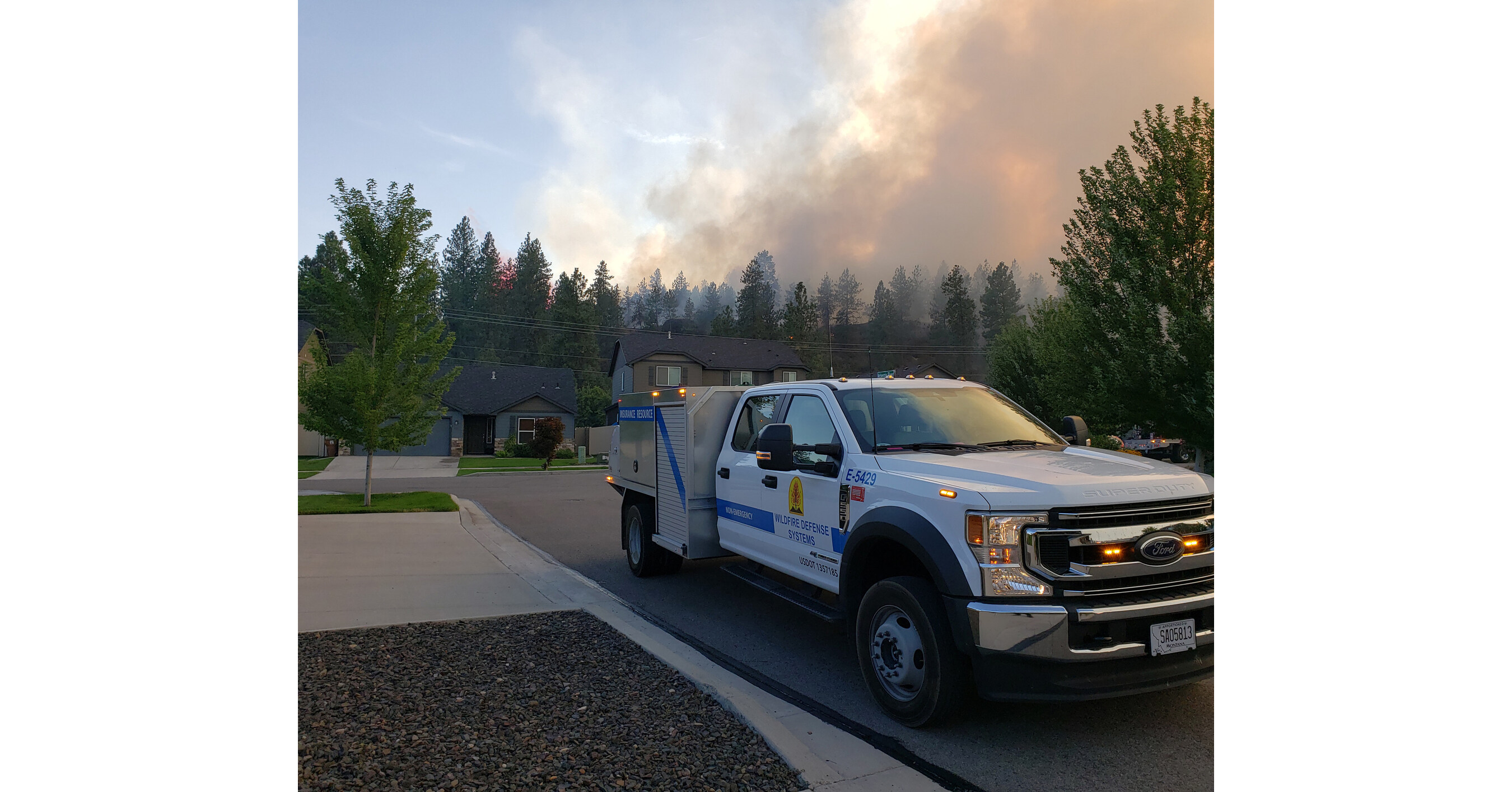
Climate volatility makes the flywheel more valuable and less predictable at the same time. Intact sees hail, floods, wildfire and wind twice: as human disruption and as claims severity. In 2024 it introduced Wildfire Defense Systems service for eligible Canadian home-policy customers in selected areas. The partner monitors fires and may deploy trained crews, engines and water equipment to threatened properties. There is no guarantee a home will be reached or saved. That limit matters. Prevention is a risk reduction service, not a force field.
Intact has also funded municipal climate-resilience grants, supported the Intact Centre on Climate Adaptation at the University of Waterloo and acquired Jiffy, a Canadian home-maintenance platform, in 2024. The common idea is to move upstream. A maintained home, a fire-adapted property or a flood-aware municipality can reduce damage before an adjuster opens a file.
Weather writes in red ink
Combined ratio - lower is better; below 100 means underwriting profit
The numbers show both the strength and the exposure. Intact finished 2025 with a combined ratio of 88.2 percent, record annual net operating income per share of C$19.21 and a 19.5 percent operating return on equity. In the second quarter of 2026, elevated catastrophe and large losses pushed the combined ratio to 94.9 percent and cut quarterly underwriting income 61 percent from a year earlier. The company still earned an underwriting profit. The cushion simply got thinner.
04 / The codeAI that has to survive contact with an adjuster
Intact opened its Montreal digital lab in 2015 and an AI research centre in Hong Kong in 2019. Its public materials describe models used for pricing, risk selection, call analysis and auto total-loss appraisals. The company says it has built production AI in operations since 2018 and is now applying generative AI across Canadian business lines.
The differentiator is not access to machine learning. Every major insurer can buy cloud compute and hire data scientists. The scarce piece is a workflow that joins actuaries, underwriters, engineers and claims staff, then measures whether a model improves speed, price or customer outcomes. Intact's long history supplies data, but old data can also encode yesterday's weather, repair costs and driving patterns. Models require governance and constant recalibration precisely because the world they describe will not sit still.

05 / The copyWhat smaller companies can steal
Do not copy Intact by buying an insurer. Copy the sequence. First, identify the decision repeated most often. For Intact it is risk selection and price. Second, instrument the painful handoff. The sale matters, but the claim is where loyalty and cost are decided. Third, shorten the feedback loop so the outcome improves the next decision. Only then add adjacent distribution, suppliers or acquisitions.
A founder can apply the same pattern to lending, logistics, maintenance or healthcare administration. Own the measurement around the core decision. Capture what happens after the transaction. Bring the worst customer moment close enough that the product team cannot call it somebody else's problem.
Intact's stated culture - integrity, respect, customer focus, excellence and generosity - sounds conventional until the incentives become visible. The company wants three in four customers to advocate for it, four in five brokers to value its expertise, employees to register Best Employer engagement and operating return on equity to beat the industry by five points. Those are unusually concrete translations of soft nouns.
The company is not insulated from the forces it insures. Regulation can change prices. Repair inflation can devour margins. A single severe season can overwhelm forecasts. Global expansion can turn a tidy flywheel into a box of mismatched gears. Yet that is why Intact is worth watching. It has made a very old product feel like a live operational problem: observe, price, respond, learn - and keep enough capital for the afternoon when all four are tested at once.