The odd thing about specialty insurance is that its sophistication has long coexisted with a startling amount of clerical repetition. A broker describes a risk. An underwriter interprets it. Someone puts a price against it. Then the same facts wander through email, a spreadsheet, a policy system, a claims file and an exposure model - gathering opportunities for delay and disagreement at every stop.
Verisk Specialty Business Solutions has spent three decades attacking those stops. The London-based software company, still widely associated with its former Sequel name, sells the working machinery for complex commercial insurance and reinsurance. Its tools help brokers and underwriters negotiate and bind contracts, actuaries control rating models, claims teams see a common file, and risk managers inspect how many insured assets might be hit by the same storm, cyber event or political shock.
This is not the friendly end of consumer fintech. The customers are insurers, reinsurers, Lloyd's managing agents, brokers, managing general agents and coverholders. The products carry names such as Whitespace, Rulebook, Sequel Impact and Sequel Claims. The work concerns bordereaux, endorsements, accumulations and audit trails. It is valuable precisely because most people would rather not explain it at dinner.
A workflow company disguised as a product catalogue
Read the catalogue from left to right and a strategy appears. Whitespace handles placement: a broker creates a structured submission, underwriters collaborate, quotes move back and forth, and the contract can be bound, signed and endorsed inside an encrypted platform. Rulebook governs the pricing logic, replacing free-range spreadsheets with centrally managed models, testing and an auditable account of how a price was reached. Underwriting and broking systems administer the policy. Claims gives users one live view of what happens next. Impact maps and aggregates the exposure across the portfolio.
The suite can be bought in pieces. That matters because an insurer rarely wakes up eager to replace every core system at once. Open APIs let a new component sit beside existing technology, while an optional AWS managed service hands hosting and product operation back to Verisk specialists. The commercial model is conventional enterprise software - contracted licences or subscriptions, implementation, support and managed services - with prices negotiated privately rather than displayed beside a cheerful monthly toggle.
Its difference is less about any single screen than the combination of domain depth and data adjacency. General insurance platforms such as Guidewire, Duck Creek and Sapiens cover broad carrier operations. Specialist workflow companies compete around underwriting or placement. Catastrophe firms model physical shocks. Verisk SBS sits across several of those jobs and can connect them to its parent's data and analytics. Impact, for example, can send exposure data directly into Verisk's Touchstone catastrophe models instead of requiring another manual transfer.
“Technology is most powerful when it amplifies human expertise and relationships, not when it seeks to substitute them.”Tim Rayner, chief executive
What £250 million actually bought
The legal entity was incorporated in 1992 as Beken Computers and took the Sequel Business Solutions name in 1993. By the time Verisk agreed to acquire it in August 2017, Sequel had become a compact but profitable specialist. It reported £26 million in revenue and £12 million in EBITDA for the year to June 2017. Verisk paid £250 million, reported as $320.3 million net cash at closing - a rich price for code alone, but code was only part of the purchase.
Verisk bought an installed route into the London specialty market. It bought people who spoke both software and insurance, a customer base that included large market participants, and workflow products positioned close to the moment a risk becomes a contract. That placement is strategic: structured transaction data can feed pricing, claims and portfolio analytics long after the electronic signature lands.
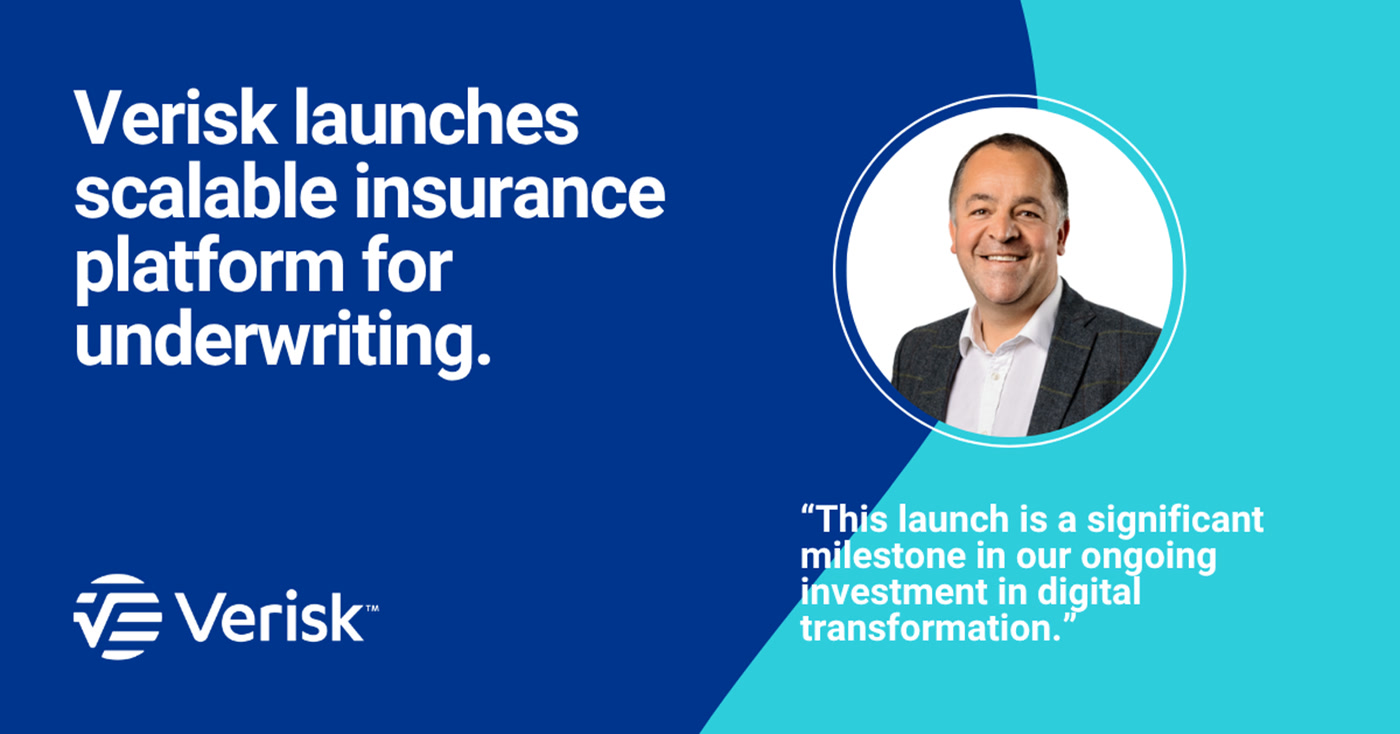
The acquisition did not freeze the portfolio. Verisk added Rulebook in 2018 by buying Moore Stephens' insurance technology business. It acquired Whitespace in 2021. Morning Data followed in 2023, bringing NOVUS core systems and Eos workflow applications for brokers and MGAs. In 2025, SBS launched a new API-first Insurance Platform for London-market underwriting, with specialist insurer and reinsurer IQUW as the first adopter.
The pilot that changed the conversation
Enterprise insurance projects do not fail first because the button is the wrong shade of blue. They fail at adoption and integration. Users keep a shadow spreadsheet. Data arrives incomplete. A new interface demands double entry. A promised transformation becomes one more system to feed. Verisk's public case studies repeatedly answer that anxiety with the same trio: start inside a bounded workflow, connect to what already exists, and leave a useful data record behind.
Marsh provides the clearest example. The global broker piloted Whitespace in 2023 and put more than $400 million of premium through it. After that test, Marsh announced the next phase: more than 90 percent of client premium in its UK Specialty and international placement segment was expected to flow through the platform by the end of 2024. The trial did not merely prove that a contract could be placed digitally. It gave Marsh enough operational evidence to expand.
By October 2024, nearly 170,000 lines had been written on Whitespace during the year - more than triple the 2022 figure - and Verisk was taking the platform into the US excess-and-surplus market. That is a telling expansion. E&S insurance covers unusual or hard-to-place risks and, like London specialty business, rewards flexibility. A rigid form is no help when the object being insured refuses to behave like last year's object.
The old handoff
- Email attachments become versions
- Risk details are keyed again
- Pricing logic lives in personal files
- The audit trail needs reconstruction
The data-first handoff
- Parties work on a shared contract
- APIs move structured fields
- Rules and changes are controlled
- The transaction leaves a usable record
Complex risk rewards an opinionated tool
Sequel Impact shows why vertical software can resist generic substitutes. It is a deterministic aggregation system: load policies, assets, limits and conditions, then inspect gross and net exposure around the world. A user can draw or simulate an earthquake, flood or fire and see which insured assets fall inside it. The answer can inform a quote before binding or help triage a portfolio after an event.
In 2024, the company added an offshore-renewables module using Clarksons Research data on wind-farm sites, turbine numbers, makes, locations and sizes. In 2025, Emirates Insurance implemented Impact for property, construction and energy exposures. In early 2026, Mosaic Insurance selected it for political risk, political violence and cyber. Those are not interchangeable risks, but they share an awkward characteristic: loss can accumulate across policies in ways that are hard to see one submission at a time.
The conditions matter. This approach works when the process is repeated often enough to justify integration, when counterparties agree on data definitions, and when management can require a new workflow after the pilot. It struggles when volumes are tiny, every transaction is truly unique, source data is poor, or participants refuse a shared standard. Open APIs cannot rescue an organisation that has not decided who owns the field called “insured value.”
That explains the company's work with ACORD and the “Sequel6” - Markel, Beazley, Hiscox, Chaucer, Brit and Liberty Specialty Markets - on common data and API standards. Competitors agreeing on plumbing is not glamorous, but it lowers the cost of every later connection. It also supports Lloyd's Blueprint Two programme, whose promise of digital market services depends on systems interpreting contracts consistently.
The moat is partly made of people
SBS says it has more than 400 experts, serving more than 300 clients and 35,000 users across over 25 countries. The revealing detail is in Málaga. Javier García Magna opened the development office with 10 programmers in 2010; it has grown to more than 170 software architects, developers, project managers, analysts and cloud engineers. That is less a satellite office than an engineering centre with its own professional community.
Leadership biographies read like a deliberate mix of insurance operations and software delivery. Rayner began as a developer, then spent 18 years on the broker side. Strategy chief Danny Flavelle started as a Lloyd's claims adjuster before building pricing systems. Operations chief Helen Banton industrialised support and AWS hosting and led work that achieved ISO 27001 accreditation. The culture described publicly is disciplined, client-partnered and unusually fond of people who can translate between a risk conversation and a database schema.
The company is now trying to connect actuaries and underwriters in one live workspace, pulling Verisk data into Rulebook and its newer Insurance Platform. The idea is not that software invents the right price. It is that the model, the inputs, the decision and the resulting contract should stop living in separate institutional memories.
There is a modest lesson here. Digital transformation in insurance is not one dramatic leap from paper to artificial intelligence. It is a chain of less theatrical improvements: one field entered once, one pricing change tested before release, one claim visible to everyone who needs it, one portfolio that can be seen before the storm arrives. Verisk SBS has made a business from shortening that chain. The underwriter keeps the judgment. The inbox loses a little authority.