sales-enablement
(43)
Andrew D'Agostino Learned Every Position on the Revenue Court. Now He Calls the Plays.
After 15 years spanning product, enablement and marketing, Conquer's new CMO has a simple idea about growth: the best operator is less solo scorer than point guard.

Laura Drake Has Spent a Career Making Complex Technology Easier to Choose
After decades linking sales, partners and customers, Majesco's new marketing chief has taken on a particularly difficult brief: make the intelligent era of insurance feel concrete, useful and ready for now.

Mindy Russell Makes Complex Technology Easier to Buy
For three decades, the Austin executive has worked where technical expertise meets commercial clarity. Her career makes a quiet case for marketing as an operating system, not a coat of paint.

Brigid Ling Built the Bridge Before She Sold the Platform
Before leading marketing at an AI-native sales platform, Brigid Ling spent two decades making complicated ideas easier to act on - for small businesses, young football players and enterprise sellers alike.

Bernd Leger’s Long Game: Make the Story Hold
Across cybersecurity, workforce software and sales enablement, Bernd Leger has kept returning to the same hard assignment: make a company’s promise survive contact with its customers.

Kurt Andersen Learned the Factory Floor. Then He Made Enterprise Software Speak Human.
The BillingPlatform CMO built his career where machinery, software and revenue meet - turning complicated systems into practical stories that sales teams, finance leaders and customers can use.

Lucia Marchese Is Wiring Marketing Into the Revenue Machine
The TeamDynamix CMO has spent more than 20 years turning the old sales-marketing handshake into working infrastructure. Her operating idea is disarmingly plain: connect the system, and the value becomes visible.

Elay Cohen Turned Salesforce’s Training Problem Into a Company
At Salesforce, he learned that a kickoff could inspire a room but could not train a global team. SalesHood is his long experiment in turning that lesson into a daily operating habit.

Nicole Westenberger Built Her Career Where the Catalog Became a Click
From Sears catalogs to industrial e-commerce, Nicole Westenberger has spent a career following the customer across channels - and teaching century-old businesses to do the same.

Mathieu Perez Took AI Off Zoom and Sent It Knocking on Doors
After eight YC rejections and several startup detours, the former goalkeeper returned to a problem he had met at 18: the invisible gap between an average field rep and a closer.

Simcha Kackley Built Swivel for the Mess Between Marketing and Sales
After five sales and marketing leadership posts, Kackley stopped treating pipeline problems as a collection of tactics. Her Cincinnati firm, Swivel, is the operating system she wished those teams had shared.

Etai Beck Is Building for the Buyer Who Never Knocks
He left a comfortable corporate climb to fix a problem hiding in plain sight: B2B buyers were being tracked everywhere and understood almost nowhere. A decade later, AI has made that argument urgent.

Melanie Fellay Put the Training Manual Where Work Actually Happens
A broken Salesforce rollout gave the operator in Melanie Fellay a question worth chasing. An elevator pitch, an octopus and eight years of company-building later, she is still trying to make workplace knowledge arrive at the exact moment it matters.
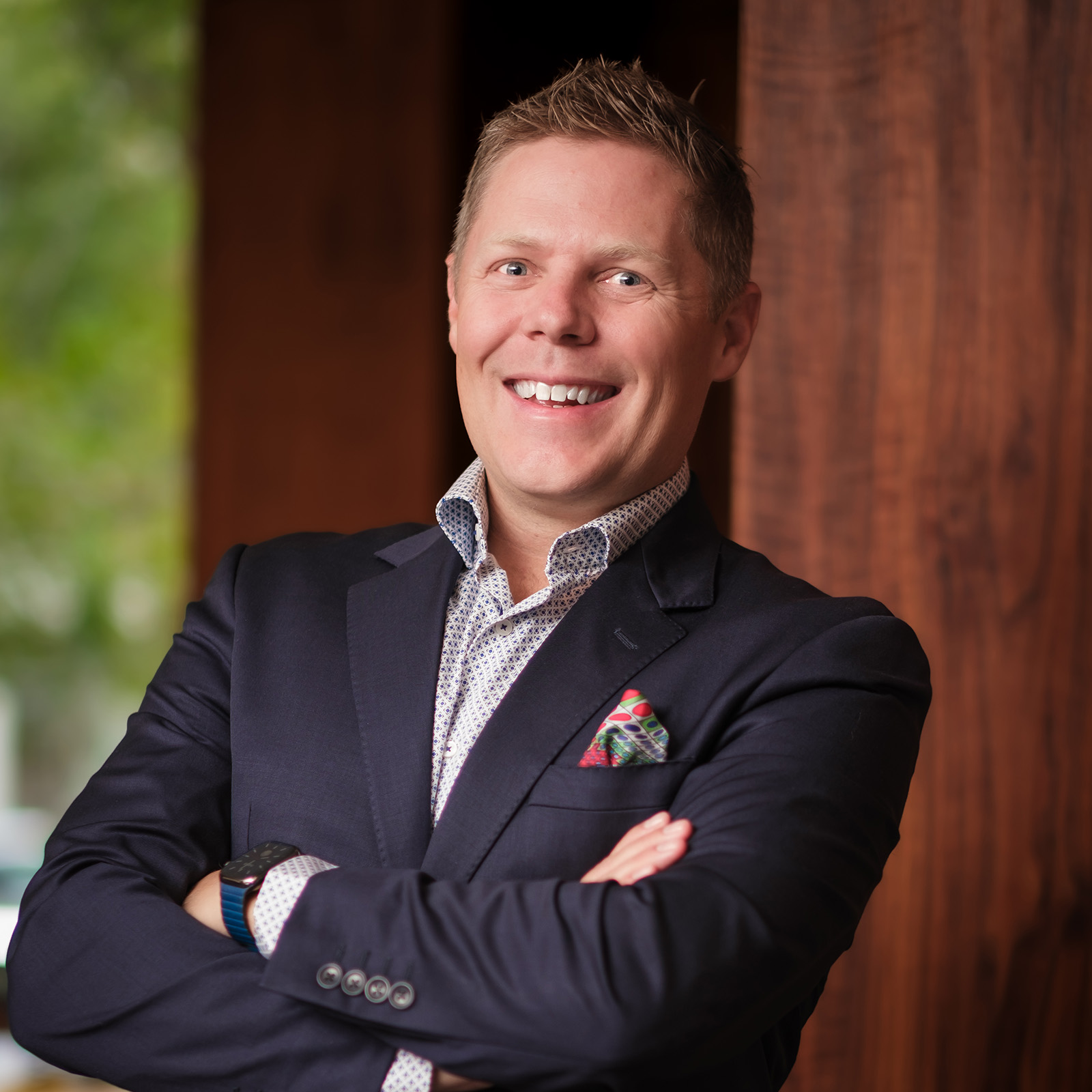
The Saskatoon Marketer Turning Sales Instinct Into a Repeatable System
Dustin Lee crossed from foodservice to medical devices to managed IT, carrying one idea with him: good sales work becomes more valuable when a whole team can repeat it.

Louis Adam Turned Telecom Complexity Into a Marketing System
At EXFO, Louis Adam made a discipline of translating dense network technology into useful customer conversations - then turned the process into a playbook others could use.

Daniel Anstandig Has Spent a Career Teaching Old Media New Moves
He started in a small Ohio radio station at nine. Now the Futuri founder is betting that the useful future of AI belongs to operators who listen before they automate.

Carlos Rivera Is Teaching a Bank to Sell Before the Ask Arrives
At Webster Bank, Carlos Rivera is turning marketing from a library of materials into a working system for bankers. His method is patient, measurable and built for the constraints that make financial services difficult.

Melissa Rothchild Makes the Complicated Feel Useful
Melissa Rothchild has spent more than 25 years making complicated products easier to understand. At Guardian, she treats marketing less like a megaphone and more like a translation desk - one where attention must eventually become action.

Jake Cronin
Jake Cronin is the founder and CEO of Siro, a New York based conversation intelligence platform that records and analyzes the face-to-face conversations of field sales reps and turns them into AI coaching. He learned the sales craft the hard way, selling Cutco knives door to door as a teenager and ranking among the company's top reps worldwide, then spent two years as a McKinsey business analyst before leaving in 2020 to code Siro's first product himself. The company has raised roughly $75 million, including a $50 million Series B led by SignalFire in 2025, and works with home services, telecom, and multifamily sales teams across the country.

Walter Rogers
Walter Rogers is the CEO of MontyCloud, a Redmond-based cloud operations platform that uses agentic AI to let IT teams manage AWS without writing scripts. Born in Rome, raised in Houston, and now based in Austin, he studied Italian and Economics at UT Austin before building and selling three software companies, two of them to VMware. He remains Chairman of Baker Communications, the sales-training firm he has run since 2003, and joined MontyCloud as CEO in April 2022.

Eric Holmen
Eric Holmen is the CEO of Revenue Grid, an AI-powered revenue intelligence and sales engagement platform. Over a nearly 30-year run in marketing technology, he has served as CEO, CRO and CMO for fast-growing SaaS companies including Splash, Silverpop, Airship, SmartReply and Ortto. He is known for scaling go-to-market teams, doubling Splash's business through the pandemic, and advising startups and private equity and venture investors on operational execution. A self-taught childhood programmer turned operator, he holds three marketing patents and blends design, data and empathy in how he builds teams.

Alistair McLeay
Alistair McLeay is the Wellington-raised, Cambridge-trained machine learning engineer who co-founded Grw AI, a San Francisco startup building Taylor, an AI sales teammate that coaches and lifts entire sales teams. He shipped product to a million Xero customers, wrote a master's thesis training LLM agents through self-play, built two software companies, and raised Silicon Valley money after a now-legendary poker game. He serves as Co-Founder and Co-CEO.

Andrew Fritts
Andrew Fritts is the CEO of Augment AI, a Seattle seed-stage startup building a 'Relationship Operating System' that pulls meetings, calls, notes, CRM data, Slack threads and buyer resources into a shared Decision Site so deals stop living in someone's inbox. A Dartmouth English and Government grad with 25-plus years running sales teams at firms like Accenture and N3, he's the rare sales lifer arguing that the salesperson should stop being the hero. His pitch, repeated across CustomerThink and SalesTechStar columns, is to flip B2B into 'Business with Business' (BwB): elevate the buyer, organize the chaos, and let AI handle the busywork so trust does the selling.

Ethan Barhydt
Ethan Barhydt is the founder and CEO of VoiceOps, a New York based AI company that listens to call center conversations and turns them into coaching. He built his first AI model in college, started two companies before he graduated from Harvard, and launched VoiceOps in 2016 to do for sales calls what self-driving car teams do for road footage: learn from millions of real examples. The company went through Y Combinator's Winter 2017 batch, raised a $9M Series A led by Bain Capital Ventures, and has helped clients lift conversion rates and slash agent attrition. Barhydt made the Forbes 30 Under 30 list in 2018.

Hakan Unsal
Hakan Unsal is the founder and CEO of Primerli, a Los Angeles area edtech company that compresses how an entire industry works into one-hour, entertainment-quality crash courses. A former BCG principal with a Cornell master's and a Columbia PhD, he started Primerli after years of cramming on unfamiliar sectors before client projects convinced him that slide decks are a terrible way to learn. His pitch: professional training should feel less like a lecture and more like a documentary you actually want to finish.

Eric Bensley
Eric Bensley is VP of Product Marketing - CRM at ServiceNow, bringing over 25 years of experience in CRM solutions and enterprise software marketing. A self-described 'recovering perfectionist' and introvert who built product marketing functions at Citrix, Salesforce, and Asana before joining ServiceNow, he is known for translating complex enterprise platforms into crisp, sticky messaging - and for believing that great leaders grow people, not just products.

Riccardo Pellegrini
Riccardo (Ricky) Pellegrini is the co-founder and CEO of Knode.ai, a New York-based AI sales-management platform that mines sales conversations to coach reps, score calls, and turn winning behaviors into repeatable playbooks. A Harvard College and Harvard Business School graduate, he built his career as a product leader - Head of Product for AWS Data Exchange and VP of Product at RapidSOS - before founding Knode in 2023 with Nicholas Horelik and Henry Katz. He is an inventor on multiple software patents and an active angel investor.

Rohan Doctor
Rohan Doctor is the founder and CEO of Louisa AI, a New York relationship-intelligence platform that spun out of Goldman Sachs in 2023. After 17 years at Goldman, where he ran the Bank Solutions business and closed a record cross-border trade he chalked up to a chance hallway encounter, he set out to answer one question: what if you could systematize serendipity with data? Louisa maps who-knows-who and who-knows-what inside an organization, then proactively nudges colleagues toward deals and warm introductions. The company raised a $5M seed in March 2024 backed by angels and Oxford University, and counts Goldman Sachs among its blue-chip financial-services customers.

Ali Akhtar
Ali Akhtar is the co-founder and CEO of Letter AI, a Chicago-based, AI-native revenue enablement platform that helps B2B sales teams build training, content, coaching, and live deal guidance with generative AI. A University of Chicago and Michigan Ross graduate, he spent roughly a decade leading machine learning and product teams at Samsara, project44, and McKinsey before launching Letter AI through Y Combinator's Summer 2023 batch. By early 2026 the company had raised more than $52 million, including a $40 million Series B led by Battery Ventures, and counted Lenovo, Adobe, Novo Nordisk, Plaid, and SolarWinds among its customers.

Jonah Lopin
Jonah Lopin is the co-founder and CEO of Crayon, a Boston-based market and competitive intelligence software company he started in 2015 with John Osborne. Before Crayon, he was HubSpot's sixth employee, running Customer Success from zero through the company's 2014 IPO. A Cornell physics grad with an MIT Sloan MBA, Lopin built Crayon on a simple frustration: companies obsess over their internal metrics while staying blind to what's happening in the market around them. His pitch is that competitive intelligence can be programmatic, continuous, and software-driven rather than a slide deck someone updates twice a year.