BREAKING  Goldman Sachs spinout Louisa AI raises $5M seed PROFILE  17 years at Goldman, one question: can you engineer luck? DISPATCH  "Systematize serendipity with data" NOTE  Named after the woman who introduced Goldman to Sachs BREAKING  Goldman Sachs spinout Louisa AI raises $5M seed PROFILE  17 years at Goldman, one question: can you engineer luck? DISPATCH  "Systematize serendipity with data" NOTE  Named after the woman who introduced Goldman to Sachs
Rohan Doctor, founder and CEO of Louisa AI
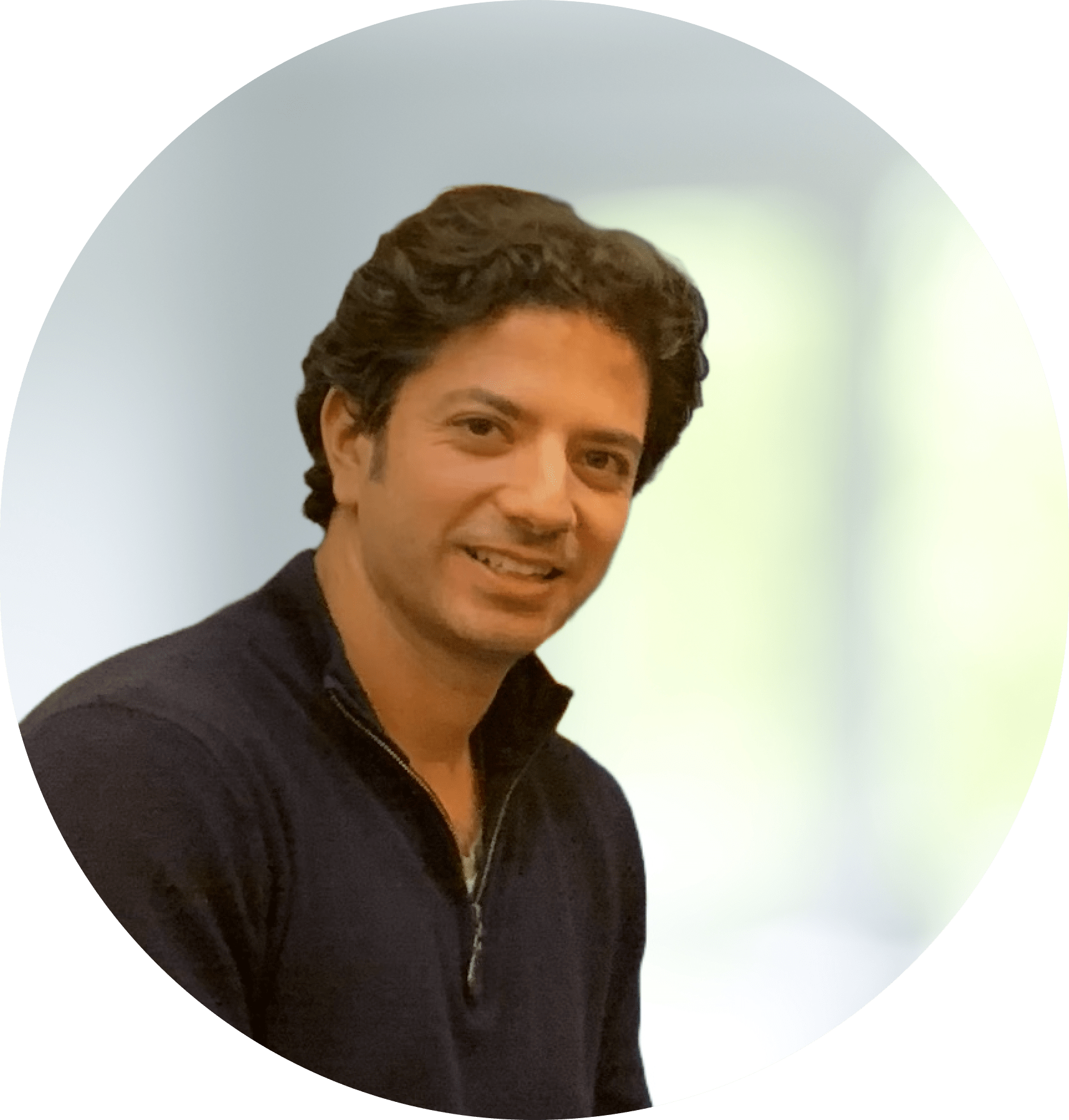
Rohan Doctor. Physicist by training, banker by trade, matchmaker by design.
The Serendipity Engineer

Rohan Doctor

He closed a record trade at Goldman Sachs and credited it to dumb luck - two thirsty people, one London bar. Then he spent the next chapter of his life proving luck could be built on purpose.

The Pitch

Right now he is teaching companies to remember everyone they know

Rohan Doctor runs Louisa AI from New York, a few blocks of glass and water away from the trading floors that made him. The product is deceptively simple to describe and quietly radical to use: it reads a company's own databases, its newsfeeds, its quiet institutional memory, and builds a living map of who knows whom and who knows what.

Then it does the thing humans forget to do. It nudges. It tells the analyst on the fourth floor that the partner on the eleventh once banked the exact client she is chasing. It surfaces the warm path to a deal before the deal goes cold. Doctor calls it relationship intelligence. He also calls it, with a salesman's grin, "an AI-powered LinkedIn on steroids."

The premise is that the most valuable asset in any large firm is not on the balance sheet. It is the dense, invisible web of relationships and expertise spread across thousands of people who have no idea what the person three desks over actually knows. Louisa makes that web visible, searchable, and - this is the part Doctor cares about - actionable.

What separates Doctor from the crowd of founders promising to bolt a chatbot onto the enterprise is that he is not selling automation for its own sake. The pitch is narrower and stranger. He is selling memory. Most organizations are amnesiac by design: people leave, context evaporates, and the knowledge of who sat across the table from which client five years ago walks out the door with them. Louisa's job is to refuse that forgetting - to keep the institutional memory intact and, more pointedly, to put it to work the moment a relevant opportunity appears in the news.

By The Numbers

A company measured in connections

17
Years At Goldman
$5M
Seed Round, 2024
~20K
Monthly Active Users
$9.3M
Total Raised
The Origin

It began with a glass of water

In 2017 Doctor closed a cross-border funding trade that nobody in the building thought was possible. A complex risk transfer between a bank and an insurer. The kind of deal that gets your name said out loud in meetings you are not invited to.

Leadership wanted to know how. They wanted the formula, the framework, the repeatable process. Doctor gave them an honest answer instead, which is always more dangerous. The truth was that he and the right person had gotten thirsty at the same moment, wandered to a bar in London, and traded the two pieces of information that unlocked everything. It was, in his telling, serendipity. Pure chance.

Most people would file that under good fortune and move on. Doctor filed it under unsolved engineering problem. If a chance encounter could be worth tens of millions, then chance itself was too important to leave to chance.

So he asked the question that became a company: what if you could systematize serendipity with data?

How It Works

Serendipity, drawn as a system

Ingest
Internal data + newsfeeds
Map
Who knows whom & what
Nudge
Proactive warm intros & deal prompts

Employees burn roughly a fifth of their week hunting for who knows what. Louisa's wager is that the hunt is waste, and the waste is fixable. The platform turns a scattered organization into something closer to a single mind - what Doctor likes to call "the firm at your fingertips."

relationship intelligence deal origination collective intelligence connect, don't replace
The Education

A physicist who never stopped studying how people connect

Before the trading desk there was the lecture hall. Doctor read Physics at Oxford and walked away with a Double First, the kind of result that suggests a mind comfortable with systems, variables, and the patient search for the hidden rule underneath messy data.

But the lesson that lodged deepest was not in the syllabus. Oxford's collegiate system throws people from wildly different disciplines into the same dining halls and common rooms, and knowledge moves between them through relationships rather than coursework. A physicist learns something from a historian at dinner that no exam would ever have delivered. Doctor noticed the mechanism. Years later, when he tried to describe what Louisa does, he reached back for it: the fastest way to learn what an organization knows is not to read its files but to find the right person to talk to.

It is a tidy arc. The student who learned across a dinner table built a company whose entire purpose is to set the right two people at the same table - or at least the same thread - before either of them knows they should be talking.

The Name & The Nest

Built inside Goldman, named for the woman who built Goldman Sachs

The product was incubated and funded inside Goldman Sachs itself. In a corner of one of the most secretive firms in finance, a tool was quietly learning how that firm's people connected. In March 2023 it spun out as an independent company, with Doctor leaving the mothership to carry it himself.

And the name. Louisa is a wink only an insider would land. Marcus Goldman and Samuel Sachs did not find each other by accident - the story goes that a woman named Louisa made the introduction that became one of the most famous partnerships in finance. A relationship-intelligence company named after the original relationship. The first warm intro.

Goldman did not just birth the company. It became a customer. Louisa now serves blue-chip clients across banking, private equity, venture capital and management consulting - firms with thousands of people and just as many forgotten connections.

The Arc

From the lecture hall to the trading desk to the cap table

1999
Matriculates at St. Anne's College, Oxford, reading Physics. He would later credit Oxford's collegiate system - knowledge crossing disciplines through people, not coursework - as a lesson that stuck.
2000s - 2016
Joins Goldman Sachs. Rises to Managing Director leading the Bank Solutions business, with stints in Hong Kong and London.
2017
Closes a record cross-border funding trade. Credits it, honestly, to serendipity. The seed of an idea is planted.
2018
Begins building a tool to make chance repeatable, incubated inside Goldman Sachs.
2023
Louisa AI spins out as an independent company. Doctor steps fully into the founder-CEO chair.
2024
Closes a $5M seed round backed by angels and Oxford University, bringing total funding to roughly $9.3M.
The Wager

Why a banker bet his career on a soft idea

There is a particular kind of courage in leaving a Managing Director's seat at Goldman Sachs - 17 years of seniority, the comp, the certainty - to chase something as slippery as serendipity. Markets reward what can be measured. Relationships, expertise, the lucky hallway encounter: these are the things finance has always shrugged off as unquantifiable, the residue left over after the spreadsheet is done.

Doctor's bet is that the residue is the business. He watched billions of dollars of opportunity slip past large firms not because the talent was missing but because the talent did not know it was sitting on the answer. The cross-border trade in 2017 was not a one-off; it was a glimpse of how much value was hiding in plain sight, waiting for the right two people to collide.

So he priced the unpriceable. He started Louisa with his own money, because that is what conviction looks like before the term sheets arrive, and he kept the company narrow on purpose. Rather than chase every industry at once, he went deep in financial services first - banking, private equity, venture capital, consulting - the worlds he knew cold, where a single warm introduction can be worth more than an entire sales team. Depth before breadth. The physicist's instinct: get the model right on one system before you generalize it.

The early scoreboard is encouraging. Roughly twenty thousand people use Louisa each month. A handful of blue-chip clients pay for it. Investors, including Oxford University's angel network, put in $5 million in March 2024 on top of earlier capital, bringing the total to around $9.3 million. None of it proves the thesis yet. All of it suggests Doctor was not the only one who thought luck deserved a software budget.
In His Words

Connect people. Don't replace them.

In a market where most AI pitches lead with how many humans they will make redundant, Doctor's is conspicuously the opposite. His tool exists to make people more findable to each other, not less necessary.

What if we could systematize serendipity with data?

Using AI to connect people, not replace them.

It was serendipity - the right person, the right time, the water cooler in London.

Filed For The Curious

Five things worth knowing

01 / Oxford

Read Physics at Oxford and came away with a Double First before a 17-year finance career.

02 / The Wink

Louisa AI is named after the woman said to have introduced Goldman to Sachs.

03 / Self-funded

He bootstrapped Louisa himself before customer revenue and venture money arrived.

04 / The Table

His go-to in New York is Indochine - downtown, candlelit, the kind of place where introductions happen.

05 / The Loop

The firm that incubated Louisa also pays to use it. Goldman is both nest and customer.

Follow The Threads

Where to find him

Pass it along

Good stories travel by warm introduction