The expensive part of marketing is often the part nobody can see. A bank can make a sharp campaign, write a useful briefing and assemble a small mountain of approved material. Then a relationship manager opens a portal, cannot locate the right file before a call, and writes something from scratch. The official message exists. The client never hears it. Carlos Rivera has spent his career around this kind of gap: the small, stubborn distance between a strategy and the behavior that would make it real.
At Webster Bank, Rivera's title gives the gap away. He is Senior Managing Director and Head of Marketing, Sales Enablement and Customer Experience for the Commercial Bank. Those are three functions on an organization chart, but a client experiences them as one conversation. Marketing frames the idea. Enablement gets it into a banker's hands. Customer experience is what happens when the idea crosses the desk.
Rivera's task has been to make that chain work more like a system. Webster had internal marketing portals, but they were largely places to store and retrieve material. They offered access without much visibility into what sellers found, used or needed next. Rivera wanted the bank to move from answering requests to anticipating them, from a shelf of content to an operating rhythm.
“We wanted to see real usage, not just people logging in once.”
The useful thing before the request
That sentence contains a compact theory of change. A login is evidence that a person opened the door. It does not prove they found anything worth carrying out. So when Webster began testing a formal sales enablement platform, Rivera and the team chose a deliberate pilot. The point was not a broad launch or a cheerful adoption chart. The point was to see whether the tool could fit the work bankers already had to do.
One early use case was almost modest enough to miss: personalized one-to-many email. A banker could reach a group of clients efficiently, keep the message relevant to each recipient and remain within regulatory guardrails. Rivera recalled the immediate response from sales teams. They recognized that the message could feel personal at scale, changing the way they engaged customers.
marketing
workflow
conversation
The pilot also produced a less visible benefit. As sellers worked inside connected systems, the quality of information in Salesforce improved. Better outreach created better records; better records could support better outreach. A marketing tool had begun to affect the data underneath the customer experience. This is what Rivera's combined remit makes possible. He can see the message, the behavior and the feedback loop without pretending they are separate projects.
A career made of handoffs
Rivera did not arrive at this work through a straight marketing track. After studying at Sacred Heart University from 1997 to 2003, earning a bachelor's degree and an MBA, he started as a project manager at Praxair. He moved into GE's Information Technology Leadership Program and then the company's Corporate Audit Staff. The work took him through the machinery of a large enterprise before his titles moved closer to sales.
At GE Capital, Rivera held roles in sales-force effectiveness, deployment, data, analytics and reporting. He earned a Six Sigma Green Belt in 2005, a credential associated with reducing variation and improving processes. Later came marketing and sales strategy and technology at Deloitte, followed by marketing analytics and strategy roles at Gartner. By the time he joined Webster in 2019 as Vice President of Marketing, Strategy and Operations, marketing was one layer in a much larger operating picture.
That sequence matters because enablement is translation work. Someone has to understand what senior leaders mean by growth, what technology teams mean by integration, what compliance teams mean by control and what sellers mean when they say they do not have time. Rivera's career placed him on several sides of those conversations. His job now is to make their definitions meet inside a client workflow.
Compliance as part of the design
Financial services adds a particular kind of friction. A new platform must satisfy legal review, information security, compliance and data governance before it can improve a single client conversation. The easy response is to call those controls blockers. Rivera treated them as conditions of the product. The enablement model had to be useful because it was compliant, not useful in spite of compliance.
The distinction changes how a pilot is designed. Webster and its technology partner set scope, success measures and priority use cases around actual banking workflows. The team did not begin with feature tours. It looked for work that could prove value without weakening the rules. The personalized email case succeeded because it solved both sides at once: sellers gained speed and relevance while the institution kept control over content and data.
“Now we're becoming proactive, providing our sales teams with timely, relevant content.”
This is quieter than the familiar story of digital transformation. There is no dramatic overnight switch. There is a controlled test, a useful behavior, stronger data and then permission to expand. In a regulated environment, trust compounds. Each use case is partly a product and partly a reference for the next decision.
Recognition, then redistribution
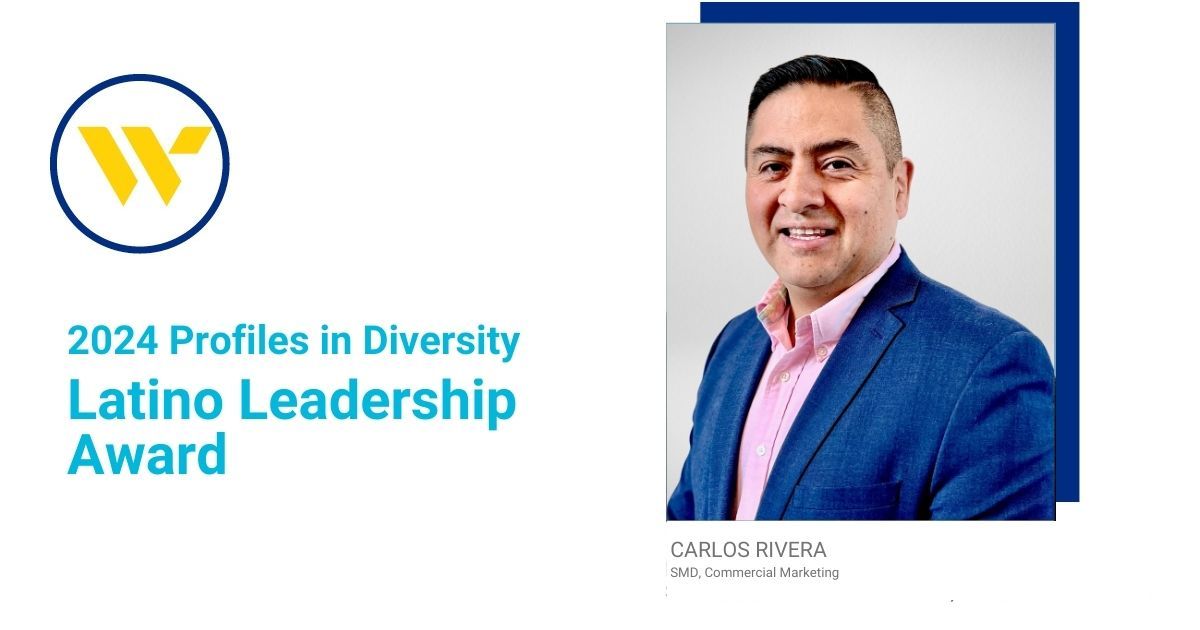
Rivera's public honors describe a second current in his work. In 2023, Prospanica Connecticut gave him its Diversity, Equity & Inclusion Leadership Award for advancing inclusion and leading by example. In 2024, Profiles in Diversity Journal included him among its Latino Leadership Award recipients. Webster highlighted his commitment to mentorship, community support and the development of young professionals.
In June 2026, Seismic named Rivera an Enablement Visionary in the Growth category. His response again redirected the spotlight. He wrote that the distinction belonged to his team and leaders, naming colleagues and describing the group as being on a journey to build a formal sales enablement organization. The award may carry one person's name, but Rivera's own framing made it evidence of collective work.
Mentorship and enablement share a useful premise: capability should not stay concentrated in the expert. A mentor gives another person context and confidence to make a better decision. An enablement system tries to do something similar at organizational scale. It places approved knowledge closer to the moment of action and reduces the number of times someone must wait for rescue.
The next operating rhythm
Webster's next phase is less about installing a platform than extending the habits around it. The stated roadmap includes learning and coaching, formal sales playbooks and deeper seller enablement as the bank grows. Rivera has said the platform should become an everyday tool for sellers, with a place in the working routine alongside Salesforce.
Daily use is the demanding part. Software can be purchased once. Relevance has to be renewed. Marketing must keep material current. Enablement must put it in the flow of work. Sales leaders must reinforce behavior. Data must show what is helping. Compliance must remain present without turning every action into a special project. The system works only if all of those handoffs keep working.
Rivera's approach offers a practical pattern for operators far beyond banking. Begin with the behavior, not the platform. Choose a use case that gives the frontline an immediate reason to care. Define evidence more honestly than attendance. Bring the central constraint into the design early. Let a narrow win earn the right to widen the system.
The value of a smaller promise
Large transformation programs tend to make large promises. They will unify the organization, reveal the customer and create a single version of truth. The language is neat because the work is not. A bank contains products, client segments, approval paths and legacy systems that accumulated for good reasons as well as frustrating ones. Asking one launch to dissolve that history creates a story that is easy to announce and difficult to operate.
Rivera's pilot made a smaller promise: help sellers complete a recognizable task better, then watch what happens. That restraint created room to learn. If bankers ignored the workflow, the team could inspect why. If they used it, the resulting engagement and CRM records could support the case for expansion. Either result contained information. The test was useful before it was flattering.
There is also a customer argument for moving this way. Commercial clients do not experience a bank's transformation roadmap. They experience whether a message understands their situation, whether the next conversation remembers the previous one and whether a banker can respond without disappearing into the institution. A more organized content system matters only when it reduces that distance. Rivera's three-part role keeps the final test close: did the client receive a more coherent experience?
That is why the operational details carry so much weight. A current document. A reliable approval. A populated CRM field. A playbook that appears where someone works. Each seems small beside a growth target. Together they determine whether the target can travel through thousands of ordinary decisions.
The result is not marketing that makes more noise. It is marketing that arrives on time. Somewhere before a commercial banker asks for a piece of content, the organization has already understood the client moment, prepared an approved answer and made it simple to use. That is the future Rivera is building toward: fewer requests, stronger signals and a bank that gets more useful before it gets louder.