quality-assurance
(47)
Switch Software Knows Where the Hours Go
Idle cloud servers. Repeated invoice entry. Timesheets nobody enjoys. The Uruguayan software company has built a business tackling the expensive chores hiding inside banks, insurers and retailers.
Global App Testing Finds the Bugs That Look Like Lost Customers
A failed payment can masquerade as a change of heart. Global App Testing sends people into the markets, devices and conversations where software quietly lets users down.
Digivante wants the bugs before your customers get them
The British testing company puts real people on real devices to find the faults that derail digital shopping. Its proposition: more eyes on a release, fewer surprises at checkout.
The Lab's Invisible Traffic Cop: How Data Innovations Moves Results Before Anyone Notices
The blood analyzer gets the glory. Data Innovations handles the awkward part - making thousands of machines, rules and patient records agree before a result reaches the chart.
Taazaa’s Bet: The Best Software Partner Is the One That Makes Risk Boring
Taazaa built a 400-plus-person software business by taking on the work that internal teams postpone: brittle systems, scattered data and promising ideas that cannot survive production. Its playbook is refreshingly practical - start narrow, prove the economics and earn the right to expand.
CallMiner Spent 24 Years Teaching Companies to Listen. Now It Wants the Bots to Answer.
The Waltham software company built its business by finding patterns in calls that nobody had time to replay. Its next act is riskier: using those patterns to decide what humans should say - and what software should handle without them.
CALTEK's Quiet Bet: The Best AI Strategy Starts With the Data Nobody Wants to Clean
The Fremont consultancy works where enterprise technology gets unglamorous: messy data, regulated workflows, aging applications and mobile networks that cannot afford to blink. Its pitch is simple - fix the plumbing before promising the future.
Beround Spent a Decade Hunting Software Bugs. Now It Wants to Fix AI Adoption Before the Tools Arrive
The Dutch consultancy built its reputation on the unglamorous discipline of testing. That same habit now powers a people-first AI playbook that starts small, measures what matters and leaves room for a human to say no.
Blue Trail Software Learned the $0 Prompt Is Often the Most Valuable One
The San Francisco software firm sells something less fashionable than magic: accountable engineering. One troubled AI recruiting system shows why architecture, not another clever prompt, became the product.
Dairy Farmers of Ontario Runs a $3.1 Billion Milk Machine - Here's the Simple Brand Playbook Marketers Can Steal
Behind the friendly blue Milk logo is a regulated operating system that moves more than 3.1 billion litres a year. Its playbook mixes quotas, quality tests, tanker routes, Minecraft lessons and a patch on one of hockey's most scrutinized sweaters.
Balto Put a Coach Inside the Call - Now 500 Million Conversations Later, the Hard Part Is Knowing When AI Should Speak
A forgotten sales script became an Excel macro, then a $52 million bet on fixing conversations before they go wrong. Balto's lesson for AI builders is simple: start with one measurable moment - and earn the right to automate the rest.
The Software Shop Behind the Gas Bill
Webmyne spent two decades doing the broad work of a digital agency. Its most revealing product is much narrower: software that helps Indian gas distributors turn meters, bills and customer requests into one working system.
The 3,000-Person Software Team You Hire Seven at a Time
Vention built a global engineering bench for a familiar executive headache: important software, scarce specialists, and no time for a year of hiring. Its real product is not code alone, but a team that can arrive quickly and stay for the difficult middle.

The 1,000-Person Software Team You Can Rent by the Problem
Svitla Systems built a global engineering bench for companies that need software shipped, systems modernized, or AI moved past the demo. Its product is not an app - it is a flexible way to buy technical capacity without building every capability in-house.
The Lahore Shop That Sells Silicon Valley Its Software
Founded in 2006 with five people in Lahore, PureLogics now ships custom software and AI systems to Fortune 500 names from a New York address - without ever taking a dollar of outside funding.
The Software Partner Built Before Remote Work Had a Name
Bridge Global spent two decades learning how to make engineers across borders work like one team. Now that old operating skill is carrying it into HealthTech, enterprise AI and the less glamorous work of keeping complex software useful.
The 1,000-Person Engineering Company You May Already Be Using
Dev.Pro rarely puts its own name on the software it builds. Instead, more than 1,000 specialists work inside the products, payment systems and cloud platforms of companies that need to move faster than their hiring plans allow.
You've Played Their Games. You've Never Heard Their Name.
Side, formerly PTW, is the roughly 3,200-person, 40-studio contractor that tests, translates, voices, and co-builds games for Activision, Ubisoft, and EA - then hands over the credit.

The Leading Hotels of the World
The luxury hotel company that owns no uniform look has spent nearly a century making independence scalable. Its product is not a room so much as a pact: global reach for hotels that refuse to become interchangeable.
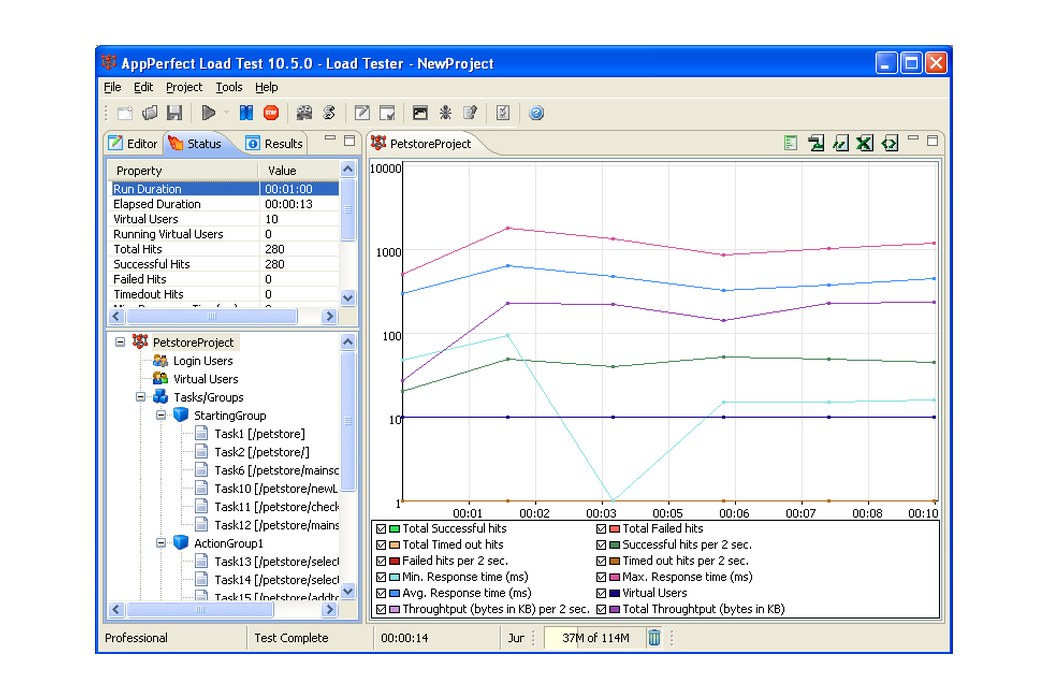
AppPerfect Corp
For more than two decades, AppPerfect has worked the unglamorous seam between a software demo and a dependable production system. Its bet is simple: test the failure, watch the machinery, and fix the bottleneck before users find it first.
Agama Solutions Inc
Agama Solutions has spent two decades selling the least glamorous - and often most necessary - layer of digital transformation: the people, testing discipline and delivery capacity that turn a technology plan into working software.
AB Soft
AB Soft spent more than two decades doing something unfashionably durable: building the engineering bench behind another company's communications platform. Its narrow focus is both the business's advantage and its biggest dependency.

Canary
Canary is an AI QA engineer that reads your source code to understand developer intent, then automatically generates and runs end-to-end tests on every pull request. Instead of flaky DOM scraping or screenshot analysis, it reads the diff, works out what a change is meant to do, and tests the real user flows it touches - catching broken checkout, auth, and billing before code reaches production. Founded in 2026 by ex-Windsurf, Cognition, and Google engineers, the two-person San Francisco team is part of Y Combinator's Winter 2026 batch.
Rulebase
Rulebase is a Y Combinator (F24) fintech building AI 'coworkers' that automate back-office operations for banks and fintechs. Its software reviews 100% of customer interactions across phone, email, and chat in real time to catch compliance breaches, policy violations, and fraud - including account takeovers and voice-clone scams - then routes disputes, QA reports, and follow-ups into tools teams already use like Zendesk, Jira, and Slack. Founded in 2024 by Gideon Ebose and Chidi Williams, the company raised a $2.1M pre-seed led by Bowery Capital.

TesterArmy
TesterArmy is a Y Combinator-backed (P26) startup building AI agents that test web and mobile apps the way a human would. Teams describe tests in plain English; the agent launches a real browser or device, clicks and types through user flows, handles logins, OAuth and OTP, then returns screenshots, recordings and actionable bug reports. It runs on every GitHub pull request and on a schedule against production, aiming to catch broken flows before customers do.

E.S. Sutton
E.S. Sutton is a New York-based global apparel sourcing and manufacturing company founded in 1959. Operating as a private-label specialist for women's and children's clothing, it works behind the scenes for many of retail's leading brands - handling trend forecasting, design, sourcing, quality assurance, and global logistics across manufacturing facilities in more than a dozen countries. Positioned as 'the brand behind your brand,' the firm builds and expands retail private labels by studying each partner's brand DNA.

Kellwood Company
Kellwood Company is an American apparel design, sourcing, manufacturing and marketing firm founded in 1961. It builds and operates women's, juniors' and girls' fashion brands - including Democracy, Jolt, Briggs New York, Rewind, My Michelle and Wit & Wisdom - and provides private-label and full-package product development, sourcing, quality assurance and distribution services for major retailers such as Nordstrom, Macy's, Kohl's, Dillard's, Target and Costco.

PlanRadar
PlanRadar is a Vienna-based SaaS platform that digitizes construction and real estate project management. Its mobile and web apps let site teams pin defect and task tickets directly onto digital plans and BIM models, capture photos, video and voice notes, assign work, and generate reports - replacing paper checklists and scattered spreadsheets. Founded in 2013, it serves more than 170,000 users across 75+ countries.

Tiliter
Tiliter is a Sydney-based computer-vision company that turns ordinary camera images into structured operational data. It began by solving product recognition at retail scale - identifying fresh produce and unbarcoded goods at self-checkout with high accuracy and no stickers - and has since expanded into a broader platform of AI 'Vision Agents' for verification, inspection, counting, damage detection, OCR and cleanliness auditing across retail, logistics, manufacturing, healthcare and industrial operations.
Opkey
Opkey is an AI-powered test automation and ERP lifecycle optimization company that helps large enterprises test, configure, and maintain packaged cloud applications like Oracle Cloud, Workday, SAP, and Salesforce. Its no-code platform, powered by an enterprise-specific AI model called Argus and a set of agentic 'virtual agents,' automates test discovery, self-healing test scripts, impact analysis, configuration migration, and end-user training. Founded in 2015 and backed by a $47M Series B led by PeakSpan Capital, Opkey serves more than 250 customers, a majority of them Fortune 1000 firms, and positions itself as the platform that pulls enterprises out of what its CEO calls 'testing hell.'