Most artificial-intelligence pitches begin with a machine performing a small miracle. Beround begins in a less cinematic place: a room full of people deciding which problem is worth the trouble. The Dutch consultancy asks a team to select one or two use cases, not a parade of speculative pilots. It assigns ownership, weighs impact against effort, and turns the result into a 30-, 60- and 90-day route. Only then does the technology get to be interesting.
This order of operations is Beround's real product. The company sells testing, AI training, custom implementation and transformation consulting, but the connective tissue is quality control. Founded in 2014 by Joeri Kraaijestein, Beround spent its first decade helping organizations find defects, design test strategies and make releases less surprising. In 2023 it formally embraced AI. The new practice did not replace the old one. It borrowed its instincts.
The business in plain English
A consultancy with three doors
Through the first door is software quality: manual and automated testing, regression checks, performance work, accessibility reviews, test strategy and flexible Testing as a Service. Through the second is AI: education for beginners and leaders, jam sessions for prioritizing opportunities, and bespoke builds that can include virtual agents, workflow automation, forecasting, document intelligence or computer vision. Through the third is transition support, where Beround helps teams absorb a new system or process without treating adoption as a memo sent after launch.
The customers are organizations with consequential software and busy employees. Public testimonials name engineering-services company Royal Kuijpers, warranty and quality specialist Woningborg, travel group TUI and the municipality of West Betuwe. Their needs differ, but the shared problem is familiar: systems become more connected while confidence becomes harder to maintain. A broken booking flow, an unreliable ERP update or an unsupervised AI answer does not stay inside the IT department for long.
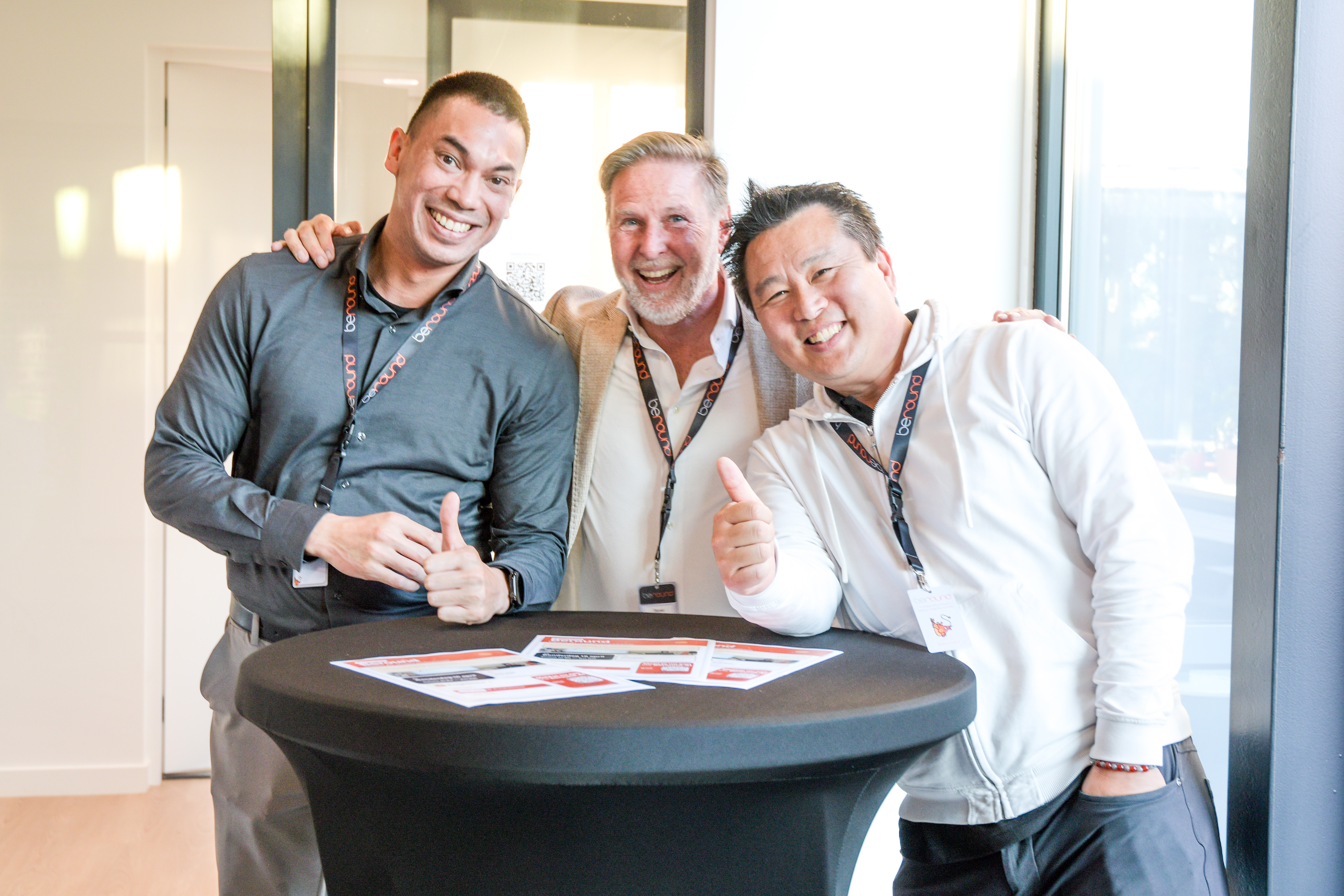
The smartest part of Beround's AI pitch is what it refuses to do: start with the tool.
What failed first
The first failure in many corporate AI efforts is not a model error. It is a sequencing error. A company buys a tool, gathers a long list of possibilities and then asks employees to adapt. The demo works. The workflow does not. People lack time, ownership is vague, the data is untidy and nobody has decided when a human must intervene. A technically plausible pilot becomes shelf furniture.
Beround's public material returns to the same warning from several angles: too many tools, too little overview; processes that do not connect; change that asks a lot and returns little. Rohan Marfatia, who leads Beround's U.S. work, has argued for starting with the business challenge and using short experiments to learn. The Dutch team frames the answer as co-creation. Different language, same correction: move the problem ahead of the product.
A Beround AI jam makes that correction concrete. The format is five hours - one hour of intake and four hours of working session. A multidisciplinary crew can include a strategist, enterprise architect, implementation manager, data expert, low-code builder and internal test team. The output is deliberately ordinary: priorities, owners, an impact-effort view, an initial solution direction and a to-do list. Ordinary deliverables are useful when someone must do the work on Monday.
The price of getting unstuck
Beround publishes a clear education ladder. A two-hour inspiration session for a group costs €1,500. The individual AI Foundations program costs €1,895 and runs for nine weeks with blended learning, live sessions, a learning platform and a certificate. The AI Leadership cohort is €2,750, also over nine weeks, and adds governance, process, technology and decision-making. Bespoke group programs and implementation work are priced separately.
Those prices buy instruction, but Beround is really trying to manufacture confidence. Its courses ask participants to build, puzzle, get stuck and try again. One exercise culminates in an AI-powered escape room. That playful brief carries a practical point: employees who have wrestled with an imperfect system understand its limits better than employees who watched a polished demo.
What changed the company's mind
Beround does not describe a single thunderclap that pushed it into AI. The change looks more like an accumulation of evidence. Its consultants were already working around data, cloud systems, CRM and automation. Generative models made those capabilities accessible to employees far beyond the technical team, while the familiar quality problems remained. The opportunity was no longer only to test software after developers built it. A testing firm could help ordinary teams decide what to automate, judge the output and spot the point where convenience becomes risk.
The company marked 2023 as the year it embraced AI and made democratization its mission. “Leave no one behind” is earnest language, but it has a commercial implication. A consultant can sell a prototype once. A consultancy that teaches managers and staff how to use, question and improve the prototype can stay for the adoption cycle. Beround's move from testing into education, advisory work and custom solutions therefore widened both the problem it could solve and the number of people involved in solving it.
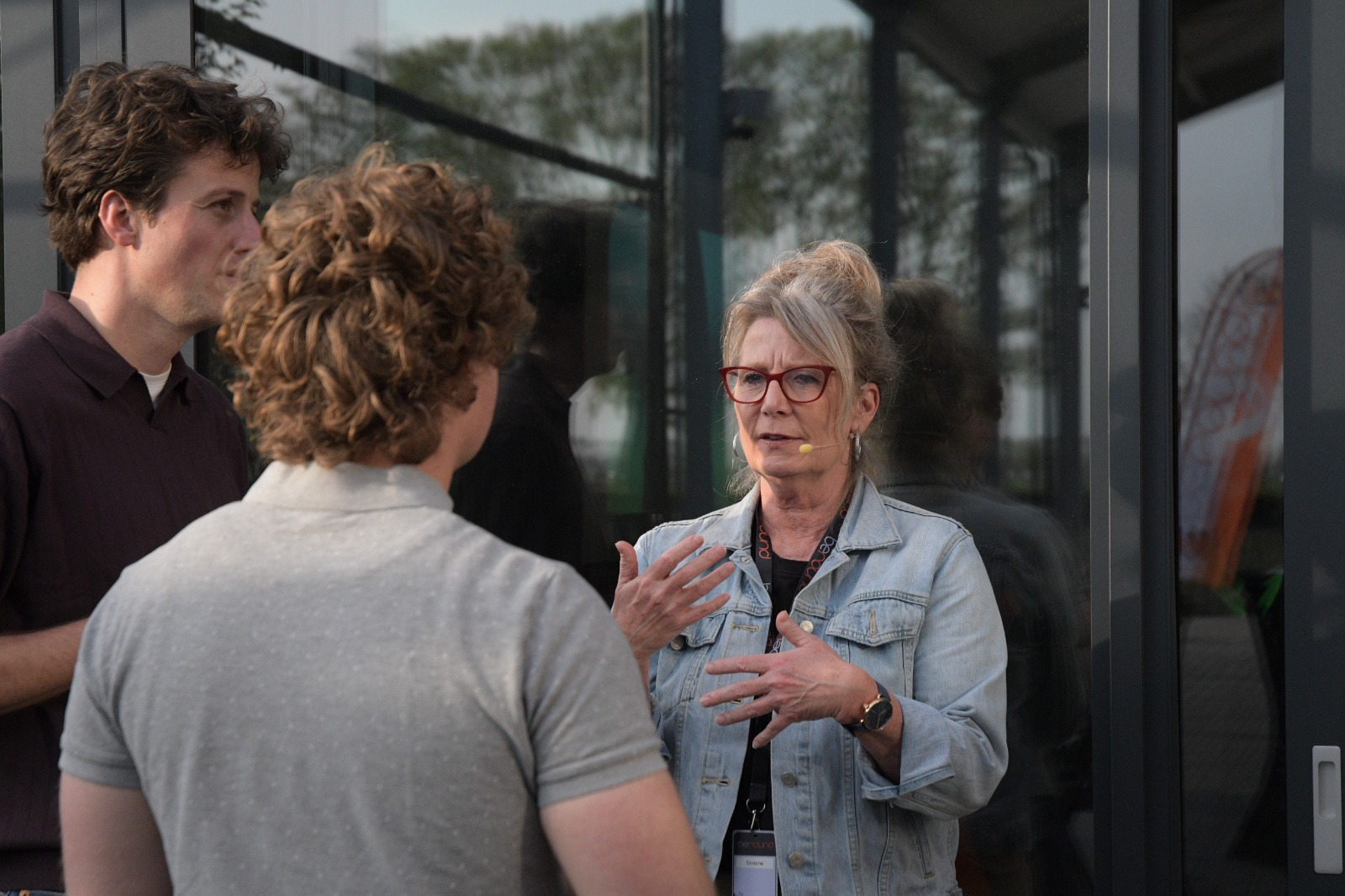
The bug hunter's advantage
AI consultancies often compete on access to the newest model or fluency with a fashionable framework. Beround's better wedge is skepticism. A testing culture assumes that the happy path is only one path. It asks what happens after an update, under load, on a different device, with incomplete data or in the hands of a person who did not attend the kickoff.
That attitude shows up in Beround's guidance for human-in-the-loop systems. The company recommends approval moments, confidence thresholds, escalation rules and audit trails. These are not philosophical decorations. They determine which low-confidence customer answer gets reviewed, which high-risk decision reaches an expert and which action can later be reconstructed. In 2026, a student project at Beround reportedly matched software requirements to test cases locally, without using a cloud service, reducing 1,500 possible combinations to 154 relevant pairs in under two seconds. The impressive figure is the 90 percent reduction. The more telling detail is that the project was designed around sensitive information and test coverage.
Beround also wraps its work in a culture that is difficult to confuse with a giant systems integrator. The firm calls itself a “smile-enabling company creating a happiness ecosystem.” It uses the Round Table as a metaphor for equality and mutual support, gives employees personal-development tracks, and operates from a headquarters named Vita Nori. Its community calendar includes dinners, padel, wine tastings and a partnership with Badminton Nederland. In July 2026, the third Beround AirBadminton weekend drew roughly 140 participants to play barefoot on sand.
The playfulness is also a recruiting and relationship system. A consultancy sells the judgment of its people, so keeping those people connected is not ornamental. Beround's India operation illustrates the other side of the model. Established in Ahmedabad in July 2022, it reported growing from one desk to 20 people by its fourth anniversary. The two-country footprint gives a company of Beround's size more building and testing capacity without pretending to be a multinational army.
Co-creation is a poor fit when leadership wants instant automation but will not name an owner, clean the data, include employees, define a human checkpoint or fund testing after the demo. It is also the wrong purchase for a team seeking a self-serve software license. Beround sells participation and judgment as part of the delivery.
Where Beround fits
At roughly 50 people across the Netherlands and India, Beround sits between an independent specialist and a global consultancy. Accenture, Capgemini and Deloitte can bring larger benches. Sogeti, Qualitest and other QA specialists can bring deep testing scale. Product vendors can bring a ready-made application. Beround's position is narrower: stay close enough to the team to teach, prioritize, build and verify inside one relationship.
The business model follows that position. Fixed-price education creates a legible first purchase. A successful session can lead to a jam, a roadmap, an implementation project, testing support and longer-term adoption work. Testing as a Service adds flexible capacity for clients that do not want to hire and manage a permanent QA team. There is no evidence of venture funding, and Beround presents itself as privately held. That makes the company look less like a software startup chasing explosive distribution and more like a craft business trying to turn methods into repeatable engagements.
That model has limits. A services company scales through people and repeatable practice, not through near-zero-cost software distribution. Its public case material is more testimonial than quantified operating proof. Buyers still need to ask what changed, how the baseline was measured and who owns maintenance after the consultants leave.
Yet there is something copyable here even for companies that never hire Beround. Limit the first round to one or two use cases. Put an owner beside each one. Define the human check before deployment. Make employees build enough to discover where the system lies, stalls or surprises them. Write the next 90 days in verbs. The lesson from a decade of hunting bugs is not that failure disappears. It is that finding failure early is a business advantage.