Company · Gaming Services
You've Played Their Games. You've Never Heard Their Name.
Side, formerly PTW, is the roughly 3,200-person, 40-studio contractor that tests, translates, voices, and co-builds games for Activision, Ubisoft, and EA - then hands over the credit.
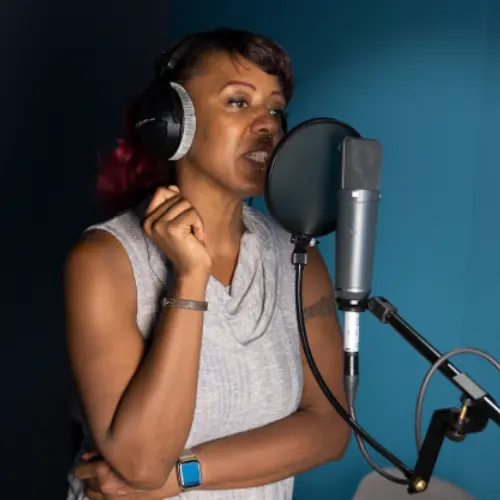
The credits roll on a game you loved. You do not read them - almost nobody does. Somewhere in the scroll, past the lead designers and the composers, are the people who tested every menu until it stopped crashing, who rewrote the whole script in Korean and Portuguese, who recorded the villain's voice in a booth in Los Angeles. There is a decent chance a single company handled several of those jobs, on more than one of your favorite games. That company is called Side, and until March 2025 it was called PTW.
Side is a game development and services company - a contractor, in plainer terms - that studios and publishers hire to help build, test, translate, voice, and support their titles. It is not a household name, and that is largely the point. The studio on the box gets the credit; Side gets the work. What makes the company worth a look is the scale of that arrangement: roughly 3,200 people, about 40 studios, 14 countries, and a client list that reads like a Game of the Year ballot.
01 / What it actually doesThe un-bundling of a video game
Modern games are enormous, and studios rarely build every part themselves. Somewhere along the way, game development got un-bundled - broken into specialized pieces that can be handed to whoever does them best. Side sells nine of those pieces. It will co-develop a game alongside a client's internal team. It will produce the art, or the audio, or run quality assurance until the bugs are gone. It will translate the whole thing and then test the translation. It will staff the player-support desk after launch and moderate the community. And it will collect and label the datasets that increasingly feed the AI and speech systems behind those games.
Put together, it means a publisher can hand Side a game that works in English and get back a game that works, and speaks, almost everywhere. That is a specific and valuable trick, and it is not glamorous. It is closer to plumbing - the infrastructure that turns a working build into a finished, worldwide product.
02 / The nameWhy 'PTW' became 'Side'
For most of its life the company went by PTW, short for Pole To Win, with a scatter of specialist brands around it: SIDE for audio, 1518 Studios and Ghostpunch for development and art, Vibe Avenue for music. Customers dealt with a family of names that all, confusingly, belonged to the same parent. In March 2025, the company collapsed them into one. PTW, SIDE, 1518 Studios, Ghostpunch Games, and Vibe Avenue all became, simply, Side.
The choice is a small pun with a clear pitch. Side works on your side of the table, side by side with the studio - not as a vendor across from it. Throwing away three decades of brand recognition is a real risk, but the logic is sound: the business had outgrown being a collection of secrets, and one name is easier to sell than five.
03 / The long roadFrom a QA desk in Japan
The company did not appear at full size. Its roots go back to a quality-assurance operation founded in Japan in 1994 - testing games, translating them, answering player questions. Pole To Win America was established in 2009, and from there the group grew mostly by acquisition: the SIDE audio business, then 1518 Studios, then Vibe Avenue, then Ghostpunch Games in 2024, each adding a capability the others lacked. The parent, PTW Holdings, is listed on the Tokyo Stock Exchange.
04 / The customersWho is actually calling
Side's customers are the developers and publishers whose logos you already know. The company lists Activision, Ubisoft, Electronic Arts, Epic Games, 2K, Bethesda, Sega, Square Enix, Riot Games, Sony Interactive Entertainment, Nexon, Warner Bros. Games, Zynga, CD Projekt, and Disney among the studios it has worked with. Credited support includes Split Fiction, Clair Obscur: Expedition 33, Madden NFL 26, and Tales of Kenzera: Zau.
The problem Side solves for these clients is scope. A big game needs to test on every device, ship on a deadline, and speak dozens of languages the day it launches - all of which require large, specialized teams that a studio may not want to hire permanently. Side is the release valve: capacity that scales up for a launch and down afterward, without a studio carrying a thousand linguists on its own payroll.
05 / The businessHow it makes money, and against whom
The model is business-to-business services. Side does not own the games; it charges fees for the work, on projects or ongoing contracts, and reported annual revenue is in the region of $210 million. That puts it squarely in a competitive field. The largest player is Keywords Studios, and the fight also includes Lionbridge Games, Testronic, Virtuos, Sperasoft, Room 8 Group, and Amber - all selling some mix of the same co-development, QA, localization, art, and audio work.
What Side leans on to stand apart is breadth under one roof. Many rivals specialize; Side's argument is that a single partner can carry a game across development, testing, translation, audio, and support without a client stitching together five vendors. Whether that is a decisive edge or a convenient one depends on the client - but it is the reason the five brands became one name.
06 / Where it fitsThe layer under the layer
It is easy to think about games as the studios that make them. Side is a reminder that under those studios sits an industrial layer most players never see - the testers, translators, voice directors, and support agents who make a modern release possible. As games grow larger and AI seeps into both their content and their production, that layer only gets more important, and Side's datasets business is a quiet bet on exactly that future. The company spent thirty years being invisible on purpose. Putting a name on it is the interesting part.