The most valuable visitor to an online shop may be the person who fails to buy anything. A payment stalls. A menu obscures the basket. A perfectly plausible sequence of taps leads nowhere. For a retailer, that visitor usually disappears into the conversion statistics. Digivante would prefer to send them in before launch, with instructions to document the trouble.
The British company sells managed testing for websites, apps and digital customer journeys. Its central resource is a distributed community of people using actual devices, coordinated by quality assurance specialists. The job is to discover what customers might encounter, then give the people building the product enough evidence to do something about it.
That places Digivante in an unusually unglamorous corner of digital commerce. The design agency gets the new look. The development team gets the release. The testing company gets a list of things that should never have happened. A useful list, as it turns out.
194 reasons to look before launch
Orlebar Brown, the luxury holidaywear brand, brought Digivante into its move from Salesforce Commerce Cloud to Shopify. The work involved its development partner, Tryzens, and covered planning through checks after launch. Digivante’s case study reports 341 testers across 443 device and browser combinations, 194 issues discovered and zero critical issues at launch.
The client’s motivation was refreshingly plain. CTO Jamie De Cesare had managed big technology projects before and wanted testing expertise available immediately. In the published account, he describes the accumulated experience with a wince:
“This was my eighth big tech project. I’ve got the scars.”
Jamie De Cesare · CTO, Orlebar Brown
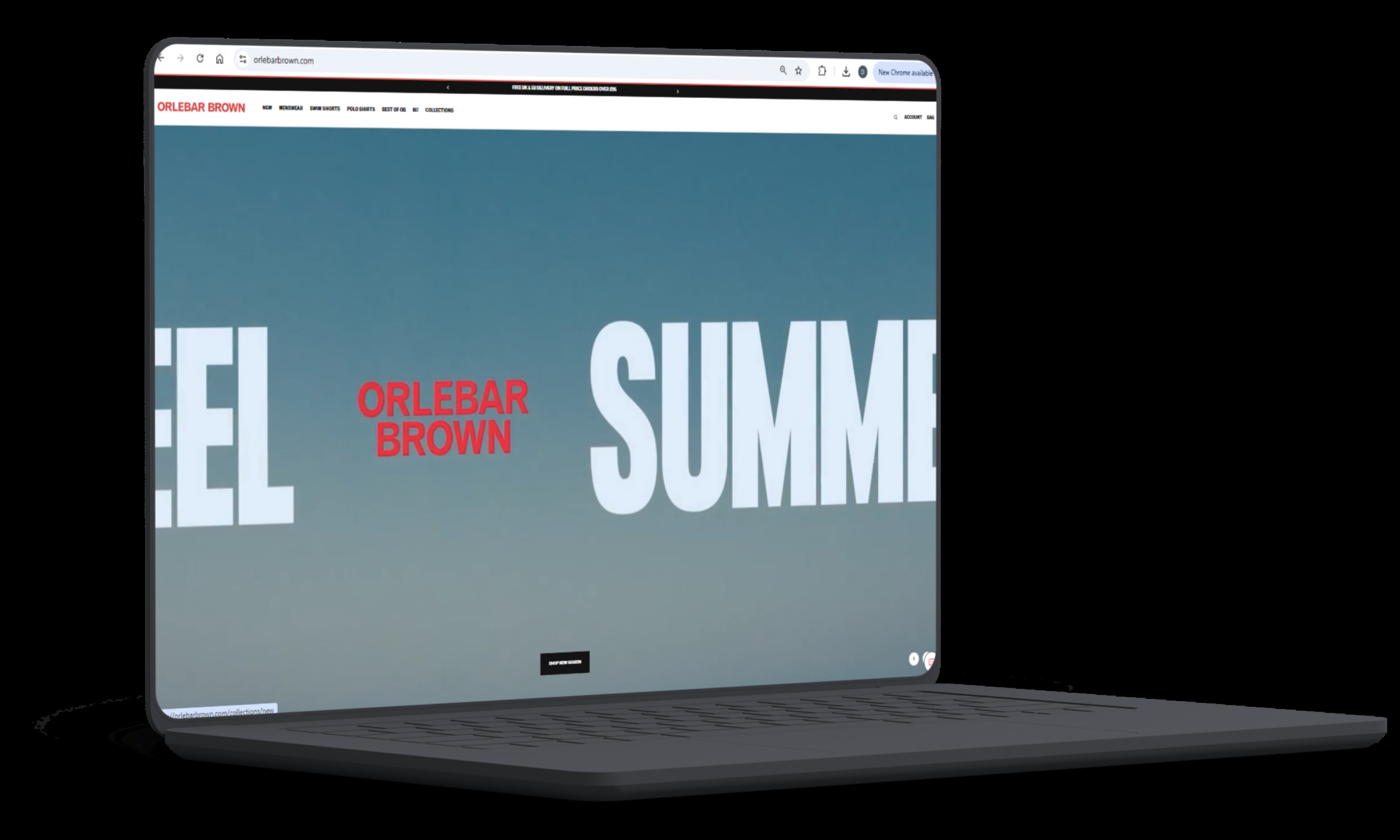
The instructive part is the sequencing: independent scrutiny arrived while there was still time to act. A reported clean launch is an outcome for that project, not a promise that every future release will be faultless. The repeatable decision is to fund the investigation before customers become the investigators.
More testers, fewer hours on the clock
Crowdtesting’s arithmetic is easy to misunderstand. Several people can perform checks at once. That increases the work completed within a short window without making any individual tap, payment or investigation impossibly fast.
Digivante’s current homepage illustrates the offer with five test days in five hours, alongside round-the-clock coverage and more than 300 device combinations. Those are service claims, dependent on the assignment. They describe capacity and scheduling, not a universal measurement of productivity.
Digivante’s advertised example. Concurrent work compresses the testing window; it does not remove the work.
The important constraint is coordination. A hundred observations do not automatically become a hundred useful engineering tickets. Someone has to establish scope, reject noise, understand severity and keep the findings connected to the release. That management layer is part of what the buyer is purchasing.
A bug has to come with receipts
Digivante describes a process that begins with scoping and a commercial proposal, moves through a test plan and execution, and ends with triage and retesting. Its portal holds the findings; the client’s product and development team fixes the issues. The company advertises an average of three days from initial review to results and recommendations.
Its tester admission process includes checks on testing competence and English communication. Reports can include video, screenshots and reproduction steps, with senior testers verifying issues. That last step matters: an intermittent fault without a reproducible sequence can consume a developer’s afternoon.
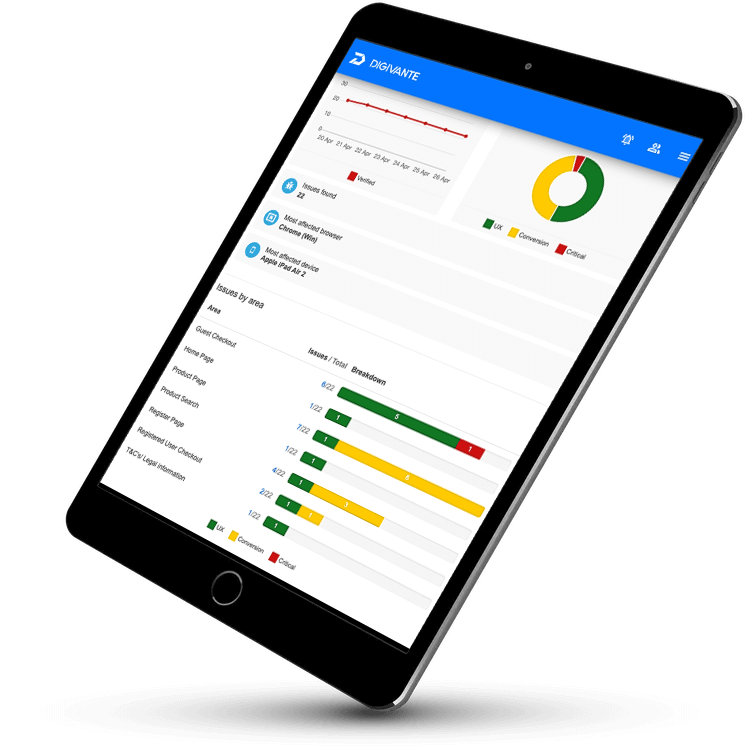
There is a lesson here for teams using any supplier. Agree on what a usable report contains before testing begins. Give each important finding an owner. Make retesting an explicit task. Otherwise, the expensive part of the exercise can become a meeting about what the tester meant.
The checkout has a postcode
A payment journey is a particularly good demonstration of why geography matters. Digivante offers testers in specified locations using specified payment types, including Saudi Arabia’s Mada card. A payment option that works for the head office’s staff may say little about the experience in another market.
The service can extend beyond placing an order to delivery and returns. That widens the question from whether a button responds to whether the customer can finish the transaction they intended. It also gives a retailer a concrete way to investigate a suspected regional checkout problem.
Audi UK supplies another example of the breadth of the work. Digivante’s account describes 48 testing projects across three years and 4,222 issues identified. For the ecommerce platform itself, it reports 16 conversion issues and 50 customer experience issues found before launch.
Those categories are commercially useful because an experience can be technically functional yet awkward enough to lose a sale. The case study does not turn every reported defect into a measured revenue gain. It shows what the testing surfaced and how the client could prioritise it.
The brief outgrew the bug hunt
Martin and Donna Mudge founded the business originally called BugFinders. The legal entity dates to March 2011. Digivante’s timeline places its first portal and early customers in 2012, the brand change in 2018, and automation and team augmentation in 2021.

A March 2021 company post explains the commercial pressure behind the broader offering: clients were adopting Agile and DevOps practices, and occasional testing assignments no longer met their needs. Digivante expanded into planning, writing test cases, end-to-end testing and automation. The release calendar had changed the brief.
Its separate team augmentation service addresses the staffing problem that follows. A client can bring in QA specialists as demands grow or change. This is particularly relevant when a migration temporarily requires skills or capacity that the permanent team would struggle to absorb.
Automation earns its place
Digivante’s automation method starts with manual execution. Test cases that consistently pass are candidates for automation, and coverage grows iteratively. The practical attraction is avoiding the cost of encoding an unstable or poorly understood check.
In January 2022, Rackspace Technology announced a partnership to bring Digivante’s blend of AI-enhanced automation and crowdtesting to EMEA customers. The announcement explicitly addressed the temptation to automate everything and the time required to establish automated coverage. Human testing could support the work while that coverage developed.
The useful buying question is therefore specific: which checks should repeat automatically, and where is human investigation still earning its fee? Digivante competes for that budget with managed testing providers including Applause and Testlio, as well as a company’s own mix of employees, contractors and tools. A large crowd alone does not settle the choice.
Now the customer is talking to AI
By August 2026, Digivante was promoting JourneyEval AI, a service for evaluating AI-powered features and AI-built digital experiences with real users. Its examples include search, chatbots and customer journeys, with attention to irrelevant results, confusing answers and points where users struggle.
This is a logical extension of its existing work. The interface changes, but someone still has to establish whether a person can accomplish the task. A chatbot response can be fluent and still leave a shopper unable to find the right product.
For a buyer, the distinction is consequential: testing selected customer interactions provides evidence about those experiences. It should not be mistaken for proof of every possible behaviour of the underlying model. The scope of the evaluation remains part of the product.
The price includes a decision to act
Digivante sells through scoped proposals and statements of work, with one-off assignments and subscription relationships. Its contact page says subscription customers can have projects set up within hours, while one-off work usually starts within 24 to 48 hours. The commercial conversation begins with the release and its requirements.
NelsonHall’s May 2019 assessment described a business owned by founders and key executives, without outside investment at that point. The analyst also highlighted internal retesting and targeting areas that needed further investigation. That historical picture helps explain the emphasis on managed delivery rather than simply access to a crowd.
For clients, the full cost calculation should include their own time: preparing access, agreeing coverage, reviewing findings and implementing repairs. Shortening the discovery window is useful only when the development team can respond. If nobody has capacity to fix the defects, faster reporting mostly advances the date of an uncomfortable conversation.
Even the content needs another look
Accessibility and usability bring the work back to the person at the screen. Digivante’s accessibility service covers matters such as keyboard navigation, screen readers and colour contrast. Its usability work observes how people interact with a website or app, helping explain friction that a simple pass-or-fail check may miss.
These are recurring concerns. A content update can introduce an accessibility barrier; a changed journey can confuse returning customers. Digivante also offers post-release checks because live integrations and credentials can differ from the test environment. Launch is a change in conditions, not the end of observation.
The organisation behind that scrutiny describes remote-first hybrid working and monthly staff access to strategy and financial information. Its careers page also makes room for school pickups and errands. There is something fitting about a testing business acknowledging that people have lives outside the system.
The reader’s most useful takeaway is modest enough to copy: choose the journeys that matter, test them under relevant conditions, demand reproducible evidence and check the repair. Digivante packages the people and management around that sequence. The payoff is a customer who gets to finish shopping without learning anything about your software.