healthcare-technology
(59)
How SS&C Turned a $20,000 Bet Into Wall Street’s $6 Billion Back Office
Bill Stone nearly watched his software company disappear. Then he stopped selling tools alone, started taking on the work, and assembled a financial-infrastructure empire one unglamorous workflow at a time.
The Waiting Room Was Dead Time. CheckedUp Turned It Into Media Inventory.
CheckedUp gives clinics its screens for free, then sells life-sciences brands a measured place inside the medical conversation. The bet works only if education stays useful, advertising stays credible, and every play can be proved.
The Pharmacy Software Roll-Up That Turned 6.5 Million Conversations Into a $93 Million Payday
Outcomes spent years assembling the unglamorous machinery behind the pharmacy counter. Now its 48,000-location network is turning routine medication reviews into a new clinical business for pharmacists - and a distribution channel for payers and drugmakers.
NuvemRx Is Turning Pharmacy Paperwork Into a Safety-Net Growth Engine
The 340B business is a maze of claims, referrals and audit trails. NuvemRx wants community health providers to stop treating that maze as back-office paperwork - and start treating pharmacy as infrastructure for care.
DME Express Built a 24/7 Hospice Supply Machine - and Made Spare Capacity the Product
Hospice does not run on business hours. DME Express turned that awkward truth into a recurring logistics business built on local warehouses, surplus gear and technicians who answer the phone at 2 a.m.
The Computer That Survives the ICU (and the Oil Refinery)
A 1989 PC company quietly reinvented itself around the two markets everyone else avoids: hospitals that hose down their hardware and factories where a spark can kill. Here is how a 150-person shop in Burlingame carved out both.
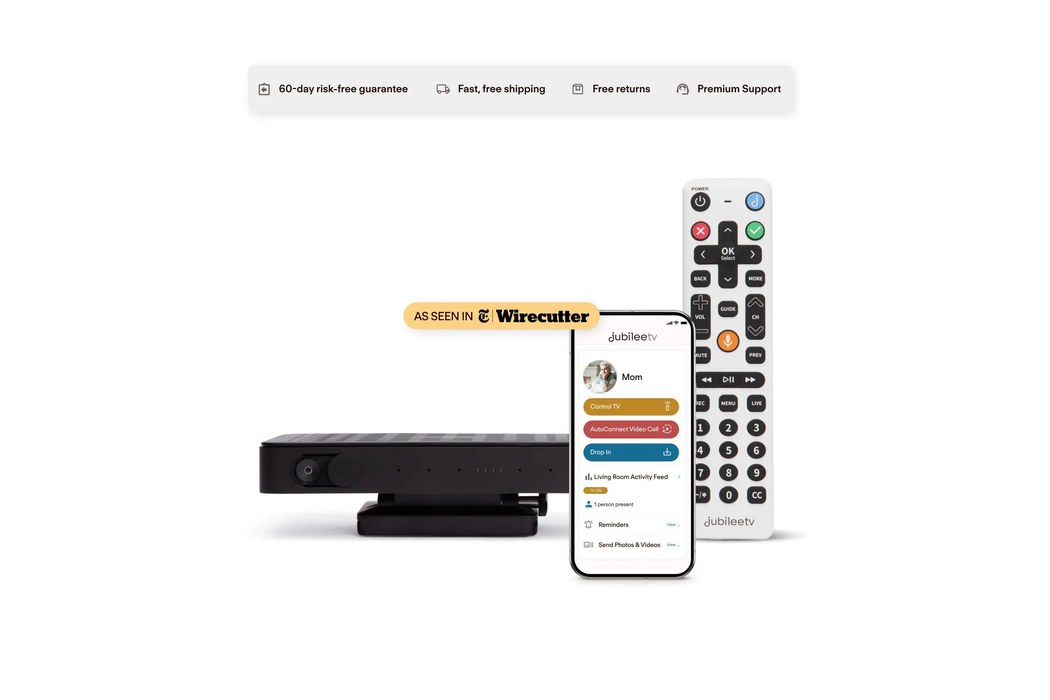
The Startup That Turned Grandma's TV Into a Caregiver
A failed universal-remote company rebuilt itself around one uncomfortable truth: the hardest part of caring for aging parents is the 300-mile drive to fix their TV. JubileeTV turns that TV into the caregiving hub instead.
The Company That Refuses to Let a Surgeon Fly Blind Through Your Nervous System
For twenty years, one Las Vegas-founded company has been the second set of eyes in thousands of operating rooms - watching the nerves surgeons can't see and sounding the alarm before a slip becomes a lifelong deficit.
Inside the Atlanta Startup Rewiring How Cancer Gets Decided
OncoLens turned the tumor board - medicine's oldest committee - into AI-backed software now running inside 225-plus cancer centers. It started with a daughter watching her father get conflicting advice.

Welsh Carson Made a 47-Year Bet on Two Industries
The New York private equity firm has spent nearly half a century turning sector focus, repeat executives and operational playbooks into a business. Its healthcare record also shows where that model can collide with regulators.
The Venture Firm That Likes a Market Before It Is Fashionable
Chicago Ventures built its thesis around an unfashionable observation: large companies can begin far from the coasts and inside markets other investors find too small, messy or ordinary. Its edge is showing up early, taking a board seat and helping founders turn that mess into a business.

The Venture Firm That Bet on China Before the Map Got Complicated
GSR Ventures found Didi, Ele.me and Xiaohongshu while they were still risky ideas. Two decades later, its early-stage playbook remains intact - but the cross-border world that made it distinctive has been redrawn.
The 6,000-Engineer Firm That Bet Its Whole Business on Treating People Like People
For nearly three decades DataArt has quietly engineered the software behind trading floors, booking engines, and clinical trials - and it did it by building the company around retaining people, not just billing hours.
The Hospital's Most Important Robot Might Be a Locked Drawer
Omnicell began with a father watching nurses hunt for supplies in a hospital. Three decades later, it is trying to make every medication drawer, robot and pharmacy workflow behave like one connected system.
Evolent
The company betting that the most expensive corner of American medicine - cancer, cardiology, and back surgery - can be run better when the people paying for care and the doctors delivering it are finally pulling in the same direction.
Siemens
The company Werner von Siemens started with a telegraph in 1847 now wants to be the operating system for the physical world - one factory, train, and power grid at a time.
Medtronic
Medtronic began by repairing hospital electronics in a Minneapolis garage. Seventy-seven years later, its devices sit inside bodies, beside beds, and at the center of a high-stakes contest to make medicine less invasive, more measurable, and easier to scale.
AMN Healthcare
AMN began by placing traveling nurses. Forty years later, it sells health systems something broader: the people, software and operating discipline to keep care moving when labor gets scarce, expensive or suddenly unavailable.
NDR Medical Technology
NDR Medical Technology is a Singapore-based deep-tech company building AI-empowered interventional robotics for minimally invasive, image-guided surgery. Its Automated Needle Targeting (ANT) platform combines hardware and software to plan and align percutaneous needle placement with roughly ±1mm accuracy using a hospital's existing imaging equipment. Its flagship ANT-X robot received U.S. FDA 510(k) clearance in 2023 as the first automated device to aid kidney access for percutaneous nephrolithotomy, while ANT-C brings AI CT-based lesion targeting to procedures across the lung, liver, kidney and spine.
Spectrumedics Medical
Spectrumedics Medical is a Singapore-based medical device company building active, minimally-invasive cardiovascular interventional systems. Its flagship product, the Sonico-CX intravascular lithotripsy (IVL) system, uses acoustic pressure waves to break up calcified coronary lesions so cardiologists can restore blood flow and place stents. In January 2026 the company earned an EU CE mark, joining Johnson & Johnson MedTech's Shockwave and Elixir Medical as one of the few companies with EU-approved coronary IVL systems. Backed by a Series A round led by Legend Capital, Spectrumedics operates from the JTC MedTech Hub and is commercializing across Asia Pacific and Latin America while expanding into Europe and the Middle East.
Opencare
Opencare is a Toronto-based dental marketplace that helps patients find, compare and book vetted dentists across North America while giving dental practices a pay-for-performance patient-acquisition channel. Patients use a matching quiz, verified reviews and instant online booking to choose a provider; practices pay only when a new patient actually shows up and is treated. Founded in 2012, the company has cared for more than 100,000 patients and raised roughly $22.6M, led by 8VC.
CairnSurgical, Inc.
CairnSurgical is a clinical-stage medical device company in Lebanon, New Hampshire, building patient-specific surgical guidance for breast cancer lumpectomy. Its Breast Cancer Locator (BCL) System pairs a 3D-printed, bra-like form molded to each patient's anatomy with an interactive 3D Visualizer derived from supine MRI, giving surgeons a precise blueprint of a tumor's size, shape, depth and edges. The goal is to cut the 20 to 25 percent re-excision rate in breast-conserving surgery toward zero. Spun out of Dartmouth College and Dartmouth-Hitchcock Medical Center in 2015, the company reported 94 percent margin-negative resections in a European study and filed for FDA De Novo clearance in 2026.
Conduit Health
Conduit Health is a New York-based healthcare technology company that rebuilds the path to insurance-covered home medical supplies for Medicare and Medicaid patients. It combines clinical evaluation, insurance authorization, and physical supply fulfillment into one vertically integrated platform, powered by CareOS - an agentic AI engine trained on 50,000+ patient interactions that predicts approval likelihood and automates payer paperwork. Founded in 2024 by Natan Wise and Rocky Seftel, Conduit has delivered supplies to more than 50,000 patients and works with 100+ health plans covering nearly 90 million lives.
Cytovale
Cytovale is a San Francisco-based medical diagnostics company that built IntelliSep, an FDA-cleared blood test that helps emergency departments identify patients at risk of sepsis in about eight minutes. Instead of hunting for a pathogen, the test reads the immune response by measuring the biomechanical properties of white blood cells using microfluidic deformability cytometry, high-speed imaging and machine learning. Founded on academic research that began in 2007 and incorporated in 2013, the company is applying its rapid host-response platform to one of medicine's most time-sensitive and deadly conditions.
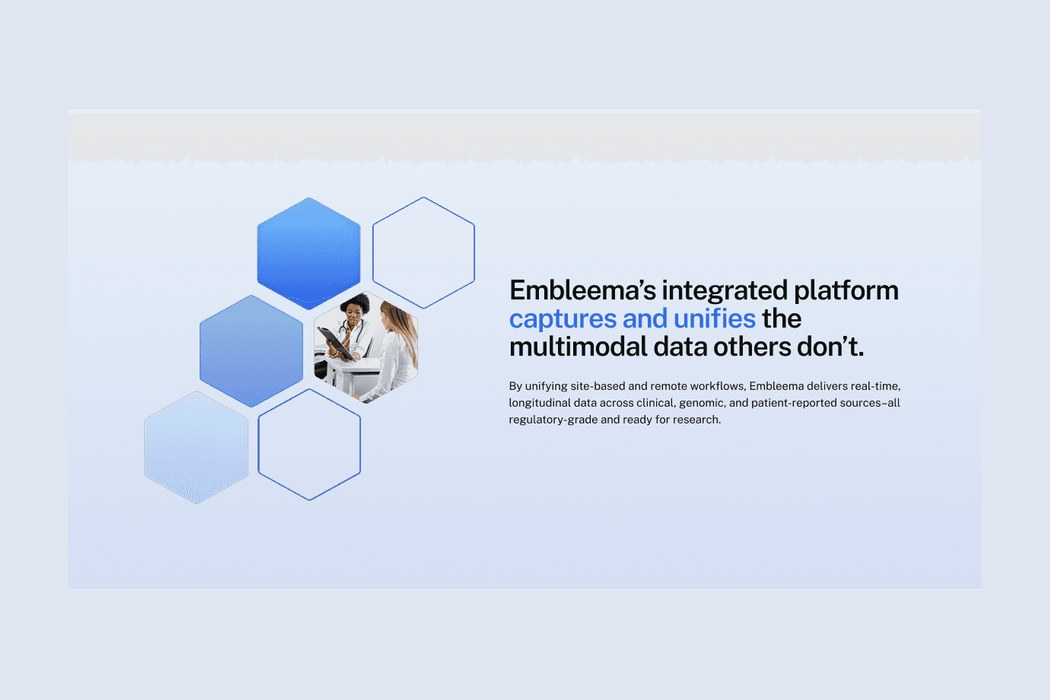
Embleema
Embleema is a New York- and France-based healthcare technology company that builds a unified real-world data and evidence platform for clinical research. It aggregates clinical, genomic, and patient-reported data from electronic medical records, wearables, biospecimens, and patient apps into regulatory-grade datasets, and uses no-code protocol tools plus dynamic consent to help pharmaceutical sponsors, research sites, and patient groups run non-interventional and Phase IV studies faster and at lower cost. Founded in 2017 by Robert Chu, the company started with a patient-driven health blockchain and its analytics stack has been used by the FDA for genomic regulatory review.
Morphle Labs Inc.
Morphle Labs is a deep-tech healthcare automation company building robotic and AI-driven imaging systems for cancer diagnostics. Founded in 2017 and now operating between Bengaluru and New York, it combines robotics, optical engineering, and neural-network AI to automate the historically manual steps of histology - from tissue sectioning to whole-slide scanning to remote reporting. Its product line spans the RoboTome robotic microtome, the MorphoLens family of whole-slide scanners, and the HemoLens hematology scanners, giving pathology labs an end-to-end digital workflow at a fraction of the cost of legacy systems.
Nirvana
Nirvana is a New York-based health tech company that automates insurance eligibility and benefits verification for healthcare providers. Its AI-powered platform - available as the OneVerify web/mobile app or a Coverage API - reads complex insurance plans from hundreds of payers, returns real-time, specialty-specific benefit and cost details, and catches errors that lead to claim denials. Founded in 2019 with a focus on behavioral and mental health, Nirvana now supports more than 100,000 providers and roughly 2 million patient visits a year.
RV Healthcare Solutions
RV Healthcare Solutions (RVH Solutions), which operates the Teamwrks technology suite, is a New York-based healthcare technology company that uses artificial intelligence and machine learning to help hospitals and health systems improve financial and quality performance without reducing staff. Grown out of Workforce Prescriptions and backed by Rizk Ventures and Vizient, Teamwrks turns operational data into department-level targets, AI-driven root-cause insights and actionable workflows - typically deployed in days rather than months.

Scripta Insights
Scripta Insights is a Needham, Massachusetts healthcare technology company that helps self-insured employers, health plans and their members cut pharmacy benefit costs without switching PBMs. Its Rx Navigation platform, powered by the proprietary Med Mapper AI engine, analyzes prescription claims and clinical data to surface lower-cost, therapeutically equivalent medication options - getting patients 'The Right Meds at The Best Price.' Founded in 2019 by serial entrepreneur Eric Levin and physician Dr. Paul Bradley, the company serves more than 80 employer and health-plan clients and raised $42M total after a $17M Series B in December 2024.
Truveris
Truveris is a healthcare technology company that helps employers, benefits consultants and plan sponsors buy and oversee pharmacy benefits. Founded in 2009 and based in Wilmington, Delaware, it runs a competitive procurement marketplace connecting buyers with 60-plus pharmacy benefit managers, analyzes 100% of pharmacy claims to police PBM contract performance, and layers on independent audits and member engagement tools. The company says clients typically see roughly 20% improvement on pharmacy contract costs.