The Company That Refuses to Let a Surgeon Fly Blind Through Your Nervous System
For twenty years, one Las Vegas-founded company has been the second set of eyes in thousands of operating rooms - watching the nerves surgeons can't see and sounding the alarm before a slip becomes a lifelong deficit.
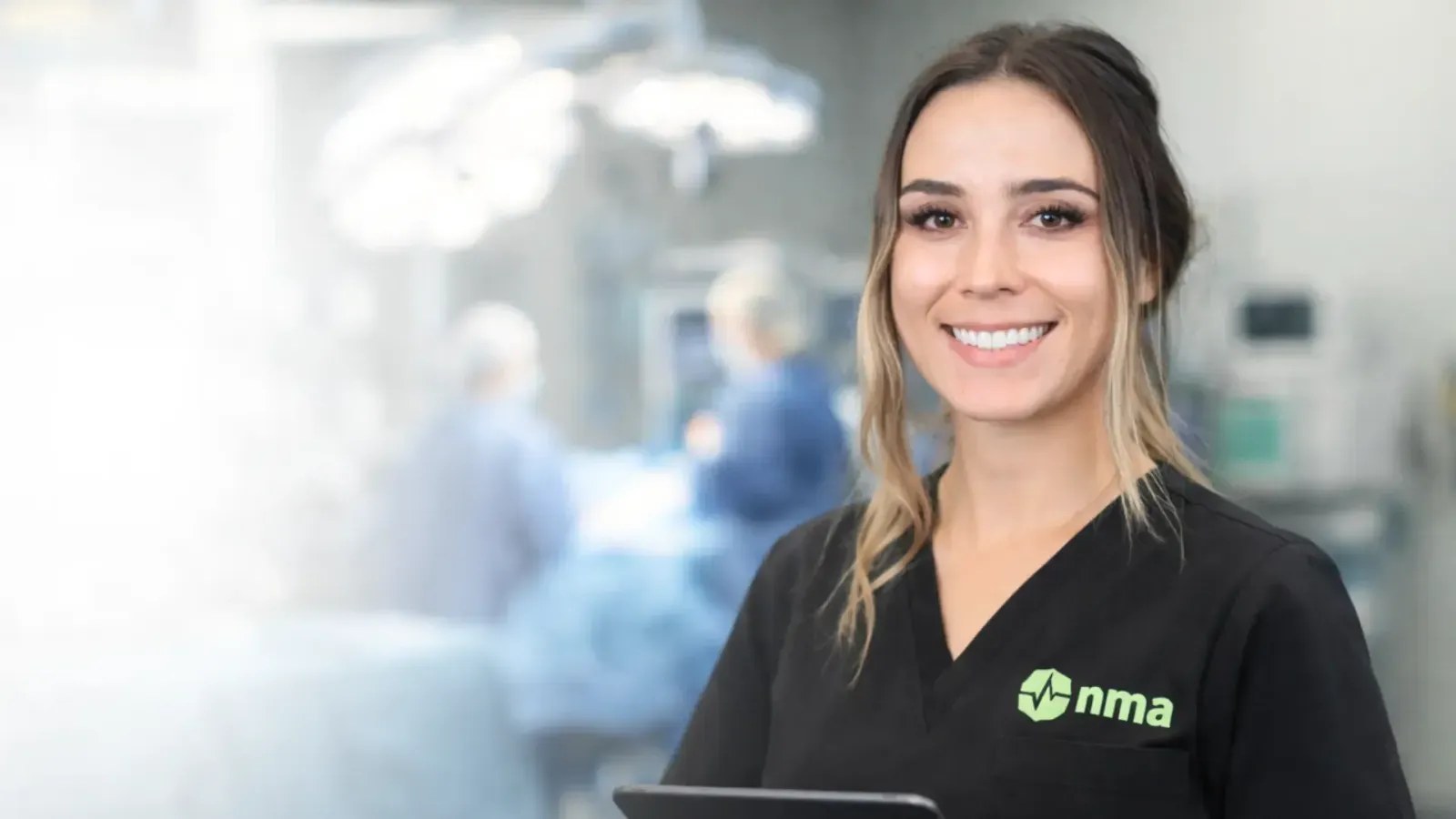
There is a moment in spine surgery that almost nobody outside the operating room knows about. The surgeon is millimeters from a nerve root. One wrong angle and the patient wakes up with a leg that no longer answers. In that moment, the most important person in the room might be someone the patient never met - a certified technologist reading a screen full of waveforms, listening for the sound that means stop. That person, in more than a thousand American hospitals, works for a company called NMA.
Neuromonitoring Associates - NMA - does one thing, and does it obsessively: intraoperative neuromonitoring, or IONM. It places a trained clinician and a proprietary software platform inside the operating room to watch a patient's central and peripheral nervous system in real time. When a scalpel drifts too close to something that must never be cut, NMA's entire reason for existing is to be the alarm that goes off before the damage is done. Founded in 2006 and Joint Commission-accredited, it now supports more than 2,400 surgeons and holds contracts with over 1,000 hospitals and health systems.
01 / What they actually doWatching the nerves you can't see
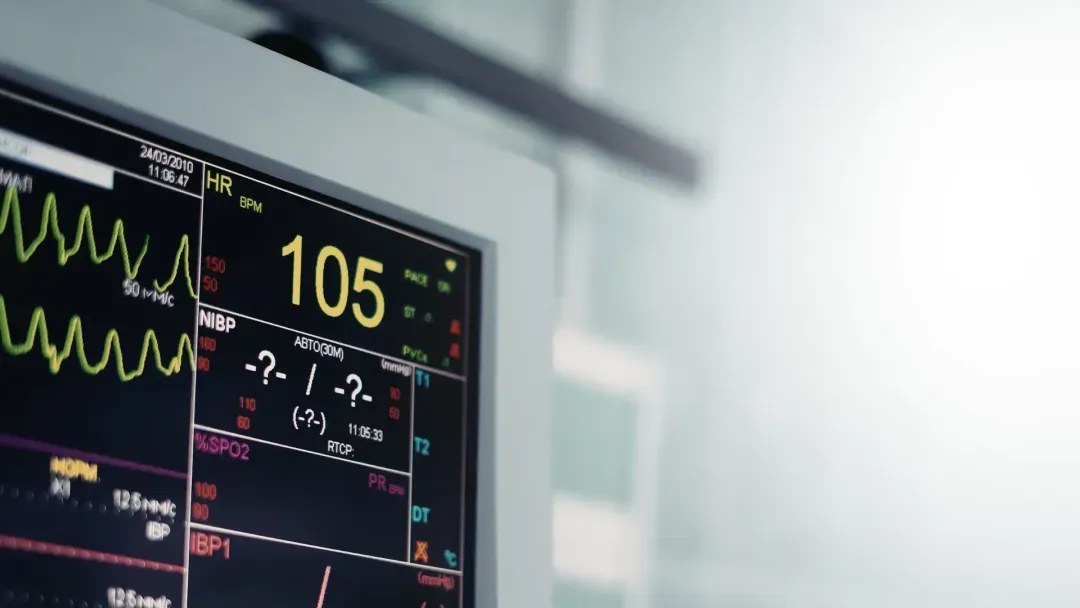
Nerves do not announce themselves. During a high-risk procedure - spine, brain, vascular, or ENT surgery - the pathways that carry movement and sensation are often buried inside the very tissue the surgeon has to work through. IONM works by placing electrodes on the patient and sending or reading tiny electrical signals along those pathways. If a signal weakens or drops, it can mean a nerve is being stretched, compressed, or starved of blood. Catch it in seconds and the surgeon can adjust. Miss it and the change may be permanent.
NMA's pitch to a hospital is simple: this is too consequential to improvise. Rather than have surgical staff juggle monitoring on the side, NMA supplies dedicated, certified technologists in the room and remote oversight physicians who can interpret the data. It is a service business built on a single, unforgiving promise - be right, in real time, every time.
The customers are the surgeons themselves and the facilities they operate in: neurosurgeons and spine surgeons first, but also orthopedic, vascular, and ENT teams whose procedures run close to critical nerves. For a surgeon, NMA is a co-pilot; for a hospital, it is a risk-management decision. Both are buying the same thing - the confidence to keep operating when the anatomy gets ambiguous, knowing someone is watching the one variable they cannot see.
02 / The productAMP, and the sound of a nerve at risk
The technology at the center of NMA is AMP - the Adaptive Monitoring Platform. It is proprietary and patented, and NMA describes it as the only technology that fuses machine-grade speed, sensitivity, and specificity with the judgment of a certified clinician. In practice, AMP does something clever: it turns dense neurophysiological data into something a whole surgical team can read at a glance, and it adds audible cues. The operating room literally sounds different when a nerve is under threat.
That matters because an alarm is only useful if it is trusted. Too many false alerts and surgeons start tuning them out. NMA reports that AMP is associated with 14% fewer alerts and a fivefold reduction in complications - the two numbers that, taken together, describe a system that cries wolf less and catches the real wolf more. More than 100,000 patients have now been monitored on it.
03 / The number that runs everything0.27 percent
Most companies bury their failure rate. NMA advertises it. The figure it leads with is a post-operative deficit rate of 0.27% - the share of monitored cases where a patient wakes with a new neurological problem - which it reports as 67% better than the national benchmark. It is a strange, honest kind of KPI. When your headline metric is measured in patients who did not get hurt, every decimal point has a face.
The orange sliver is the whole story: across NMA-monitored cases, roughly 3 in 1,000 result in a new post-operative deficit - a rate the company reports as 67% below the national benchmark. The rest of the circle is the point of the business.
04 / How it's differentPeople as the moat
Neuromonitoring is a fragmented, unglamorous corner of healthcare, and much of it runs on interchangeable contract labor - a different technologist in the room every week. NMA's counter-bet is relationships. Its "3 or Me" staffing model promises a surgeon a small, consistent pod of clinicians rather than a rotating cast of strangers. Over dozens of cases, that familiarity becomes its own form of safety: the technologist knows the surgeon's habits, and the surgeon trusts the voice on the other end of the alarm.
NMA extends that human focus past the incision. Through a partnership with a technology group called DocOR, its teams can use a HIPAA-compliant app to update a patient's family during the procedure, and a patient-advocacy team is available around the clock. These are not the features a spreadsheet would prioritize. They are the features a frightened family remembers.
05 / The businessBilling for something invisible
NMA is a business-to-business healthcare services company. It contracts with hospitals, surgery centers, and surgeons, and bills per surgical case - a professional component for the physician interpretation and a technical component for the in-room monitoring. Revenue scales with case volume across its hospital network, which is why footprint matters so much: every new hospital contract and every additional surgeon compounds.
The company has stayed private through two decades of growth. Third-party trackers put its revenue near $35 million in 2025, with headcount growing roughly 15% year over year to somewhere around 300 to 350 employees. It has also started to consolidate its niche: in October 2024, NMA acquired Southern Neuro Solutions, folding a regional provider into its national network. In a sleepy, fragmented market, being the one that buys rather than the one that gets bought is a strategy in itself.
There is a lesson here for anyone eyeing an unglamorous industry. The parts of healthcare that get the least attention are often the ones with the clearest value and the fewest serious operators. NMA did not invent neuromonitoring; it decided to do it consistently, at scale, with an accreditation that a hospital's legal and quality teams could point to. The moat is not a single clever feature. It is the accumulation of contracts, trained clinicians, clean outcome data, and a brand that surgeons carry with them from one hospital to the next.
1. Win a hospital or surgeon contract → 2. Staff consistent clinicians on AMP → 3. Deliver clean outcomes (0.27%) → 4. Surgeon brings NMA to the next facility → 5. Acquire regional players to fill the map. Repeat.
06 / The founderFrom medical sales to the nervous system
The origin story is not the one you would guess. Nick Luekenga, NMA's CEO and founder, holds a marketing degree from Utah State University and came up through medical-supply sales, not neuroscience. He founded the company in 2006 and has run it since. That background shows in how NMA talks - less like a lab, more like a company that understands the operating room is also a relationship business. The technology is patented and real, but the pitch is human: put a trusted, empowered clinician in the room and give them the best possible tool.
It is a useful reminder that some of the most durable healthcare businesses are not built by the people who invented the science. They are built by the people who noticed the science was being delivered badly - inconsistently, without ownership - and decided to standardize it.
07 / Where it fitsThe quiet infrastructure of safe surgery
NMA competes with other national and regional IONM providers and with hospitals that run monitoring in-house. Its argument against building it yourself is the same one that wins most outsourcing debates in medicine: coverage, consistency, and accountability are hard to maintain part-time, and the downside of getting it wrong is catastrophic. For a hospital, handing the nervous-system watch to a specialist accredited to do exactly that is often the safer choice.
What makes NMA worth studying is not spectacle. There is no consumer app, no viral moment, no unicorn headline. There is a company that found a critical, boring, high-stakes niche, standardized it with proprietary technology, earned the accreditation that proves it, and became a default for thousands of surgeons. Most of the patients it protects will never learn its name. That is, in a sense, the whole point - the best outcome NMA can deliver is a surgery you never have to think about again.