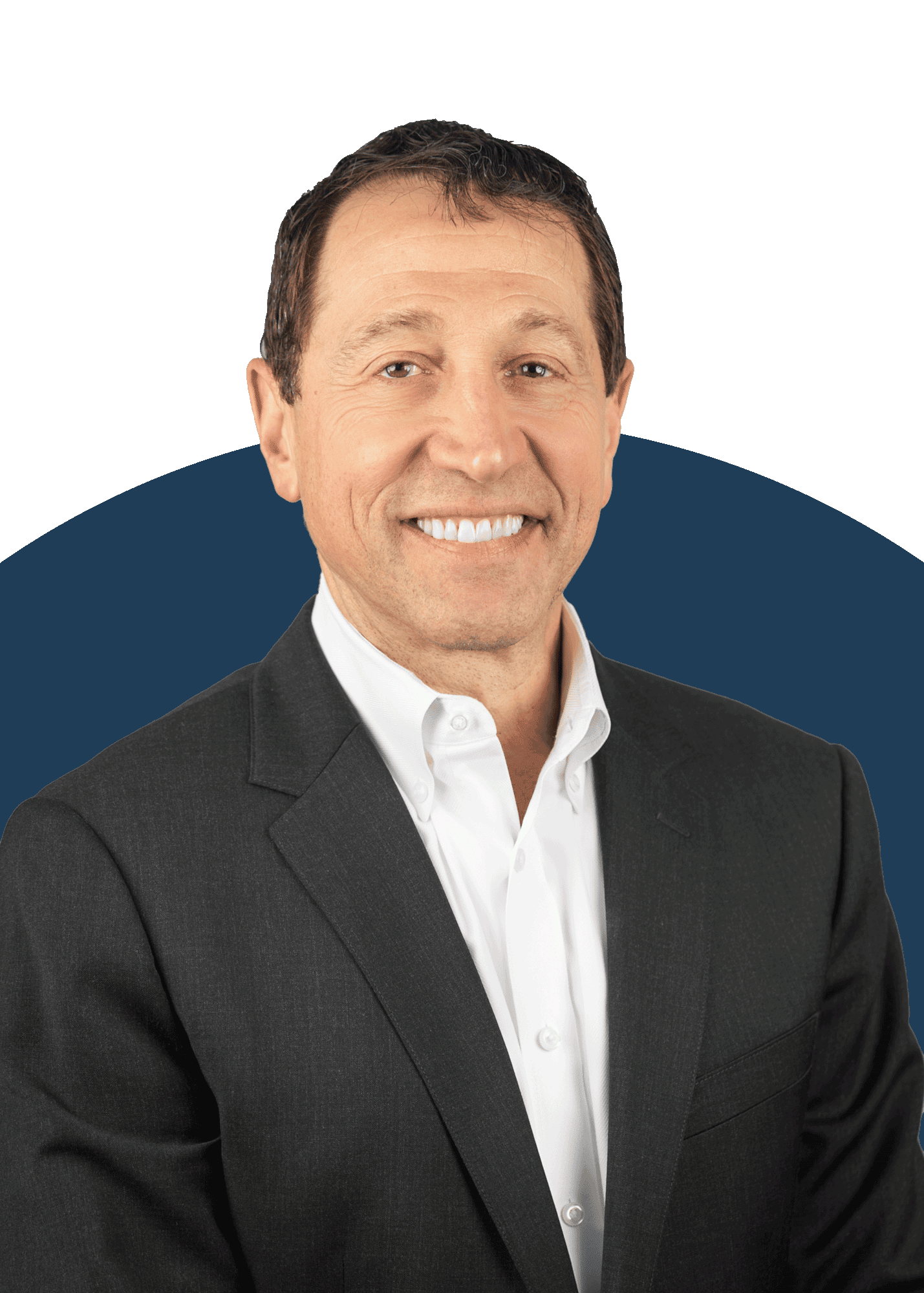
Sam Weinstein runs a company most people will never hear of, doing work most people hope they never need. SpecialtyCare supplies the specialized clinicians who quietly populate the operating room - the perfusionist running the heart-lung machine, the technologist watching nerve signals during a spine case, the surgical assistant, the team sterilizing instruments between procedures. When a hospital wants an operating room of excellence but does not want to build every piece of it in-house, Weinstein's people walk through the door.
Today that means more than 1,200 hospitals across 45 states. It means roughly 2,000 associates. It means a quietly enormous footprint in cardiac surgery support, intraoperative neuromonitoring, perfusion, ECMO, autotransfusion, surgical assist and sterile processing. And it means a database. SpecialtyCare sits on one of the largest operative procedural data sets in the business, and Weinstein's central argument is that this data, used well, can shave the clinical variation that turns routine operations into complicated ones.
"We will be uniform about improving patient outcomes in a way that decreases complications, and the costs associated with those complications," he has said. It is a sentence with a surgeon's economy. There is no slogan in it. There is a complication you did not have.
Here is the part that does not fit the standard healthcare-executive resume: Weinstein did not start in business school. He started in history. His first degree is a BA in History from the University of Pennsylvania. Medicine came after - an MD from the State University of New York at Stony Brook, then surgical and cardiac training at Columbia Presbyterian in New York, then a further pediatric cardiac specialization at The Children's Hospital of Philadelphia. The MBA, from Fordham, came later still. Humanities, then the scalpel, then the spreadsheet. Few hospital CEOs travel that exact road.
For about 16 years, the road ran through pediatric cardiac surgery in New York City. He operated on some of the smallest, highest-stakes hearts in medicine. And he kept leaving the country to do more of it. As Surgical Director for Heart Care International, Weinstein logged more than 30 surgical mission trips - Guatemala, the Dominican Republic, El Salvador, Peru - operating on children and teaching local surgeons the congenital cardiac techniques they needed to keep doing the work after the visiting team flew home. The teaching mattered as much as the operating. You can fix one heart, or you can leave behind a surgeon who can fix a hundred.
That instinct - build the team, not just the case - is the through-line into his second act. Weinstein joined SpecialtyCare in 2015 as Chief Medical Officer. Within a year he was President of Operations. By 2017 he was CEO. The promotions were fast because his pitch was credible in a way few executives can claim: he had been the customer. He had stood at the table waiting for the support that SpecialtyCare provides.
"As a surgeon, I understand intimately what our physician partners are looking for to support their patients, as well as their practice," he says. It is the rare CEO line that is also a competitive advantage. When SpecialtyCare's clinicians describe a problem in the OR, the person at the top of the company has felt it from the other side of the drape.
His framing of the business is deliberately unglamorous. He talks about five things: people, data, training, customer service and associate engagement. He describes the company's evolution as a move from a "third-party outsourcing company to a true innovative partner" - which, translated out of executive-speak, means he does not want hospitals to think of SpecialtyCare as temp labor. He wants them to think of it as the reason a complication rate went down.
The numbers underneath are substantial. SpecialtyCare reports annual revenue in the hundreds of millions and the kind of headcount that makes it one of the larger clinical-services platforms operating across American hospitals. In 2018, with state economic-development officials, the company announced an expansion of its Brentwood, Tennessee headquarters - a vote of confidence in the Nashville region's dense healthcare economy. Weinstein himself was later named to the board of the Nashville Health Care Council, the trade body that anchors that economy.
He has been prolific on paper too: more than 100 publications and presentations, and a side practice coaching other healthcare executives. The throughline is consistent. Whether he is holding an instrument, a data set or a P&L, the question is the same - how do you make the operating room safer, and how do you make that improvement stick?
There is something almost stubbornly unsexy about the work. Perfusion and sterile processing do not trend. ECMO and neuromonitoring do not show up in keynote decks about the future of health. But these are the rooms where outcomes are decided in minutes, and Weinstein has bet his second career on the idea that excellence here is buildable, measurable and repeatable - case by case, hospital by hospital. The surgeon never really left the room. He just made the room a lot bigger.
Vital Statistics
- Role CEO, SpecialtyCare
- Since 2017
- HQ Brentwood, TN
- Lives in Nashville
- Prior life Cardiac surgeon
- First degree History, Penn
- MBA Fordham
- Mission trips 30+
Reach
- Hospitals 1,200+
- States 45
- Associates ~2,000
- Publications 100+