Profile · Neurophysiology · AI in the OR
Rich Vogel
He spent a career watching nerve signals on a screen. Now he is teaching software to watch alongside him.
US CEO, Nervio // Nashville, TN // PhD x2
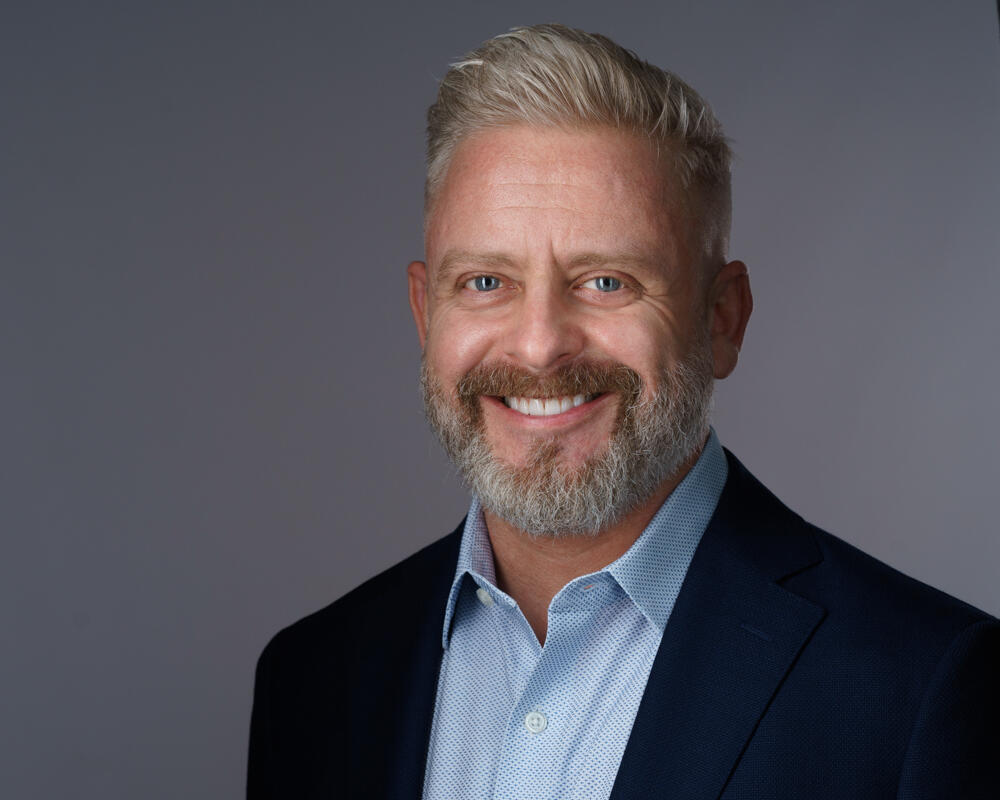
He spent a career watching nerve signals on a screen. Now he is teaching software to watch alongside him.
In an operating room, while a surgeon works near the spinal cord, someone is watching a screen full of waveforms. Those squiggles are the patient's nervous system, reporting live. If a line dips at the wrong moment, it can mean a nerve is in trouble - and seconds matter. Rich Vogel spent years as the person reading those lines. Today he is the US CEO of Nervio, a company building the first AI platform made specifically to read them with him.
Vogel's title is CEO, but his credentials read like a research faculty page. He holds two PhDs from Indiana University - one in neuroscience, one in psychology. He trained as a post-doctoral fellow in neurophysiology at the University of Pennsylvania School of Medicine, then completed an intraoperative clinical neurophysiology fellowship with Surgical Monitoring Associates outside Philadelphia. He is a board-certified oversight neurophysiologist. The acronyms that follow his name - DABNM, FASNM - are the kind that make a room of specialists nod.
What he is selling now is not a gadget. It is a second set of eyes that never blinks.
Major technological advancements are exceedingly rare in neuromonitoring, and the field is ripe for disruption.— Rich Vogel, US CEO, Nervio
There is a particular kind of authority that comes from helping define a field rather than just joining it. Vogel co-founded the Section on Intraoperative Neuromonitoring within the North American Spine Society. He wrote peer-reviewed papers and book chapters. He was twice elected president of the American Society of Neurophysiological Monitoring - first as President-Elect in 2018, and again for a term running from May 2024 to May 2025. Being elected once is recognition. Being elected twice is trust.
And he talks. A lot. By the count circulated around his appointment, Vogel has delivered more than a thousand talks to clinical, academic, and professional audiences around the world. That is not a man who stumbled into a podium. That is a career spent explaining a complex, invisible thing to people who needed to understand it before they could trust it. Which, it turns out, is exactly the job description for selling AI to surgeons.
Here is the squeeze Vogel keeps pointing at. The volume of spine surgery is climbing - by as much as 40% over the next ten years, by the projection he cites. At the same time, the number of trained neurophysiologists watching those monitors is not keeping pace. Every one of those procedures ideally has an expert tracking the patient's nervous system in real time. Soon there will not be enough experts to go around.
Vogel's framing is blunt: the workforce is overstretched and shrinking while the workload only grows. The answer he is betting on is not to clone more specialists. It is to give the ones who exist a tool that does the tireless part - the constant vigilance - so the human can do the judgment part.
Spine surgery volumes are expected to increase by as much as 40% over the next 10 years. Neurophysiologists need innovative technology to support their current workload.— Rich Vogel
Nervio was founded in early 2020 by brothers Nir and Dr. Omer Zarchi - the latter heading neuromonitoring services at a major medical center. The company is small and Israeli by birth, with its R&D center in Manof, a village in the country's North District. Vogel did not start it. He was brought in to run its American future.
The product took roughly five years to build. It draws on the input of dozens of neurophysiologists and the analysis of thousands of surgeries. The idea is to turn raw, noisy streams of physiologic data into something a surgical team can act on: real-time alerts and recommendations that flag neurologic risk earlier and more consistently than fatigue and human attention can manage alone.
The pitch is not that the AI replaces the neurophysiologist. It is that the AI watches with the patience of a machine, surfacing the signal that matters so a human expert can decide what to do about it. In a discipline where a missed dip in a waveform can change a life, consistency is the whole game.
That distinction matters to Vogel, who has spent his career inside the profession the technology is meant to support. He has been clear, in interviews about AI's place in clinical decision-making, that the goal is to keep the expert in the loop - not to write them out of it.
Before Nervio, Vogel was Director of Strategic Initiatives at NuVasive Clinical Services, one of the larger names in the monitoring business. Leaving an established player to lead the American arm of a roughly 20-person Israeli startup is not the safe move. Vogel made it because, by his own read, the timing finally lined up: a field that rarely changes, a workforce problem that will not solve itself, and a technology mature enough to do something about both.
He runs the US operation from Nashville while the engineering stays in Israel - a CEO bridging two countries, two cultures, and the gap between a profession that prizes careful human judgment and a tool that promises to scale it. His whole career, oddly, has been a rehearsal for exactly this translation job.
He even keeps a YouTube channel under the handle @richvogelphd - a clinical scientist who decided the message was worth a camera, not just a conference room.
The more opportunities we have for education and training, to cultivate research and broadly communicate the clinical benefits of IONM, the better insights we can offer in the OR to increase safety and improve outcomes.— Rich Vogel, on the work that defined his career
Strip away the acronyms and Vogel's project is simple to state and hard to do. Take the most attentive thing a human can do - watch for a single bad signal among thousands of good ones, for hours - and give it to a machine that does not tire, while keeping the human who knows what the signal means firmly in charge. Then convince a famously cautious profession that this is help, not replacement.
It is fitting that the person doing it has two doctorates in how minds work and a thousand talks' worth of practice making complicated things land. The signals were always there. Rich Vogel is building the system that promises never to blink while watching them.