embodied-ai
(22)
Wayve Raised $2.5 Billion to Teach One AI Driver Every Road
The London company skipped hand-coded rules and high-definition maps for a driving model that learns from experience. Its harder test begins now: turning an elegant research bet into ordinary cars and rides people can actually buy.
Waymo Has Left the Lab. Now It Has to Teach Cities to Trust an Empty Driver’s Seat
Alphabet’s robotaxi company has turned autonomous driving into a service people can summon. Its next test is less cinematic and more difficult: making safety, fleet economics and public trust work in city after city.

Dyna Robotics
Dyna Robotics is a Redwood City, California startup building embodied-AI foundation models that let robots perform dexterous, real-world manipulation tasks around the clock. Founded in 2024 by repeat entrepreneurs Lindon Gao and York Yang (who sold Caper AI for $350M) and former DeepMind researcher Jason Ma, the company's DYNA-1 model runs commercial deployments in laundries, factories, restaurants and gyms. Dyna raised a $23.5M seed and a $120M Series A in 2025, reaching a valuation above $600M with backing from NVIDIA, Amazon, Salesforce Ventures, Samsung Next and CRV.

6thSense
6thSense builds wearable tactile sensing rigs that record how human hands actually touch the world - pressure, grip, contact, force, depth, vision and 3D hand pose - out in real homes rather than labs. It packages that multimodal, model-ready data and sells it to teams training the next generation of dexterous robots, positioning itself as a 'nervous system for physical AI.' The company is part of Y Combinator's Summer 2026 batch and is based in San Francisco.
InLoop Robotics
InLoop Robotics deploys intelligent bimanual robotic arms into warehouses as a service - handling packing, kitting, and order fulfillment for a flat monthly fee with no upfront hardware cost. Instead of waiting for a perfect model, InLoop ships imperfect policies into real warehouses, detects failures in real time, recovers automatically when it can, and hands off to a remote human operator when it can't. Every intervention becomes training data, so the system keeps getting faster and cheaper with each order.

Remy AI
Remy AI is a San Francisco robotics startup in Y Combinator's Winter 2026 batch building dexterous, AI-powered robots for e-commerce third-party logistics (3PL) warehouses. Its core bet is data: the team captures real human dexterity on real job sites using head-mounted cameras paired with wearable tactile sensors, recording synchronized vision, motion, and contact force. That data trains robotics foundation models so a bi-manual mobile robot can pick, pack, kit, and receive across changing inventory without reprogramming, deploy in weeks rather than months, and target roughly half the cost of legacy automation via a robot-as-a-service model.

Sensei Robotics
Sensei Robotics (YC S24) is a San Francisco startup building the data layer for robot learning. It pairs a sub-$300 sensorized exoskeleton arm with a distributed network of trained human operators - 'Senseis' - who perform real-world manipulation demonstrations on demand. Robotics and AI teams submit a task like folding cloth or loading a dishwasher, and Sensei returns curated, labeled human-demonstration data. The company positions itself as 'the Scale AI for robotics training data,' claiming roughly a tenth of the cost and twice the speed of conventional teleoperation setups.

Sureform
Sureform is a San Francisco startup (Y Combinator X25) that collects real-world, multimodal human data to train robots and world models. It equips workers at hotels, warehouses, restaurants, construction sites, and laundromats with head-mounted cameras, stereo depth rigs, and handheld grippers that capture time-synced video, audio, pose, depth, and tactile data while they do their jobs. Each session is delivered to robotics teams as structured, synchronized, training-ready data.
Apptronik
Apptronik is an Austin-based robotics company building Apollo, a general-purpose humanoid robot designed to work alongside people in manufacturing, logistics and other physically demanding settings. Spun out of the University of Texas at Austin's Human Centered Robotics Lab in 2016, the company grew from custom actuator work for NASA into one of the most heavily funded humanoid robot developers, with commercial pilots at Mercedes-Benz and GXO and an AI partnership with Google DeepMind's Gemini Robotics team.

LE Robotics
LE Robotics is a Chengdu-founded industrial robotics company building AI-driven welding and cutting robots that combine 3D vision, SLAM autonomous navigation and welding-specific AI algorithms. Its systems locate weld seams in seconds and operate without pre-programming or manual teaching, letting robots 'think and act like workers.' Spun off from the Loyalty Enterprises industrial group in 2022 by CEO Haojie Hu, the company serves Fortune 500 manufacturers and large state-owned enterprises across nuclear, oil and gas, rail and heavy machinery, and is expanding internationally through subsidiaries in Canada, the US, Brazil and Singapore.

Lightwheel
Lightwheel is a Physical AI infrastructure company building the data layer that teaches robots to work in the real world. It produces physically accurate SimReady 3D assets, egocentric human demonstration data, and evaluation platforms so robots can learn safely and cheaply in simulation before they are deployed. Founded in 2023 by former autonomous-driving-simulation lead Steve Xie, Lightwheel partners with NVIDIA and supplies simulation assets and synthetic datasets to leading robotics teams.

Nullmax
Nullmax is an AI company building vision-only, map-free autonomous driving software for mass-produced cars. Founded in Silicon Valley in 2016 by former Tesla Autopilot engineer Lei Xu and headquartered in Shanghai, it develops MaxDrive, a chip- and sensor-agnostic driving stack, and Nullmax Intelligence (NI), an end-to-end, multimodal system that reads the road with cameras instead of lidar or high-definition maps. Its technology ships in production vehicles from major Chinese automakers.
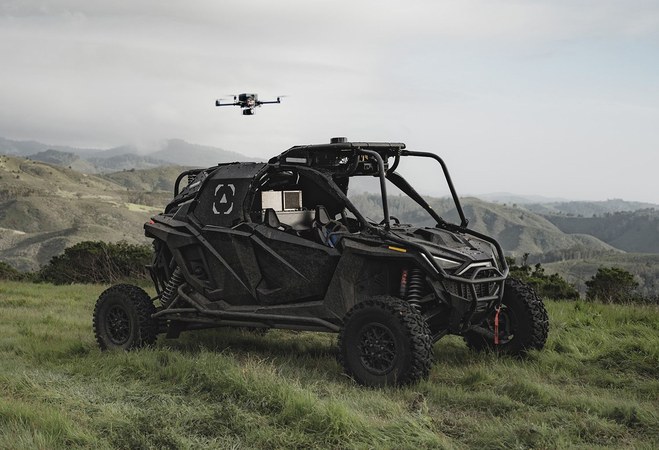
Scout AI
Scout AI is a Silicon Valley defense-tech company building Fury, a Vision-Language-Action foundation model that turns unmanned robots - ground, air, sea, and space - into autonomous agents that perceive the world, understand natural-language commands, and act in GPS- and comms-denied environments. Founded in 2024 by Colby Adcock and Collin Otis, the company raised a $100M Series A in April 2026 (which it billed as the largest defense-tech Series A in U.S. history) after emerging from stealth in 2025 with a $15M seed and early Department of Defense contracts.

Anvil Robotics
Anvil Robotics is a Palo Alto-based hardware and software company building a composable platform for Physical AI. It sells ready-to-run robot devkits - most notably the open-source OpenARM bimanual manipulator and the OpenYAM arm - bundled with teleoperation, data-collection, and training tooling so teams can train end-to-end robot policies on day one instead of spending six months sourcing and wiring parts. Backed by a $6.5M seed round, Anvil manufactures in-house in Taiwan and has shipped hundreds of robots to customers including Nvidia, Google, and university labs.

Dexmate
Dexmate is a Santa Clara robotics startup building Vega, a general-purpose mobile robot with high-payload arms, dexterous hands and a foldable torso that reaches over seven feet. Founded in 2024 by a team out of MIT, UCSD and CMU, the company pairs custom hardware with a data-driven 'flywheel' learning approach - combining simulation and real-world data - to tackle dexterous manipulation for logistics, manufacturing, retail and research. Backed by NVIDIA and LG Technology Ventures, Dexmate has opened preorders for Vega at $89,999.

Integral AI
Integral AI is a Japan-US startup building foundation world models - AI systems meant to learn, plan, and act in the real world the way people do, with an emphasis on energy efficiency and continuous, autonomous skill learning. Founded in 2021 by ex-Google AI leaders Jad Tarifi and Nima Asgharbeygi, the company positions its interactive world models as infrastructure for an AI-based economy, spanning robotics, universal simulators, and multimodal interfaces. In December 2025 it made headlines by claiming to have tested the world's first AGI-capable model, TOWA.

Mbodi AI
Mbodi AI is a New York robotics-software company building an embodied AI platform that lets people teach industrial robots new skills through plain natural language and short demonstrations - no code and no specialized engineers. Founded in 2024 by two former Google Public DNS engineers, the platform combines generative AI, agent orchestration and symbolic reasoning to turn everyday instructions into precise, reliable robot actions that run in production within minutes and transfer across an entire robot fleet. Mbodi is a Y Combinator company with a joint commercialization partnership with ABB Robotics.
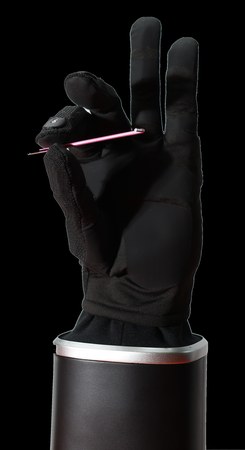
Proception
Proception is a Palo Alto and Mountain View robotics company building the dexterous robotic hand that humanoids are missing. Its flagship ProHand 1.0 packs 22 degrees of freedom, tendon-driven fingers and skin-like tactile sensors into a hand designed with input from surgeons - close enough to a human hand that robots can learn directly from human demonstration. A companion sensor glove, ProGlove, captures real human manipulation data at scale to train those movements. Founded in 2024 by former Tesla Optimus engineers Jay Li and Jack Xu, the company raised an $11M seed led by First Round Capital and is shipping its first hands to research labs and robotics companies.
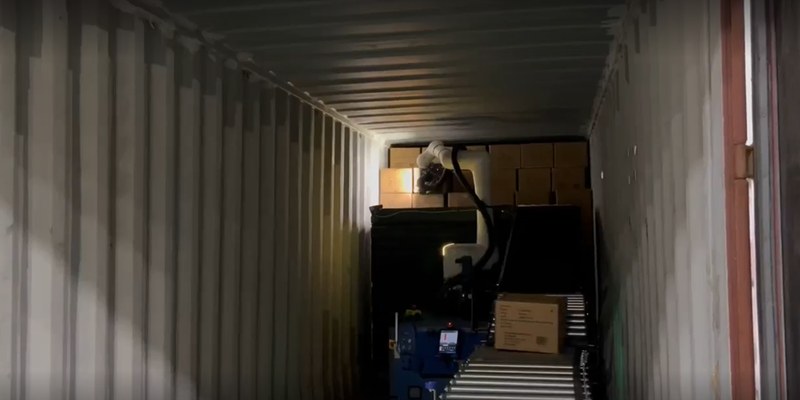
Anyware Robotics
Anyware Robotics is a Fremont, California startup building deployable physical AI for industrial work. Its first product, Pixmo, is a mobile robot that drives into a shipping container or trailer and unloads boxes - up to about 1,000 cases per hour - using a force-sensing collaborative arm and an AI stack the company calls AnywareOS. Founded in 2023 by former UC Berkeley researchers and FANUC engineers, the company aims to take over the back-breaking jobs that warehouses can no longer reliably staff.
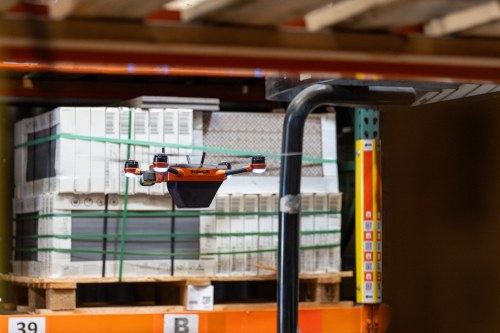
Corvus Robotics
Corvus Robotics builds fully autonomous indoor drones that count warehouse inventory without human operators or any added infrastructure. Its flagship system, Corvus One, flies through aisles using an onboard AI world model - no GPS, Wi-Fi, fiducial markers, or beacons required - scanning barcodes and pallets to deliver near real-time inventory visibility at claimed 99.9% accuracy. Founded in 2017 out of MIT and backed by Spero Ventures and S2G Ventures, the company targets the slow, manual, error-prone problem of physical inventory counts in distribution centers and production plants.
Chef Robotics
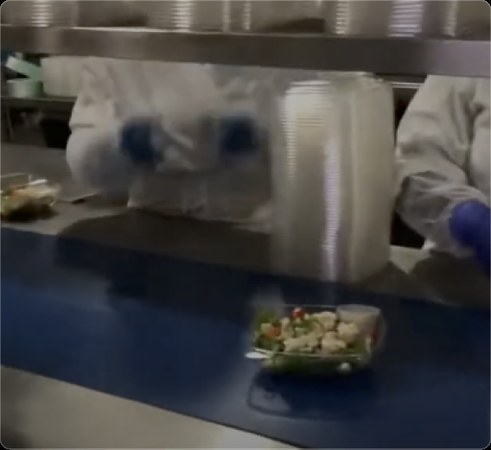
Chef Robotics builds AI-powered robotic arms that assemble meals in food production plants. Its ChefOS platform powers Robotics-as-a-Service deployments at customers like Amy's Kitchen, Sunbasket, Chef Bombay, and Cafe Spice, having helped produce 70+ million servings across North America.

Figure
Figure is a Bay Area robotics company building autonomous, general-purpose humanoid robots powered by Helix, its in-house vision-language-action model. Founded by Brett Adcock in 2022, Figure is one of a small handful of companies racing to put commercially viable humanoids inside factories, warehouses and - by late 2026 - homes.