diagnostics
(37)
The Marketing Problem That Begins When the Science Is Too Good
Samba Scientific hires people who can read the paper, question the claim and still build the campaign. The wager is simple: in biotech, fluency is not decoration - it is the shortest route from a complicated product to a credible lead.
Bioscribe knows what to say between breakthroughs
Biotech companies can spend years waiting for their next big announcement. Bioscribe has built a communications business around the science, people, and progress in between.

TOBY is following cancer’s chemical trail
A urine sample, a mass spectrometer, and an algorithm: TOBY is betting on a less invasive route to disease detection. Its early prostate results show both the appeal and the difficult business of telling a useful signal from a false alarm.

Five Engineers, Twenty-Five Pounds and a Workshop for Medicine
Team Consulting nearly disappeared before it found its lane. Four decades later, its employee-owners build the unglamorous machinery behind better injections, longer-lived transplant organs and an ear clinic that fits in a hand.
The Software Behind the Test Results Nobody Can Afford to Lose
Clinisys sits in the quiet, high-stakes gap between a specimen arriving and an answer going out. Its next act is to turn decades of specialist lab software into one cloud platform - without breaking the workflows that already move billions of tests.

Junction Is Selling the Boring Plumbing Behind At-Home Healthcare
Digital-health companies want to launch lab testing and connect hundreds of devices. Junction does the unphotogenic work in between - integrations, requisitions, logistics, reminders and results - so customers can ship care instead of another six-month infrastructure project.

The Pregnancy Test That Could Catch a Killer Before the Doctor Does
Preeclampsia kills tens of thousands of mothers a year, mostly because no one catches it in time. A team that started as classmates in Durham and Kampala wants to move that first warning from the hospital lab to the bathroom shelf.
The Minneapolis Shop That Turns Lab IP Into Real Companies
Most venture firms write checks and wait. Invenshure hires the scientists, licenses the patents, and builds the company itself - one hard problem at a time.
The Tiny Florida Fund Reading Every AI Healthcare Deck
Intelligence Ventures is turning an inbox full of early-stage pitches into a map of AI healthcare - then using that map to place small, concentrated bets on founders whose data may outlast the hype.

The Fund That Bets on People Who Read Physics Papers for Fun
Eric Schmidt's Palo Alto firm has spent fifteen years funding PhDs who want to rebuild the physical world - from SoFi and Uber to gene editors and metal-bending robots. Its bet: the boring industries are about to move fast.
The Firm That Bets on the Toolmakers, Not the Cure
For nearly four decades, Ampersand Capital Partners has skipped the lottery of drug discovery and quietly backed the companies that make the drug discovery possible. In May 2026 it closed a $1.5 billion fund in a single day.

The Company That Turned a Dead Battery Into an 80-Year Business
For 79 years Schumacher Electric has sold the same quiet promise - your battery will not leave you stranded. The bet now is that the promise scales from a dead sedan to an electric car.
The Health Company Hiding in Your Kitchen, Your Lab and Under Your Skin
Abbott built a $44.3 billion business by showing up everywhere health becomes measurable - from a breakfast shake to a glucose curve to a repaired heart valve. Its breadth is the strategy, and the complication.
Dashlabs.ai
Dashlabs.ai is a Manila-based health-tech company (YC W21) that builds end-to-end, cloud-based software for medical laboratories and clinics. Its DIY laboratory information system connects lab machines, patient records, billing, and results into one platform, and it rose to prominence powering the Philippine Red Cross through millions of COVID-19 RT-PCR tests. Today it serves diagnostic labs, hospitals, dialysis centers, veterinary clinics, and corporate health programs across the Philippines.

Healthlane
Healthlane is an African preventive-health company (Y Combinator W20) that pairs a mobile app with a network of diagnostic laboratories to give people personalized health checkups and screening. Founded by Alain Nteff and Dr. Agbor Ashumanyi Ako, it grew out of the maternal-health service GiftedMom with a goal of catching disease early rather than treating it late.

NOSO LABS
NOSO LABS builds AI agents for field-service technicians in home-services trades - starting with HVAC, plumbing, electrical, and pest control. Its agents automatically follow up on unsold estimates over text, sync notes to the CRM, and route complex jobs to a back-office dashboard, aiming to recover revenue that would otherwise slip through the cracks without adding headcount. Founded in 2025 by Winston Chi and Alex Xi, the San Francisco company is part of Y Combinator's Summer 2025 batch.
Galatek
Galatek is a Singapore-based automation and AI company building intelligent infrastructure for two sectors where precision and data integrity matter most: life sciences and advanced semiconductor manufacturing. It pairs robotics and machine vision with software - its Abio platform unifying ELN, LIMS, SDMS and lab automation, and its InteVega AI vision platform - to run smart labs and inspect chips. Led by CEO David Tian, Galatek raised roughly US$30 million in a Series A round announced in December 2025 to expand across Europe, North America and Southeast Asia.

Ash
Ash (poweredbyash.com) is a New York-based health technology company that gives healthcare organizations a customizable, white-label platform for at-home diagnostic testing. Founded in 2019 as a direct-to-consumer sexual health testing service for the LGBTQ+ community, Ash pivoted to a B2B model that lets health plans, digital health companies and public health agencies launch branded testing programs across 100+ biomarkers in all 50 states. The company handles kit design, a vetted lab network, multilingual patient engagement, logistics and real-time reporting through one API, and has shipped more than 500,000 kits while helping organizations close care gaps and improve HEDIS and Star Ratings measures.
GlycanAge
GlycanAge is a UK-registered, Croatian-founded longevity biotech that measures biological age by analyzing glycans - sugar molecules attached to immune-system antibodies. Built on roughly two decades of glycobiology research led by Professor Gordan Lauc, the company turns a finger-prick blood sample into a report on how fast a person is aging at the molecular level, plus a specialist consultation to guide lifestyle changes. It sells directly to consumers and is expanding its glycan biomarkers into hospitals and preventive-care systems.
Oova
Oova is a New York-based women's health company that brings lab-grade hormone testing into the home. Founded in 2017 as a Mount Sinai spinout by Dr. Aparna (Amy) Divaraniya, Oova combines urine test strips, smartphone scanning, and AI to quantitatively measure LH, E3G (estrogen metabolite), and PdG (progesterone metabolite), giving women personalized daily insights for fertility, PCOS, cycle health, and perimenopause. The FDA-registered platform is used by consumers and integrated with hundreds of fertility and women's health clinics through a HIPAA-compliant provider dashboard.
Resonant Sensors Incorporated
Resonant Sensors Incorporated (RSI) is an Arlington, Texas biotechnology company that builds label-free optical biosensor systems based on its patented guided-mode resonance (GMR) technology. Its ResoSens Ultra-Mab Pro benchtop plate reader and disposable Bionetic microarray plates let researchers watch molecular binding interactions in real time, in a standard 96-well format, using tiny sample volumes and no fluorescent labels. RSI targets antibody discovery, epitope binning, hybridoma screening, kinetics and cell-based assays for immunotherapy, diagnostics and life-science research, and also offers analytical contract testing services.
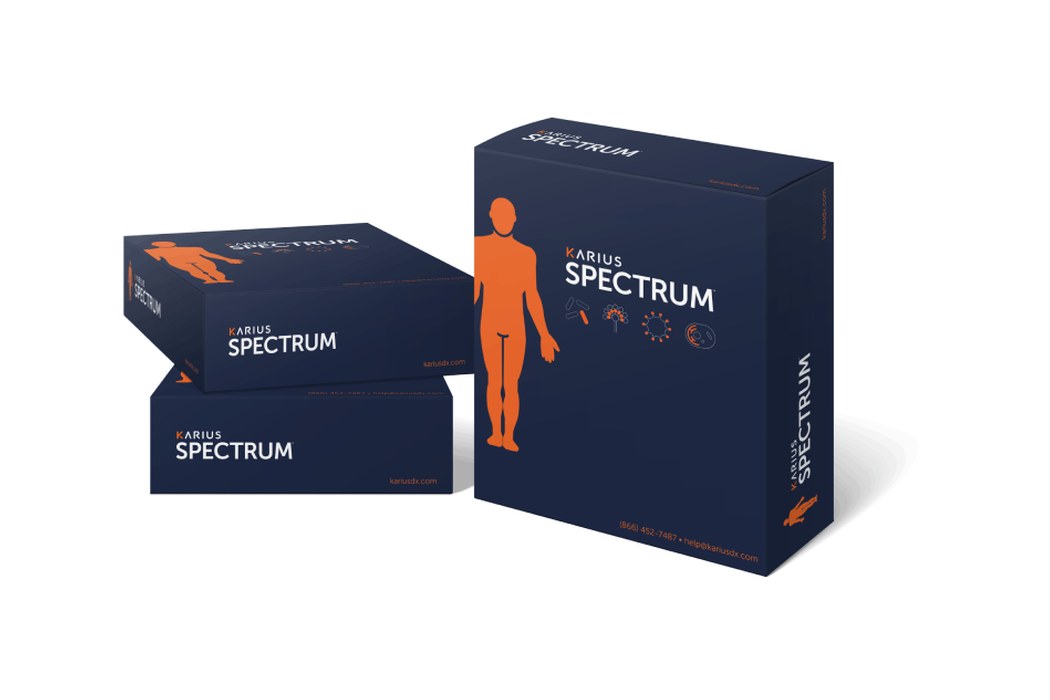
Karius
Karius is a Redwood City, California life-sciences company that turns a single blood draw into a broad infectious-disease diagnosis. Its flagship Karius Test uses microbial cell-free DNA (mcfDNA) sequencing, metagenomics and AI to detect more than 1,000 pathogens - bacteria, DNA viruses, fungi and parasites - often within a day of receiving a sample. Founded in 2014 out of Stephen Quake's lab at Stanford, the company aims to give clinicians a fast, non-invasive alternative to invasive biopsies and slow cultures, with a focus on the immunocompromised patients who need answers most urgently.

Amprion
Amprion is a precision-diagnostics company using Seed Amplification Assay (SAA) technology to detect misfolded proteins - alpha-synuclein, amyloid-beta and tau - in cerebrospinal fluid, giving physicians and drug developers a biological readout of neurodegenerative disease years before symptoms fully emerge. Its flagship SAAmplify-aSYN test (formerly SYNTap) is the first commercially available validated alpha-synuclein SAA, carries an FDA Breakthrough Device Designation, and aims to replace symptom-based guesswork for Parkinson's, Lewy body dementia, Alzheimer's and multiple system atrophy with autopsy-grade certainty.
ARNA Genomics US Inc.
ARNA Genomics US Inc. is a San Francisco-based biotechnology company developing multiomics liquid-biopsy technology for early cancer detection. Its lead assay, ARNA Breast, analyzes cell-free DNA and plasma enzyme activity from a routine blood draw to flag early-stage breast cancer, with proof-of-concept studies reporting sensitivity above 90%. Founded in 2013 and led by CEO Egor Melnikov, the company raised a $3.5M Series A in 2020 to fund clinical validation.
Kryptos Biotechnologies, Inc.
Kryptos Biotechnologies is a Hayward, California life-sciences startup that reinvented the PCR machine around light. Its proprietary photothermal heating uses an optical thin film to convert light into precisely controlled heat, driving an Ultrafast Photonic PCR engine that runs 40 thermal-cycles in under 10 minutes. That engine powers Kuick, a sample-to-answer molecular diagnostics system that delivers lab-grade infectious-disease results at the point of care in roughly 20 minutes. Founded in 2017 and backed by a $10M Series A led by Osang Healthcare, Kryptos is pushing toward U.S. clinical trials and FDA clearance.
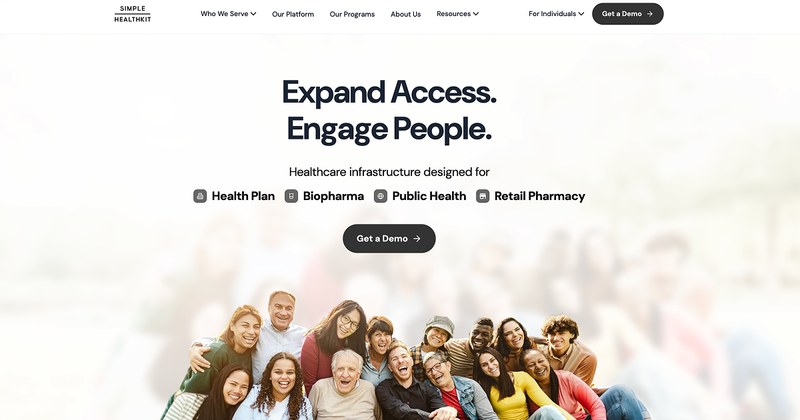
Simple HealthKit
Simple HealthKit is a Milpitas, California-based digital health company building end-to-end healthcare infrastructure that unifies at-home and in-clinic diagnostics, a CLIA-certified lab, telehealth, and follow-up care into a single platform. Founded in 2018 by biochemist Sheena Menezes, the company targets health equity by making testing for sexual health, respiratory illness (COVID/flu/RSV), and chronic conditions like diabetes accessible and affordable for underserved populations, selling primarily to health plans, retailers, pharmacies, employers, schools, and public health organizations.
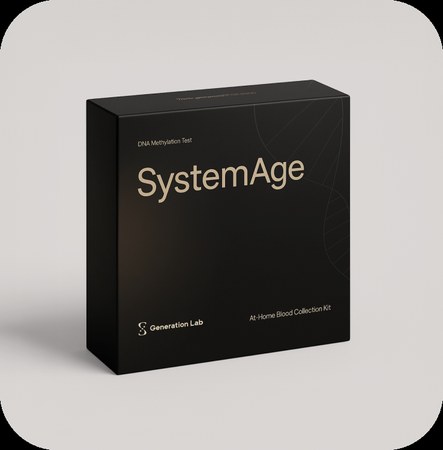
Generation Lab
Generation Lab is a San Francisco longevity biotech building SystemAge, a diagnostic that measures how fast your body is actually aging rather than predicting a number. Using DNA methylation analysis of hundreds of biomarkers, it reports biological ages across roughly 19 organ systems from a blood sample, then hands clinicians an actionable plan to track whether interventions are moving the needle. Founded in 2023 by CEO Alina Rui Su, UC Berkeley aging researcher Dr. Irina Conboy, and operator Michael Suswal, the company raised an $11M seed in October 2025 led by Accel and works with 275+ clinics across roughly 18 countries.

HueDx
HueDx is a Philadelphia diagnostics company - formerly Group K Diagnostics - that turns any smartphone camera into a reader for lab-grade, quantitative color-based tests. Its patented HueCard color-correction hardware and AI-powered HueTools/HueCloud software let researchers develop, validate, and deploy paper-based colorimetric assays without proprietary readers or lab infrastructure, aiming to make quantitative results available at the point of care and at home.

Abram Scientific
Abram Scientific is a Menlo Park, California medical-device company building CoagCare, a portable point-of-care platform that reads the full blood-coagulation cascade - from clot formation through fibrinolysis - from a single drop of blood in under 10 minutes. By measuring blood viscoelasticity and density on single-use test cards inside a vibration-insensitive handheld meter, CoagCare aims to move coagulation testing out of the central lab and into trauma bays, ambulances, and MEDEVAC helicopters, helping clinicians decide the right transfusion or therapy at the right time.

AltPep
AltPep is a Seattle biotech company spun out of the University of Washington that is building both diagnostic tests and disease-modifying drugs for amyloid diseases such as Alzheimer's and Parkinson's. Its work is anchored on the alpha-sheet, a non-standard protein structure discovered by founder and CEO Valerie Daggett, which forms in the toxic soluble oligomers that appear at the earliest, pre-symptomatic stages of disease. AltPep's SOBA blood test aims to flag those toxic oligomers years before symptoms, while its SOBIN peptide therapeutics are designed to neutralize them.