data-center
(40)
SiFive wants a bigger job inside the AI machine
The RISC-V pioneer sells the blueprints behind other companies’ chips. With $400 million in fresh funding and a new development server, it is making a bid for the data center’s CPU business.

Myriad360 Is Betting Big on the Work Behind AI
The systems integrator is buying expertise, assembling infrastructure and handling the unglamorous details of enterprise technology. Its next test is keeping the personal touch as the business gets bigger.
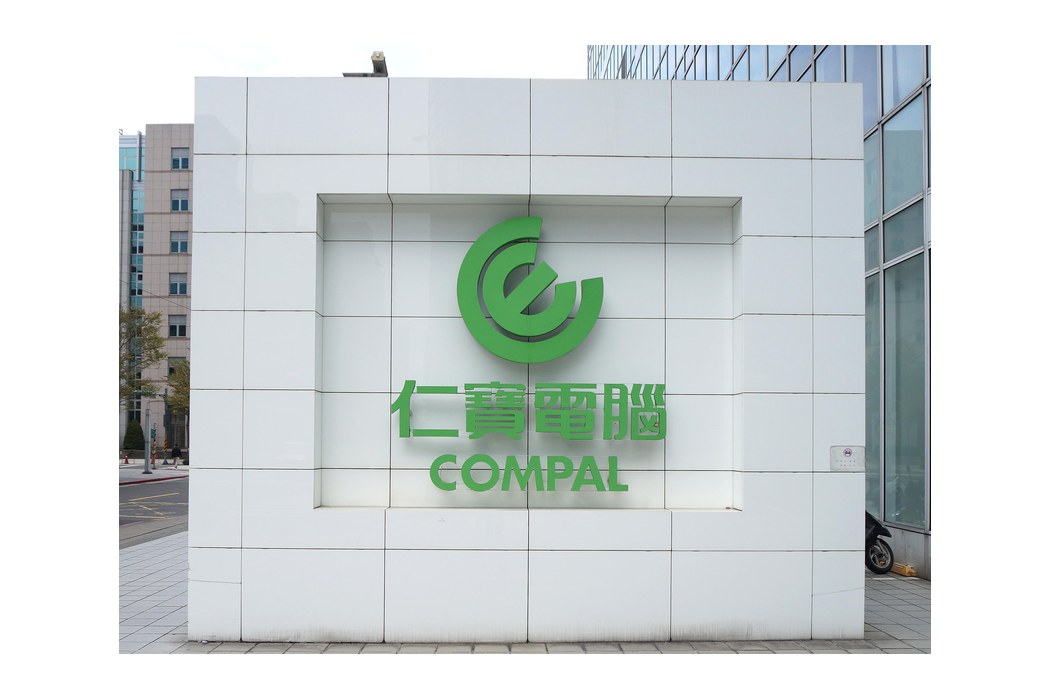
The Company That Builds Your Laptop and Never Puts Its Name On It
It is the world's #2 notebook maker, ships Apple Watches when demand spikes, and quietly assembles the laptop on your desk. Now Compal wants 40% of its revenue to come from AI servers - and its name still won't be on the box.
The Cantu Brothers Sold Used Servers From a Basement. Now They Wire the Cloud for the FIFA World Cup.
For 29 years, two brothers from Bellevue have made a business out of the boring middle - the wiring, racking, migrating, and securing that every enterprise needs and few can do end to end.
The Tribe That Plans 150 Years Ahead Just Became Milwaukee's Third-Biggest Minority-Owned Business
Potawatomi Ventures turns casino and enterprise profits into data centers, federal contracts and fresh-food gas stations - and measures every bet against the next 150 years, not the next quarter.
The AI Chip Company Betting the Future Won't Fit Inside One GPU
Tenstorrent is building AI computers from small, networked pieces - then opening the software so developers can see how the machine works. The wager is simple: in a market organized around one dominant GPU stack, flexibility can be a product.
Lenovo Wants to Own the Journey From Your Pocket to the Cloud
The company that made the black business laptop an office fixture is building a much larger machine - one that sells devices, data-center infrastructure and recurring services as a connected stack.
AMD Is Building the Everything Chip Company
The old Intel understudy now sells CPUs, GPUs, adaptive chips, networking and software as one connected system. Its next test is whether an open stack can win the most expensive race in computing.
Global Unichip Corporation (GUC)
The Taiwanese design house that quietly builds other people's AI chips - and reserved 60,000 CoWoS wafers to keep doing it.
Western Digital
The 55-year-old hard-drive maker bet its whole future on the spinning platter - right as the AI boom made cheap, bottomless storage the most valuable thing in the data center.
Intel
The company that built the microprocessor is trying to build something harder: a second act. Inside Intel's bet-the-house pivot from selling chips to making everyone else's.
Oracle
The 48-year-old database company reinvented itself as the landlord of the AI boom - and a half-trillion-dollar order book to prove it.
Cisco
The company that quietly wired the internet is now betting its next chapter on securing and connecting the machines that run artificial intelligence.

3i Inc.
3i Inc. is a Seoul-based spatial AI company that turns physical spaces into interactive digital twins. Founded in 2017, it operates two brands: Beamo, an enterprise digital twin platform used to remotely inspect and manage mission-critical facilities like data centers and factories, and Pivo, a consumer AI-powered auto-tracking pod for content creators. Backed by a $24M Series A led by SV Investment, the company holds dozens of technology patents in computer vision, 3D scanning, and SLAM.

Neurophos
Neurophos is an Austin-based photonics startup building an Optical Processing Unit (OPU) that uses light instead of electrons to run AI inference. Spun out of Duke University and the Metacept incubator, the company packs more than a million micron-scale metamaterial optical modulators - roughly 10,000x smaller than conventional photonic elements - onto a single chip to perform the matrix-vector multiplication at the heart of large AI models. It positions the OPU as an energy-efficient, drop-in alternative to GPUs for data-center inference, and raised a $110M Series A led by Gates Frontier in January 2026.
Cisco Systems
Cisco Systems is an American multinational technology company and the world's largest maker of networking hardware. Founded in 1984 by two Stanford computer scientists, it builds the routers, switches, silicon, security, and software that route much of the world's internet traffic. Today Cisco is repositioning around AI infrastructure, cybersecurity, and observability - anchored by its 2024 acquisition of Splunk - while remaining the default backbone for enterprise, service-provider, and government networks.

Broadcom
Broadcom Inc. (NASDAQ: AVGO) is one of the world's largest semiconductor and infrastructure-software companies, headquartered in Palo Alto, California. Led by President and CEO Hock Tan since 2006, it designs custom AI accelerators, Ethernet switching and routing silicon, wireless and broadband chips, and optical components, while also running a large enterprise-software business anchored by VMware, Symantec, CA and Brocade. Its products connect and power much of the modern internet, from smartphones and set-top boxes to the hyperscale data centers training today's largest AI models.
NVIDIA
NVIDIA is an American technology company that designs graphics processing units (GPUs) and the accelerated-computing platforms built around them. Founded in 1993 to chase realistic 3D graphics for video games, it turned its parallel-processing chips and the CUDA software layer into the dominant engine of the modern AI boom. Today its data-center systems train and run most of the world's large AI models, and the company sits at the center of the semiconductor industry with a market value above $5 trillion.
Marvell Technology
Marvell Technology is a Santa Clara-based fabless semiconductor company that designs the chips underpinning modern data infrastructure. Founded in 1995, it has pivoted under CEO Matt Murphy from consumer and mobile silicon into custom AI accelerators (XPUs), electro-optics, high-speed Ethernet switching, DSPs and storage controllers. Its parts move data inside and between the hyperscale data centers run by companies like Amazon, Microsoft and Alphabet, making it one of the key merchant and custom silicon suppliers powering the AI buildout.

Ayar Labs
Ayar Labs is a San Jose-based semiconductor company building optical input/output (I/O) technology that moves data between chips using light instead of copper. Its silicon-photonics chiplets - the TeraPHY optical engine and the SuperNova multi-wavelength light source - are designed to be co-packaged directly with GPUs and other processors, letting AI and high-performance-computing systems scale across thousands of accelerators with far higher bandwidth and far lower power than electrical interconnects. Spun out of a DARPA-funded university research effort, the company raised a $500M Series E in 2026 with backing from NVIDIA and AMD.

Enfabrica
Enfabrica is a Silicon Valley chip startup building the networking and memory plumbing that lets tens of thousands of GPUs behave like one giant computer. Its Accelerated Compute Fabric SuperNIC (ACF-S) moves data at 3.2 terabits per second, and its EMFASYS memory fabric lets AI clusters borrow cheap DDR5 DRAM over Ethernet instead of buying more GPUs for capacity. Founded in 2019 by ex-Broadcom and Google networking engineers, the company raised roughly $290M before Nvidia paid over $900M in September 2025 to license its technology and hire CEO Rochan Sankar and much of his team.
eTopus Technology
eTopus Technology is a San Jose-based semiconductor IP company that designs ultra-high-speed, ADC/DSP-based SerDes and die-to-die interconnect IP for data centers, high-performance computing, AI, 5G and storage. Founded in 2012 by Harry Chan and Peter Kou, the company licenses silicon-proven PHY IP - spanning 112G on advanced 6/7nm nodes down to 22nm - plus chiplet interfaces supporting UCIe, Bunch of Wires, PCIe Gen 5/6 and CXL. eTopus positions itself on low latency and low power, and has built collaborative chiplet platforms with partners including QuickLogic, OpenFive and CoMira.
Movellus Inc.
Movellus is a San Jose semiconductor IP company that builds the invisible plumbing of advanced chips - the clocks, sensors, droop-response systems and on-die voltage regulators that keep high-performance silicon running fast without melting or missing a beat. Its flagship Aeonic platform reimagines traditional analog blocks as synthesizable, digital IP that can be dropped into an SoC design and ported across process nodes from 40nm down to TSMC 3nm. Founded in 2014 out of University of Michigan research, the company sells to teams building everything from ultra-low-power edge-AI devices to cloud datacenter and AI accelerators, and raised a $23M Series B in 2022.
Oxide Computer Company
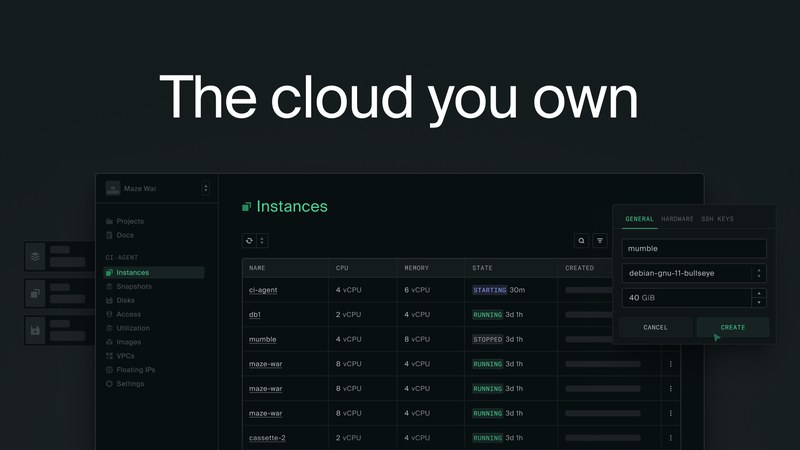
Oxide Computer Company builds the Oxide Cloud Computer, a rack-scale system that fuses purpose-built hardware with open-source software to give enterprises the elastic, API-driven experience of a public cloud inside their own data centers. Founded in 2019 by Joyent and Docker veterans, Oxide designs everything from the sheet metal, power distribution, and boot firmware up to the hypervisor and control plane, selling a single integrated rack rather than a pile of parts. It has raised over $577M, counts national labs and Fortune 1000 enterprises among customers, and is known for radical engineering transparency including a uniform company-wide salary.

Point2 Technology
Point2 Technology is a San Jose-based fabless semiconductor company building ultra-low-power, low-latency interconnect chips and cables for AI/ML data centers. Its e-Tube platform sends data as radio-frequency signals through plastic waveguides - a third path between copper and optics - and its smart-retimer SoCs power 800G and 1.6T active electrical cables. Founded in 2016 by a KAIST professor and veterans of Marvell, Finisar and Samsung, the company has drawn investment from NVIDIA's NVentures, Bosch Ventures, Molex and UMC.

Sihua Technologies Inc
Sihua Technologies Inc is a Cupertino, California enterprise-infrastructure software company that helps organizations build private and hybrid clouds inside their own data centers. Its software-defined stack - the ExpressVM virtualization engine, the MegaBric hyper-converged storage suite, and the XOS operating layer - collapses compute, virtualization, and storage onto standard x86 servers, aiming for enterprise-class performance and high availability without the price of proprietary appliances. Founded in 2000 and paired with its Shanghai-based sibling company KXTech, Sihua also ships media-streaming (XView) and AI data-acceleration (NeuADC) products for telecom and enterprise customers.

Hammerhead AI
Hammerhead AI is a Redwood City data center infrastructure startup that uses reinforcement learning agents to turn stranded power into usable AI compute. Its ORCA platform (Orchestrated RL Control Agents) coordinates power, cooling, and GPU workloads in real time so operators can raise token throughput by up to 30% within their existing power envelope - without waiting for new grid capacity. Founded in 2024 by former AutoGrid executives Rahul Kar and Rajeev Singh, the company emerged from stealth in November 2025 with a $10M seed round led by Buoyant Ventures.

Nimbus Data
Nimbus Data is a privately held, largely self-funded American flash storage company founded in 2003 by Thomas Isakovich. It designs all-flash arrays and solid state drives - most famously the ExaDrive DC100, the 100-terabyte SSD it introduced in 2018 that remained the world's largest for years. Rather than chase venture money, the company built a profitable business selling high-capacity, power-efficient storage to enterprises, cloud providers, and AI and edge workloads, backed by its HALO/AFX software and a flat-rate support model.

Questivity
Questivity is a Santa Clara IT infrastructure integrator and training house. Founded in 1999, it designs, deploys, and supports the unglamorous plumbing of enterprise technology - networking, security, servers, storage, and virtualization - for mid-size and large organizations, and runs a parallel learning arm that hires, trains, and deploys engineers in Cisco, VMware, and data center disciplines. Its pitch is vendor-neutral: solve the client's problem with the right gear, on budget, rather than whatever a single manufacturer is selling.

Zayo Group
Zayo Group is a Denver-based communications infrastructure company that owns and operates one of North America and Europe's largest fiber-optic networks - over 150,000 route miles after its 2026 acquisition of Crown Castle's fiber business. It sells the physical layer of the internet: dark fiber, wavelengths, Ethernet, IP transit, dedicated internet access, colocation and managed edge services to wireless carriers, hyperscalers, enterprises, governments and ISPs. Founded in 2007 on a contrarian bet that bandwidth demand would only explode, Zayo has spent its life buying and building fiber, and is now positioning that network as the backbone for AI workloads moving data between data centers.