contactless-payments
(23)
OneDine and the art of keeping a tab open
At bartaco, paying after every order became a reason to stop ordering. OneDine’s answer reveals a useful truth about restaurant technology: the smallest interruption can have a very expensive appetite.
PAX Technology: The little box that runs the room
A card reader looks like the end of a purchase. PAX has built a business around everything that happens before the beep - and long after it.

Vianet wants to know where the missing pints went
Behind the bar and inside the vending machine, Vianet turns small operational leaks into measurable business problems. Its next test is taking that hard-earned British expertise into American restaurant chains.
Masabi Wants the Ticket Machine in Your Pocket
The London company turned mobile tickets into a shared fare-payment business. From Boston’s abandoned $70 million smartcard expansion to Denver’s tap-and-ride network, its pitch is simple: stop rebuilding the checkout.
Ticketer gave the bus ticket machine a second job: running the bus
The British company put ticketing in the cloud, then used the same equipment to track vehicles, explain delays and connect drivers. Its next test is taking that approach across bigger networks.

FreedomPay Built for the Moment Your Payment System Breaks
The Philadelphia fintech began with mobile payments, survived on cashless accounts, and became the independent plumbing behind hotels, stadiums and stores. Its cleverest choice was assuming the network would fail.
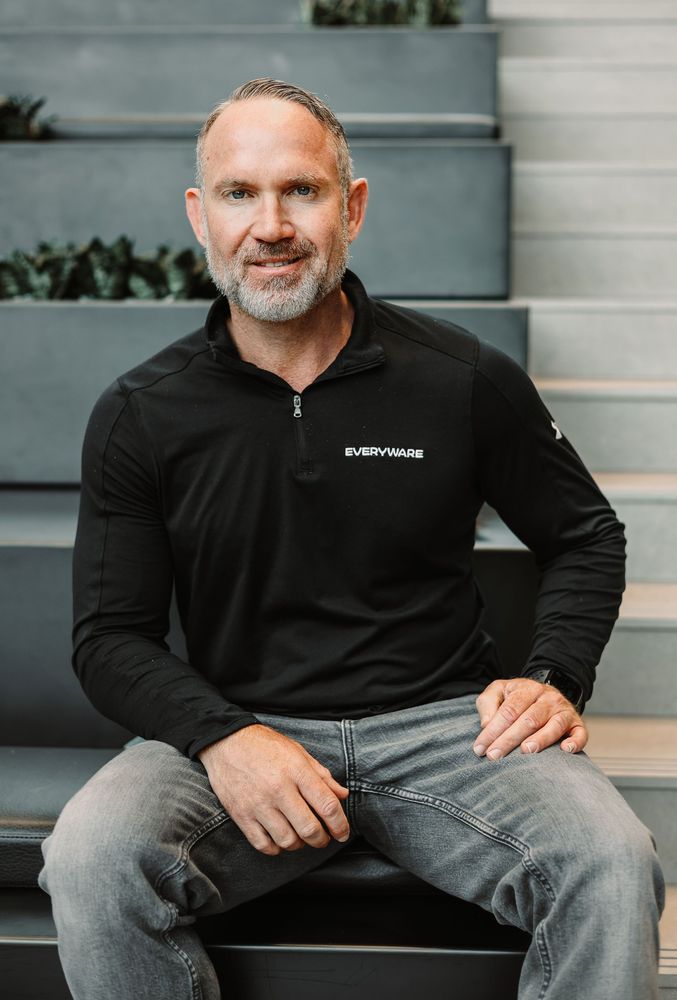
Austin Talley Put the Checkout Counter Inside a Text Message
The Everyware founder spent two decades turning awkward business processes into software. His wager now is simple: the most useful payment terminal may be the phone already in your hand.

The Card Reader Disappears: CPOS Bets the Smallest Merchants Will Tap Their Phones
The Ottawa payments company spent a decade selling the machinery of checkout. Now its most interesting product removes the machine - and asks small merchants to trust the phone already in their pocket.
How Janam Turned the Humble Barcode Scanner Into a Stadium Gate - Then Sold to HID
Janam spent years making unglamorous handhelds for warehouses and hospitals. Then digital tickets turned the same rugged scanner into a front door for stadiums - and made the small Long Island hardware company strategically useful to HID.

Moreta
Moreta (Moreta Pay) is a Y Combinator S24 fintech building a mobile wallet that lets international travelers, expats and digital nomads pay local merchants by scanning QR codes across Southeast Asia and Latin America - using their own currency, at real exchange rates, without needing a local bank account. It connects to national QR networks like Indonesia's QRIS, Thailand's PromptPay and the Philippines' QR Ph so a Western visitor can pay at street stalls and cafes the same way a local does.

Nearpay
Nearpay is a Riyadh-based fintech that turns any NFC-equipped smartphone into a payment terminal. Its payment-infrastructure-as-a-service platform gives banks, payment providers and developers a certified SoftPOS (tap-to-phone) SDK plus the full stack behind it - acceptance, compliance, certification, reconciliation and merchant dashboards - so businesses can accept in-person card payments in about 30 minutes without dedicated hardware. Founded in 2020, Nearpay was one of the first companies certified under Visa's tap-to-phone program, processed more than 40 million transactions in 2024, and in 2025 became the first Saudi payments fintech to expand into the United States.
Wiseasy
Wiseasy is a Singapore-headquartered payment technology company that builds smart Android payment terminals, cloud device-management software, and payment gateways under an integrated 'Cloud + Software + Terminals' model. Founded in 2012 by Yan Li, it serves banks, payment service providers, fintechs, and mobile operators across roughly 114 countries and regions, and in 2024 raised a Series C led by Qualcomm Ventures while launching 'pi' (π), an on-device AI POS terminal built on the Qualcomm QCS6490 chipset.

Ziina زينة
Ziina is a Dubai-based fintech that lets people and small businesses send, spend, and get paid from a phone. Launched in 2020 as one of the UAE's first peer-to-peer payment apps, it removes the friction of IBANs and Swift codes by moving money through a phone number, then extends into business tools: payment links, QR and NFC Tap to Pay, a checkout gateway for online stores, and an upcoming business card. Licensed by the Central Bank of the UAE as a stored value facility, Ziina has raised more than $30 million and serves tens of thousands of consumer and business customers across the MENA region.
Everyware
Everyware is an Austin, Texas-based payments and customer-engagement company that lets businesses collect money and communicate with customers over text message. Founded in 2015 by Larry "Austin" Talley and Scott Orlinsky, its Pay By Text platform turns a mobile phone number into a payment method - customers receive an invoice by text or email and pay by replying, without downloading an app or logging in. Everyware combines two-way SMS messaging, online and in-person payments, recurring billing, and identity-verification tools for merchants in healthcare, travel, automotive, nonprofit, retail, and utilities.
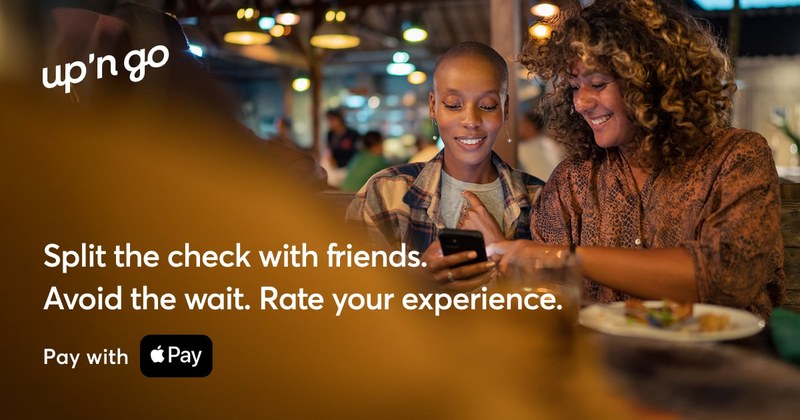
Up 'n go
Up 'n go is a San Diego fintech that lets restaurant guests pay their check by scanning a QR code or tapping a texted link - no app to download. Diners view the bill, split it any number of ways, pay with Apple Pay, Google Pay, Venmo, PayPal, a card or gift card, and leave feedback, all from their own phone. Built to plug directly into POS systems like NCR Aloha, Toast, Oracle Micros and Simphony, the company was among the first to bring app-free pay-at-the-table to U.S. restaurants and has since processed more than $1 billion across nearly 14 million contactless payments at chains from First Watch to Fox Restaurant Concepts.
Upped Events Inc.
Upped Events is a Philadelphia-based, software-only event management and payments platform that bundles ticketing, contactless mobile payments, on-site point-of-sale, CRM, mapping, staff and partner management, and real-time analytics into one system. Built for food and drink festivals, fairs, conventions, and community events, Upped aims to raise attendee spend and organizer ROI while cutting the number of tools a team has to juggle. Founded in 2020 by Mark Kozlowski, Louis Blitzman, and Filip Risteski, the company was acquired by Events.com in May 2025.

Mark Kozlowski
Mark Kozlowski is the founder and CEO of Upped Events, a Philadelphia event-experience platform he built to drag festivals, fairs and community events out of the spreadsheet era. A Penn State and Wharton-trained operator, he started by trying to pour a beer in under ten seconds (BeerMe), then turned that obsession with friction into a full registration, contactless-payment and analytics stack. In May 2025 Upped was acquired by Events.com.

Touradj Barman
Touradj Barman is the co-founder and CEO of Up 'n go, the San Diego company that lets restaurant guests scan a QR code, pull up their check, and pay without downloading an app. An MIT graduate with a Yale MBA and more than 20 issued patents - some acquired by Microsoft and now underpinning push and group messaging - Barman started Up 'n go to solve a small annoyance, splitting the check at a single San Diego restaurant. The platform has since processed more than $1.1 billion across over 16 million checks for 11 million-plus guests nationwide.

Kody
Kody (formerly KodyPay) is a UK-founded, Singapore-incorporated payments and commerce platform that helps larger retail and hospitality businesses accept in-person payments, run QR-code ordering, and manage cash flow from a single system. Started by then-teenage founder Yoyo Chang in 2018, Kody combines payment hardware (KodyTerminal), digital ordering (KodyOrder), a fee-rebate card (KodyCard) and merchant analytics into one platform. By late 2024 it was processing close to $1 billion in annualised volume and had raised roughly $30 million across its rounds, including a $20M Series A.

LISNR
LISNR is a Cincinnati-based technology company that moves data through sound. Its Radius ultrasonic SDK lets ordinary speakers and microphones transmit inaudible 'Smart Tones' between devices, enabling secure proximity detection, identity verification, and contactless transactions without Wi-Fi, Bluetooth, NFC, or QR codes. Founded in 2012 out of a 72-hour Startup Bus ride to SXSW, LISNR has grown into a data-over-audio leader backed by Visa, Mastercard, and Intel, serving payments, retail, mobility, and live-event clients.

MovoCash, Inc.
MovoCash, Inc. (MOVO) is a Palo Alto-based financial technology company founded in 2014 by veteran financial-industry entrepreneur Eric Solis. MOVO offers an on-demand mobile banking app that lets people instantly create FDIC-insured accounts and disposable virtual debit cards, send peer-to-peer payments, pay bills, and make contactless purchases from their phone - even without a traditional bank account. Built on its patented HyperBIN digital-token technology and delivered with Mastercard and Coastal Community Bank, MOVO positions itself as a 'digital cash' network that blends payment cards, bank accounts, and mobile money movement.
Eric Allen
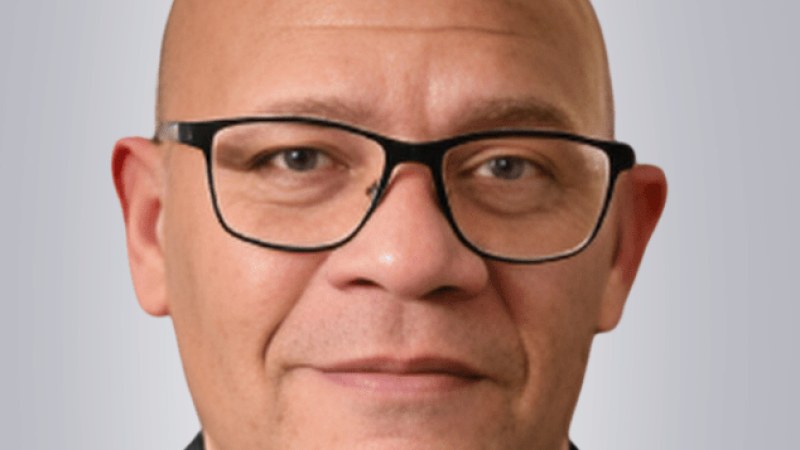
Eric Allen is the CEO and President of LISNR, the Cincinnati-based company turning ordinary sound into a secure data channel. A self-described product guy with 30-plus years in software, he previously ran a $250M audio-fingerprinting business unit at Gracenote and helped win two Emmy Awards for interactive television. Since taking the helm in 2018, he has steered LISNR's pivot into contactless payments and proximity verification, attracting investment from Visa and pushing data-over-audio as a software alternative to NFC, Bluetooth, and QR codes.
Kathleen Schnering
Kathleen Schnering is the Chief Executive Officer of Clover Network, one of the largest cloud-based point-of-sale platforms in the United States. Under the Fiserv umbrella, Clover serves more than 800,000 merchants across retail, restaurant, and services verticals, processing hundreds of billions in payments annually. Schnering leads a platform generating over $2.7 billion in annual revenue with a workforce of approximately 1,500 employees, steering Clover's expansion into international markets and value-added services as it targets $4.5 billion in revenue by 2026.