A pint leaves the tap. Did it reach a paying customer, disappear into a drip tray or escape the till altogether? A vending machine takes a card payment. Is its best-selling drink still in stock? These are small questions with a habit of becoming expensive when multiplied across a pub estate or a fleet of machines. Vianet Group PLC has built its business around giving operators something better than a hunch.
The British technology company connects physical equipment to software that records activity, flags problems and helps people decide what to do next. Its territory is pleasingly tangible: beer lines, coffee machines, stockrooms and unattended payment terminals. The customer buys visibility into the gap between what a business thinks is happening and what its equipment can actually measure.
That proposition has produced a substantial subscription business inside a modest listed company. For the year ended March 2026, Vianet reported £15.50 million in gross revenue, with 88% recurring. The headline figure is before rebates; the accounts record £15.23 million after them. Predictable income is the attraction. Finding enough new places to install the technology is the continuing challenge.
£13.60m recurring income out of £15.50m gross revenue. Each square represents roughly 4 percentage points.
01Before the cloud, there was the beer line
Vianet's origins belong to the practical, occasionally awkward world of pub economics. Its 2006 flotation document credits Derrick Collin with founding the Brulines business concept in the early 1990s. The present company dates its founding to 1995. Brulines measured beer dispensed and compared it with deliveries, helping pub owners identify purchases that breached tenants' obligations to buy from designated suppliers.
That history matters. Vianet learned to collect evidence from equipment in working premises, where installation, maintenance and interpretation count. A pretty dashboard is of limited use if the underlying meter is wrong. The company was bought out by management in 2005, floated on AIM in 2006 and subsequently adopted the Vianet name. Its flotation offered new shares to raise about £8 million gross, approximately £7 million after expenses.
The modern hospitality proposition is broader than policing beer purchases. Beverage Metrics brings inventory, point-of-sale integration and draught management together. SmartInsight adds business and market reporting. The useful comparison is between stock bought, liquid dispensed and sales recorded. Differences give managers somewhere to investigate waste, quality or lost revenue. A discrepancy is a prompt for inquiry, not a verdict on the person behind the bar.
- 01 / STOCKWhat came in?
- 02 / POURWhat went out?
- 03 / TILLWhat was paid for?
Reconciling deliveries, dispensing and sales gives managers a place to investigate.
02The machine gets a voice. Someone still has to listen.
In unattended retail, SmartContact and SmartContact Pro provide contactless payment hardware. SmartVend supplies the payment and device management platform, while telemetry captures machine data remotely. For the operator, those pieces address related jobs: letting people pay, seeing what sells and finding out which assets need attention. The person buying a coffee encounters a reader; the business running hundreds of machines needs the information behind it.
There is no shortage of companies offering connected card readers. Nayax, for example, combines cashless payments with machine monitoring, inventory information and management software. Vianet's case therefore rests on the fit of its combined service: hardware, operational data, payment relationships and engineers who can support installations. Its unusual breadth spans both unattended machines and the physical accounting of drinks in hospitality.
Customers supply some concrete evidence. Suntory Beverage & Food GB&I says it chose Vianet after trials when introducing a second cashless supplier to an estate of roughly 2,500 machines at the end of 2024. That is the size of Suntory's estate, not a disclosed Vianet installation count. OCS also describes using SmartVend across its estate. Tchibo and Matthew Algie cite telemetry for monitoring machine performance.
The revealing word in Suntory's account is “trials.” Buyers can copy that sequence: establish a baseline, test on representative equipment and compare uptime, payment completion and service effort before extending the contract. A demonstration proves that a reader can take a payment. A trial can reveal whether the whole service survives the less glamorous conditions of the customer's own locations.
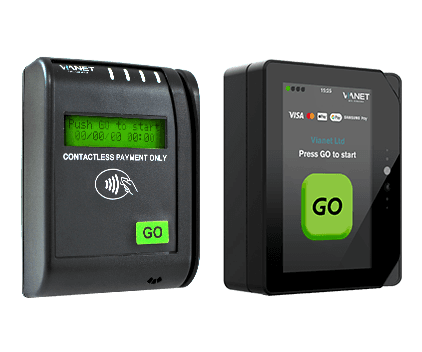
SmartContact hardware is the customer-facing end of a much larger operating system. Photo: Vianet.
03The price of knowing
Payment costs provide one measurable entry point. In testimonials published by Vianet, JW Vending reports a 14% saving on transaction fees through the technology and payments partner Attenda; Venda Valet reports 15%. Those are customer-specific comparisons, not tariff promises. Lower fees can help, but they are only one line in the calculation. Hardware, installation, connectivity, subscriptions and staff time belong in the same spreadsheet.
For an operator, a sensible evaluation would count avoidable visits, lost sales during downtime and the time spent reconciling stock. A machine on a dense, frequently serviced route presents different economics from one requiring a special journey. At a bar, the value depends partly on how much unexplained stock loss exists and whether managers have the authority and time to correct it.
Vianet also pays to keep the proposition useful. Its 2026 annual report records £1.615 million of research and development expenditure, all capitalised on the balance sheet. That treatment spreads the expense through future amortisation; it does not make the development free. The business requires continuing work on devices, software and integrations, even when customers keep renewing.
A particularly revealing cheque was written in shares. In May 2023, Vianet acquired Beverage Metrics' trade and assets for initial consideration of £577,500, satisfied through 700,000 shares. The agreement added revenue-linked deferred consideration capped at £4 million. The cap was a maximum contingent obligation, not the cash price paid on day one. Acquired software, customers and point-of-sale integration technology widened what Vianet could sell.
“we understand both the quality of the people”James Dickson / May 2023 acquisition announcement
04America requires more than a passport
The acquisition followed years of working together. At the time, James Dickson pointed to that collaboration as evidence of the team’s ability and the quality of its software. That is a more useful account of conviction than a sudden conversion to a fashionable market. Vianet had experience of the team before it bought the assets, and could combine inventory software with its own draught monitoring.
Partnerships extend that logic. A March 2023 agreement with Vendekin introduced QR-based mobile checkout integrated with SmartVend. Customers scan, select, pay and collect. The Suresite collaboration, announced in December 2022, joined payment acquiring services to Vianet hardware for unattended uses including car washes and forecourts. Both arrangements show how the company can enter adjacent applications with a partner supplying part of the machinery, commercial or technical.
In American hospitality, the Fintech Inc. relationship is a distribution opportunity. Vianet says it provides access to more than 240,000 hospitality locations. Those locations are a potential audience, not Vianet subscribers. The difference is considerable. An introduction can create a sales conversation; installation across a restaurant chain requires integration, training and a persuasive result at individual sites.
By July 7, 2026, Vianet reported completing a Beverage Metrics inventory rollout across approximately 100 sites for an unnamed national US full-service restaurant chain. It also reported first-quarter group revenue growth of 3.1%. That is tangible progress beyond a large addressable-market number. Preparations for a September 2026 UK inventory-platform launch were described as on track, a plan rather than confirmation of a completed launch.
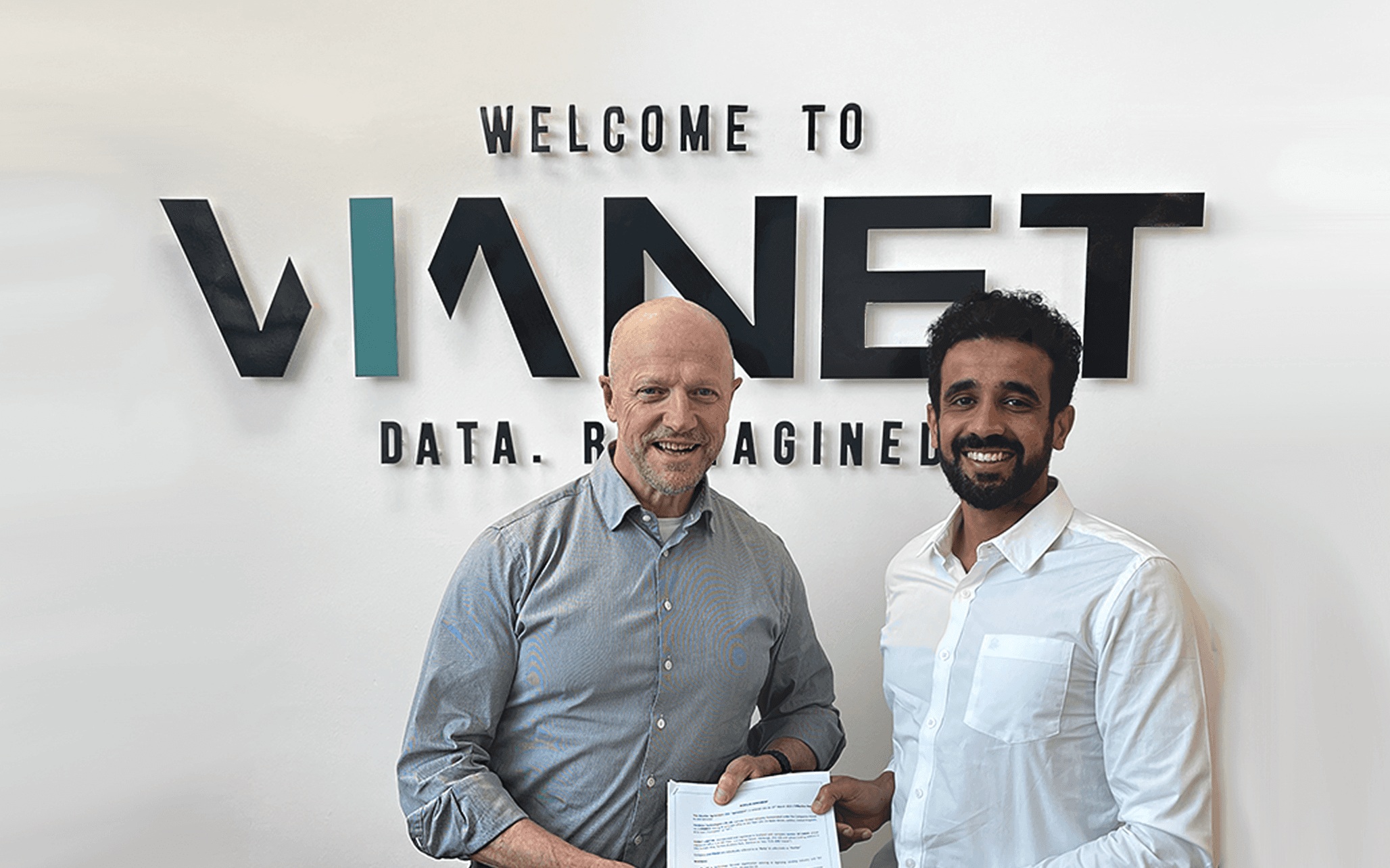
James Dickson and Aroon Khatter mark the 2023 Vendekin partnership, bringing QR checkout to Vianet’s unattended retail offer. Photo: Vianet.
05A network upgrade can shrink the network
Connected equipment inherits the lifespan of the communications systems underneath it. Vianet's 2026 annual report describes customer estate rationalisation during the migration from 3G to 4G LTE. Faced with an upgrade, customers can reconsider whether an older machine merits keeping at all. The first weak point in this episode was the ageing connectivity layer and the economics of replacing it.
Smart Machines revenue fell from £6.25 million to £5.90 million. Of 4,637 cashless devices deployed during the year, 2,520 were 3G upgrades. A replacement can protect a relationship without adding a new machine to the estate. Counting shipments alone would make the commercial story look simpler than it was. Recurring income nevertheless rose to 81% of divisional turnover, from 75%.
The US business also remained unfinished work: Vianet Americas recorded a £243,000 loss, reduced from £385,000 the previous year. Even a product that makes sense operationally needs enough paying sites to cover its costs. The July rollout is encouraging evidence, but it does not turn the preceding year's loss into a profit.
For buyers, the same experience argues for asking about network longevity, replacement responsibility and integration support at the outset. Remote data is useful only if it arrives reliably and someone acts on it. Thin sales volumes, poor connectivity or unresolved stock records can weaken the return. An alert cannot refill a machine, fix a beer line or persuade an overstretched manager to investigate.
Divisional revenue fell 5.6% as the connected estate went through the 3G transition. Bars use a common zero baseline.
06The useful part is what happens after the alert
Vianet's workforce offers a less glossy explanation for its expertise. The 2026 accounts report an average of 127 employees, including directors. A 2024 apprenticeship feature describes training across warehouses, IT support, customer service, sales and data analysis. One analyst, Chris Byers, had already served 20 years and worked in several departments. Knowing how the business behaves is part of knowing what its data means.
The company has also documented management training in coaching, communication and conflict handling. These are its own accounts of development, rather than an independent verdict on workplace culture. Still, they describe specific work behind the promise of service: people answering customers, installing equipment and making operational information intelligible.
The environmental argument follows the same practical pattern. Telemetry can help operators avoid unnecessary journeys and stock products more accurately, reducing fuel use and waste. Savings depend on changed decisions. Moving an existing report onto a screen does not by itself remove a mile from a van's route.
Vianet's next stage will be judged in that space between information and action. Craig Brocklehurst became chief executive in June 2026, with James Dickson returning to the chairman role. The business he leads has an established recurring income base, a broader beverage offering and an American rollout to build on. The persuasive sales pitch remains wonderfully unromantic: show the operator where money is escaping, then help stop it.